
If your blog has dozens of posts but rankings still feel stuck, the problem probably isn’t content quality; it’s structure. Adopting a strategic approach to topic clusters in SEO is the fix most sites are missing, and it’s the reason some websites dominate search results while others with equally good content stay buried on page two.
Search engines no longer rank pages in isolation. They evaluate how well an entire site covers a subject, how content connects internally, and whether a site demonstrates real depth on a topic. Without a clear content silo structure, SEO, even well-written articles compete against each other instead of reinforcing one another.
This guide breaks down exactly what topic clusters and pillar pages are, why topical authority SEO matters more than ever, and how to build a clear pillar page strategy that actually earns rankings, not just traffic spikes.
Looking to elevate your organic reach? Not sure where your current content structure stands? Start with a comprehensive SEO content audit to see what’s holding your rankings back.
What Are Topic Clusters and Pillar Pages
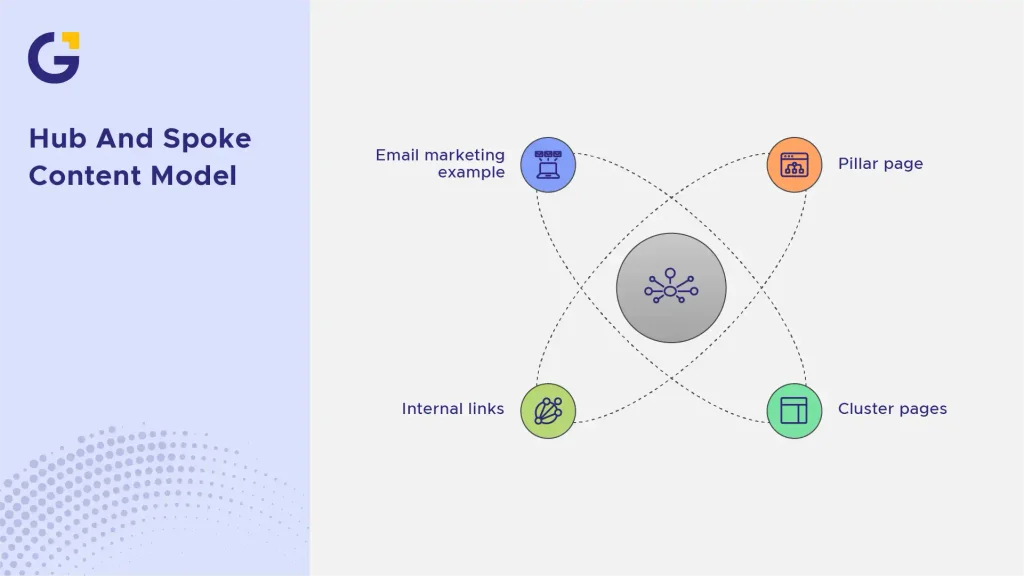
What is a pillar page? A pillar page is a comprehensive resource covering a broad topic in depth, while cluster pages are supporting articles that explore specific subtopics related to that pillar. Together, they form what’s known as the hub-and-spoke content model.
Think of the pillar page as the “parent” page targeting a high-volume, broad keyword. Cluster pages target long-tail, specific keywords and link back to the pillar, creating a clear content hierarchy search engines can easily interpret.
This structure isn’t just organisational; it’s semantic SEO in action. Internal links between pillar and cluster pages signal topical relationships, helping Google Search Central understand context, relevance, and depth of coverage.
Example Case: A digital marketing agency creates a pillar page titled “Complete Guide to Email Marketing.” Around it, they build cluster pages like “Email Subject Line Best Practices,” “How to Segment an Email List,” and “Email Automation for Small Business.”
- The main pillar page sits at the centre, targeting the broad core keyword and linking out to each specialised subtopic.
- Each cluster article focuses on a long-tail search intent, linking directly back to the main pillar page and interlinking horizontally to related subtopics.
Why Topical Authority Matters More in 2026
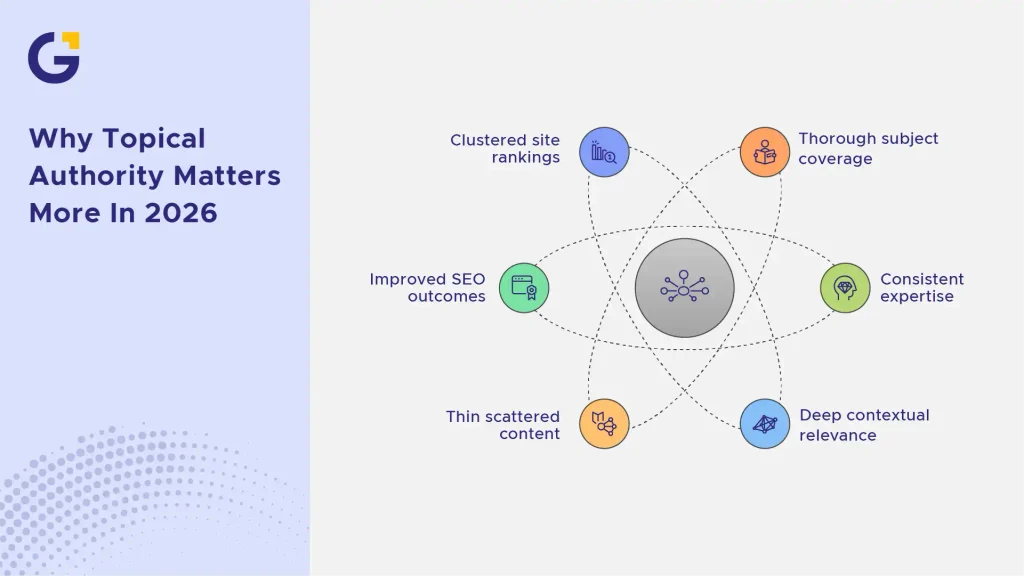
Search engines have shifted from keyword matching to evaluating topical authority SEO essentially, how thoroughly a website covers a subject compared to competitors. A single great article is no longer enough to rank for competitive terms.
As AI-generated content floods the web, search engines are placing more weight on sites that demonstrate consistent expertise, structured depth, and clear content hierarchy. According to data from Ahrefs Research, structured clusters build deep contextual relevance that helps sites earn trust faster. Thin, scattered content, even if well-written, struggles to compete against interlinked, comprehensive resources.
Industry data consistently shows that sites using a topic cluster guide approach see improved crawl efficiency, stronger internal link equity distribution, and better rankings for both head terms and long-tail queries simultaneously. As SEO veteran Rand Fishkin notes, “SEO is no longer about keyword repetition; it’s about proving to search engines that your domain is the ultimate destination for an entire concept.”
Example Case: Two competing SaaS companies publish similar numbers of blog posts. One organises content into clusters around core product use cases; the other publishes standalone posts with no interlinking. Within six months, the clustered site ranks for significantly more keyword variations tied to its core topics.
How to Choose Your Pillar Topics
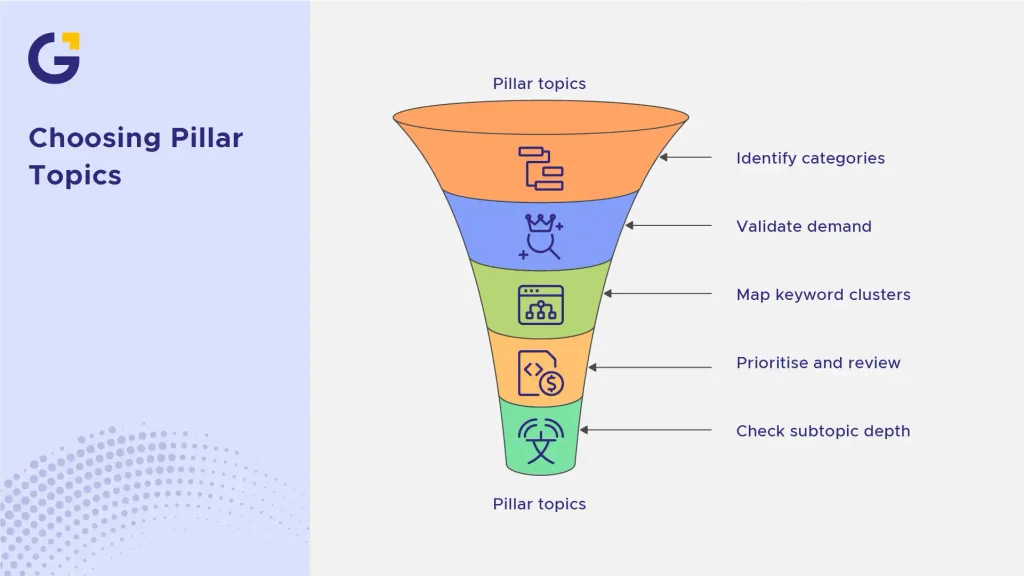
Choosing the right pillar topics is the foundation of any successful pillar page strategy. Pillars should be broad enough to support 8-15 subtopics, but specific enough to align with your core business offerings.
Start by identifying the 3-5 main service or product categories your business wants to rank for. Each of these becomes a potential pillar page candidate: broad, high-intent, and searchable.
Next, validate demand using keyword research tools to confirm the pillar topic has meaningful search volume, along with a cluster of related long-tail keywords feeding into it. Proper keyword search mapping ensures every cluster piece serves a distinct user query.
- Prioritise topics tied directly to revenue-generating services.
- Review distinct pillar page examples to model your content structure effectively.
- Choose pillars with enough subtopic depth to sustain 10+ cluster articles.
- Avoid overly narrow pillars that can’t support expansion later.
Building Cluster Content Around Each Pillar
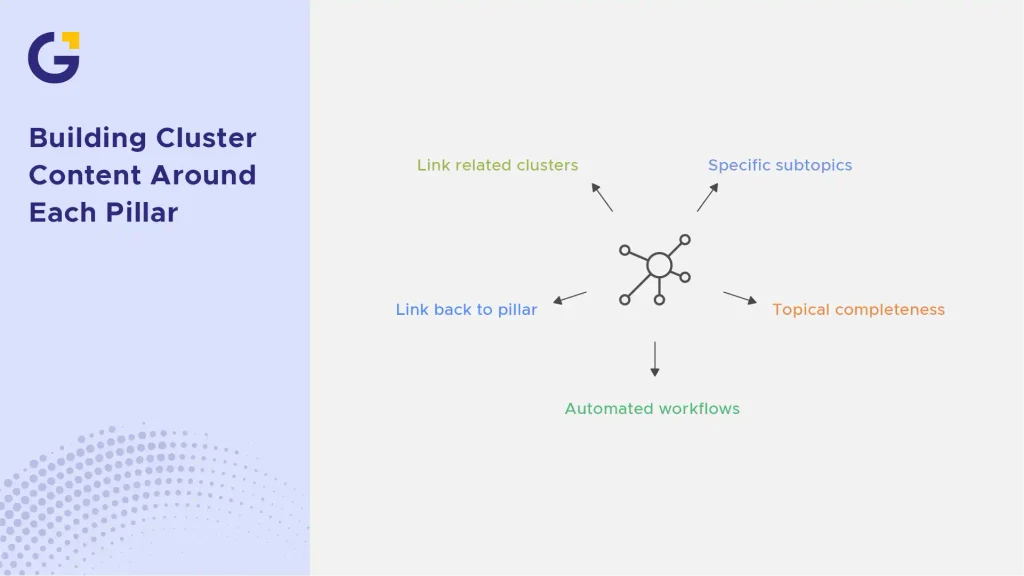
Once a pillar topic is chosen, cluster content should address specific questions, processes, or subtopics that naturally fall under that umbrella. Understanding pillar page vs. cluster page dynamics is vital: the pillar provides high-level structure, while clusters deliver specialised detail.
Aim for topical completeness: cover the common questions your audience searches for, gaps competitors haven’t addressed, and supporting details that add real depth to the pillar’s core promise. Automated workflows can help scale this; adopting AI content workflows allows teams to outline subtopics rapidly while keeping the writing authentically human.
Internal Linking Best Practices for Clusters
Every cluster page should link back to its pillar using descriptive, keyword-relevant anchor text, not generic phrases like “click here.” Applying a disciplined internal linking strategy reinforces the content hierarchy and passes link equity where it matters most.
Follow an internal linking strategy where clusters also link sideways to closely related cluster pages, not just upward to the pillar. This creates a denser, more crawlable network that keeps visitors engaged and lowers bounce rates.
A Topic Cluster Example for a Service Business
To see how this works in practice, consider an agency offering web development services. Instead of publishing random articles about web design, they build a structured architecture:
- Pillar Page: “The Ultimate Guide to Business Website Architecture & Development” (Targeting main head terms).
- Cluster 1 (Technical SEO & Code): WordPress maintenance checklists and speed optimisation steps.
- Cluster 2 (Platform Comparison): Articles analysing Shopify vs WooCommerce for Australian businesses.
- Cluster 3 (UX & Conversion): In-depth guides on UI/UX for B2B businesses and landing page layouts.
By implementing this hub-and-spoke model, every supporting blog post passes topical authority back to the main service page. This approach helps businesses rank for competitive keywords without relying solely on external backlinks.
Common Mistakes When Structuring Content
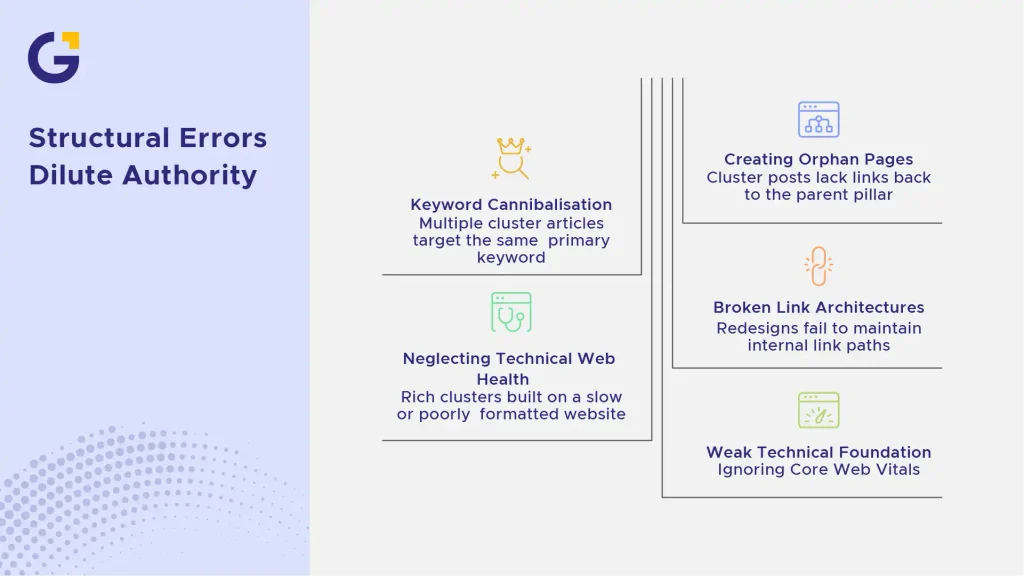
Even experienced marketing teams make structural errors that dilute their authority. Implementing effective content clusters for SEO requires avoiding these frequent traps:
- Creating Orphan Pages: Publishing cluster posts without linking back to the parent pillar. Learning how to fix orphan pages in SEO is critical to ensure search crawlers discover every piece of content.
- Keyword Cannibalisation: Targeting the same primary keyword across multiple cluster articles. Each post must focus on a unique long-tail query.
- Broken Link Architectures During Redesigns: Failing to maintain internal link paths when updating a site. Always follow a strict SEO migration checklist during structural changes.
- Neglecting Technical Web Health: Building rich clusters on a slow or poorly formatted website. Ensure your site adheres to W3C Web Standards for clean markup and fast rendering.
- Weak Technical Foundation: Ignoring Core Web Vitals. Fast loading speed and smooth navigation are required to keep cluster visitors reading.
By structuring your site logically and maintaining a clean link architecture, you establish a solid foundation that search engines respect and users appreciate.
Frequently Asked Questions
1. What is the difference between a pillar page and a cluster page?
A pillar page is a broad, comprehensive overview covering all aspects of a core topic on a single page. A cluster page is a detailed supporting article that dives deep into a specific subtopic mentioned on the pillar page. Cluster pages link back to the pillar page, creating a contextual link network.
2. How many cluster pages does a pillar need?
Most effective pillars are supported by 8 to 15 cluster pages. However, the quality and relevance of the clusters matter much more than raw volume. You should create as many cluster pages as needed to thoroughly cover the subtopics your audience searches for.
3. Does topic clustering actually improve rankings?
Yes. Implementing topic clusters in SEO improves search performance by helping search engine crawlers understand site structure, establishing topical depth, and efficiently distributing link equity across related pages.
4. How long should a pillar page be?
Pillar pages typically range from 2,000 to 4,000+ words because they cover broad subjects comprehensively. However, length should always be driven by user intent; focus on answering questions clearly and logically rather than hitting an arbitrary word count.





 27 Oct 2026
 8 Min Read