
Most small businesses in Australia struggle to get consistent, qualified leads online. Without a clear strategy, time and money get wasted on marketing channels that do not work.
Recent data from Red Search shows that almost 97% of Australians are online. That means your target customers are already searching, comparing, and buying online. Brands like Shopify and Google continue to shape how small businesses compete, especially through search engine results and local listings.
For most Australian small businesses, start with your website, Google Business Profile, local SEO and conversion tracking. Add Google Ads when you need faster lead volume. This ultimate guide to digital marketing for Australian small businesses explains what to do first, what works, how to build organic traffic channels without paid ads, and how to choose affordable digital marketing packages for long-term growth.
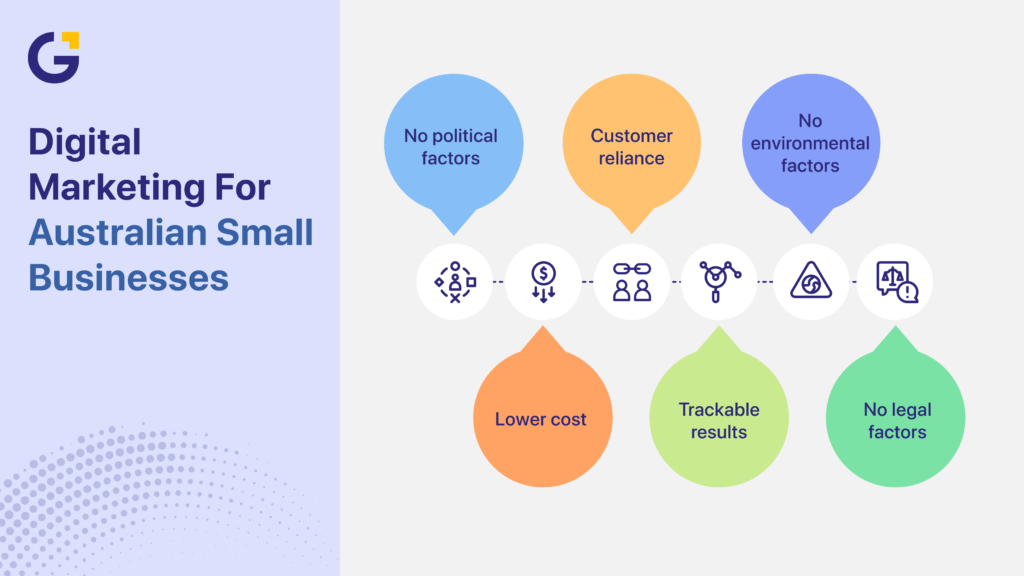
What Is Digital Marketing For Australian Small Businesses And Why Does It Matter?
Digital marketing for Australian small businesses is the strategic use of online channels including search engines, local directory listings, social media, and email to attract customers and generate consistent lead flow. It allows small businesses to compete locally and nationally without massive advertising budgets.
Unlike traditional media, online marketing for Australian small businesses can be continuously tracked, measured, and improved based on real conversion data.
The BrightLocal Consumer Search Behaviour Report shows that most customers now rely on search before choosing a local provider, often searching multiple times a day and comparing options online.
For example, a local electrician in Sydney relies heavily on Google searches like “emergency electrician near me.” Without targeted digital marketing, the business will not appear in search results and will lose ready-to-buy customers to competitors.
Core Benefits for Aussie SMEs
- Reach Active Buyers: Target customers searching online right now for specific service solutions.
- Trackable ROI: Measure leads, phone calls, form submissions, and conversion rates directly.
- Cost-Effective Scalability: Lower overall acquisition cost compared to traditional print or radio ads.
- Geo-Targeted Focus: Better targeting based on specific suburbs, cities (such as Sydney or Melbourne), and high customer intent.
Where Should Small Businesses Start With Digital Marketing In Australia?
The best place to start digital marketing for a small business in Australia is with a website, Google Business Profile, and basic SEO. These create a foundation that brings consistent traffic and local leads.
Many businesses try social media first but skip website basics. This leads to poor results.
Step-by-Step Starting Point
Follow these simple steps to build a strong digital marketing foundation.
| Step | Action | Why It Matters |
| 1 | Build a simple website | Acts as your main sales page |
| 2 | Set up Google Business Profile | Helps appear in local searches |
| 3 | Start small business SEO in Australia | Brings long-term traffic |
Key Digital Marketing Channels: Organic vs. Paid Strategy
Selecting the right online channels depends on your goals, budget, and timeline. Combining long-term organic visibility with fast paid advertising creates a balanced small business marketing strategy.
| Channel | Cost | Speed | Best For |
| SEO & Local SEO | Low to Medium | Slow (3–6 Months) | Sustainable long-term traffic & leads without ongoing ad spend |
| Google Ads | Medium to High | Fast | Immediate leads and targeting high-intent local searches |
| Social Media | Low | Medium | Brand awareness, community trust, & customer engagement |
| SMS & Email Marketing | Low | Medium | Direct retention, repeat sales, & increasing customer lifetime value |
To accelerate lead generation while your search rankings build, integrating targeted paid advertising strategies allows you to secure immediate search visibility.
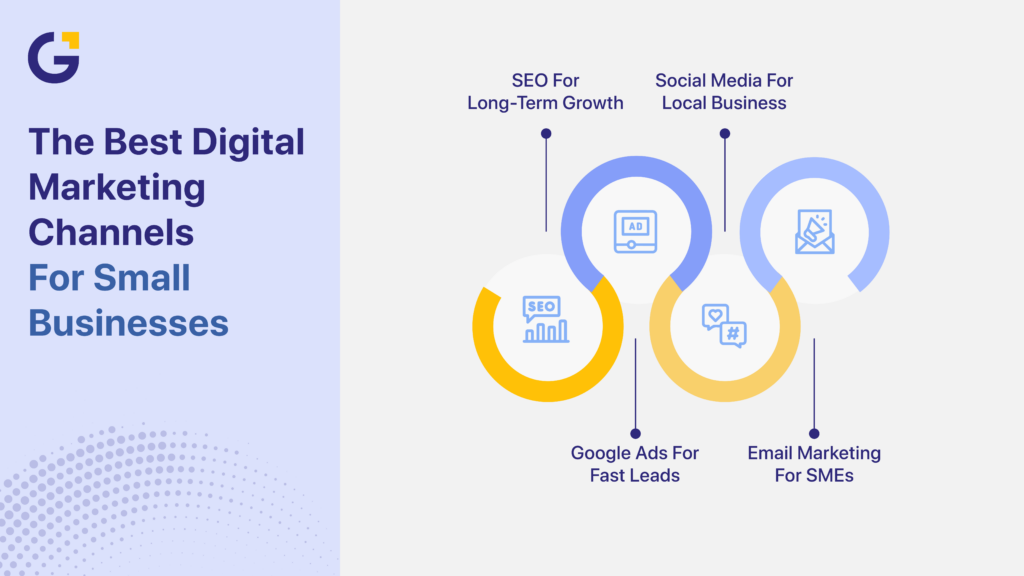
What Are The Best Digital Marketing Channels For Small Businesses In Australia?
The best digital marketing channels for small businesses include SEO, Google Ads, social media, and email marketing. Each channel plays a role based on your goals, budget, and timeline.
Not every business needs every channel. The goal is to pick what drives results.
Channel Comparison Table
Use this table to compare channels based on cost, speed, and results.
| Channel | Cost | Speed | Best For |
| SEO | Low | Slow | Long-term traffic |
| Google Ads | Medium | Fast | Immediate leads |
| Social Media | Low | Medium | Engagement |
| Email Marketing | Low | Medium | Repeat sales |
SEO For Long-Term Growth
Small business SEO in Australia focuses on helping your website rank in Google when people search for your services. This includes optimising your pages, targeting local keywords, and building trust through content and backlinks. It takes time to see results, but it delivers steady, long-term traffic without ongoing ad spend.
Google Ads For Fast Leads
Google Ads allows your business to appear at the top of search results for high-intent keywords. You can target people who are actively looking for your service, which often leads to faster enquiries and calls. This is ideal for service businesses that need immediate results while building long-term SEO.
Social Media For Local Business
Social media for local businesses helps build awareness and trust with your audience over time. Posting regularly, sharing updates, and responding to comments can keep your brand visible and active. While it may not drive instant leads, it supports your overall marketing by strengthening credibility.
Email Marketing For SMEs
Email marketing for SMEs keeps your business connected with existing customers and past leads. You can send updates, promotions, and reminders that encourage repeat purchases and ongoing engagement. It is a low-cost way to increase customer lifetime value and maintain consistent communication.
Organic Traffic Channels for Local Service Businesses Without Paid Ads
While Google Ads deliver fast leads, relying exclusively on paid search can quickly drain your budget. Building organic traffic channels for local service businesses in Australia provides continuous visibility without pay-per-click expenses.
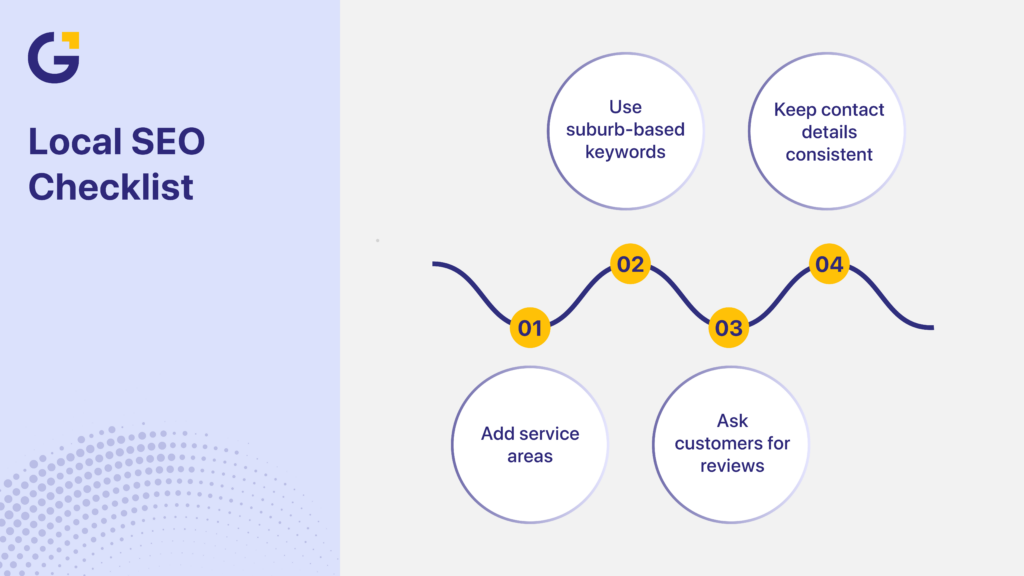
1. Optimise Your Google Business Profile (GBP)
Your Google Business Profile is the primary tool for local map packs. Ensure your business details (Name, Address, Phone) match across local listings, collect fresh customer reviews, and post regular business updates.
2. Focus on Suburb-Based Local SEO Keywords
Target localised search queries within your content and meta tags. Instead of generic phrases, use suburb-targeted terms like “commercial lawyer Melbourne” or “emergency plumber Sydney CBD” to capture high-intent local traffic.
3. Build Evergreen Educational Content
Write practical blog posts answering common customer questions. Repurpose this content into social updates and customer newsletters to maximise organic search reach across multiple touchpoints.
Affordable Budgets & Managed Marketing Packages for Small Business
Determining how much to spend is a common challenge for small business owners in Australia.
- Standard Budgeting: Most established small businesses allocate between 5 to 10% of gross revenue toward digital marketing.
- Low-Budget Testing: Start with low-cost channels (such as local SEO and Google Business Profile) or test paid campaigns with modest daily budgets before scaling up.
Managed Digital Marketing Packages & Subscriptions
If running campaigns internally takes too much time away from daily business operations, investing in affordable digital marketing packages for small businesses or monthly marketing subscriptions ensures consistent execution.
A complete small business marketing package in Australia typically covers:
- On-page SEO and ongoing content optimisation.
- Local SEO directory citations and profile management.
- Structured content creation (blogs and social media assets).
- Strategic Google Ads management for direct enquiry generation.
If you’re unsure how to allocate your budget between immediate leads and long-term organic growth, evaluating the trade-offs in SEO vs Google Ads for Australian businesses helps determine the right mix for your market.
3-Phase Strategy for a Simple Digital Marketing Plan
- Build Presence (Foundation): Set up a responsive, mobile-friendly website, claim your Google Business Profile, and complete basic on-page SEO.
- Generate Traffic (Growth): Execute local SEO tactics, publish valuable blog content, and maintain active social media channels.
- Convert Leads (Scale): Implement conversion rate tactics, run targeted Google Ads for immediate lead volume, and set up automated email follow-ups.
Focusing on lead conversion and multi-channel nurturing is essential when building a high-converting marketing funnel that turns casual site visitors into paying clients.
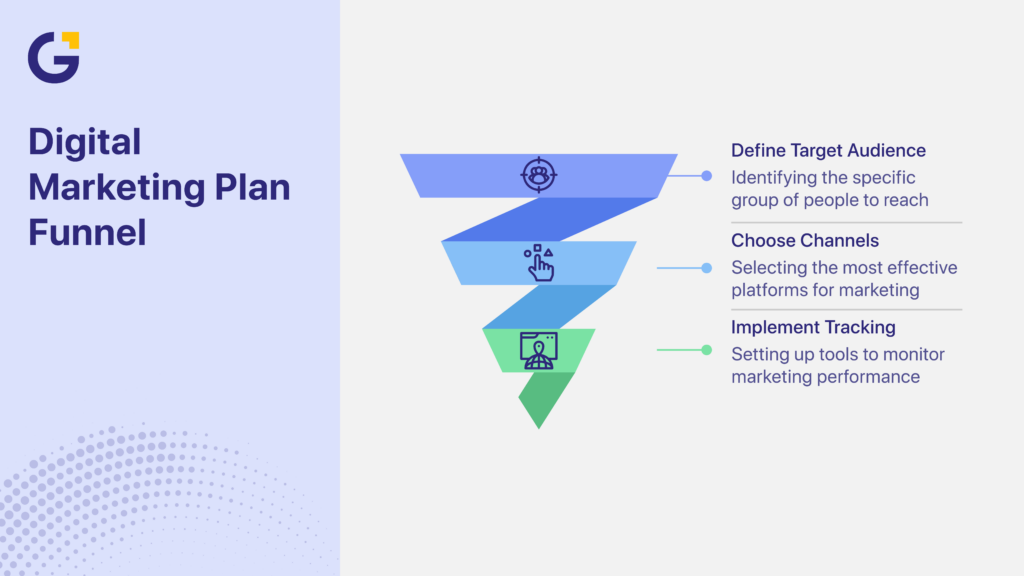
How Do You Create A Simple Digital Marketing Plan For Your Business?
A simple digital marketing plan includes clear goals, target audience, chosen channels, and tracking. This keeps small businesses focused and avoids wasted effort.
A beginner marketing plan should stay simple.
Basic Plan Structure
- Goal: Increase leads by 20%
- Audience: Local homeowners
- Channels: SEO and Google Ads
- Tracking: Google Analytics
SMART Goals Example
- Get 30 leads per month
- Increase website traffic by 15%
Tools To Use
- Google Analytics
- Google Search Console
- Email platforms
Common Digital Marketing Mistakes to Avoid
- Ignoring Local SEO: Failing to target geographic keywords and local map listings.
- Spreading Channels Too Thin: Trying to manage every social platform poorly instead of focusing on 2 or 3 high-performing channels.
- Neglecting Mobile UX: Failing to optimise site speed and form navigation for mobile visitors.
- Not Tracking Lead Attribution: Running campaigns without properly configured conversion tracking in GA4 and your advertising platforms.
How Genix Digital Helps Small Businesses Grow Online
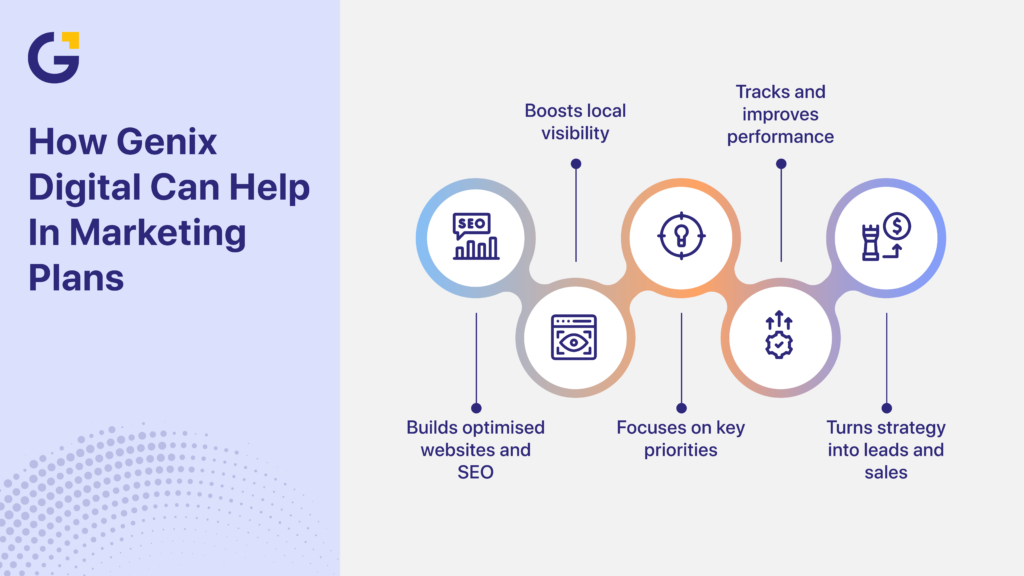
At Genix Digital, we help Australian small businesses build simple, highly effective marketing strategies focused on real sales and lead growth. We build fast websites, manage localised SEO campaigns, and run targeted ad strategies tailored to your exact budget.
Ready to turn your online strategy into real business growth?
Book a consultation today to get a customised digital marketing plan for your business.
Frequently Asked Questions
What is the best digital marketing strategy for Australian small businesses?
The best strategy combines a fast, mobile-optimised website, Google Business Profile optimisation, and local SEO. Once your organic foundation is stable, adding paid ads accelerates lead flow.
How can a small business get organic traffic without paid ads?
Focus on local SEO, build location-specific landing pages, gather authentic Google reviews, and regularly produce informative blog content addressing local customer queries.
Is SEO worth it for Australian small businesses?
Yes, SEO delivers sustainable organic traffic over time, reducing your dependency on paid advertising and establishing strong long-term market authority.
How much should a small business spend on digital marketing in Australia?
Most small businesses invest 5 to 10% of revenue. If operating on a limited budget, prioritise low-cost organic channels such as SEO and local directory management first.




 1 Apr 2026
 18 Min Read