
If your business isn’t showing up when someone nearby searches for what you offer, you’re losing valuable customers to competitors who do. This is almost always a keyword targeting issue rather than a quality problem. Local keyword research is the foundational process that fixes it, helping you understand exactly what your suburb-based Australian customers are typing into Google before they make a purchase decision.
Most small business owners in Australia either skip this step entirely or copy generic keyword lists that completely ignore location context. The result is a website that ranks nowhere near the local pack, no matter how exceptional the service is. This comprehensive guide walks you through a practical, step-by-step approach to find and use the right keywords, without needing an expensive agency retainer or enterprise software. If you need expert assistance right away, our team specialising in local SEO services can audit your current online visibility.
Not sure where your business currently ranks locally? Our local SEO services team can run a quick visibility check before you dive into the steps below.
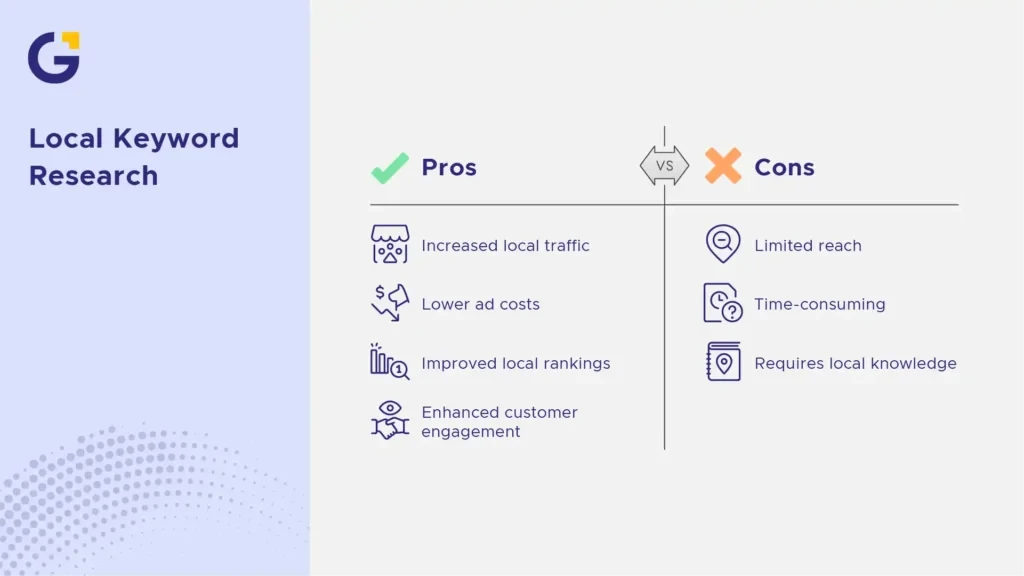
What Makes Local Keyword Research Different From Standard Keyword Research
Standard keyword research focuses strictly on search volume and national or global competition levels. Rigorous local keyword research adds a third, non-negotiable layer: geographic intent.
A plumber in Parramatta doesn’t need to rank nationally for a broad term. They need to rank for “plumber Parramatta,” “emergency plumber near me,” and “blocked drain Western Sydney.” These geo-modifiers completely change how you research, prioritise, and implement your keywords.
Example Case: A Melbourne electrician switched from targeting “electrician Australia” to suburb-specific terms like “electrician Brunswick” and “licensed electrician near me.”
- Organic local enquiries increased significantly within three months.
- Cost-per-click on paid ads dropped because competition was lower and more targeted for specific suburb terms.
Standard keyword research also tends to ignore Google Business Profile signals and the local pack, both of which are heavily influenced by location-based keywords rather than broad industry terms. As leading local SEO expert Joy Hawkins frequently advises, optimising for hyper-local search intent is what separates businesses that thrive online from those that get buried.
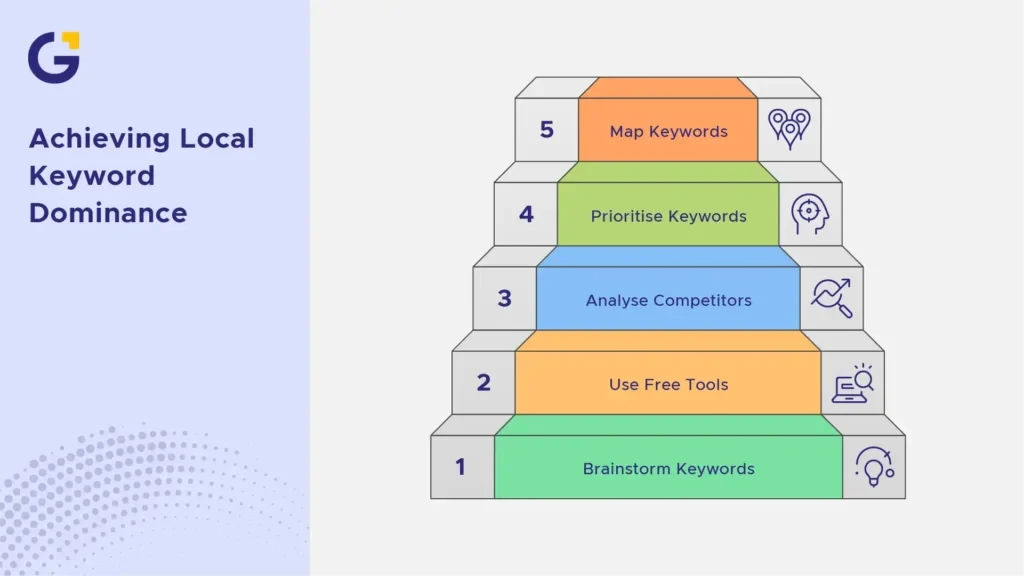
Step-by-Step Local Keyword Research Process
Finding the right local keywords doesn’t require expensive software. It requires a structured, repeatable process you can apply across every suburb or service area you operate in. For a broader foundational understanding of search optimisation, you can also review our guide on how to do seo for a website step-by-step.
Step 1: Brainstorm Seed Keywords by Service and Suburb
Start by listing every core service you offer, then pair each one with every suburb, region, or council area you service.
This creates a simple grid: service plus location equals seed keyword. A landscaper servicing Brisbane’s southside might list “garden design Sunnybank,” “lawn mowing Mount Gravatt,” and “landscaping Coorparoo.” For multi-location setups, you can explore our detailed playbook on Local SEO for Sydney Service Businesses: The Suburb-by-Suburb Playbook.
Example Case: A cleaning company listed 6 services across 10 suburbs, generating 60 seed keyword combinations to research further.
- Include informal suburb names, colloquialisms, and nicknames locals actually use.
- Add nearby suburbs your customers regularly travel from, not just your immediate physical base.
Step 2: Use Free Tools (Keyword Planner, Search Console, Google Maps)
You don’t need paid software to start. Google Keyword Planner shows search volume by location, Search Console reveals what people already type to find your site, and Google Maps shows how competitors describe themselves.
Search Console is particularly valuable because it surfaces real queries, including suburb names and near me searches, that are already driving traffic to your existing pages.
Example Case: A bakery checked Search Console and discovered “gluten free cakes near me” was driving clicks despite the phrase never appearing anywhere on their site.
- Google Keyword Planner: filter by city, state, or postcode for accurate local volume data.
- Google Maps: search your service plus suburb to see how top-ranking competitors phrase their listings. If your map visibility is lagging, our guide on Why Your Sydney Business Isn’t Showing Up on Google Maps (Local Pack Troubleshooting Guide) offers actionable fixes.
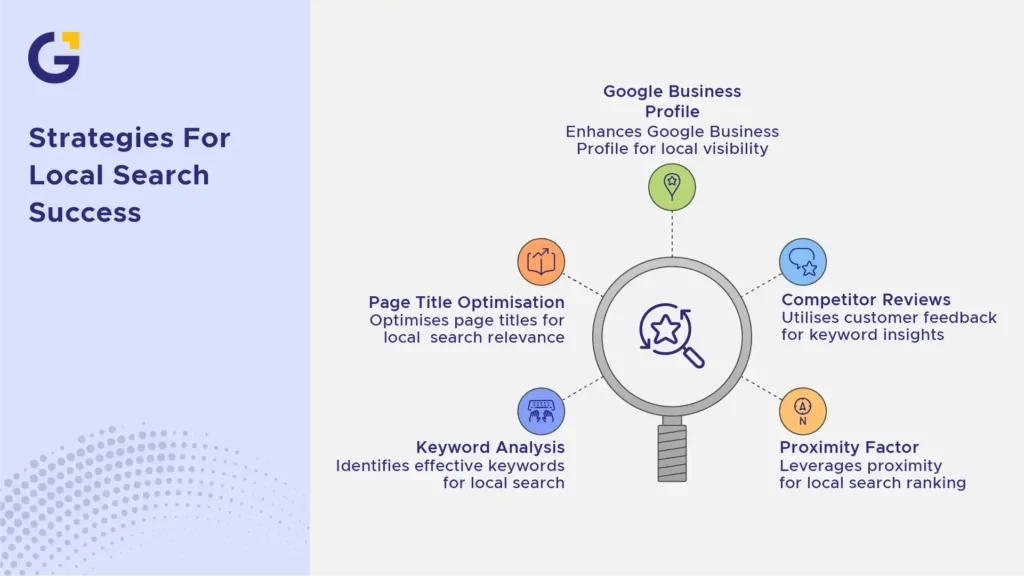
Step 3: Analyse Local Competitors
Search your main service keywords with suburb names attached and study who appears in the local pack and organic search results.
Look specifically at their page titles, headings, and Google Business Profile categories. These reveal the exact keywords Google already associates with ranking businesses in your area. According to data shared by industry authority Whitespark, proximity and local keyword optimisation in metadata remain top ranking factors for map packs.
Example Case: A pest control business found that top-ranking competitors all used the phrase “same day pest control” in their titles, a term they hadn’t considered.
- Note recurring suburb names or region terms across multiple competitors.
- Check competitor reviews for keyword phrases customers naturally use in their feedback.
Step 4: Prioritise “Near Me” and Suburb-Based Long-Tails
Not all local keywords deserve equal attention. Near me searches and specific suburb long-tails typically convert better because they signal high purchase intent.
A search for “24 hour locksmith near me” shows far more urgency than a generic “locksmith services.” Prioritise these phrases when they match a service you can genuinely deliver promptly.
Example Case: A locksmith business restructured their homepage around “emergency locksmith near me” and saw a noticeable lift in same-day call enquiries.
- Rank keywords by user intent first, and search volume second.
- Group long-tails by suburb cluster for easier content planning and site structure. To ensure your information architecture supports this, refer to our insights on Internal Linking Strategy for Service-Based Websites: How to Support Money Pages.
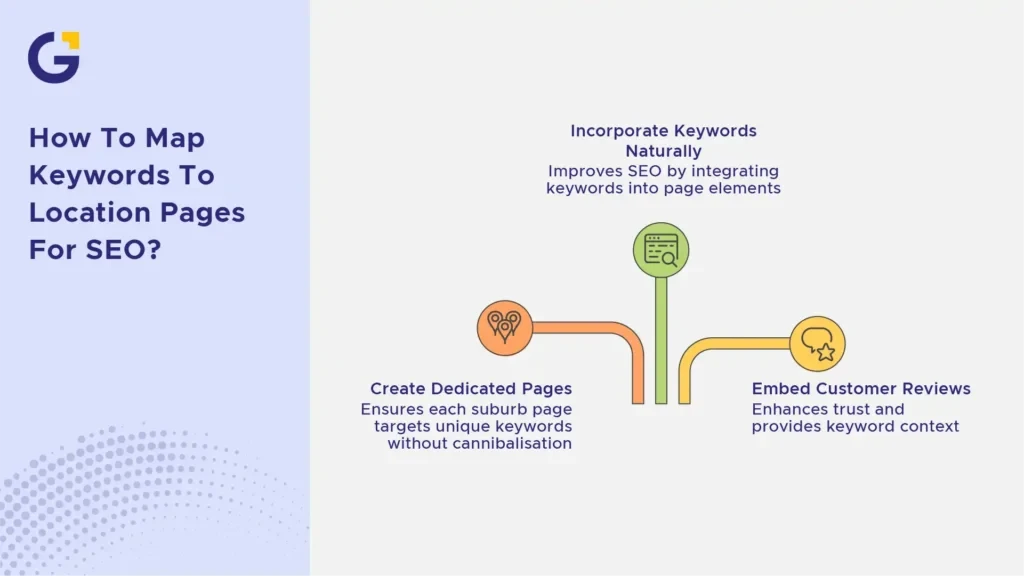
Step 5: Map Keywords to Location Pages
Once you have gathered and filtered your keyword lists, the final operational step is mapping them to specific pages on your website. Avoid stuffing every suburb keyword onto your homepage; instead, create dedicated, high-value location landing pages for distinct service areas or suburbs. Executing strategic local keyword research ensures that each suburb page targets unique phrases without cannibalising your other rankings. Incorporate your target keywords naturally into the main page title (H1), meta description, subheadings (H2/H3), and image alt text. Furthermore, as highlighted in resources discussing How Reviews Help Sydney Businesses Rank in Google, Maps and AI Results, embedding customer feedback rich with local terms on these location pages provides powerful trust signals and additional keyword context for search crawlers.
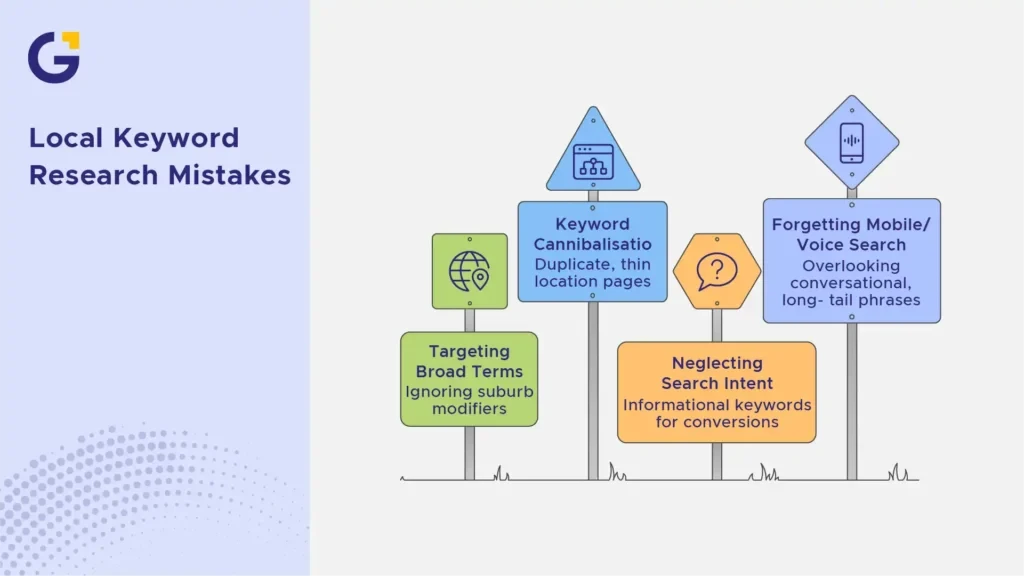
Common Local Keyword Research Mistakes
Even experienced business owners frequently stumble when executing local SEO campaigns. Failing to invest time in thorough local keyword research before writing website copy often leads to major pitfalls:
- Targeting Only Broad Terms: Ignoring suburb modifiers and trying to rank nationally for highly competitive services.
- Keyword Cannibalisation: Creating duplicate, thin location pages for neighbouring suburbs with identical content instead of tailoring unique, valuable local insights for each area.
- Neglecting Search Intent: Targeting high-volume informational keywords when your page is designed for commercial service conversions.
- Forgetting Mobile and Voice Search: Overlooking conversational, long-tail phrases that customers speak into their phones while on the go. Fixing these structural errors is essential for maximising your overall SEO services ROI and ensuring long-term organic growth.
FAQ
1. What are local keywords in SEO?
Local keywords are search terms that include specific geographic identifiers such as city names, suburbs, or phrases like “near me” designed to connect local searchers with nearby physical businesses or service areas.
2. How do I find keywords for my suburb?
You can find suburb-specific keywords by combining your core services with local council regions, suburbs, and colloquial nicknames, then cross-referencing them using tools like Google Keyword Planner, Google Search Console, and competitor analysis in Google Maps.
3. Is Google Keyword Planner free to use?
Yes, Google Keyword Planner is completely free to use within a Google Ads account, providing valuable location-based search volume estimates even if you aren’t currently running active paid ad campaigns.
4. How many location pages should I create?
You should only create dedicated location pages for suburbs or regions where you have a genuine physical presence, a verifiable address, or a dedicated service team capable of serving customers effectively. Avoid creating thin, automated pages for dozens of distant suburbs, as this can harm your overall site quality.





 24 Jul 2026
 7 Min Read