

If you manage a Google Ads account in Sydney, you’ve likely noticed a massive shift in how the platform operates compared to just two years ago. Smart bidding suggestions, Performance Max campaigns, and automatically generated ad combinations mean that AI is now embedded into almost every part of the interface. For businesses navigating modern AI Google Ads Sydney strategies, the question isn’t whether to embrace automation; it’s knowing how to use it without losing control of your actual profitability.
The truth is, AI has made Google Ads faster to set up and, in many cases, more efficient. But it has also made it easier to scale mistakes quickly, especially when conversion tracking is weak or offers aren’t clearly defined. Automation optimises toward whatever data it’s given, good or bad.
This article breaks down what AI is actually doing inside Google Ads today, where human strategy and oversight still determine the difference between wasted spend and scalable growth, along with key checks every business owner should make before increasing their ad budgets.
If you want a professional review of your account, our team offers AI-informed Google Ads management built around real business outcomes, not just platform automation.
What AI Is Already Doing in Google Ads
Google has aggressively shifted most of its core ad products toward machine learning and automation. This isn’t a future trend; it’s already the default setup for most new, high-performing accounts using AI in Google Ads Sydney and across AI paid ads Australia campaigns.
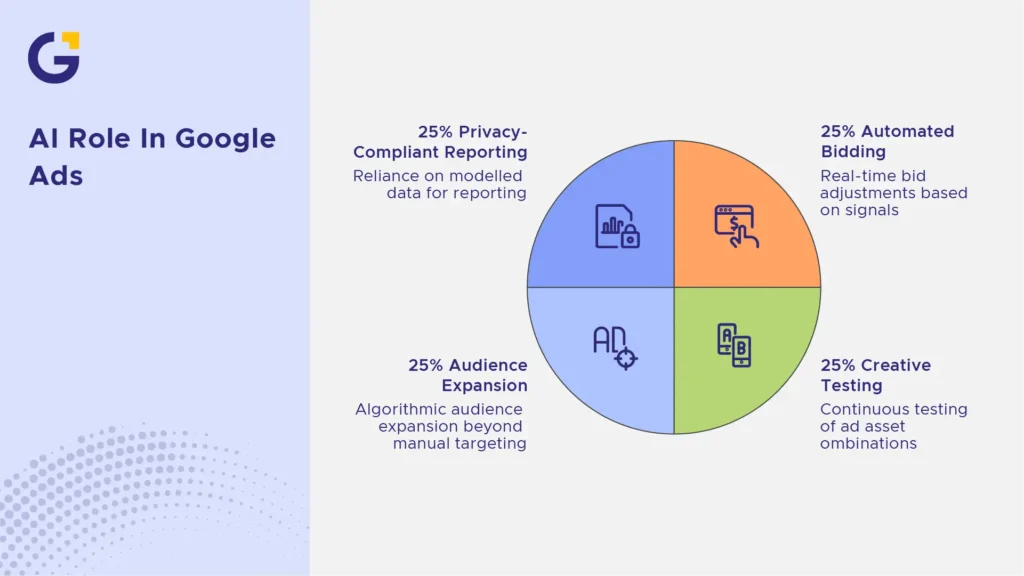
Today, algorithms handle automated bidding Google Ads adjustments in real time, testing thousands of auction-level signals every second, data points that no media buyer could ever process manually. Simultaneously, machine learning engines generate and test multiple headlines, descriptions, and image combinations automatically within Responsive Search Ads and Performance Max AI structures.
Audience targeting has similarly evolved from manual demographic selection to signal-based modelling, where the system finds behavioural patterns across search queries, website visits, and conversion data.
Example Case: A Sydney-based trade business running Performance Max noticed the system was serving ads to a broader audience than expected, based on predictive lookalike profiles derived from past converters rather than manual targeting rules.
- Automated bidding dynamically adjusts bids in real-time based on high-intent conversion signals.
- Creative testing happens continuously across dozens of ad asset combinations.
- Audience expansion is driven by algorithmic machine learning, not static manual lists.
- Reporting increasingly relies on privacy-compliant modelled data, rather than straightforward browser tracking.
Where Human Strategy Still Matters
AI can optimise what it’s told to optimise. It cannot decide whether your offer is competitive, whether your leads are actually good customers, or whether your landing page makes sense to a real visitor. That’s still a human job.
Offer, positioning and lead quality
Automation will happily generate a surge of form submissions if the campaign is structured to do so, but a higher volume of enquiries isn’t the same as high-margin revenue.
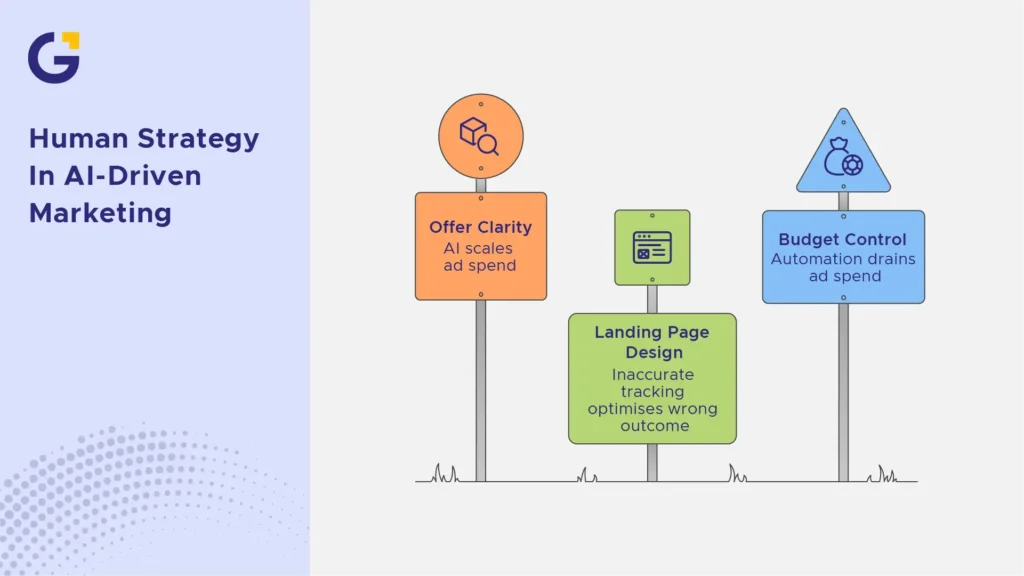
If your offer, pricing, or positioning lacks clarity, AI will enthusiastically scale ad spend toward cheap clicks and low-intent forms that never close. That is why experienced marketers must conduct a regular human review of Google Ads audit to evaluate actual conversion quality and sync CRM data back into the ad account
Landing pages and conversion tracking
Algorithmic AI bidding is only as good as the data infrastructure behind it. If conversion tracking is inaccurate, or if a landing page confuses mobile users, the algorithm optimises toward the wrong outcome entirely.
Many Sydney businesses running paid ads still send traffic to generic pages that lack clear value propositions or conversion elements. Before scaling budgets, make sure to review our Google Ads Landing Page Checklist for Sydney Businesses to plug landing page leaks.
Implementing targeted landing page improvements for paid campaigns often produces a substantially larger conversion uplift than any bid management tweak.
Budget control and campaign interpretation
Automated systems are built to spend your daily budget efficiently against the goal you set, but they don’t question whether that goal is right for your business right now.
Someone needs to interpret whether performance trends reflect genuine demand or seasonal noise, and adjust budgets accordingly.
Left unchecked, automation can quietly drain ad spend on non-performing audience segments if top-level goals aren’t audited consistently.
AI Bidding, Creative and Audience Signals
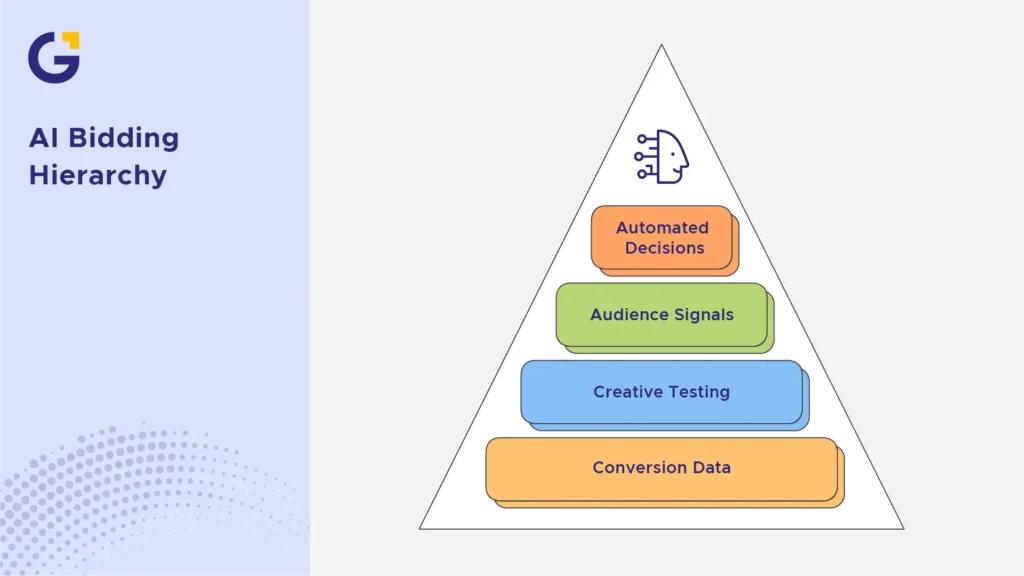
Automated bidding strategies, including Target CPA, Target ROAS, and Maximise Conversions, rely entirely on the quality of conversion data passed into the account. Where tracking feeds clean attribution data back into Google, this can dramatically scale conversion efficiency.
Creative testing has undergone a similar transformation. Instead of manually testing single ad variations, Google’s systems test combinations of headlines, descriptions, and visual assets simultaneously, learning which pairings perform best for specific audience segments.
Audience signals such as first-party customer lists, CRM integrations, and detailed web user paths now feed directly into how Performance Max and Smart Bidding decide who to target, rather than relying purely on manual keyword lists.
Example Case: An eCommerce brand supplying first-party purchase data saw more stable Target ROAS performance than a competitor relying only on default conversion tracking, according to internal campaign comparisons discussed in industry case studies.
The pattern is consistent across most accounts: better input data leads to better automated decisions. Garbage data leads to automation scaling waste silently, usually without throwing any obvious red flags in the standard interface.
Risks of Blind Automation
Blind automation isn’t the only risk when managing campaign performance; reviewing other common PPC mistakes Australian businesses make will keep your return on investment intact. While machine learning offers unprecedented reach, leaning entirely on automated bidding without human guardrails creates serious strategic risks for growing Sydney companies:
- Wasted Budget on Misaligned Keywords: Without exact match controls and rigorous negative keyword lists, smart campaigns frequently capture broad, irrelevant search terms that drain capital.
- Brand Dilution & Low-Quality Messaging: Dynamically assembled headlines can occasionally produce awkward phrasing, inaccurate promises, or robotic copy that degrades your local brand reputation.
- Inaccurate Attribution Loops: If spam leads or unvetted phone calls are counted as valid conversions, AI will aggressively optimise toward acquiring more spam.
- Loss of Strategic Agility: Relying exclusively on black-box algorithms leaves business owners blind to shifting consumer sentiment, local competitor pricing moves, and underlying market demand.
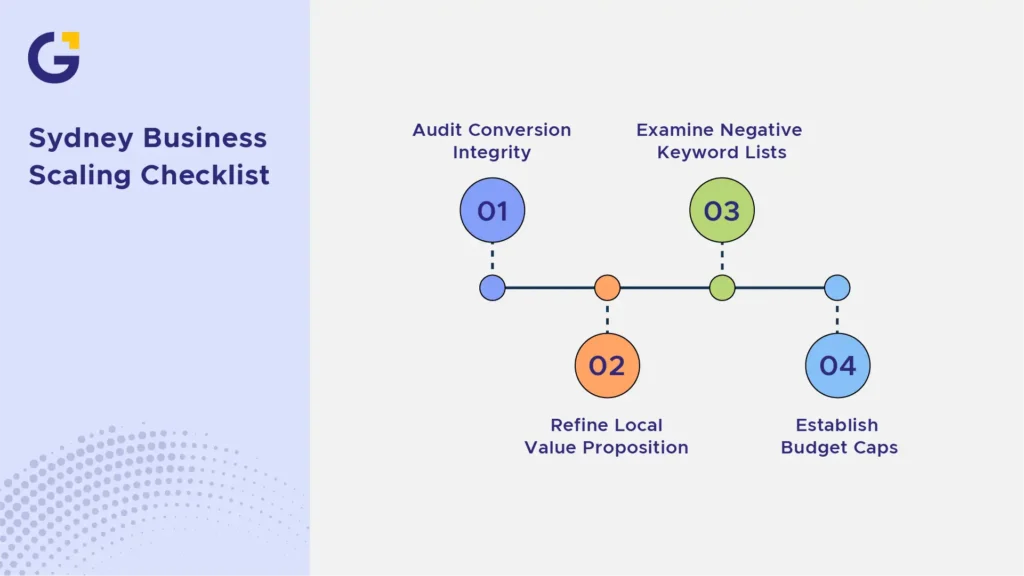
What Sydney Businesses Should Check Before Scaling
Before increasing your daily ad spend, ensure your site is built to capture leads effectively by applying these website conversion rate optimisation fixes.
- Audit Conversion Integrity: Ensure that tracking codes only fire on qualified, valuable business actions (such as verified quote requests or completed purchases) rather than basic button clicks or soft page views.
- Refine Your Local Value Proposition: Make sure your ad copy and landing page messaging specifically address the expectations, pain points, and geographic needs of your Sydney target market.
- Examine Negative Keyword Lists & Exclusions: Continuously purge non-converting search terms and exclude irrelevant placement channels (like low-quality mobile app networks).
- Establish Strict Budget Caps & Target Thresholds: Set realistic ROAS or CPA targets so the algorithm doesn’t overspend during low-demand periods trying to meet unrealistic volume goals.
AI Google Ads Checklist
Use this step-by-step framework to audit your campaign setup before expanding budget allocation:
- Offline Conversion Tracking & CRM Sync: Feed real sales data back to Google so AI bids on actual profit, not just lead volume.
- Landing Page Experience & Conversion Rate Optimisation: Ensure fast load times, clear localised social proof, and mobile-friendly forms before driving paid traffic.
- Audience Signal Cleanliness: Upload fresh first-party customer lists, remarketing audiences, and high-intent search themes.
- Ad Asset Diversity: Supply a rich mix of headlines, long headlines, tailored descriptions, and high-resolution images to allow creative testing.
- Human Oversight Schedule: Schedule weekly search term reviews, conversion audits, and CST-per-acquisition checks to prevent runaway spending.
Ready to stop wasting spend on blind automation? Take the first step toward profitable scaling: review your paid advertising setup with Genix Digital’s Sydney search marketing specialists today.





 31 Aug 2026
 8 Min Read