


Pay-per-click advertising, also called PPC, is a form of online advertising where businesses pay each time someone clicks on their ad. Google Ads is the most common PPC platform in Australia. Common PPC mistakes Australian businesses should avoid include poor audience targeting, broad keywords, missing negative keywords, weak landing pages, and inaccurate conversion tracking. These mistakes often happen because businesses try to reach too many people, rely on broad settings, or do not review campaign data often enough.
Many Australian businesses spend thousands on PPC campaigns but still struggle to get leads, phone calls, or sales. Rising click costs and more competition across Google and Meta make wasted ad spend even more expensive. Businesses struggling with wasted ad spend, poor targeting, and low conversion rates may benefit from professional paid ads management services from Genix Digital, designed to improve campaign performance and ROI.
In this guide, readers will learn why PPC campaigns fail, what causes poor PPC performance, how to stop wasting money on PPC, and which changes can improve CTR, CPA, ROAS, and lead quality.
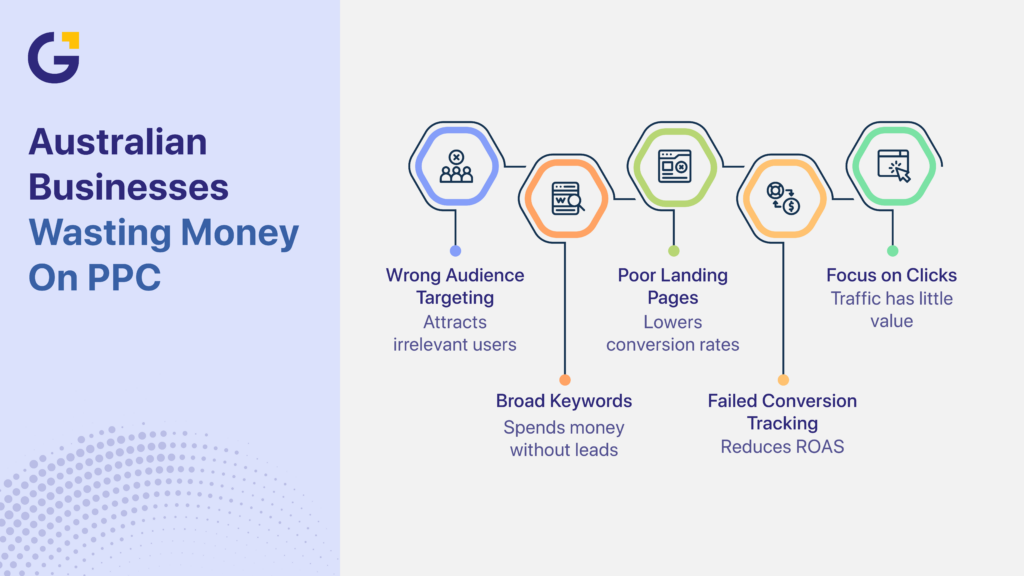
Why Are So Many Australian Businesses Wasting Money On PPC?
Many businesses waste money on PPC because they target the wrong audience, use broad keywords, send traffic to poor landing pages, and fail to track conversions properly. These common PPC mistakes lower conversion rates, increase CPA, and reduce ROAS.
Google Ads costs in Australia continue to rise across industries like legal, finance, dental, plumbing, electrical, and construction. When businesses use broad targeting or generic keywords, they can spend hundreds or thousands of dollars without generating enough leads.
One of the biggest Google Ads mistakes Australian businesses make is focusing too much on clicks instead of actual results. A campaign may attract traffic, but that traffic has little value if people do not contact the business, make a purchase, or book a service. High CPA, low CTR, low conversion rate, poor Quality Score, high bounce rate, and low ROAS are all signs that a campaign needs attention.
For example, a Sydney plumbing business may bid on broad terms like “plumber” or “blocked drain” without location targeting. This can attract users outside the service area or people looking for DIY advice instead of emergency repairs. Using more specific keywords like “emergency plumber in Sydney” or “24-hour blocked drain repair in Sydney” can improve lead quality and reduce wasted ad spend.
Businesses trying to improve ad relevance and conversion rates can also reference top digital marketing trends in Australia for 2026, especially on keeping messaging consistent across ads, landing pages, and SEO.
Are You Targeting The Wrong Audience In Google Ads?
Poor audience targeting in Google Ads happens when businesses use broad demographics, weak location settings, or generic audience segments. This often leads to wasted ad spend because ads appear in front of users who are unlikely to convert.
Common audience targeting mistakes include:
- Targeting all of Australia instead of a local service area
- Using age groups that do not match the ideal customer
- Running ads without audience exclusions
- Missing remarketing audiences
- Showing ads to users who are not ready to buy
These broad targeting issues are one of the most common PPC errors businesses make. When ads show to the wrong people, click-through rate often drops and CPA rises.
This problem is common in local service industries where businesses need to target specific suburbs, postcodes, or regions. A Brisbane dental clinic, for example, should not run ads across the whole country. It should focus on users within a reasonable distance of the clinic.
A tighter targeting radius helps improve ad relevance, increase conversions, and reduce wasted spend.
Are Your Keywords Too Broad Or Too Generic?
Broad keywords often attract clicks from users who are not ready to buy. The best way to improve keyword targeting is to use phrase match, exact match, long-tail keywords, and search terms that show clear buying intent.
Many common Google Ads mistakes Australian businesses make involve poor keyword match types.
| Match Type | Example | Risk Level |
| Broad Match | plumber | High |
| Phrase Match | “emergency plumber” | Medium |
| Exact Match | [emergency plumber in Sydney] | Lower |
Broad match keywords often bring in irrelevant traffic. A business bidding on “shoes” could appear for users searching for free shoe repairs, shoe cleaning, or school shoes.
Which Long-Tail Keywords Usually Convert Better?
Long-tail keywords usually convert better because they show stronger buying intent. Examples include:
- emergency plumber in Sydney
- Google Ads agency in Melbourne
- roof restoration quote in Brisbane
- ecommerce SEO agency in Sydney
- paid ads agency for real estate businesses
A business bidding on “shoes” may receive many clicks but few sales. A keyword like “buy black running shoes in Sydney” is more specific and often converts better because the user already knows what they want.
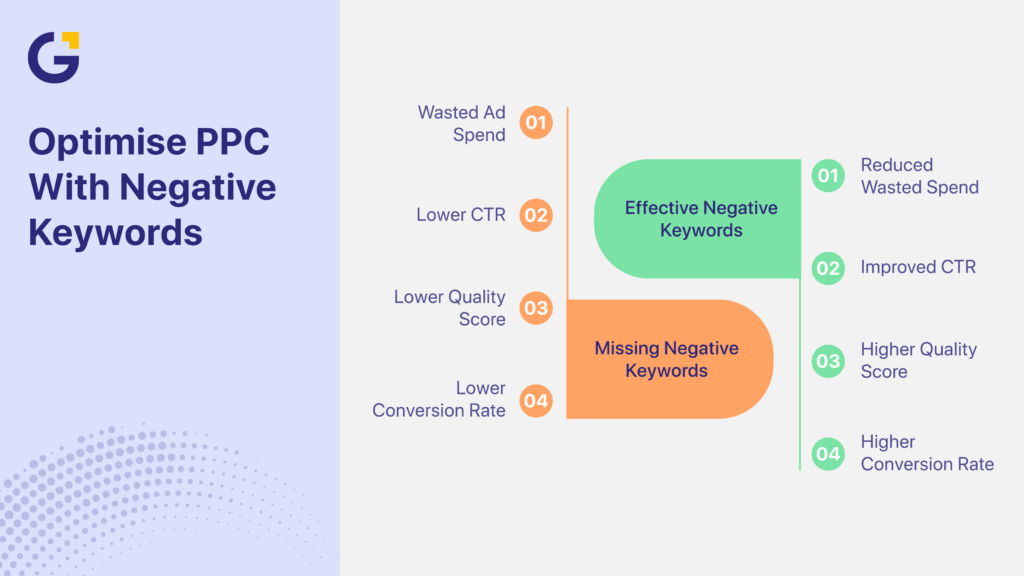
Are Missing Negative Keywords Hurting Your PPC Campaign?
Missing negative keywords in PPC campaigns can waste a large share of ad spend. Negative keywords stop ads from showing for irrelevant searches and help improve CTR, Quality Score, and conversion rate.
Negative keywords are words or phrases that block ads from appearing for certain searches. For example, a business selling premium services may want to exclude searches that include “cheap,” “free,” or “DIY.”
Common negative keywords Australian businesses may want to exclude include:
- free
- cheap
- jobs
- student
- DIY
- templates
- training
- near me if location is not relevant
Knowing how negative keywords improve PPC helps businesses reduce wasted clicks and improve lead quality. Negative keywords can improve click-through rate, lower CPA, reduce wasted ad spend, improve Quality Score, and increase ad relevance.
For example, a marketing agency may accidentally pay for searches like “free SEO tools” or “free website audit template.” These users often want free resources instead of paid services. Adding negative keywords can stop these searches from draining budget.
Is Weak Ad Copy Lowering Your Click-Through Rate?
Weak ad copy often leads to low CTR and poor conversion rates because it fails to match user intent or explain why the business is different. Strong PPC ads focus on benefits, urgency, trust, and a clear CTA.
Weak ad copy often includes:
- Generic headlines
- No value proposition
- No trust signals
- No clear CTA
- No mention of local service areas
Better ad copy often includes:
- Local keywords
- Clear service benefits
- Review ratings
- Years of experience
- Limited-time offers
- Strong CTA phrases like “Book Your Free Audit” or “Get A Quote Today.”
Weak Ad: “Marketing Agency Sydney. Call Today.”
Strong Ad: “Paid Ads Agency in Sydney. Lower Wasted Spend And Improve ROAS. Book Your Free PPC Audit.”
Can A Bad Landing Page Ruin PPC Performance?
A bad landing page can ruin PPC performance even if the ad gets clicks. Landing page mismatch, slow load speed, poor mobile design, and weak calls to action often lead to high bounce rates and low conversion rates.
What Is A Landing Page Mismatch?
Landing page mismatch happens when the ad promise does not match the page users visit. For example, a user clicking on an ad for emergency electrical services should not land on a general homepage.
Which Landing Page Problems Hurt Conversion Rates Most?
The biggest landing page problems include:
- Slow load speed
- Poor mobile experience
- Weak CTA buttons
- Long forms
- No testimonials
- Too much text
- Weak headlines
If landing page mismatch and poor website experience are hurting conversions, readers may also find value in what makes a good website in 2026, which explains how speed, UX, and clear calls to action affect lead generation.
Is Your Conversion Tracking Setup Inaccurate?
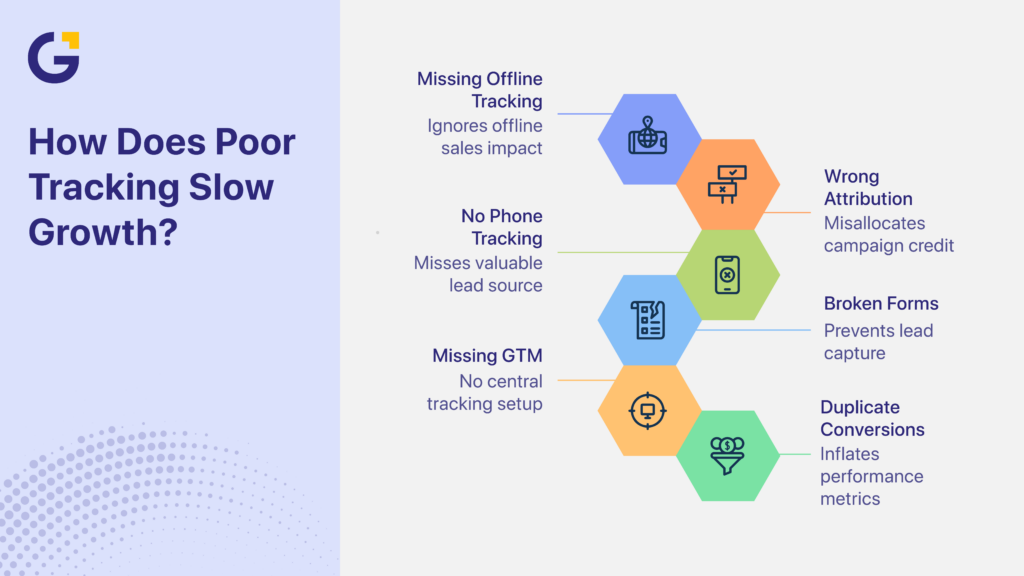
An inaccurate conversion tracking setup makes it difficult to know which campaigns, keywords, or ads are producing leads. Conversion tracking errors often lead to wasted spend because businesses keep funding campaigns that are not performing.
Common causes include:
- Missing Google Tag Manager setup
- Duplicate conversions
- Broken forms
- No phone call tracking
- Wrong attribution model
- Missing offline conversion tracking
Australian businesses should track:
- Form submissions
- Phone calls
- Booked consultations
- Purchases
- Downloads
- Offline sales
Is Your Campaign Structure Making Google Ads Harder To Optimise?
A weak campaign structure can make Google Ads harder to manage, test, and improve. The best campaign structures group keywords, ads, audiences, and landing pages by service, location, or user intent.
Weak structures often include:
- Too many keywords in one ad group
- Too many services in one campaign
- No location segmentation
- No device targeting
- One landing page for every service
Better structure helps improve:
- Quality Score
- Ad relevance
- Budget control
- Reporting clarity
- Testing accuracy
A business trying to advertise SEO, PPC, web design, social media, and email marketing in one campaign often struggles to maintain ad relevance. Breaking services into smaller campaigns makes it easier to improve results.
Are You Treating PPC As A Set-And-Forget Strategy?
PPC campaigns need regular testing and optimisation to improve over time. Businesses that leave campaigns untouched for months often see falling CTR, rising CPC, and lower conversion rates.
Businesses should review:
- Search terms
- Negative keywords
- Ad copy
- Bids
- Audience performance
- Device performance
- Landing pages
A/B testing helps businesses improve headlines, CTAs, landing pages, and targeting. Even small changes can improve conversion rate and lower CPA.
What Is The Fastest Way To Fix An Underperforming PPC Campaign?
The fastest way to fix an underperforming PPC campaign is to audit keywords, negative keywords, audience targeting, landing pages, and conversion tracking. Small fixes in these areas often improve CTR, lower CPA, and reduce wasted ad spend quickly.
Quick PPC Audit Checklist
- Review search terms
- Add negative keywords
- Check conversion tracking
- Improve landing pages
- Test new ad copy
- Adjust audience targeting
- Review bidding strategy
Businesses struggling with weak targeting, poor tracking, and wasted ad spend can benefit from reviewing the same issues covered in paid advertising 101.
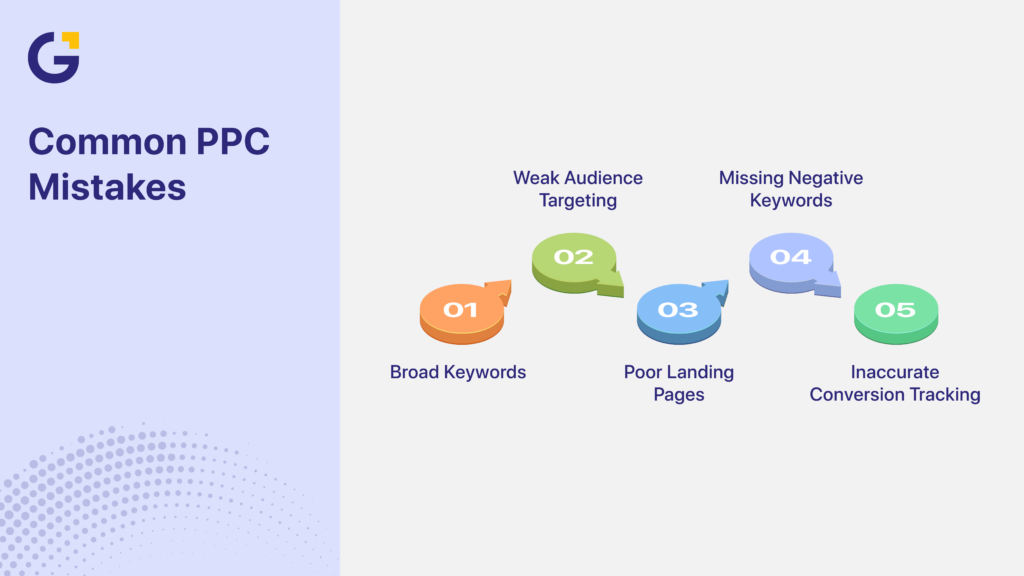
How Can Australian Businesses Avoid Common PPC Mistakes?
Many Australian businesses lose money on PPC because of broad keywords, weak audience targeting, poor landing pages, missing negative keywords, and inaccurate conversion tracking. These common PPC mistakes often lead to lower CTR, higher CPA, weaker ROAS, and poor lead quality. The good news is that most PPC campaign mistakes can be fixed without increasing the budget. Better keyword match types, stronger ad copy, more accurate tracking, and regular optimisation can improve performance and reduce wasted spend over time.
If your business is seeing high CPCs, low conversion rates, or poor lead quality, it may be time to review what is happening inside your campaigns. Genix Digital offers PPC audits and paid ads management services for Australian businesses looking to improve campaign efficiency, lower wasted ad spend, and generate better results from Google Ads.
Book a PPC audit with Genix Digital to identify wasted spend and improve Google Ads performance.
FAQs
What are the most common PPC mistakes?
The most common PPC mistakes include poor audience targeting in Google Ads, broad keywords, missing negative keywords, weak landing pages, and inaccurate conversion tracking.
Why do Google Ads campaigns fail to convert?
Google Ads campaigns often fail because the ads target the wrong audience, use weak keywords, or send users to landing pages that do not match the ad.
How do negative keywords improve PPC performance?
Negative keywords stop ads from showing for irrelevant searches. This reduces wasted ad spend, improves click-through rate, and increases lead quality.
Can a bad landing page ruin a PPC campaign?
Yes. A slow page, weak CTA, poor mobile design, or landing page mismatch can lead to high bounce rates and low conversions.
How does poor conversion tracking affect PPC results?
Poor conversion tracking makes it harder to see which campaigns are driving leads or sales. Businesses may continue spending money on campaigns that are not working.
What is the fastest way to fix an underperforming PPC campaign?
The fastest way is to review keywords, audience targeting, negative keywords, ad copy, landing pages, and conversion tracking.





 18 May 2026
 9 Min Read