
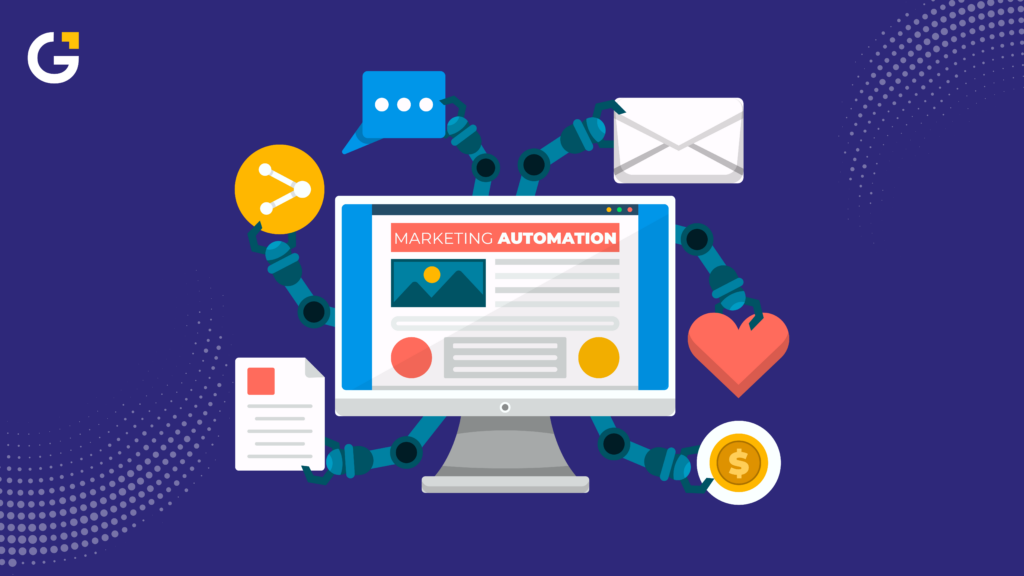
Australian businesses are investing more heavily in automation as customer expectations continue to rise across email, search, social media, ecommerce, and customer support channels. Many SMEs now rely on the best marketing automation software in Australia to improve lead generation, customer retention, reporting, and campaign efficiency without significantly increasing internal workload.
The challenge is not simply choosing software. The real challenge is selecting automation platforms that match your business size, customer journey, reporting needs, and growth goals. Whether you are running local operations or scaling an online store, choosing the right marketing automation software that Australian companies trust makes all the difference.
Some tools work well for e-commerce automation, while others focus more on CRM automation tools, lead nurturing automation, or multichannel campaign management. Businesses that align automation with strong SEO services and content marketing strategies often see better long-term results than companies that adopt software without a clear plan.
What Is Marketing Automation and How Does It Work?
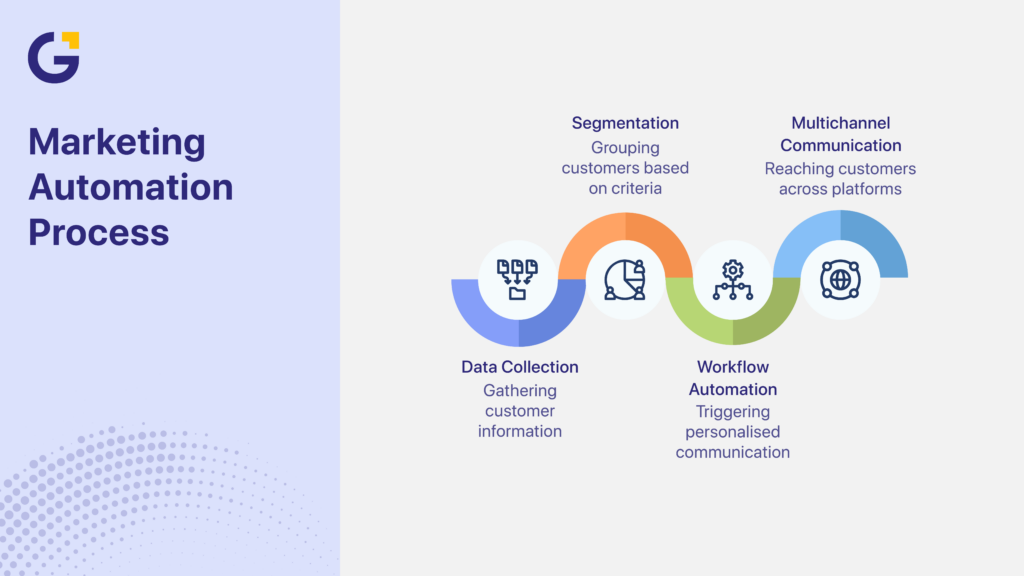
Marketing automation is the process of using software to automate repetitive marketing tasks such as email campaigns, lead nurturing, customer segmentation, CRM updates, and campaign reporting. Modern automation software Australian businesses use also supports customer journey automation, behavioural targeting, lead scoring tools, and multichannel communication workflows.
Many Australian SMEs first associate automation with email campaigns. However, modern automation platforms Australian companies use now integrate across websites, social media, CRM software, ecommerce platforms, paid ads, and analytics tools.
Instead of manually responding to every enquiry or follow-up, businesses can build workflow automation marketing systems that trigger personalised communication based on customer behaviour. For instance, businesses leveraging Website Lead Automation can seamlessly connect web forms directly to their CRM and follow-up sequences.
Common Marketing Tasks Businesses Automate
Automation tools are commonly used to reduce repetitive manual work while improving consistency and response times. Businesses that generate frequent enquiries, online sales, or recurring customer interactions often see the greatest operational benefits.
Common automation workflows include:
- Welcome email sequences for new leads
- Abandoned cart recovery for e-commerce stores
- Automated quote follow-ups for service businesses
- Customer review requests after purchases or appointments
- Lead nurturing automation for long sales cycles
- Social media scheduling and campaign reporting
- Customer segmentation based on behaviour or demographics
These workflows help businesses respond faster and create more consistent customer experiences across multiple channels.
Why Automation Is More Than Just Email Marketing
Modern digital marketing automation tools that Australian businesses use now connect marketing, sales, reporting, and customer management together. CRM automation tools can automatically assign leads to sales staff, update pipeline stages, trigger follow-up reminders, and personalise campaigns based on customer activity.
This broader approach is important because automation alone does not create growth. Mark Ritson has repeatedly argued that businesses often fail when they adopt marketing technology before developing clear positioning and customer strategies. Automation works best when it supports existing business goals rather than replacing strategic thinking.
Benefits of Marketing Automation for Australian Businesses
Marketing automation helps Australian businesses improve efficiency, customer retention, lead management, and reporting while reducing repetitive admin tasks. Businesses using customer journey automation and lifecycle marketing systems can often improve response times, increase conversion rates, and manage larger lead volumes without dramatically increasing staffing costs.
Australian SMEs face growing competition across nearly every industry, especially in e-commerce, trades, healthcare, SaaS, and professional services in hubs like Sydney, Melbourne, and Brisbane. Customers now expect faster responses, personalised communication, and consistent experiences across websites, email, and social media.
How Automation Helps Australian SMEs Compete
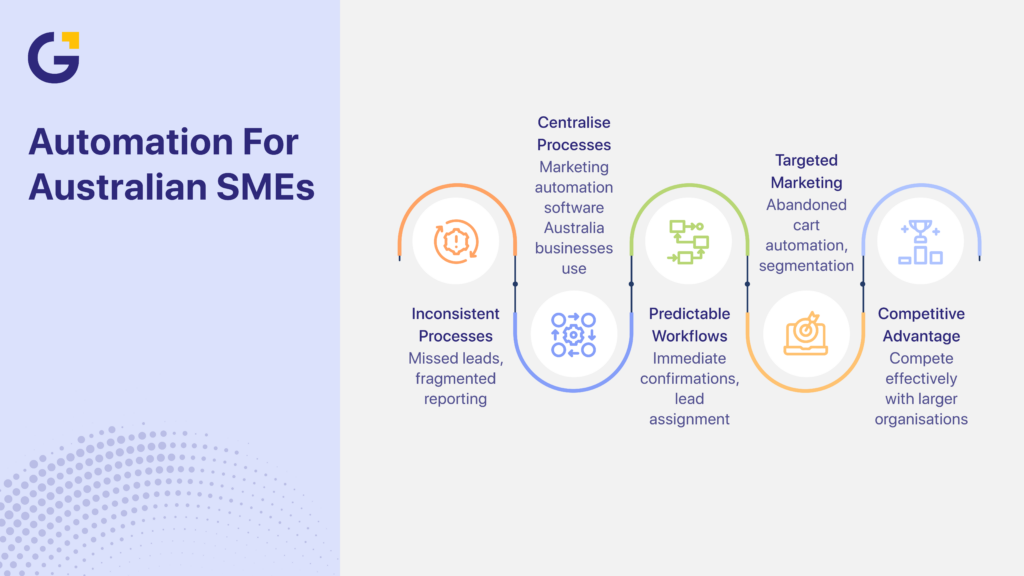
Many small businesses struggle with inconsistent follow-up, missed leads, and fragmented reporting. Marketing automation software Australian businesses use can centralise these processes and create more predictable workflows.
For example, a Sydney-based trades company receiving online quote requests may use automation to send immediate confirmation emails, assign leads to staff, trigger reminders, and request customer reviews after completed jobs. E-commerce businesses often focus more on abandoned cart automation, customer segmentation tools, and personalised product recommendations.
These systems allow smaller businesses to compete more effectively with larger organisations already using advanced automation infrastructure. To ensure your digital foundation is ready, check out our guide on Marketing Dashboards for Small Businesses: The KPIs You Should Track Monthly.
Operational Benefits Beyond Marketing
Automation also improves operational visibility across sales, customer service, and reporting. Businesses using sales pipeline automation and campaign reporting tools can better understand where leads come from, how customers behave, and which campaigns generate revenue.
Some common operational benefits include:
- faster lead response times
- reduced manual admin work
- improved customer retention
- clearer reporting dashboards
- stronger sales and marketing alignment
- improved campaign attribution
Healthcare clinics, accountants, SaaS providers, and local service businesses often benefit from automating repetitive communication while maintaining personalised customer interactions.
Businesses combining automation with strong SEO services and content marketing strategies often create more sustainable lead generation systems than businesses relying only on paid advertising or manual outreach.
Best Marketing Automation Tools in Australia for 2026
The best marketing automation tools in Australian businesses depend heavily on company size, sales complexity, integration needs, reporting requirements, and marketing maturity. Some platforms are designed for simple email marketing automation that Australian businesses need for basic campaigns, while others support advanced lead nurturing automation, AI-driven customer segmentation, and multichannel orchestration.
Choosing the wrong platform can create unnecessary complexity, poor adoption, and wasted marketing spend. Businesses should evaluate both current needs and future scalability before selecting automation software.
Best Email Marketing Automation Tools
Email automation remains one of the most widely used forms of marketing automation because it directly supports lead nurturing, customer retention, and personalised communication.
| Tool | Best For | Starting Cost | Main Strength |
| HubSpot | Growing SMEs | Higher-tier pricing | CRM + inbound marketing |
| ActiveCampaign | E-commerce & advanced workflows | Mid-range | Behavioural automation |
| Mailchimp | Small businesses | Lower-tier | Ease of use |
| Klaviyo | E-commerce brands | Usage-based | Customer segmentation |
| Brevo | Budget-conscious SMEs | Lower-tier | Email + SMS automation |
HubSpot remains one of the strongest options for businesses needing integrated CRM automation tools, reporting, and inbound marketing workflows. It performs particularly well for B2B lead nurturing automation and service-based businesses.
ActiveCampaign is popular among e-commerce brands because of its strong behavioural automation and customer segmentation capabilities. Businesses using Shopify or WooCommerce often use ActiveCampaign for personalised workflows and lifecycle marketing campaigns. If you operate an online store, pairing your setup with insights from Shopify vs WooCommerce for Australian businesses: which is better? can help you streamline integrations.
Best CRM and Lead Nurturing Automation Tools
CRM automation tools help businesses manage customer relationships, sales pipelines, and follow-up processes while improving visibility across marketing and sales teams.
| Tool | Best For | CRM Strength | Complexity Level |
| HubSpot CRM | SMEs & inbound marketing | Strong automation | Moderate |
| Salesforce | Enterprise organisations | Advanced scalability | High |
| Zoho CRM | Cost-conscious businesses | Flexible integrations | Moderate |
| Pipedrive | Sales-focused teams | Pipeline management | Lower |
| Monday CRM | Workflow-heavy teams | Visual automation | Moderate |
Salesforce remains one of the most powerful CRM platforms available, but many Australian SMEs find it overly complex or expensive unless they have dedicated internal teams or external support. Pipedrive works well for businesses focused heavily on sales pipeline automation and lead tracking without requiring enterprise-level configuration.
Best Marketing Automation Tools by Business Type
Different industries and business models require different automation capabilities. One of the biggest mistakes businesses make is selecting software based purely on popularity rather than operational fit.
| Business Type | Recommended Tool | Why |
| Ecommerce | Klaviyo | Advanced e-commerce automation |
| B2B Services | HubSpot | CRM + lead nurturing |
| Healthcare Clinics | ActiveCampaign | Appointment & retention workflows |
| Trades Businesses | Pipedrive | Quote follow-ups & lead tracking |
| SaaS Companies | HubSpot or Salesforce | Pipeline automation |
| Small Local Businesses | Mailchimp | Simpler workflows |
Businesses unsure which automation tools in Australian companies should prioritise often benefit from evaluating their existing workflows first. For further guidance on optimising your overall conversion architecture, explore our insights on Conversion Rate Optimisation (CRO) Strategies for Australian Websites.
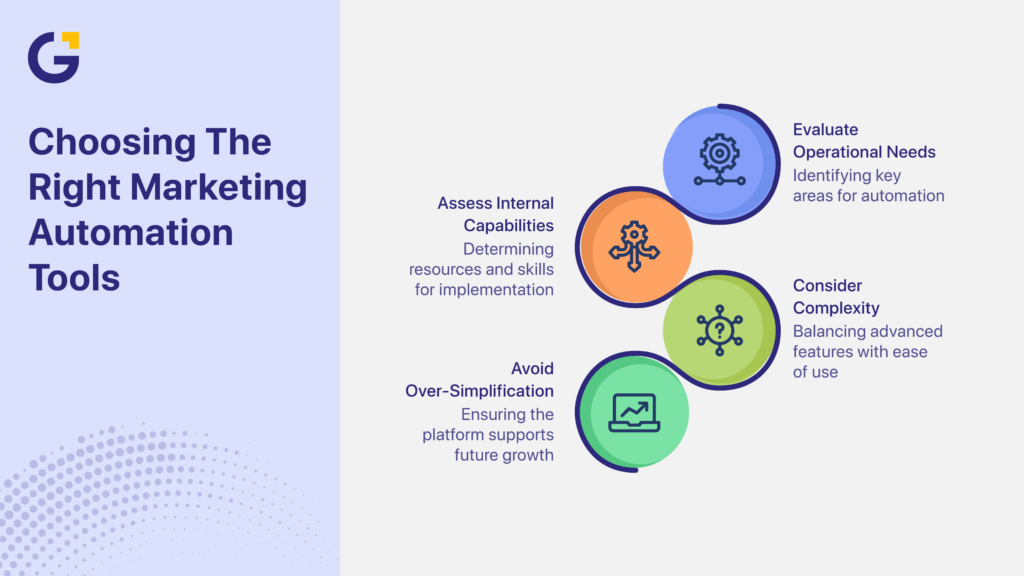
How to Choose the Right Marketing Automation Tools in Australia
The best way to choose automation software that Australian businesses can actually use successfully is to evaluate operational needs before evaluating features. Businesses should first understand their customer journey, sales process, lead volume, reporting needs, and internal capabilities before selecting automation platforms.
Signs Your Business Is Ready for Automation
Businesses often reach a point where manual processes start to slow growth. This usually happens when lead volume increases or customer communication becomes inconsistent. Common signs include:
- Missed follow-ups and delayed customer responses
- Inconsistent email campaigns
- Growing customer databases that are hard to manage manually
- Repetitive admin work
- Poor lead visibility and disconnected reporting systems
Common Mistakes Australian Businesses Make
One of the most common mistakes is automating broken processes. Businesses sometimes add automation before fixing lead handling, customer segmentation, or reporting issues. Other mistakes include choosing overly complex software, ignoring staff training requirements, and failing to integrate CRM systems properly.
To ensure your tracking and multi-channel attribution are set up correctly from day one, make sure to implement a robust framework as outlined in our UTM Tracking Guide: How to Measure Google and Meta Ads Correctly.
Marketing Automation Trends in Australian Businesses to Watch in 2026
AI-assisted workflows, predictive analytics, customer journey orchestration, and first-party data strategies increasingly shape marketing automation trends in 2026. Businesses are moving away from isolated email campaigns and toward connected automation systems that personalise communication across multiple channels.
AI-powered automation platforms can now analyse customer behaviour, predict engagement patterns, recommend workflows, and improve campaign optimisation with less manual input. However, businesses still need clear customer strategies and reporting frameworks to use these systems effectively.
AI and Automation Will Work Together
AI is changing how automation workflows are built and managed. Many automation platforms now offer:
- Predictive lead scoring
- AI-generated email recommendations
- Automated reporting summaries
- Behavioural segmentation and workflow suggestions
These features can improve efficiency and reduce manual workload, especially for growing SMEs with smaller internal teams. However, businesses still need human oversight to maintain brand consistency, customer trust, and strategic direction.
Why Human Strategy Still Matters
Businesses that rely entirely on automation often create generic customer experiences. Successful marketing still depends on positioning, messaging, customer insights, and strategic planning.
This aligns with the broader strategy-first approach promoted by Mark Ritson, who frequently warns businesses against adopting marketing technology without a strong foundational strategy. Automation should support customer relationships and business goals rather than replace thoughtful marketing decision-making.
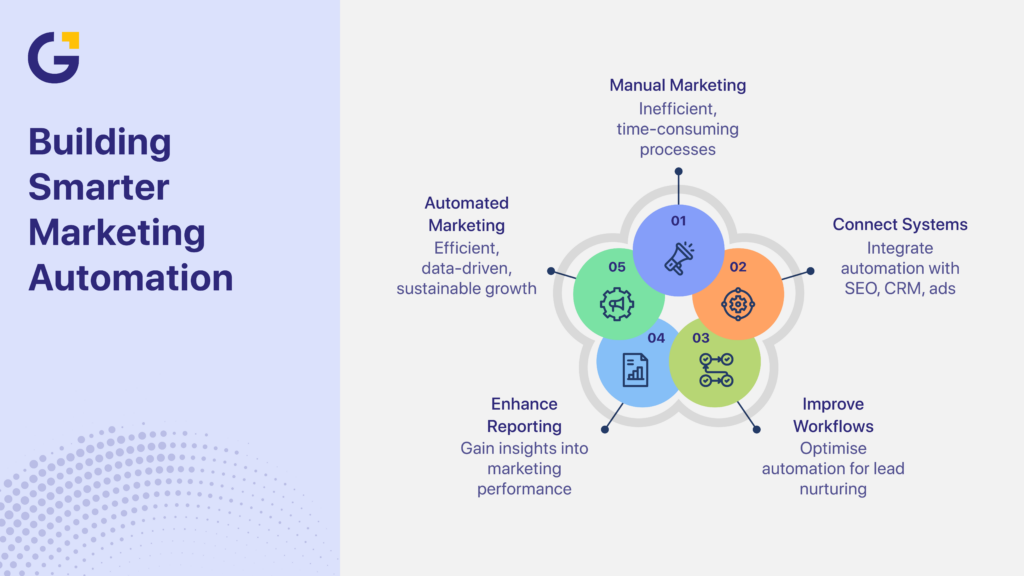
How Genix Digital Helps Australian Businesses Build Smarter Marketing Automation Systems
Marketing automation is no longer just about sending emails automatically. Australian businesses now use automation to improve lead generation, customer retention, reporting, and customer experience across multiple channels. Businesses that connect automation with SEO, content marketing, CRM systems, and paid ads often create more sustainable long-term growth.
At Genix Digital, we help Australian SMEs build practical automation systems that support real business goals and customer journeys. Our team can help improve automation workflows, reporting, lead nurturing, and digital marketing performance across your existing channels. Contact us to book a free consultation and review your current marketing systems and automation opportunities.
FAQs
1-What are the best marketing automation tools for Australian businesses?
The best marketing automation tools for Australian businesses depend on company size, customer journey complexity, and operational goals. HubSpot, ActiveCampaign, Mailchimp, Salesforce, and Klaviyo remain some of the most widely used platforms because they support different levels of automation, CRM integration, and reporting. Smaller businesses often prioritise ease of use, while larger businesses usually require stronger lead nurturing automation and customer segmentation features.
2-What is the difference between CRM and marketing automation?
CRM software focuses primarily on managing customer relationships, sales pipelines, and contact records. Marketing automation tools focus more on automating campaigns, workflows, lead nurturing, and customer communication. Many modern platforms now combine both CRM and automation features to create more connected customer journey management systems.
3-Which marketing automation platform is best for small businesses?
Mailchimp, ActiveCampaign, and HubSpot are commonly recommended for small businesses because they balance automation functionality with manageable complexity. The best option depends on lead volume, reporting requirements, e-commerce integration needs, and future growth plans.
4-How much do marketing automation tools cost in Australia?
Pricing varies significantly depending on contact volume, automation complexity, CRM functionality, and reporting features. Smaller businesses may spend under a few hundred dollars per month, while larger businesses using enterprise-level CRM automation tools can spend significantly more.
5-Can marketing automation improve SEO and lead generation?
Marketing automation can support SEO and lead generation by improving customer nurturing, campaign follow-up, and reporting visibility. Businesses often use automation to distribute content, capture leads, track engagement, and personalise customer communication after website visits.
6-What is the best marketing automation tool for e-commerce performance marketing and customer growth in Australia?
For e-commerce performance marketing and customer retention in Australia, platforms like Klaviyo and ActiveCampaign stand out due to their advanced behavioural triggers, deep integrations with Shopify and WooCommerce, and granular customer segmentation capabilities.





 3 Jun 2026
 11 Min Read