


Businesses expanding into multiple locations often struggle to understand why some areas generate leads while others remain invisible in search. Without a clear view of how each location performs, it becomes difficult to identify gaps in visibility, fix weak pages, or improve local rankings. A structured review of website performance, local signals, and campaign data can quickly highlight where opportunities exist and what needs to change to drive better results.
If your business operates across multiple cities or suburbs, gaining clarity on your current SEO setup is the first step toward consistent growth. Reviewing how each location performs can reveal missed opportunities and help prioritise the actions that will improve visibility and conversions across all areas.
What is Multi-Location SEO in Australia
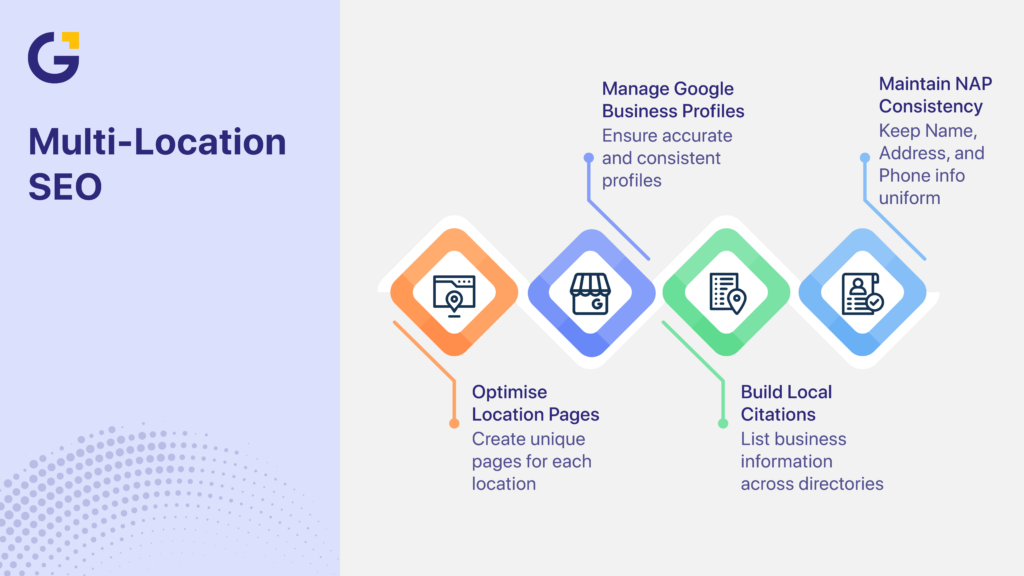
Multi-location SEO in Australia is the process of optimising a business’s online presence so each location ranks in local search results. It focuses on location pages, Google Business Profiles, and local signals to help businesses attract customers in different cities or regions.
At its core, this strategy ensures that each business location is treated as its own search entity. Instead of relying on one page to rank nationally, businesses create a structure that allows Google to understand where they operate and who they serve. This includes location-specific landing pages, local citations, and consistent NAP (Name, Address, Phone) information across directories.
A key difference between local SEO for multiple locations and single-location SEO is scalability. While local SEO focuses on one area, multi-location SEO requires a repeatable framework that works across multiple cities without creating confusion or overlap in search intent.
| Factor | Local SEO | Multi Location SEO |
| Scope | One location | Multiple locations |
| Structure | Single focus | Scalable architecture |
| Complexity | Lower | Higher |
| Strategy | Local relevance | Multi-region targeting |
Businesses that understand this difference are better positioned to build a sustainable multi location seo strategy in Australia that supports growth across different markets.
Why Multi-Location SEO Matters in Australia
Multi-location SEO matters in Australia because customers consistently search for services based on proximity. Even within the same city, users often include suburbs or specific areas in their queries. This means businesses that optimise for multiple locations have a stronger chance of appearing in more relevant searches.
Search behaviour across Australia reflects strong local intent. According to Think with Google, around 91% of Australians use Google Search before visiting a store, which highlights how critical online visibility is for local businesses. This means most customer journeys begin with a search, even for offline purchases, and businesses that do not appear in local results risk missing a large portion of high-intent traffic.
Another key factor is long-term investment trends. Based on the data cited on Ken Search, local search is becoming a major focus for Australian businesses, with projections showing billions being spent on SEO services driven by location-based demand. As more users rely on search to find nearby services, scalable strategies that support multiple locations are becoming essential for growth.
In cities like Sydney and Melbourne, where competition is high, businesses that invest in structured multi-location SEO can expand their reach beyond a single area and capture demand across multiple suburbs and regions. This directly impacts visibility, enquiries, and overall business performance.
For Australian SMEs that want to improve local rankings across different locations, a structured multi-location website seo approach creates more opportunities to attract customers at the exact moment they are searching for a service.
Multi-Location SEO Strategies in Australia
The most effective multi-location SEO strategies in Australia include creating unique location pages, maintaining NAP consistency, optimising Google Business Profiles, building local backlinks, and tracking performance by location to improve rankings and conversions over time.
A strong strategy focuses on building relevance at the local level rather than scaling generic content. Businesses need to show Google that each location serves a distinct audience, even if the services are similar. This is where many businesses struggle, especially when they expand into new areas without adjusting their SEO structure.
Location Pages SEO
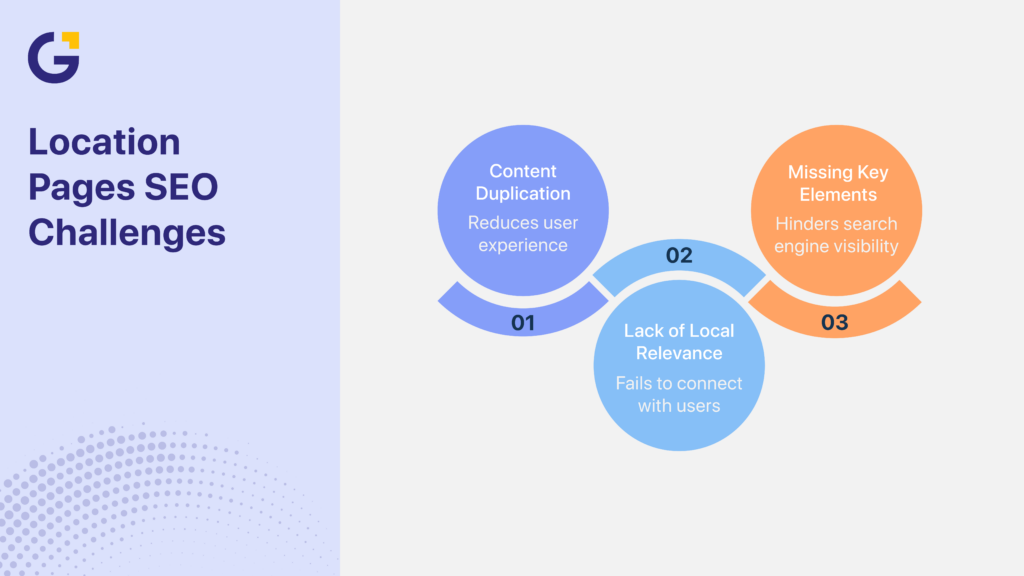
Location pages are one of the most important components of location pages seo. However, simply creating multiple pages with different suburb names is not enough. Each page must provide unique value and demonstrate local relevance.
A high-performing location page should include:
- Unique service descriptions tailored to the area
- References to local suburbs, landmarks, or communities
- Customer reviews from that specific location
- Clear contact details and directions
- Location-specific images
- Internal links to relevant services
- FAQs tailored to local search intent
Many businesses fall into the trap of duplicating content across pages. Instead, focus on building pages that reflect real local presence. This improves both user experience and search performance.
NAP Consistency Australia
NAP consistency refers to keeping your business name, address, and phone number consistent across all platforms. This is a key ranking factor in nap consistency in Australia, especially when managing multiple locations.
Inconsistent listings can confuse search engines and reduce trust signals. Businesses should ensure that all directories, including Google Business Profiles and local listings, match exactly.
To maintain consistency:
- Keep website contact details aligned with listings
- Ensure Google Business Profile information is accurate
- Update Australian directories like TrueLocal and Yellow Pages
- Remove duplicate or outdated listings
Maintaining accurate listings supports stronger local citations in Australia and helps improve visibility in local search results.
Google Business Profile Optimisation
Each location should have its own Google Business Profile. This allows businesses to appear in Google Maps and local pack results, which are often the most visible positions in search.
Optimisation includes:
- Selecting the right categories
- Adding accurate service information
- Uploading images regularly
- Collecting and responding to reviews
- Posting updates
A well-optimised profile strengthens google maps seo in Australia and increases visibility for location-based searches.
Local Keyword Targeting & Suburb Strategy
Local keyword targeting is essential for geo-targeting seo. Instead of targeting broad terms, businesses should focus on service + location combinations.
Examples include:
- “electrician Sydney CBD”
- “accountant Parramatta”
- “physiotherapy Brisbane Northside”
This approach improves relevance and helps capture high-intent searches. It also supports better performance for local landing pages in Australia and improves conversion potential.
Common SEO Mistakes in Australia
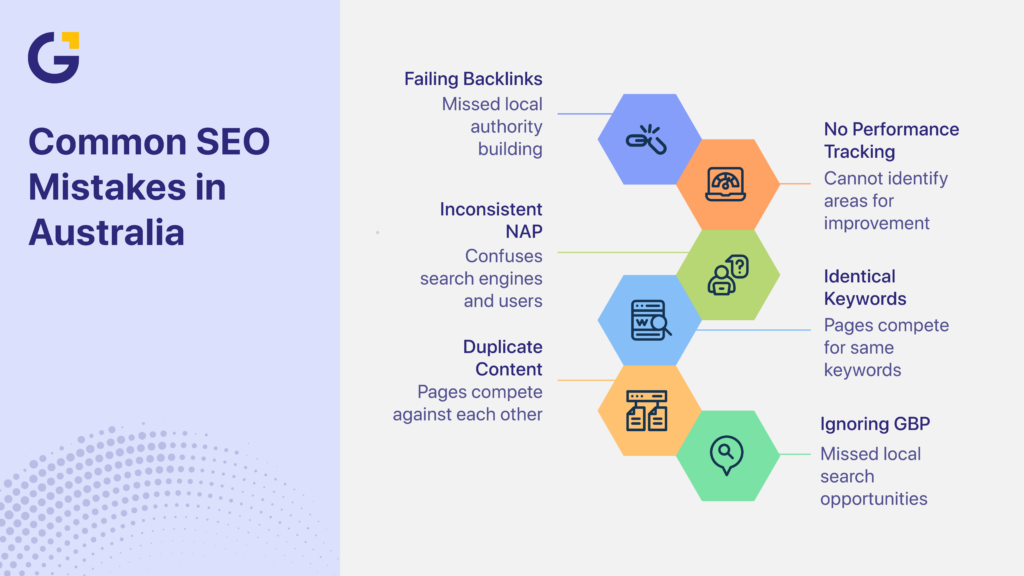
Common multi-location SEO mistakes in Australia include using duplicate content across location pages, failing to optimise Google Business Profiles, inconsistent NAP details, and not tracking performance by location. These issues reduce visibility and limit the ability to rank in local search results.
Many businesses unknowingly weaken their SEO performance by applying the same approach across all locations. This often leads to overlapping pages that compete against each other instead of supporting overall visibility.
The most common mistakes include:
- Copying and pasting location pages
- Ignoring Google Business Profile optimisation
- Inconsistent business details across directories
- Targeting identical keywords across multiple pages
- Failing to build local backlinks
- Not tracking location-specific performance
A key concept to understand is “duplicate intent.” Even if the content is not identical, pages that target the same keyword without clear differentiation can compete against each other. This reduces the chances of ranking effectively.
Businesses that follow a structured local seo checklist in Australia can avoid these issues and build a more effective multi-location strategy.
Tools for Multi-Location SEO Australia
The best tools for multi-location SEO in Australia include platforms for keyword research, local ranking tracking, citation management, and performance reporting. These tools help businesses manage multiple locations efficiently and improve visibility in local search results.
Managing multiple locations requires more than manual tracking. Businesses need a system that connects rankings, traffic, and conversions to specific locations. This allows for better decision-making and clearer ROI tracking.
| Tool Type | Purpose |
| Google Search Console | Track search performance |
| Google Business Profile | Manage local visibility |
| SEO tools | Keyword and ranking insights |
| Citation tools | Manage listings |
| Analytics tools | Track conversions and leads |
When used together, these tools provide a complete view of performance across locations. However, many businesses struggle to connect this data into a clear strategy.
Aligning these tools into a structured reporting system makes it easier to track how each location performs and identify where improvements can drive better results over time.
How to Structure Multi-Location SEO for Different Business Types
Multi-location SEO strategies vary depending on whether a business has physical branches, operates as a service-area business, or runs a franchise. Each model requires a different approach to location pages, Google Business Profiles, and targeting.
Not all businesses operate in the same way, and applying the wrong structure can limit results. Understanding your business model helps determine how to approach SEO across multiple locations.
| Business Type | Strategy |
| Physical locations | Individual pages and Google Business Profiles per location |
| Service-area businesses | Suburb-focused pages without physical addresses |
| Franchises | Standardised structure with local customisation |
Service-area businesses should focus on broader targeting across suburbs, while physical businesses benefit from strong location signals tied to their address. Franchises require consistency while still allowing for local variation.
This structured approach improves franchise seo in Australia, retail seo in Australia, and overall visibility across different regions.
How to Track Multi-Location SEO Performance
To track multi-location SEO performance, businesses should monitor rankings, traffic, calls, leads, and conversions for each location. This helps identify which locations perform well and where optimisation is needed to improve results.
Tracking performance across multiple locations can be challenging without a clear framework. Many businesses focus only on rankings, but this does not provide a complete picture of success.
Key metrics to track include:
- Search rankings by suburb or city
- Traffic to each location page
- Calls and enquiries
- Google Business Profile insights
- Conversion rates per location
A structured reporting system allows businesses to connect SEO performance to real outcomes, such as leads and revenue. This ensures that efforts are focused on areas that deliver the highest return.
How Genix Digital Helps Australian Businesses Scale Multi-Location SEO
Multi-location SEO in Australia requires more than creating multiple pages. It involves building a structured system that aligns location pages, Google Business Profiles, local citations, and performance tracking. Businesses that approach this strategically can improve visibility across different regions, attract more qualified leads, and scale their online presence effectively.
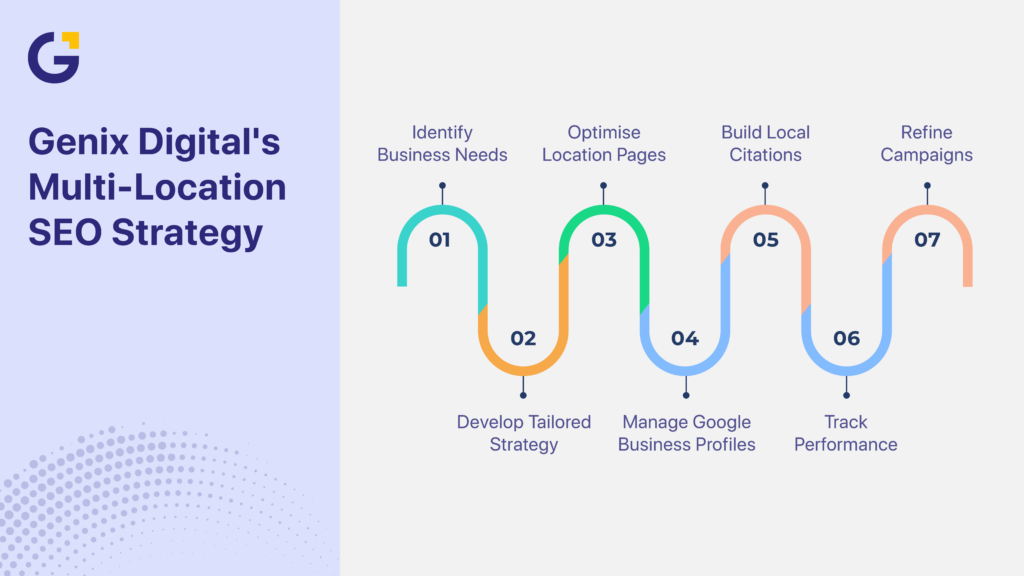
At Genix Digital, businesses receive tailored multi-location SEO strategies designed to improve visibility, generate leads, and support long-term growth. From location page optimisation to performance tracking and campaign refinement, each strategy is built around measurable outcomes. Contact us to book a consultation and review your current SEO strategy.
FAQs
What is multi-location SEO in Australia?
Multi-location SEO in Australia helps businesses rank across different cities or regions by optimising location pages and local signals. It improves visibility in search results and helps attract local customers. This strategy is especially useful for businesses operating in multiple areas. It supports consistent lead generation across locations.
How is multi-location SEO different from local SEO?
Local SEO focuses on one location, while multi-location SEO targets multiple areas. Multi-location strategies require scalable systems and unique location pages. This makes them more complex but also more effective for growth. Businesses with multiple locations benefit most from this approach.
Can I use the same content for multiple location pages?
Using the same content across location pages reduces relevance and may limit rankings. Each page should include unique details about the location and services. Search engines prioritise content that matches local intent. Creating tailored pages improves both visibility and user experience.
Do I need a Google Business Profile for every location?
Yes, each physical location should have its own profile to appear in local search results. This helps customers find accurate details and improves visibility in Google Maps. Businesses should maintain consistency across all profiles. This strengthens trust and improves rankings.
How do I track SEO performance across multiple locations?
Tracking performance involves monitoring rankings, traffic, and conversions for each location. Tools like analytics platforms and search consoles provide insights into performance. This helps identify areas for improvement. A structured system ensures better decision-making.
Is multi-location SEO useful for service-area businesses?
Yes, service-area businesses can still benefit from multi-location SEO. By targeting suburbs and regions, they can attract local customers without physical locations. This improves reach and visibility. Proper optimisation ensures relevance in search results.





 5 Aug 2026
 8 Min Read