
Most people who visit a website do not buy, book, or contact the business on their first visit. They might get distracted, compare other options, or simply need more time before making a decision. This is a major problem for businesses that spend money on SEO, Google Ads, Meta Ads, social media, or email marketing.
Retargeting helps solve that problem. It gives businesses a second chance to reconnect with previous visitors and bring them back when they are ready to act. With advertising costs rising across platforms like Google and Meta, many businesses are now focusing more on retargeting because it helps reduce wasted ad spend and improve conversions.
A recent Statista report found that global digital advertising spending is expected to pass 950 billion U.S. dollars in 2026. Digital advertising now makes up around 70% of total global ad spend, which means competition across Google, Meta, YouTube, and other channels is becoming more expensive every year.
In this guide, you will learn what retargeting is, how it works, which platforms to use, and how businesses can use it to improve conversions and reduce wasted ad spend.
What Is Retargeting In Digital Marketing?
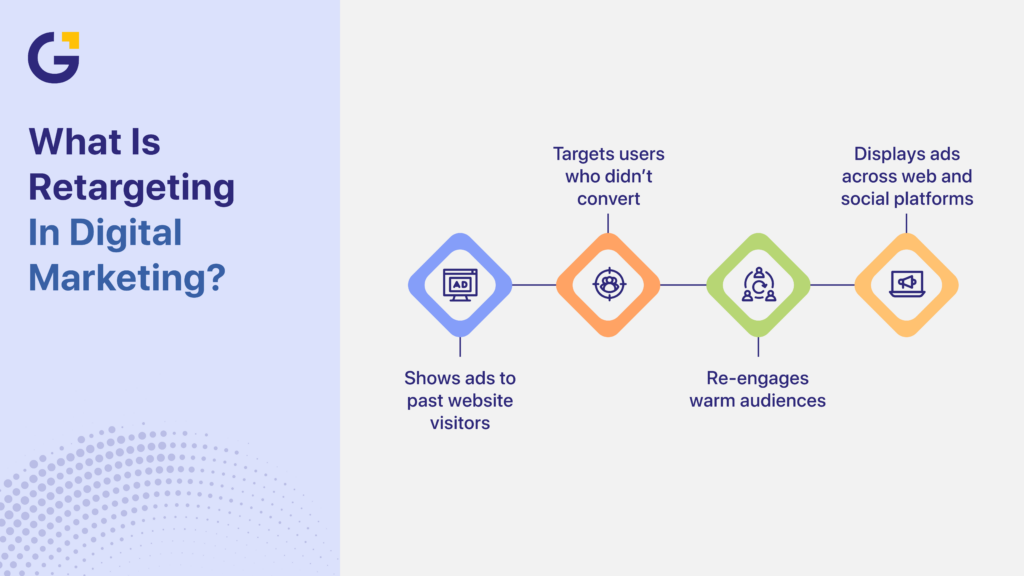
Retargeting in digital marketing is a way to show ads to people who have already visited your website, viewed a product, or interacted with your business online. It helps businesses reconnect with warm audiences who did not convert the first time.
Retargeting is used because most website visitors leave without taking action. A visitor might browse products, read a blog article, look at a pricing page, or even add something to a cart before leaving the site. Retargeting allows businesses to show ads to those same people later while they browse other websites, watch YouTube videos, scroll social media, or search online.
What Retargeting Ads Mean in Practice
The meaning can vary depending on the business and the platform. For an e-commerce store, retargeting might show the exact product someone viewed. Service business on the other hand, might remind visitors to book a consultation, request a quote, or finish a lead form.
For example, someone browsing an online shoe store may view a pair of running shoes and leave without buying. Later that day, they might see the same shoes in a Facebook ad or a Google Display ad while reading the news.
The same thing happens for service businesses. Someone might visit a Sydney accounting firm’s tax planning page but leave without filling out the enquiry form. Later that week, they could see a Google Display ad offering a free tax consultation or a Facebook ad reminding them to book before the end of the financial year.
Why Businesses Use Retargeting In Digital Marketing
Businesses use retargeting in digital marketing because it helps them reconnect with visitors who have already shown interest. These people are often more likely to convert than someone seeing the brand for the first time.
Businesses often use retargeting to:
- Recover lost website’s visitors
- Improve brand recall
- Improve conversion recovery
- Increase return on ad spend
- Keep the business visible while buyers compare options
- Recover abandoned carts and incomplete forms
- Build stronger customer re-engagement over time
Retargeting is often one of the most cost-effective forms of advertising because it targets a warm audience. These visitors already know the brand, which means they usually need less convincing than completely new prospects.
Google also states that people often need multiple touchpoints before they decide to convert. Retargeting helps businesses stay visible during that process. This is why brands like Google, Meta, LinkedIn, Amazon, and Nike all use retargeting as part of their advertising strategy.
Why Do Ads Follow Me Online?
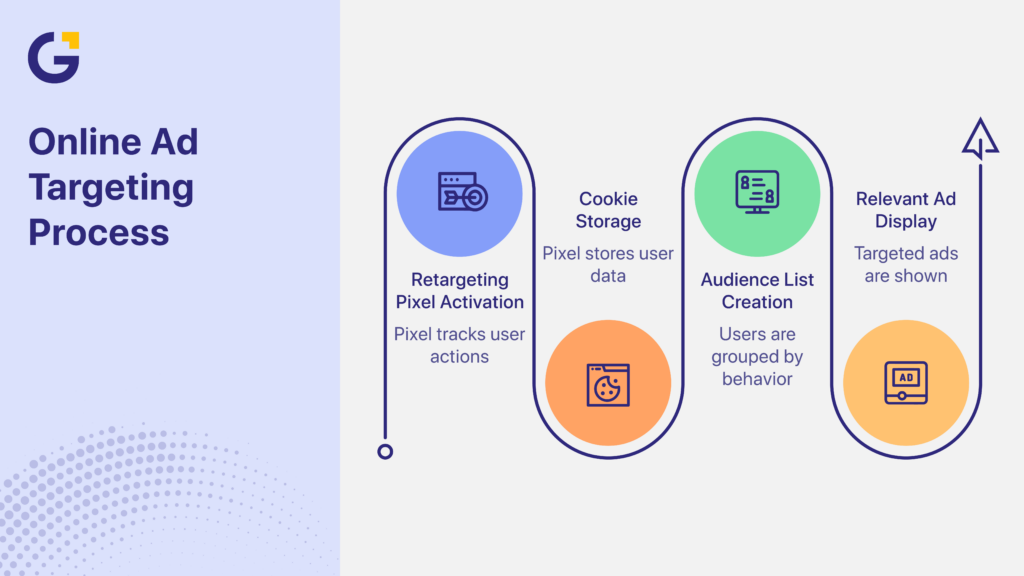
Ads often follow people online because businesses use behavioural targeting and retargeting pixels to track previous website actions. This helps them show more relevant ads to people who have already visited a website.
A retargeting pixel uses cookies to remember that someone visited a page, looked at a product, or started a form. It does not track sensitive personal details. Instead, it tracks website actions and groups people into remarketing audience lists based on their behaviour.
How Does Retargeting Work In Digital Marketing?
How retargeting works in digital marketing depends on tracking website behaviour. A small piece of code called a retargeting pixel records actions like page visits, product views, and cart abandonment so businesses can show relevant ads later.
What Is A Retargeting Pixel?
A retargeting pixel is a short piece of code added to a website. When someone visits the site, the pixel tracks what they do. This can include viewing a product, spending time on a pricing page, reading a blog article, watching a video, or starting a checkout process.
Popular advertising platforms all have their own tracking tools. Google uses tags for remarketing audiences, Meta uses the Meta Pixel, and LinkedIn uses the Insight Tag. These tools help businesses build audience lists based on user behaviour.
What Actions Can Retargeting Track?
Retargeting pixels can track many different website actions. Businesses use this information to create more targeted ads and remarketing audience lists.
Some common actions that retargeting can track include:
- Product page visits
- Pricing page visits
- Cart abandonment
- Form abandonment
- Blog visits
- Video views
- Time spent on site
- Guide downloads
- Quote page visits
What Is The Difference Between Retargeting And Remarketing?
The retargeting vs remarketing difference usually comes down to the channel used. Retargeting often uses paid ads to reconnect with previous visitors, while remarketing usually uses email campaigns to re-engage existing contacts or customers.
Many businesses use the two terms interchangeably, but there is a small difference. Retargeting usually focuses on showing ads to people after they leave a website. Remarketing usually focuses on reaching people again through email, SMS, or CRM-based campaigns.
What Is Remarketing In Digital Marketing?
Remarketing in digital marketing is a way to reconnect with people who already know your business through channels like email, SMS, and customer databases. It is often used after someone buys a product, signs up for a list, downloads a guide, or leaves items in a cart.
For example, an e-commerce store might email a shopper about the shoes they left in their cart. A law firm could email someone who downloaded a family law guide but never booked a consultation.
Retargeting vs Remarketing Difference Explained
Retargeting and remarketing both focus on customer re-engagement, but they use different channels.
| Retargeting | Remarketing |
| Uses display ads, social ads, and Google Ads | Uses email, SMS, and CRM campaigns |
| Targets website visitors through pixels and cookies | Targets people already in a contact list |
| Common on Google Display Network, Facebook, Instagram, and YouTube | Common in email marketing platforms and customer databases |
| Often used for product views, pricing page visits, and form abandonment | Often used for abandoned cart emails, newsletters, and repeat customer offers |
Which Platforms Are Best For Retargeting Campaigns?
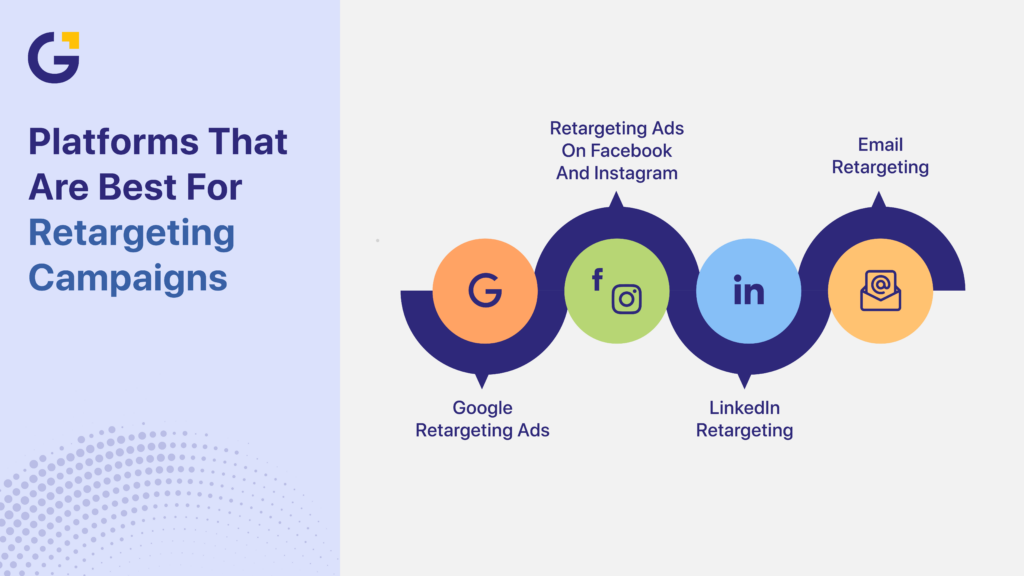
The best retargeting platforms depend on your audience and business type. Google Ads, Meta Ads, LinkedIn Ads, and email marketing are some of the most common options because they help businesses reconnect with previous website visitors in different ways.
Most businesses do not rely on just one platform. A strong retargeting strategy often uses several channels together so the business stays visible across search, social media, email, and other websites.
Google Retargeting Ads
Google retargeting ads show follow-up ads to previous website visitors across Google Search, YouTube, Gmail, and the Google Display Network.
Businesses can build remarketing lists based on actions like product page views, pricing page visits, and abandoned carts. E-commerce brands often retarget product viewers, while service businesses often retarget quote page visitors and consultation requests.
Retargeting Ads On Facebook And Instagram
Facebook and Instagram retargeting uses Meta Ads to reconnect with previous website visitors and social media users.
Businesses can build Facebook Custom Audiences from website visits, video views, form activity, and social engagement. Carousel ads work well because they can show the exact products or services someone viewed earlier. Likes, comments, and reviews can also help improve trust.
LinkedIn Retargeting?
LinkedIn retargeting is best for B2B businesses and companies with longer sales cycles. Businesses often use LinkedIn retargeting after someone downloads a whitepaper, visits a pricing page, attends a webinar, or reads a case study. These campaigns help keep the business visible while buyers continue researching.
Email Retargeting
Email retargeting works by sending follow-up emails after someone takes or does not take a specific action. Common examples include abandoned cart emails, lead nurturing emails after a download or webinar, and customer re-engagement campaigns for past buyers or inactive subscribers.
What Types Of Retargeting Campaigns Can Businesses Use?
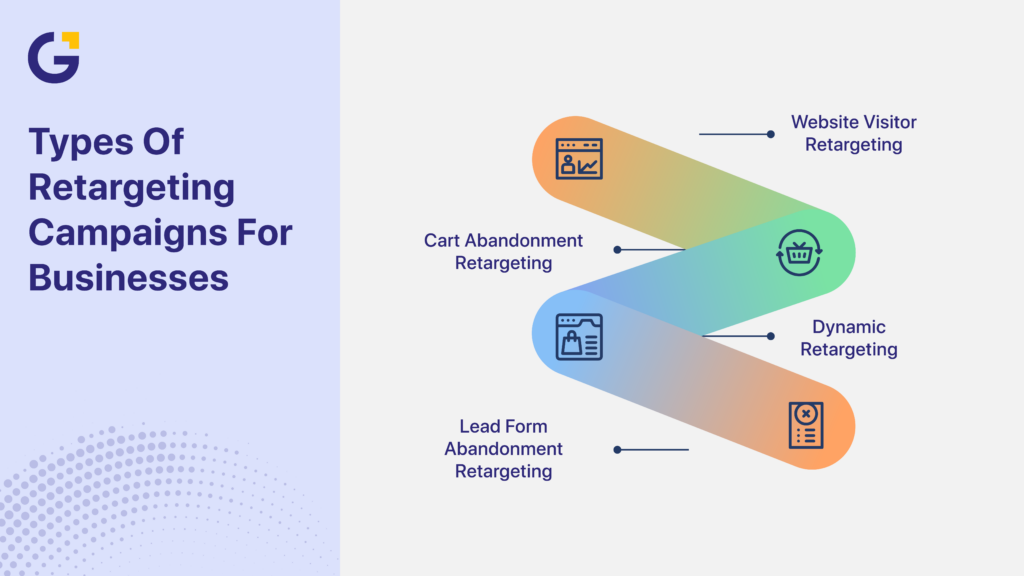
Businesses can use different types of retargeting campaigns based on user behaviour. Common examples include website visitor retargeting, cart abandonment campaigns, dynamic product ads, lead form retargeting, and customer re-engagement campaigns.
Different campaigns work for different business goals. Some focus on bringing visitors back quickly, while others are designed to keep the business visible during longer buying cycles.
Website Visitor Retargeting
Website visitor retargeting targets people who visited the website but did not take action. It works well for brand awareness and customer re-engagement. Businesses often show reminder ads to recent website visitors to promote products, services, or strong offers.
Cart Abandonment Retargeting
Cart abandonment retargeting focuses on people who added products to their cart but did not complete checkout. Baymard Institute reports that the average online cart abandonment rate is close to 70%. Businesses often use urgency, discounts, free shipping, or low stock reminders to bring these shoppers back.
Dynamic Retargeting
Dynamic retargeting shows people the exact products or services they viewed earlier. These ads update automatically based on website behaviour. This type of retargeting works especially well for e-commerce brands with large product catalogues.
Lead Form Abandonment Retargeting
Lead form abandonment retargeting targets people who started filling out a form but did not finish it. Businesses often use follow-up ads, consultation offers, downloadable guides, or reminders to encourage people to come back and complete the form.
How Does Audience Segmentation Improve Retargeting Results?
Audience segmentation improves retargeting results because it allows businesses to show different ads to different groups of people. A person who viewed a pricing page needs a different message from someone who only read a blog article.
Businesses get better results when they break audiences into smaller groups instead of showing the same ad to everyone. Different people are at different stages of the buying process, which means they need different messages, offers, and calls to action.
Some of the most useful audience segments include:
- All website visitors
- Product page viewers
- Cart abandoners
- Pricing page visitors
- Blog readers
- Past customers
- High-intent users who spent a long time on the site
Someone who only reads a blog article may respond better to an educational guide or free checklist. Someone who visited a pricing page is often closer to making a decision and may respond better to a consultation offer, free trial, or customer testimonial.
Is Retargeting Effective for E-commerce and Lead Generation?
Retargeting is effective for both e-commerce and lead generation because it reconnects with people who have already shown interest. It can help recover abandoned carts, increase bookings, improve lead quality, and shorten the sales cycle.
Retargeting works well across many industries because most people do not convert the first time they visit a website.
How E-commerce Brands Use Retargeting
E-commerce brands use retargeting to reconnect with shoppers who viewed products or abandoned carts. Dynamic product ads can show the exact products someone viewed, often with a reminder, discount, or free shipping offer.
How Service Businesses Use Retargeting
Service businesses use retargeting to bring back people who visited quote pages, pricing pages, contact forms, or service pages. Businesses often use reminder ads, customer testimonials, free consultations, or limited-time offers to encourage people to come back.
How B2B Businesses Use Retargeting
B2B businesses often have longer buying cycles, which makes retargeting useful for staying visible during the research process. Common B2B retargeting campaigns focus on webinar registrations, demo bookings, whitepaper downloads, pricing page visits, and case study views.
What Mistakes Should Businesses Avoid With Retargeting?
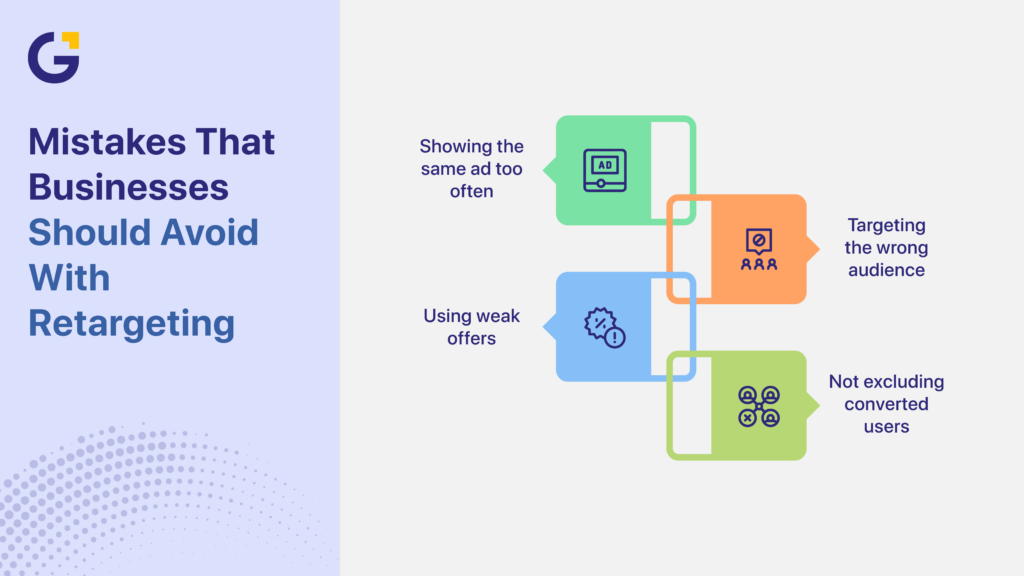
The biggest retargeting mistakes include showing the same ad too often, targeting the wrong audience, using weak offers, and failing to exclude people who have already converted. These mistakes can waste ad spend and reduce trust.
Retargeting works best when the ads feel relevant and useful. If the targeting is poor or the message does not match what the visitor did, the campaign can quickly lose effectiveness.
Some of the most common retargeting mistakes include:
- Showing the same ad too often, which can lead to ad fatigue and lower engagement
- Using the same message for every audience instead of tailoring ads based on user behaviour
- Sending people to the wrong landing page instead of matching the page to the ad offer
- Forgetting to exclude people who have already bought a product or submitted a form
- Ignoring privacy and consent rules around tracking and audience building
Businesses should rotate creative regularly, use audience segmentation, match ads with the right landing pages, and build stronger first-party data through email lists, CRM systems, and consent-based tracking.
How Is Retargeting Changing In A Privacy-First World?
Retargeting is changing because third-party cookies are becoming less reliable. Businesses now need stronger first-party data, better consent tools, and more direct audience information from email lists, CRM systems, and customer actions.
Google and browsers like Safari are reducing support for third-party cookies, which means businesses may have less access to older forms of audience tracking. This does not mean retargeting is disappearing. It means businesses need to rely more on first-party data such as email lists, CRM audiences, customer lists, website lead data, and purchase history.
First-party data is becoming more valuable because it is more accurate, more reliable, and easier to use in a privacy-first environment. Businesses can use customer email lists, CRM systems, and website behaviour to build custom audiences across Google Ads, Meta Ads, and LinkedIn.
To prepare for these privacy changes, businesses should:
- Install retargeting pixels correctly
- Build audience lists based on website actions
- Collect more email subscribers
- Track conversion events properly
- Use CRM data to create custom audiences
- Add cookie consent banners where required
Businesses that invest in first-party data now will be in a stronger position as privacy rules continue to change.
How Does Retargeting Fit Into A Smarter Digital Marketing Strategy?
Retargeting works best when it supports SEO, Google Ads, social media, email marketing, and landing page optimisation. It helps businesses get more value from the traffic they already pay for and improves conversion rates across channels.
Retargeting should not work on its own. It works best when it is part of a wider strategy that includes traffic generation, conversion tracking, audience building, and strong landing pages.
How Retargeting Supports SEO And Content Marketing
Retargeting can improve the value of SEO and content marketing by bringing previous visitors back to the website. This is especially useful because blog readers and content visitors are often not ready to convert on their first visit.
A business can retarget blog readers with related guides, case studies, webinars, or consultation offers. Pricing page visitors can see ads with customer reviews, free trials, or limited-time promotions.
How Retargeting Supports Google Ads And Meta Ads
Retargeting helps businesses get more value from Google Ads and Meta Ads because it reduces wasted spend. Instead of paying only for new traffic, businesses can reconnect with people who have already visited the site.
This often leads to better conversion rates because previous visitors are more likely to take action than cold audiences. Retargeting can also help improve return on ad spend by making more use of traffic that the business already paid for.
When Should A Business Use Retargeting?
A business should use retargeting once it has enough website traffic and conversion tracking in place. Retargeting works best when there are enough visitors to build audience lists.
Businesses should also make sure their tracking tools are working correctly before launching campaigns. This includes retargeting pixels, conversion events, and audience segmentation.
How Genix Digital Helps Businesses Improve Retargeting Results
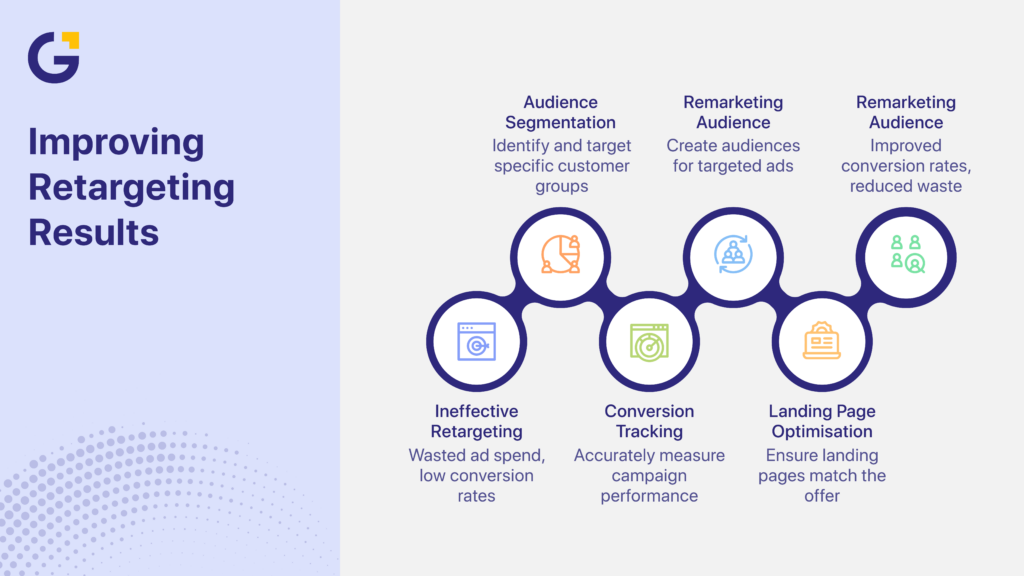
Retargeting works best when it is supported by strong audience data, good creative, accurate tracking, and landing pages that match the offer. Businesses that use retargeting well can improve conversion rates, reduce wasted ad spend, and recover more value from the traffic they already have.
At Genix Digital, we help businesses build smarter retargeting strategies across Google Ads, Meta Ads, LinkedIn, and email marketing. We can help with audience segmentation, conversion tracking, remarketing audience creation, landing page optimisation, and campaign setup.
Contact us to book a consultation and build a retargeting strategy that improves conversions and reduces wasted ad spend.
FAQs
What Is Retargeting In Digital Marketing?
Retargeting in digital marketing is a way to show ads to people who have already visited your website, viewed a product, or interacted with your business. It helps businesses reconnect with warm audiences who did not convert the first time.
What Is The Difference Between Retargeting And Remarketing?
The main difference between retargeting and remarketing is the channel used. Retargeting usually uses ads on Google, Facebook, Instagram, YouTube, and other websites, while remarketing usually uses email, SMS, and CRM campaigns.
How Do Retargeting Ads Work?
Retargeting ads work by using a retargeting pixel to track website actions like page visits, product views, and form abandonment. Businesses then use that information to show follow-up ads to previous visitors.
Which Platforms Are Best For Retargeting Campaigns?
Google Ads, Meta Ads, LinkedIn Ads, and email marketing are some of the best retargeting platforms. The right platform depends on the business type, audience, and buying journey.
When Should A Business Use Retargeting Ads?
A business should use retargeting once it has enough website traffic, tracking tools, and audience data in place. Retargeting works best when there are enough visitors to build meaningful audience lists.
Is Retargeting Effective For Lead Generation and E-commerce?
Yes. Retargeting is effective for both lead generation and e-commerce because it helps businesses reconnect with people who have already shown interest. It can improve bookings, reduce cart abandonment, and shorten the sales cycle.





 13 Mar 2026
 10 Min Read