

Most businesses are not struggling because they lack a budget. They are struggling because they cannot clearly see what is working and what is wasting their marketing spend.
Recent data from the Gartner CMO Spend Survey shows that marketing budgets are tightening, yet pressure to prove ROI is increasing. At the same time, changes from platforms like Google and Meta have made tracking less reliable, which means many businesses are making decisions based on incomplete data.
This is where the problem starts. Businesses invest in ads, content, and campaigns, but still struggle to improve marketing ROI because they are fixing the wrong areas.
To improve marketing ROI in Australia, you need to focus on four core areas: tracking accuracy, targeting, conversion performance, and budget allocation. When these work together, your marketing becomes more efficient, your CAC drops, and your return on marketing spend increases.
This guide explains how to improve marketing ROI using practical strategies, real metrics, and clear steps you can apply across your campaigns.
What Is Marketing ROI And Why Does It Matter For Australian Businesses?
Marketing ROI is the revenue your business earns compared to what you spend on marketing. To improve marketing ROI, you need clear tracking, efficient budget allocation, and strong conversion performance across channels. Without this, businesses waste budget and lose profitable growth opportunities.
Marketing ROI shows if your campaigns actually drive revenue. Many Australian businesses track clicks and impressions but struggle to connect these metrics to revenue measurement. That gap leads to poor decisions and wasted spending.
Simple Marketing ROI Formula (With Example)
Use this formula:
Marketing ROI = (Revenue – Marketing Cost) ÷ Marketing Cost × 100
| Scenario | Spend | Revenue | ROI |
| Google Ads Campaign | $10,000 | $30,000 | 200% |
| SEO Investment | $5,000 | $25,000 | 400% |
A business running paid ads in Sydney may see high traffic but low ROI if conversion rates are weak. This is why tracking both revenue and costs matters.
ROI vs ROAS, CAC, and LTV Explained Simply
- ROAS measures revenue from ads only
- CAC shows the cost to acquire one customer
- LTV shows the total revenue from a customer over time
These metrics work together:
- High CAC + low LTV = poor ROI
- High ROAS but low conversion = misleading performance
Why Many Australian Businesses Struggle With ROI
Common issues include:
- Poor conversion tracking
- Weak attribution model
- Low lead quality
- Funnel leakage between channels
Why Is Your Marketing ROI Low Even If You Are Spending More?
Marketing ROI is often low because businesses invest in traffic before fixing tracking, targeting, and conversion issues. To increase marketing ROI in Australia, identify gaps in data, funnel performance, and channel efficiency before increasing spend.
Many businesses increase ad spend, hoping for better results. This often leads to higher CAC and lower campaign profitability.
Common Causes Of Low ROI
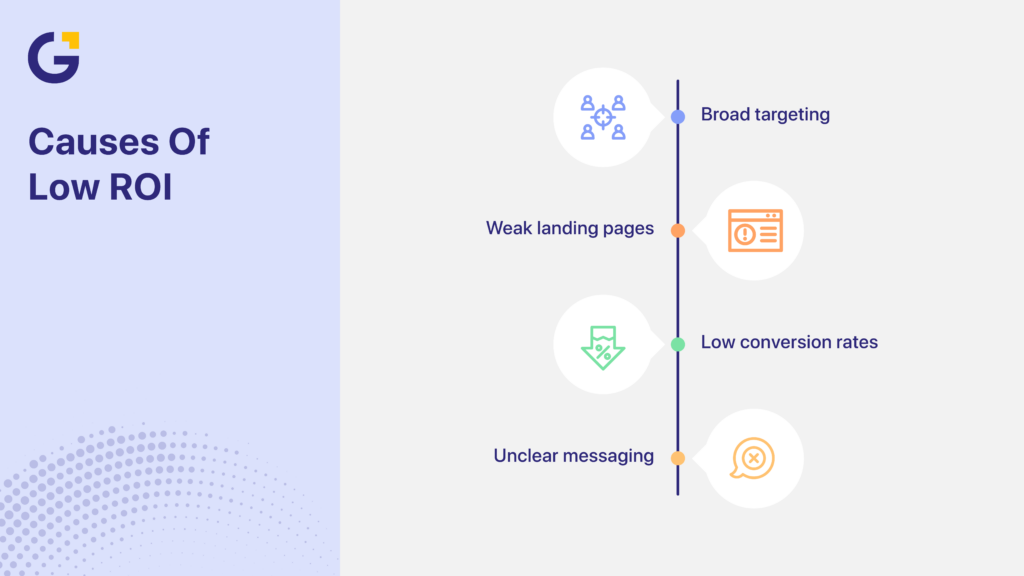
Marketing ROI is often low due to broad targeting, weak landing pages, low conversion rates, and unclear messaging. When campaigns reach the wrong audience or fail to communicate value, engagement drops, and costs rise, leading to wasted spend and poor results.
A Melbourne e-commerce brand may spend heavily on Meta Ads but fail to convert due to unclear product messaging.
The Hidden Cost Of Poor Tracking And Attribution
If conversion tracking is inaccurate:
- Campaign performance appears worse than it is
- Budget shifts to the wrong channels
- ROAS becomes unreliable
Platforms like Google and Meta depend on accurate data to optimise campaigns.
How Do You Measure Marketing ROI Accurately Across Channels?
To measure marketing ROI accurately, track all costs and revenue across each channel using tools like GA4 and attribution models. Accurate conversion tracking helps identify which campaigns drive real revenue and which waste budget.
What Costs Should Be Included In ROI
To measure marketing ROI accurately, businesses must include all relevant costs such as ad spend, agency fees, marketing tools, staff time, and creative production. This gives a complete view of campaign profitability and prevents underestimating true investment.
Best Tools For Tracking Marketing Performance
- Google Analytics 4
- CRM systems
- Conversion tracking platforms
These tools help track channel performance and revenue.
Attribution Models And Why They Matter
Attribution models assign credit to touchpoints:
- First-click attribution
- Last-click attribution
- Data-driven attribution
Better attribution improves budget optimisation and spend efficiency.
What Are The Most Effective Marketing ROI Strategies Today?
The best way to improve marketing ROI is to combine better targeting, data-driven decisions, conversion optimisation, and budget allocation. These strategies help businesses increase return on marketing spend without relying on higher budgets.
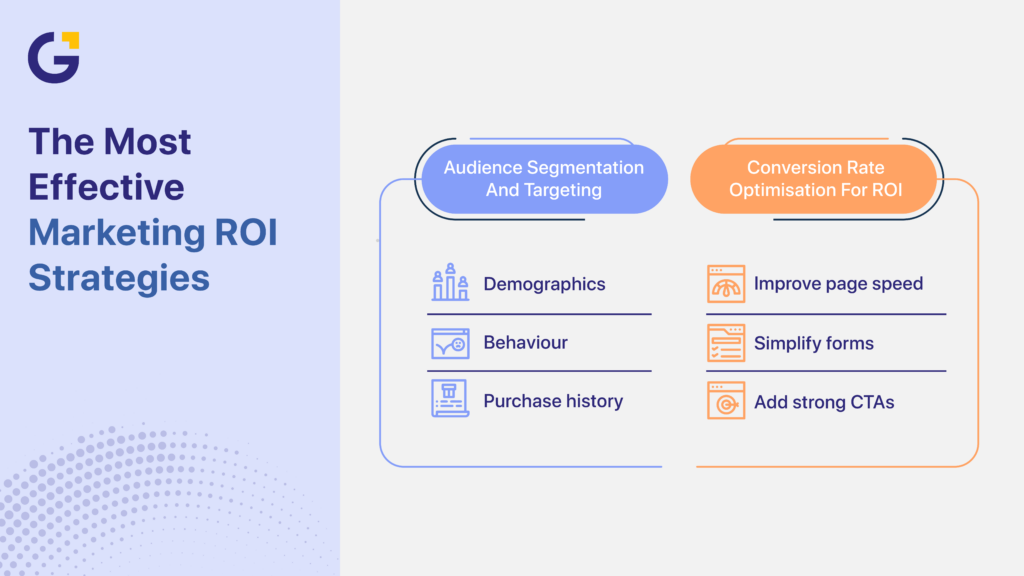
Audience Segmentation And Targeting
Segment audiences based on:
- Demographics
- Behaviour
- Purchase history
This improves lead quality and reduces CAC.
Conversion Rate Optimisation For ROI
Small changes can double results:
- Improve page speed
- Simplify forms
- Add strong CTAs
A site increasing conversion from 2% to 4% effectively halves acquisition cost.
Channel Performance And Media Mix Optimisation
Focus on high-performing channels:
| Channel | ROI Potential |
| SEO | High long-term ROI |
| Paid Ads | Fast results, variable ROI |
| High LTV impact |
Remove underperforming channels to improve spend efficiency.
Content Marketing And SEO For Long-Term ROI
Content supports traffic growth, lead generation, and lower CAC over time. Brands like HubSpot and Shopify use content to drive consistent ROI by attracting and converting high-intent users.
How Can You Improve Marketing ROI Without Increasing Budget?
To improve marketing ROI without increasing budget, focus on reducing wasted spend, improving conversion rates, and reallocating budget to high-performing channels. Small efficiency gains often deliver higher returns than increasing spend.
Ways To Reduce Wasted Ad Spend
Reducing wasted ad spend starts with identifying underperforming campaigns, refining audience targeting, and removing irrelevant keywords or placements. These adjustments help improve spend efficiency and ensure your budget is focused on channels that drive real results.
Improve Return On Ad Spend Through Better Data
- Use first-party data
- Improve attribution accuracy
- Track all conversions
Increase Conversions From Existing Traffic
Increase conversions from existing traffic by retargeting visitors who have already shown interest, improving landing pages to remove friction, and using stronger offers that encourage action.
A Brisbane business reduced wasted ad spend by 30% simply by refining audience targeting.
Which Marketing Channels Deliver The Highest ROI In Australia?
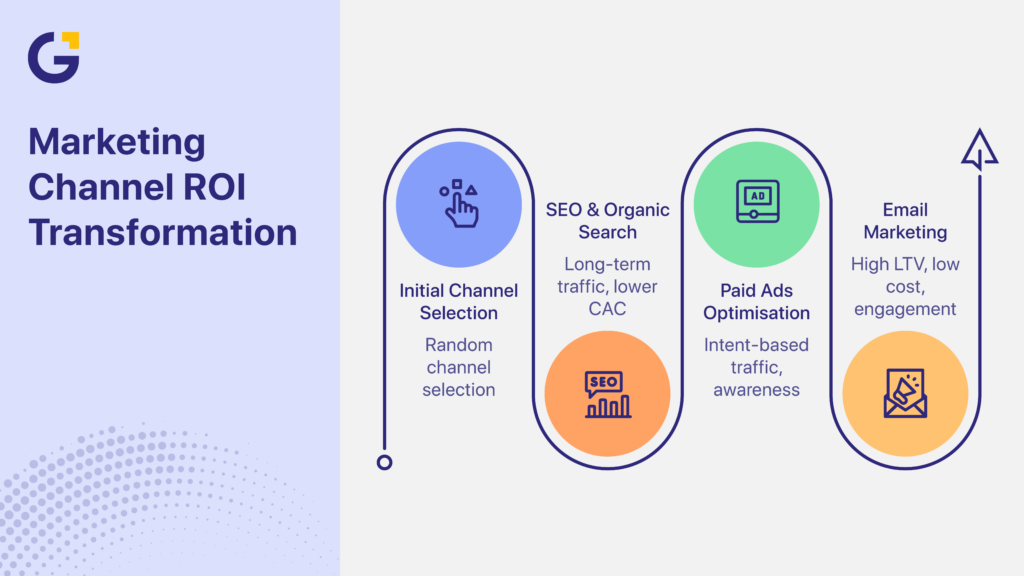
Channels with the highest marketing ROI in Australia often include SEO, email marketing, and retargeting ads. These channels deliver strong returns because they target high-intent users and reduce customer acquisition costs over time.
SEO And Organic Search ROI
- Long-term traffic
- Lower CAC
- Strong conversion rates
Paid Ads And ROAS Optimisation
- Google Ads for intent-based traffic
- Meta Ads for awareness and retargeting
Email Marketing And Retention ROI
- High LTV
- Low cost
- Strong engagement
Choosing The Right Channel Mix
A strong media mix improves:
- Spend efficiency
- Campaign profitability
- Channel performance
How Does Conversion Rate Optimisation Impact Marketing ROI?
Conversion rate optimisation improves marketing ROI by turning more visitors into leads or customers. Increasing conversion rates reduces CAC and improves campaign profitability without increasing traffic or spend.
What Is Conversion Rate Optimisation (CRO)
CRO focuses on improving user actions such as purchases, form submissions, and clicks to increase conversions and maximise the value of existing traffic.
HubSpot data shows that conversion rate optimisation is one of the most used optimisation methods, with around 50% of marketers actively improving conversion performance to drive better ROI.
Most websites convert at low rates. The average ecommerce conversion rate is under 2%, which means small improvements can have a large impact on campaign profitability. This is why conversion rate optimisation for ROI is one of the fastest ways to improve return on marketing spend without increasing traffic.
Key CRO Tactics That Improve ROI
- Faster load times
- Clear messaging
- Strong value propositions
Example impact:
| Conversion Rate | Leads | ROI Impact |
| 2% | 100 leads | Baseline |
| 4% | 200 leads | 2x ROI |
How Do You Reduce CAC And Improve Marketing Efficiency?
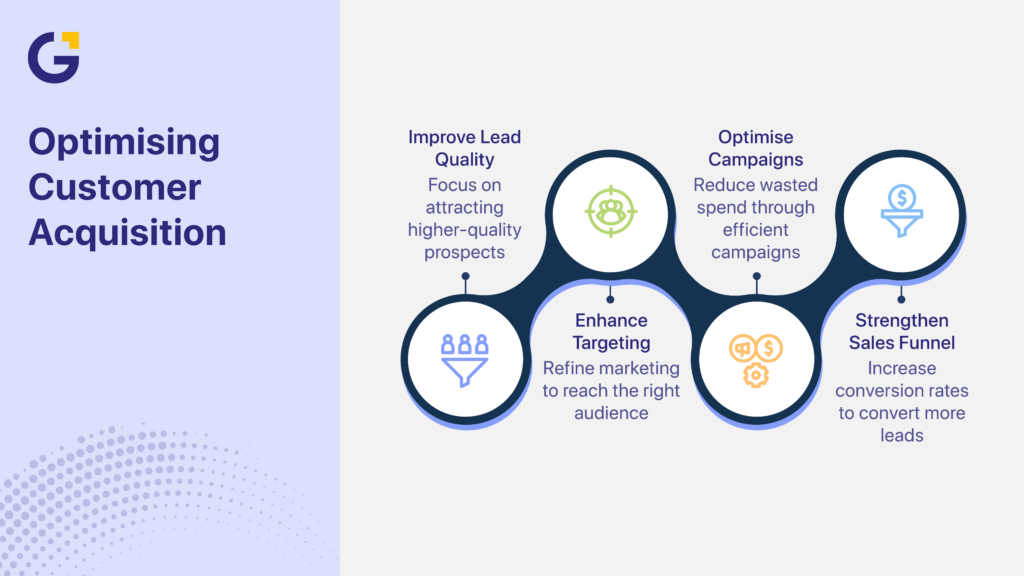
Reducing CAC means lowering the cost to acquire each customer while maintaining revenue. Businesses improve marketing ROI by increasing lead quality, improving targeting, and optimising campaigns to reduce wasted spend.
How CAC Impacts Marketing ROI
High CAC reduces profitability even if revenue is strong. Reducing CAC involves improving targeting, using retargeting campaigns, and strengthening the sales funnel to convert more leads. When businesses focus on attracting higher-quality prospects and improving conversion performance, acquisition costs naturally decrease.
Improve Lead Quality And LTV
- Segment audiences
- Focus on retention
- Improve customer experience
What Role Does Data And Tracking Play In Marketing ROI Improvement?
Data and tracking are the foundation of marketing ROI improvement. Accurate conversion tracking and attribution models allow businesses to measure campaign profitability and make better budget decisions based on real performance.
Conversion tracking basics include tracking purchases, leads, and form submissions
A Perth business may improve ROI by fixing tracking gaps, leading to better attribution and smarter budget allocation.
How Can Australian Businesses Build A Sustainable Marketing ROI System?
To build a sustainable marketing ROI system, businesses must align tracking, targeting, conversion optimisation, and budget allocation into one strategy. This creates consistent performance and long-term revenue growth.
The 5 Core Drivers Of Marketing ROI
- Tracking accuracy
- Targeting
- Conversion performance
- Channel mix
- Budget allocation
Turning Marketing Into A Revenue System
Focus on turning marketing into a revenue system by improving campaign profitability, increasing lead quality, and driving consistent revenue growth. Prioritise outcomes that directly impact sales instead of surface-level metrics.
How Genix Digital Helps Improve Marketing ROI For Australian Businesses
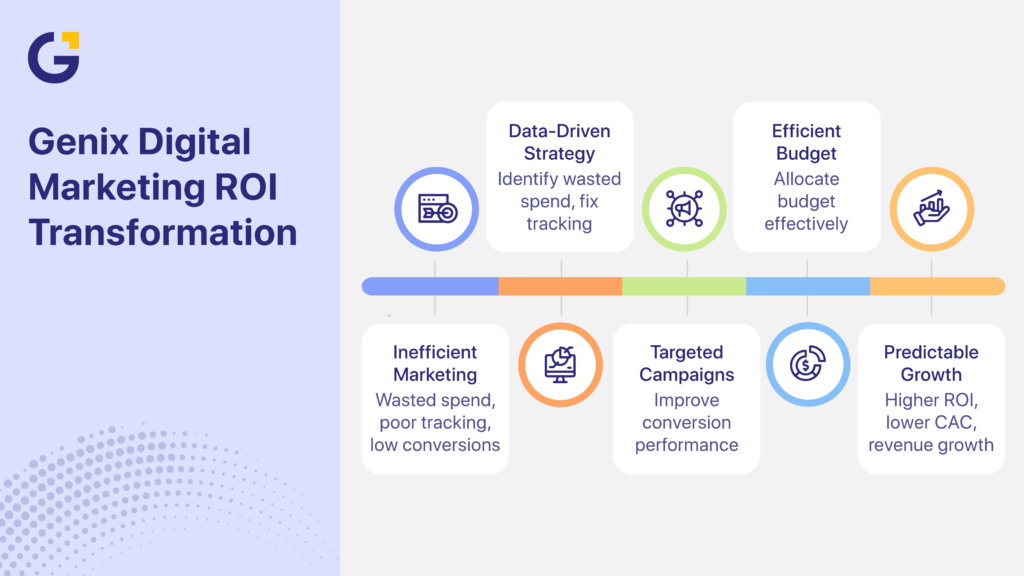
Improving marketing ROI requires accurate tracking, strong targeting, better conversion rates, and efficient budget allocation. Businesses that fix these areas see better campaign profitability, lower CAC, and stronger revenue growth across all channels. A structured approach helps turn marketing into a predictable growth system.
At Genix Digital, we help Australian businesses identify wasted spend, fix tracking issues, and improve conversion performance. Our team focuses on data-driven strategies that improve return on ad spend and campaign profitability. We work across SEO, paid ads, and conversion optimisation to deliver measurable results.
Book a consultation today to see where your ROI is being lost and how to fix it.
FAQs
How do you improve marketing ROI?
Improve marketing ROI by fixing tracking, improving targeting, and increasing conversion rates. Focus on reducing wasted spend and reallocating budget to high-performing channels.
What is a good marketing ROI benchmark?
A good marketing ROI depends on the channel. SEO can reach 2000% ROI, while paid ads often average 200%. The key is consistent profitability.
How can businesses improve ROI without increasing budget?
Improve ROI by optimising conversion rates, refining targeting, and cutting underperforming campaigns. Better efficiency increases returns without extra spending.
Does attribution improve marketing ROI?
Yes. Better attribution helps identify which channels drive revenue. This allows smarter budget allocation and improves overall ROI.
Which marketing channels usually deliver the highest ROI?
SEO, email marketing, and retargeting often deliver the highest ROI. These channels target high-intent users and reduce CAC.





 17 Jun 2026
 16 Min Read