


If your site is not showing up where it should, you are not alone. Many Australian businesses want to know how to rank higher on Google, but they are working against stronger competition, AI Overviews, and tougher quality standards than they faced a few years ago. Google still dominates search in Australia, with about 88.2 percent market share in March 2026, so improving your Google visibility still has the biggest payoff for most businesses.
The good news is that SEO is still one of the best ways to build steady leads. Google’s own guidance says its ranking systems aim to show helpful, reliable, people-first content, and its SEO Starter Guide says even basic SEO work can make a noticeable impact. That means better rankings are still available to businesses that fix the basics, publish better pages, and build real authority over time.
A Quick View Of What Matters Most In 2026
| Priority | What It Means | Why It Matters |
| Search intent | Match what the user wants | Helps Google trust your page for the query |
| Content quality | Clear, useful, expert-led content | Supports EEAT and engagement |
| On-page SEO | Titles, headings, links, page structure | Helps Google read and rank pages |
| Technical SEO | Speed, indexing, mobile SEO, crawlability | Removes barriers to ranking |
| Authority | Backlinks, mentions, reviews, brand trust | Builds confidence in your site |
| Local SEO | Google Business Profile, local pages, reviews | Improves visibility in Australian local searches |
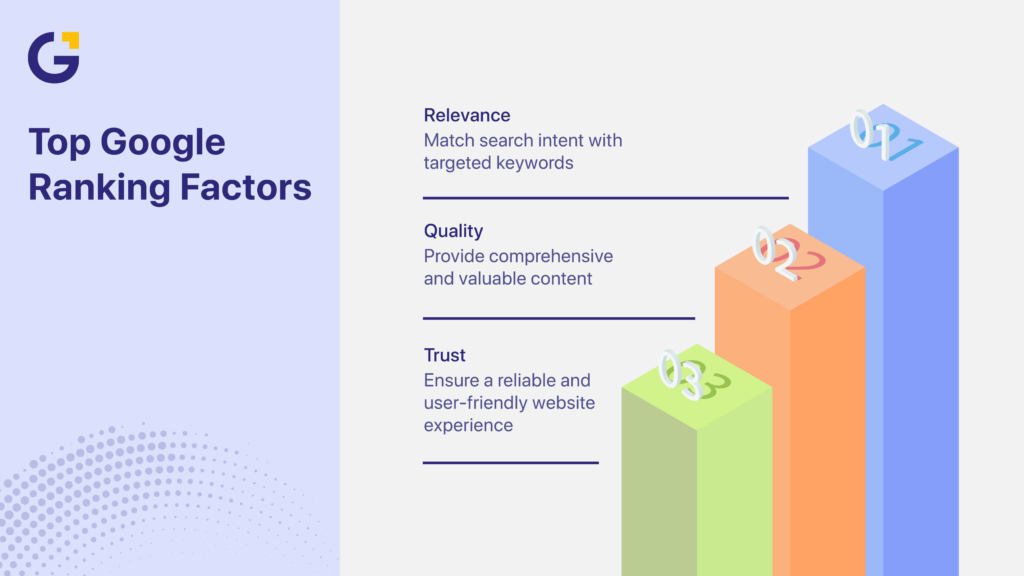
How Does Google Decide Which Websites Rank First?
Google ranks pages by checking relevance, quality, trust, and page experience. To rank higher on Google, your page must match the search, answer it well, and give users a strong experience on both desktop and mobile devices.
Google has never published a full list of ranking signals, but its public guidance is clear on the big themes. Google wants content that helps people, pages that are easy to crawl and index, and websites that feel reliable. Core Web Vitals also matter because they measure real-world loading, responsiveness, and visual stability.
For an Australian business, this usually means three things. Your page must target the right keyword. The content must be stronger than what already ranks and the website must not block Google with a poor technical setup.
If a Sydney accounting firm writes a thin page targeting “tax help,” but the results are full of detailed guides for “small business tax deductions Australia,” Google has a clear reason to rank those better pages first. That is why search intent matching sits at the centre of modern SEO.
Why Is My Website Not Ranking On Google?
The most common reason a site is not ranking is weak SEO foundations. In most cases, the problem is not one single issue. It is a mix of poor keyword targeting, thin content, low authority, and technical SEO gaps that stop Google from trusting the page.
If you are asking why my website is not ranking on Google, start with an SEO audit. Check whether your pages are indexed or whether the page targets a clear topic. Also, check whether it gives a better answer than the pages already ranking.
Here are the most common causes:
- The page targets a keyword that is too broad or too competitive
- The content does not match the user’s intent
- Google cannot crawl or index the page properly
- The site is slow or weak on mobile
- The business has little authority or few trusted backlinks
- Title tags and meta descriptions are poorly written
- The page has no internal links pointing to it
Google Search Console is the best place to begin. Google says Search Console helps you measure search traffic, fix issues, and see which queries bring users to your site. That makes it one of the most useful free tools for spotting ranking problems.
How Do You Choose The Right Keywords To Rank Higher On Google?
The best way to improve Google ranking is to target keywords that fit your audience, your offer, and the type of page Google already rewards. Good keyword research finds realistic opportunities instead of chasing terms that look attractive but rarely convert.
Many businesses make the same mistake. They chase broad, high-volume phrases and ignore the terms buyers actually use. A Melbourne law firm may want to rank for “lawyer,” but it may get more value from “employment lawyer Melbourne for small business” or “workplace contract lawyer Melbourne.”
Use this filter when choosing keywords:
| Question | Good Sign | Bad Sign |
| Is it relevant to your service? | Direct fit | Only loosely related |
| Does intent match the page? | Clear commercial or informational fit | Mismatch between query and page |
| Is the competition realistic? | Achievable based on your site strength | Dominated by major publishers |
| Can it lead to business value? | Strong lead or sales potential | Traffic with little buyer intent |
This is where how to rank higher on Google Australia differs from generic advice. Local modifiers matter. Industry terms matter. Buyer language matters. If your audience searches “bookkeeper Brisbane” or “solar installer Gold Coast,” your site should reflect that language in titles, headings, body copy, and service pages.
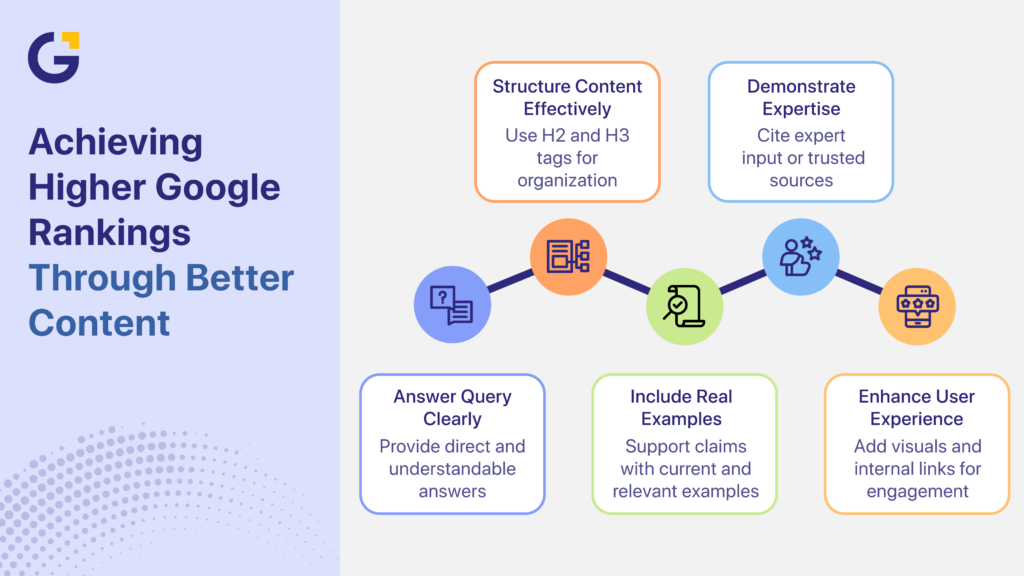
How Can Better Content Help You Rank Higher On Google?
Better content helps you rank when it answers the query more clearly, more fully, and more credibly than competing pages. Google’s own guidance says ranking systems are designed to prioritise helpful, reliable information created for people, not pages made just to manipulate rankings.
This is where many sites fall short. They publish content that repeats what everyone else says. That is not enough in 2026. If you want to rank higher on the Google first page, your page needs a clear angle, useful structure, real examples, and signs of expertise.
A strong article should include:
- A direct answer near the top
- Clear H2 and H3 structure
- Updated facts and current examples
- Expert input or trusted sources
- Useful tables, checklists, or visuals
- Internal links to related pages
- A clear next step for the reader
Google also keeps pointing site owners back to people-first content and page experience in AI search. Its AI features guidance says site owners should think about how their content can be included in AI experiences, while still focusing on users first.
That matters because AI Overviews now shape how people search. If your content is vague, padded, or hard to scan, it is less likely to earn strong visibility in both standard results and AI-driven answers.
What On-Page SEO Changes Improve Rankings The Fastest?
On-page SEO improves rankings by making a page easier for Google to understand and easier for users to choose. The fastest gains often come from better title tag optimisation, clearer headings, stronger internal links, and tighter alignment between the keyword and the page.
If you want on-page SEO for higher rankings, start with the basics:
- Put the primary topic in the title tag
- Use a strong H1 that matches the search intent
- Add the keyword and close variations naturally in the first section
- Use descriptive H2s and H3s
- Write a clear meta description that improves click-through rate
- Link to related pages using natural anchor text
- Add image alt text where relevant
A weak title like “Our SEO Tips” gives Google little context. A better title like “How to Rank Higher on Google Australia in 2026” gives a clear topic, location context, and timeframe.
Internal linking matters here, too. If you publish a strong guide but never link to it from your service pages, blog hub, or related posts, you make it harder for Google to understand its importance. Good internal links support topical authority and help users move deeper into the site.
What Technical SEO Factors Affect Google Rankings?
Technical SEO affects rankings by helping Google crawl, index, and evaluate your pages properly. Strong technical SEO for Google rankings means your site loads quickly, works well on mobile, avoids indexing errors, and gives search engines a clean structure to follow.
Google says Core Web Vitals measure loading performance, interactivity, and visual stability, and it recommends site owners achieve good Core Web Vitals for success with Search. Google also uses mobile-first indexing, so poor mobile SEO can limit results even if your desktop site looks fine.
Technical SEO Checklist
| Area | What To Check | Tool |
| Crawlability | robots.txt, broken links, orphan pages | Search Console, crawler |
| Indexing | noindex tags, sitemap, canonical issues | Search Console |
| Page speed | image size, scripts, hosting, caching | PageSpeed Insights |
| Mobile SEO | responsive layout, tap targets, readability | Lighthouse |
| Structured data | schema markup for FAQs, articles, business info | Rich Results Test |
| Security | HTTPS, mixed content warnings | Browser and crawl tools |
For many SMEs, quick wins come from compressing large images, reducing script bloat, fixing broken pages, and tightening page templates. These are not flashy tasks, but they often unlock better page speed, better crawlability, and better user experience.
How Do Backlinks Help You Rank Higher On Google?
Backlinks help you rank because they act as trust signals from other websites. When reputable sites link to your page, Google can treat that as a sign that your content is useful, credible, and worth surfacing more often.
Not all links help. A handful of strong, relevant links can do more than dozens of weak ones. This is why many businesses waste time on cheap link packages that create risk but little value.
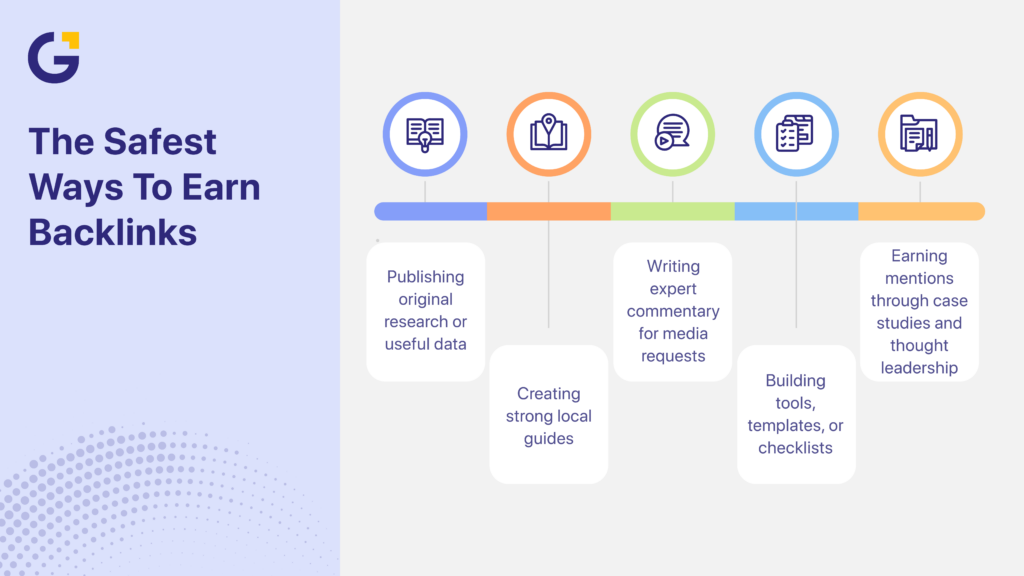
The safest ways to earn backlinks include:
- Publishing original research or useful data
- Creating strong local guides
- Writing expert commentary for media requests
- Building tools, templates, or checklists
- Earning mentions through case studies and thought leadership
If a Brisbane agency publishes a useful guide on Google ranking factors in Australia with real examples, current stats, and a strong structure, it has a better chance of earning links than a generic post filled with recycled advice.
How Does Local SEO Help Australian Businesses Rank Higher?
Local SEO helps businesses rank by improving visibility in Google Maps and local search results. Google says local results are mainly based on relevance, distance, and popularity, which means a well-optimised Business Profile can lift visibility even when your website is still building authority.
If you want to know how to improve local search rankings, focus on these areas:
- Fully complete your Google Business Profile
- Keep your name, address, and phone number consistent
- Choose the right primary and secondary categories
- Add fresh photos and updates
- Collect and respond to reviews
- Build suburb or city-based landing pages where relevant
Google also says there is no way to request or pay for a better local ranking. That matters because it pushes businesses back to the work that actually moves the needle: relevance, accurate business data, and real reputation signals.
For an Australian plumber, this may mean separate pages for “emergency plumber Newcastle” and “hot water repairs Newcastle,” supported by a strong Business Profile and steady reviews. That is far more effective than one broad page trying to target every service and suburb at once.
How Long Does It Take to Rank on Google?
SEO usually takes months, not weeks. Google itself says that for new businesses, rankings can take up to a month to appear in local search, and broader SEO gains often take three to twelve months, depending on authority, competition, and site quality.
This is the honest answer to how long SEO takes to rank. Quick wins can happen early. You may fix indexing issues, improve title tags, and see pages move within weeks. Stronger growth usually takes longer because content, links, and trust build over time.
Typical SEO Timeline
- Month 1: SEO audit, technical fixes, indexing cleanup
- Months 2 to 3: on-page updates, new content, internal linking
- Months 3 to 6: keyword movement, stronger local visibility, early leads
- Months 6 to 12: authority gains, higher rankings, more stable traffic
Google’s advice around core updates also matters here. Sites do not always need to panic after an update, but they may need to assess and improve content quality if performance drops.
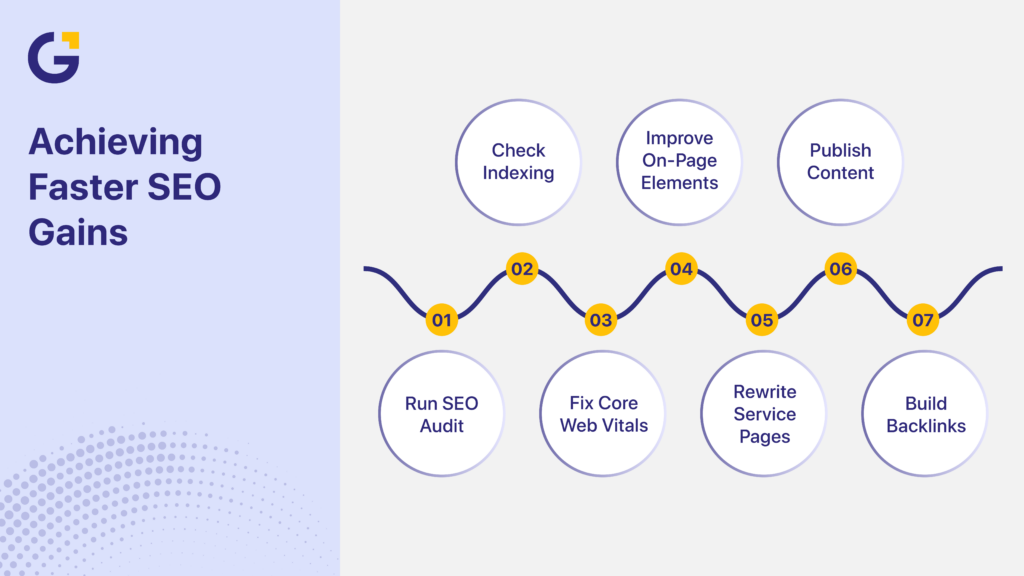
What Should You Do First If You Want Faster SEO Gains?
The fastest way to improve website ranking on Google is to fix what is holding the site back right now. That usually means starting with indexing, technical SEO, weak pages, and low-hanging on-page improvements before moving into bigger content and authority projects.
Start with this order of work:
- Run an SEO audit
- Check indexing and crawlability
- Fix Core Web Vitals and mobile SEO issues
- Improve title tags, meta descriptions, and internal links
- Rewrite weak service pages
- Publish content around high-intent keyword gaps
- Build backlinks and local trust signals
This order matters. There is little value in writing ten new blogs if your key pages are not indexed, your site is slow, or your service pages do not match what buyers are searching for.
How Genix Digital Helps Australian Businesses Rank Higher on Google
Ranking higher in 2026 comes down to getting the right basics in place and then building on them with discipline. The businesses that win are the ones that align their pages with search intent, improve technical SEO, publish stronger content, and keep building authority over time. If you want to know how to rank higher on Google Australia, the answer is not one trick. It is a system that combines content, on-page SEO, technical fixes, local relevance, and trust.
At Genix Digital, we help Australian businesses turn that system into a practical SEO growth plan. We audit what is blocking growth, improve the pages that matter most, and build content and local SEO strategies that support long-term rankings and lead generation.
Book a consultation with Genix Digital to improve your Google rankings and organic visibility.
FAQs
How can I rank higher on Google in Australia?
To rank higher on Google in Australia, start with the basics: keyword targeting, search intent matching, technical SEO, and strong content. Then build local relevance with a complete Google Business Profile and location-specific pages if you serve defined areas. Keep improving authority through links, reviews, and useful content.
What are the most important Google ranking factors in 2026?
The biggest factors are relevance, content quality, EEAT, user experience, technical health, and authority. Google’s public guidance keeps pointing site owners toward helpful, reliable content and good page experience. Core Web Vitals, indexing, and mobile usability still matter because they affect both users and crawlability.
How long does it take to rank on Google?
Some fixes can show results in a few weeks, especially if indexing or page targeting is the main problem. Stronger ranking gains often take three to twelve months because authority and trust build over time. Highly competitive industries can take longer.
Does local SEO help businesses rank higher in Australia?
Yes. Local SEO can improve visibility in both Google Maps and local organic results. Google says local ranking is mainly based on relevance, distance, and popularity, so accurate business data, reviews, and strong local pages can lift results.
What is the fastest way to improve a website’s Google ranking?
The fastest path is to fix technical barriers, improve weak titles and page targeting, and upgrade the pages closest to conversion. Many businesses also see gains by cleaning up internal links and rewriting thin service pages. After that, publish useful content and build trustworthy backlinks.





 19 Aug 2026
 9 Min Read