
Artificial intelligence is changing how brands plan and manage email campaigns. Interest increased rapidly after Google, Meta, Mailchimp, HubSpot, Salesforce, and Adobe released new automated AI features. The rise of generative models like ChatGPT, Gemini, and Jasper has also pushed demand for faster content production and hyper-personalisation. Many Australian businesses now want email marketing services that feel more relevant, reduce manual tasks, and deliver measurable ROI. If you are new to automated campaigns, reviewing the fundamentals of what email marketing is can help you structure your core subscriber lists before adding predictive AI models.
According to research from Statista, 7 in 10 marketers already use ai in email marketing. Retailers, clinics, trades, coaches, B2B teams, and e-commerce stores rely on artificial intelligence to improve open rates, predict customer behaviour, and automate workflows. With budgets tightening across Australia, leveraging ai for email marketing gives brands a direct way to move faster with fewer resources.
This guide covers the benefits, strategies, tools, common mistakes, and practical steps Australian businesses need to strengthen their email marketing artificial intelligence campaigns.
How AI Is Transforming Email Marketing
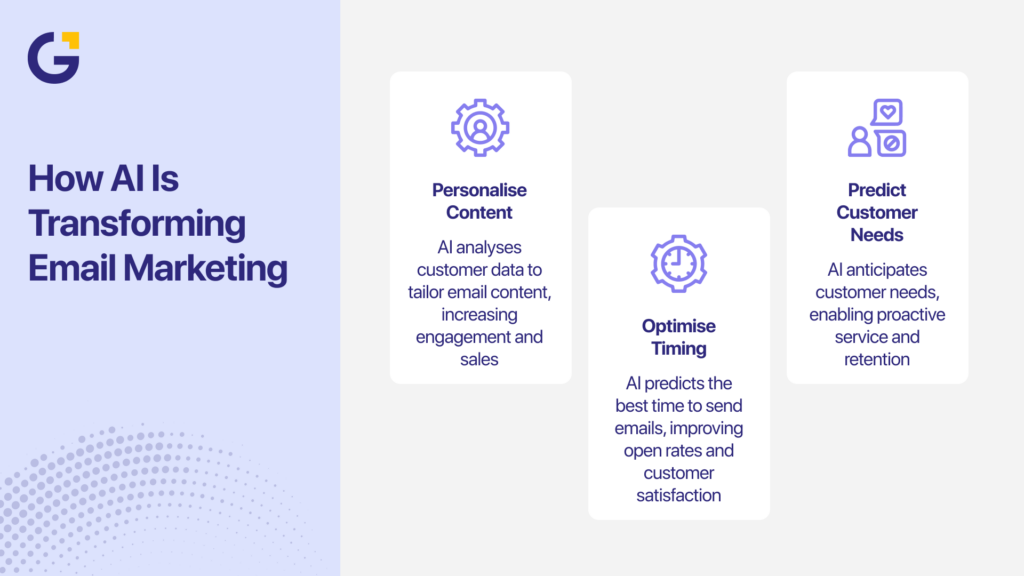
Using ai and email marketing together gives marketers new ways to study behaviour, predict buying intent, and personalise content at scale. This removes the guesswork that used to slow campaign planning. Google and Salesforce updates show how predictive models adjust timing, message variants, and audience segments in real time.
Google CEO Sundar Pichai noted that AI will influence every industry, including how brands manage communication. Many marketers now use AI-powered tools to optimise subject lines, send times, and automated sequences. This evolution makes email marketing with ai an essential capability for businesses aiming to stay competitive.
AI studies browsing patterns, email engagement, purchase history, and subtle behaviour changes. It dispatches emails when a subscriber is most active and dynamically adjusts body copy based on individual interests.
For example:
- E-commerce: A Sydney fashion store uses AI to monitor product views. When the system detects repeated interest in a clothing line, it sends tailored recommendations, lifting revenue without manual effort.
- Services: A plumbing company uses predictive ai powered email marketing to estimate when clients need routine maintenance. The system sends reminder emails weeks before common seasonal issues occur, boosting bookings automatically.
AI does not replace human strategy; it enhances decision-making and sharpens targeting.
What Is AI-Powered Email Marketing?
AI-powered email marketing uses machine learning algorithms to automate and refine every phase of an email campaign. These systems process vast datasets to deliver the right message to the right person at the exact right time.
Rather than sending static newsletters to static lists, artificial intelligence email marketing dynamically updates contact groups, crafts tailored content drafts, predicts subscriber churn, and adjusts send times per recipient.
For service businesses, AI recommends optimal times to send appointment reminders or nurture cold leads. In e-commerce sites, it identifies next-likely purchases based on browsing patterns. For instance, a Sydney dental clinic running local SEO and email campaigns can use AI to analyse past patient engagement, automatically sending booking reminders when each patient is most likely to check their inbox.
AI vs Traditional Email Software: Key Advantages
Understanding the advantages of using ai-based email marketing solutions over traditional software helps explain why brands are upgrading their tech stacks:
| Feature | Traditional Email Software | AI-Based Email Solutions |
| Segmentation | Static, manual lists based on basic tags | Dynamic, real-time predictive segments |
| Send Timing | Single blast time for the entire contact list | Individualised predictive send-time optimisation |
| Content | Same message sent to all subscribers | Dynamic body copy, images, and offers per person |
| Testing | Basic A/B testing (2 variants, manual selection) | Multi-armed bandit multivariate testing in real time |
| Deliverability | Reactive monitoring after getting blacklisted | Proactive spam trigger detection & inbox warming |
Key Benefits of Using AI in Email Campaigns
Applying ai in email marketing delivers clear advantages across personalisation, speed, deliverability, and automated retention.
Personalisation at Scale
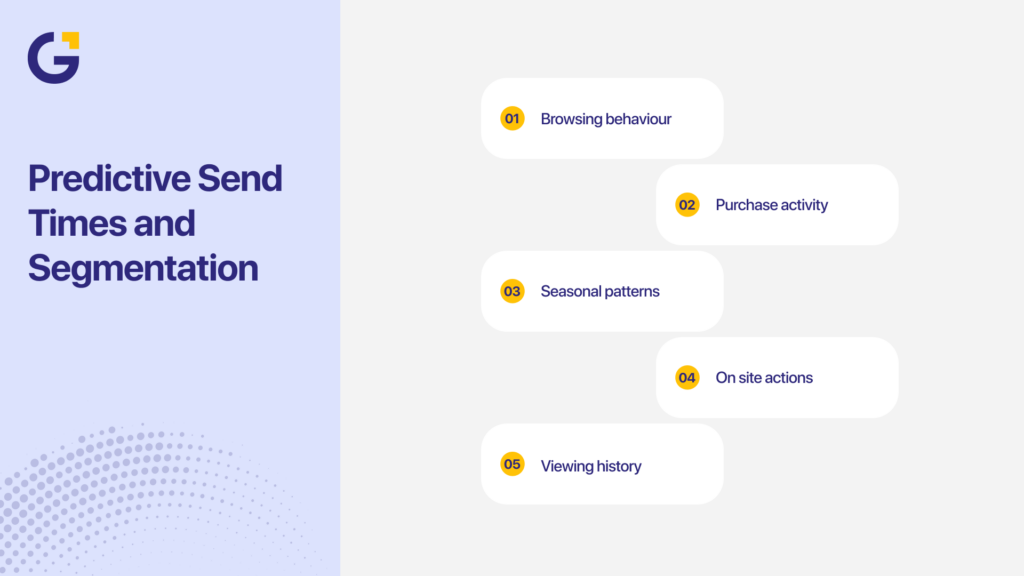
AI analyses browsing activity, purchase records, and reading habits to adjust content for each recipient. This level of personalisation makes messages feel genuinely tailored:
- Dynamic product and service recommendations
- Tailored article suggestions based on past clicks
- Adaptive tone of voice matching buyer personas
- Contextual imagery and custom calls-to-action (CTAs)
Predictive Send Times and Segmentation
Instead of guessing when to hit send, predictive ai in email marketing algorithms deliver messages based on when each subscriber historically opens emails. A Sydney business might find CBD office workers check emails during morning commutes, while suburban clients prefer evenings AI handles these time shifts automatically.
Smarter Subject Lines and Content Optimisation
Learning how to use ai for email marketing subject lines can dramatically improve open rates. AI tools analyse historical engagement data to suggest high-performing keywords, preview text, and emotional hooks. They also catch grammar issues, overly complex sentences, and formatting flaws that hurt readability.
Improved Conversions and Customer Retention
Research from McKinsey & Company shows that AI-driven personalisation can lift revenue by 5 to 15% and increase marketing efficiency by up to 30%. Delivering relevant offers at the right time improves both immediate conversions and long-term customer lifetime value.
How to Leverage AI in Email Marketing to Reduce Churn
A major priority for Australian businesses is learning how to leverage ai in email marketing to improve customer retention and reduce churn. Acquiring new customers costs significantly more than retaining existing ones, making automated re-engagement essential.
- Early Churn Risk Detection: AI algorithms monitor engagement metrics like declining open rates, fewer link clicks, and decreased site visits. When a customer shows signs of slipping away, the system flags them automatically.
- Automated Win-Back Workflows: Once an at-risk subscriber is identified, AI triggers a targeted win-back sequence featuring personalised incentives, tailored product recommendations, or feedback surveys.
- Predictive Replenishment Reminders: For consumable goods or recurring services, AI calculates individual usage cycles and sends replenishment emails right before the customer runs out.
How to Use AI for Email Marketing: A Step-by-Step Framework
If you are wondering how to use ai for email marketing in your business, follow this structured roadmap:
- Audit Your Customer Data: Clean your subscriber list by removing invalid addresses and updating CRM records.
- Select the Right Platform: Choose an email platform with native AI capabilities (such as Klaviyo, HubSpot, or ActiveCampaign).
- Enable Predictive Send-Time Optimisation: Activate automatic send-time adjustments on your core newsletters.
- Implement Behavioural Triggers: Set up automated workflows for cart abandonment, welcome sequences, and post-purchase follow-ups.
- Utilise AI Copy Assistance: Use tools like ChatGPT or Gemini to brainstorm subject lines and draft variations, always ensuring a human reviews the final copy.
- Monitor Deliverability and ROI: Track open rates, click-through rates, inbox placement, and attributed revenue inside your analytics dashboard.
Practical Strategies to Use AI Effectively
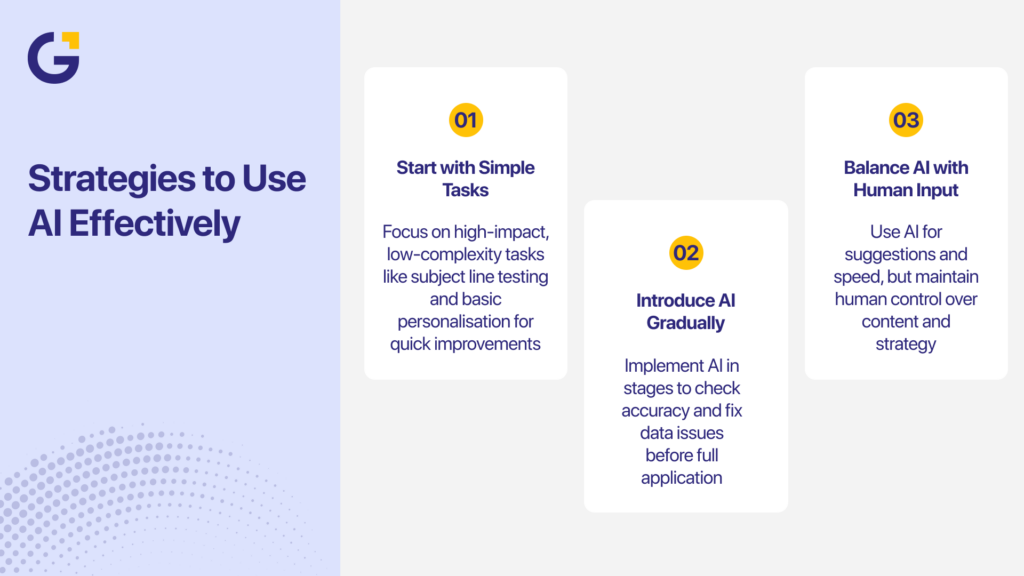
To maximise returns from ai in email marketing, focus on these core execution strategies:
Behaviour-Based Automation
AI sends targeted emails based on explicit subscriber actions rather than fixed schedules:
- Reading a specific blog post or service page
- Downloading a resource or guide
- Abandoning a shopping cart or booking form
- Repeatedly viewing high-value service offerings
Combining these behavioural email triggers with practical website automation ideas for Sydney small businesses drastically reduces manual admin work across your entire customer pipeline.
AI-Driven Multivariate Testing
Unlike traditional A/B tests that compare two static options, AI tests dozens of subject lines, layouts, and CTAs simultaneously. It automatically routes the winning combinations to the remainder of your contact list within minutes.
Automated Deliverability and Spam Prevention
Modern AI tools analyse email copy and HTML code before sending to flag potential spam triggers, ensuring your emails land in the primary inbox rather than the junk folder.
Best Practices for Implementing AI in Email Marketing
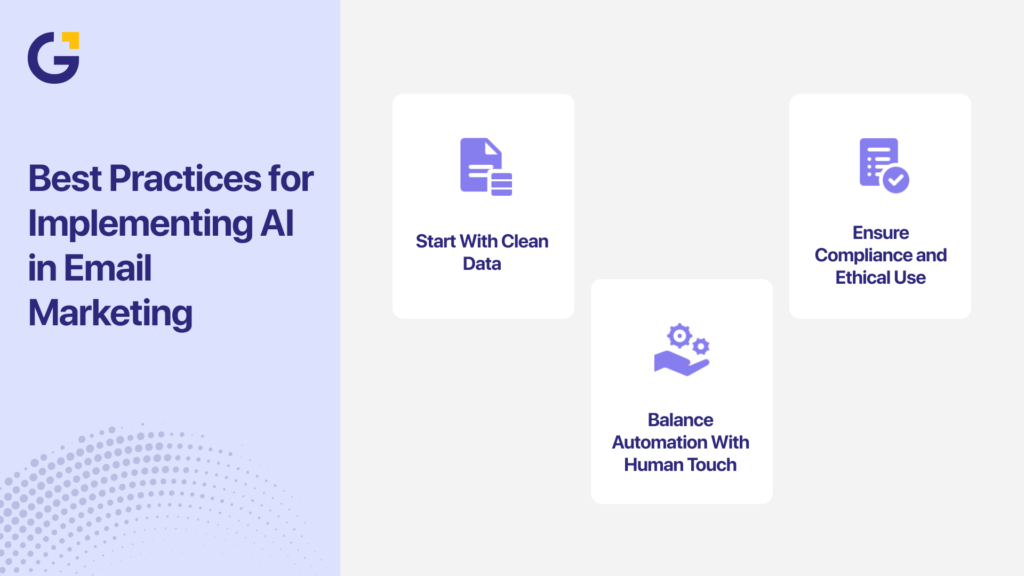
Adopting artificial intelligence in your email workflow offers clear efficiency gains, but success relies on a structured approach. To maximise ROI and protect your brand reputation, follow these foundational best practices when implementing AI capabilities.
Start With Clean Data
AI predictions are only as good as the underlying data. Perform regular list hygiene by removing inactive subscribers, updating missing fields, and fixing formatting errors.
Maintain Human Oversight
While AI excels at data analysis and drafting, it cannot replace brand voice, empathy, and strategic thinking. Always have an experienced team member review AI-generated copy before hitting send. To scale your email copy production smoothly, establish tailored AI content workflows for Australian small businesses so every subscriber message sounds authentic.
Ensure Australian Privacy and Spam Compliance
Australian organisations must comply with the Spam Act 2003, regulated by the Australian Communications and Media Authority (ACMA). Ensure your AI-driven emails include explicit consent, clear sender identification, and a functional one-click unsubscribe mechanism. As third-party cookies fade, pairing compliance with robust first-party data strategies for Australian businesses is vital for maintaining targeting accuracy.
Top AI Tools for Email Marketing in 2026
- Klaviyo: Industry-leading AI predictive analytics and dynamic segmentation for e-commerce.
- HubSpot: Comprehensive CRM integration with built-in AI copy generation and lead scoring.
- ActiveCampaign: Advanced workflow automation with predictive send times and content personalisation.
- Seventh Sense: Specialised AI tool that integrates with HubSpot and Marketo for advanced send-time optimisation.
- Phrasee: AI platform focused on generating high-converting subject lines and natural language copy.
To choose the right software stack for your business scale, review our comparison of the best marketing automation tools for Australian businesses.
Common Mistakes to Avoid
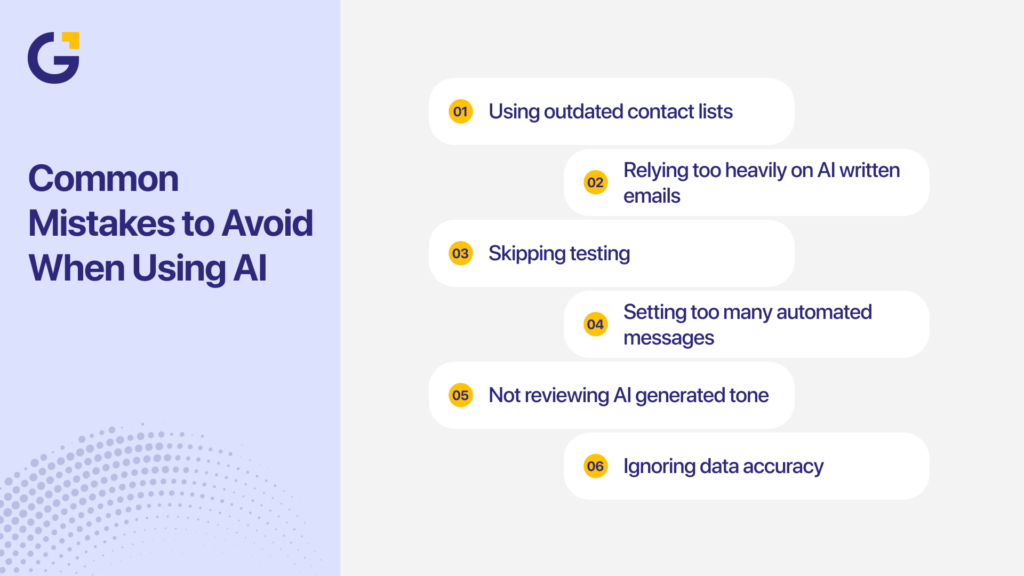
- Over-relying on raw AI copy without editing (leading to robotic, generic messaging).
- Ignoring list hygiene and feeding dirty data into AI models.
- Overwhelming subscribers with too many automated triggers.
- Failing to track deliverability and inbox placement rates.
Future Trends in Email Marketing Artificial Intelligence
The next phase of email marketing artificial intelligence will centre on real-time cross-channel orchestration. AI will seamlessly sync email messaging with SMS, site personalisation, and paid ad campaigns. As third-party cookies fade, AI-driven first-party data strategies will become the primary engine for Australian business growth.
How Genix Digital Helps
At Genix Digital, we help Australian brands design and deploy high-converting ai in email marketing strategies. From CRM integration and workflow automation to copywriting and technical SEO services, our team ensures your marketing tech delivers maximum return on investment.
Ready to upgrade your email marketing strategy? Contact the Genix Digital team today to book a consultation.
FAQs
1. How is AI used in email marketing?
AI is used to automate content generation, predict individual send times, dynamically segment subscriber lists, and deliver personalised product recommendations based on user behaviour.
2. What are the advantages of using AI-based email marketing solutions over traditional software?
AI-based solutions offer real-time dynamic personalisation, automated predictive send times, advanced multivariate testing, and automated customer churn prevention, whereas traditional software relies on static lists and manual execution.
3. How can Australian businesses leverage AI in email marketing to reduce customer churn?
Businesses can use AI to monitor declining engagement patterns, automatically flagging at-risk customers and triggering personalised win-back emails, special offers, or replenishment reminders before the customer leaves.
4. Can AI completely replace human email marketers?
No. AI automates repetitive data processing, timing, and copy drafting, but human strategy, brand voice, empathy, and oversight remain essential for running effective campaigns.
5. How do I start using AI for email marketing on a budget?
Start by using built-in AI features in your existing email platform, such as automated send-time optimisation or AI subject line generators, before investing in specialised enterprise tools.



 13 May 2026
 10 Min Read