


Voice search in Australia is changing how people search online, especially on mobile devices, smart speakers, and AI-powered assistants. Australians are increasingly using spoken queries to find local businesses, compare services, get directions, check opening hours, and research products before making decisions.
Traditional SEO focused heavily on short keywords and rankings alone. Modern search behaviour is more conversational. People now ask full questions through Google Assistant, Siri, Alexa, and AI-powered search tools like ChatGPT and Gemini. Businesses that want to stay visible in voice search results need content built around natural language, local intent, mobile usability, and answer-focused formatting.
For Australian SMEs in Sydney and across Australia, voice search optimisation is becoming part of a broader AI search strategy. Businesses that improve conversational content, local SEO, website speed, and search intent optimisation are more likely to appear in AI Overviews, featured snippets, and voice assistant responses. Companies looking to improve visibility and lead generation can also review their current SEO services strategy to identify gaps in conversational search performance and mobile search experience.
What Is Voice Search Optimisation in Australia?
Voice search optimisation is the process of improving website content, local SEO signals, mobile performance, and conversational search relevance to help businesses appear in spoken search results and AI-generated answers. In Australia, voice search SEO is increasingly connected to mobile search, conversational queries, and local intent.
Traditional searches are usually short and fragmented. Voice searches tend to sound more natural and question-based. Someone typing may search for “SEO agency Sydney,” while a voice search user may ask, “Who offers SEO services near me for small businesses in Sydney?” That difference changes how businesses should structure content and optimise pages.
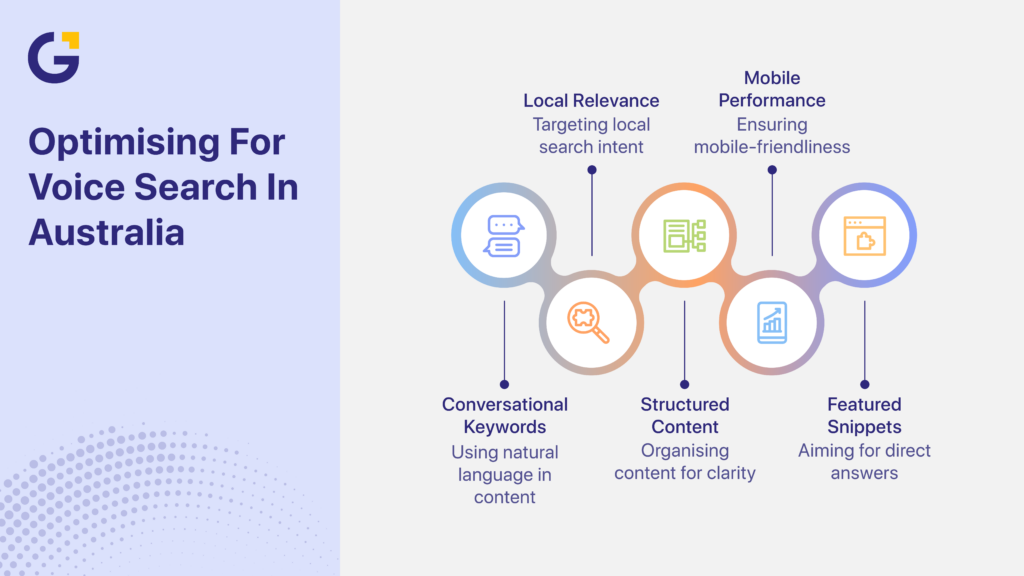
Voice assistants rely heavily on:
- conversational keywords
- local relevance
- structured content
- featured snippets
- mobile-friendly pages
- trusted business information
Modern search engines also use natural language processing to understand context and intent better. This means businesses can no longer rely only on exact-match keywords. Search engines now evaluate whether content clearly answers questions, demonstrates expertise, and matches user intent.
Google AI Overviews increasingly summarise information directly within search results. Businesses with clear, structured, authoritative content are more likely to appear within those summaries.
| Typed Search | Voice Search |
| Short phrases | Full questions |
| Keyword-focused | Conversational |
| Multiple results reviewed | Fast answer expected |
| Desktop-heavy | Mobile-heavy |
| Search intent varies | Usually action-oriented |
Why Voice Search Matters for Australian SMEs in 2026
Voice search matters because Australians increasingly expect fast, conversational, and localised answers from search engines. Businesses that optimise for spoken search behaviour can improve local visibility, mobile engagement, and conversion opportunities across AI-powered search platforms.
According to Google, search behaviour continues shifting toward conversational and multimodal experiences. AI-generated summaries, mobile search, and natural language queries are becoming more common in local search journeys.
For example, voice queries often include:
- “best electrician near me”
- “SEO consultant in Sydney”
- “website developer for small business”
- “digital marketing agency Australia”
- “open pharmacy near me”
These searches usually signal strong commercial intent. The user often wants immediate information or is close to taking action. That makes voice search optimisation valuable for tradies, healthcare providers, accountants, real estate agencies, ecommerce stores, restaurants, and professional service businesses.
Many Australian SMEs still treat voice search as a future trend instead of a current search behaviour shift. Businesses that improve conversational content, local SEO, and mobile usability now are generally better positioned for AI-driven search visibility.
For companies unsure whether their current SEO strategy aligns with seo trends 2026, reviewing conversational search performance and local SEO structure can help uncover missed opportunities in both rankings and conversions.
How Voice Search Works in Modern Search Engines
Voice search works by interpreting spoken queries and matching them with the most relevant answer quickly. Search engines analyse natural language, user intent, location, and mobile context to deliver fast conversational results instead of traditional keyword-only rankings.
When someone uses a voice assistant, the search engine processes:
- the spoken question
- user intent
- device location
- search history
- contextual relevance
- website authority
Voice assistants usually prioritise direct answers instead of showing users multiple search results. This is why concise content, strong local SEO signals, and mobile usability have become increasingly important for voice search optimisation in Australia.
| Voice Search Ranking Factor | Why It Matters |
| Conversational keywords | Matches spoken queries |
| Local SEO signals | Improves “near me” visibility |
| Mobile UX | Most voice searches happen on mobile |
| Featured snippets | Common source for spoken answers |
| Structured data | Helps search engines interpret content |
| Fast loading speed | Improves user experience and rankings |
Why AI and Semantic SEO Matter for Voice Search
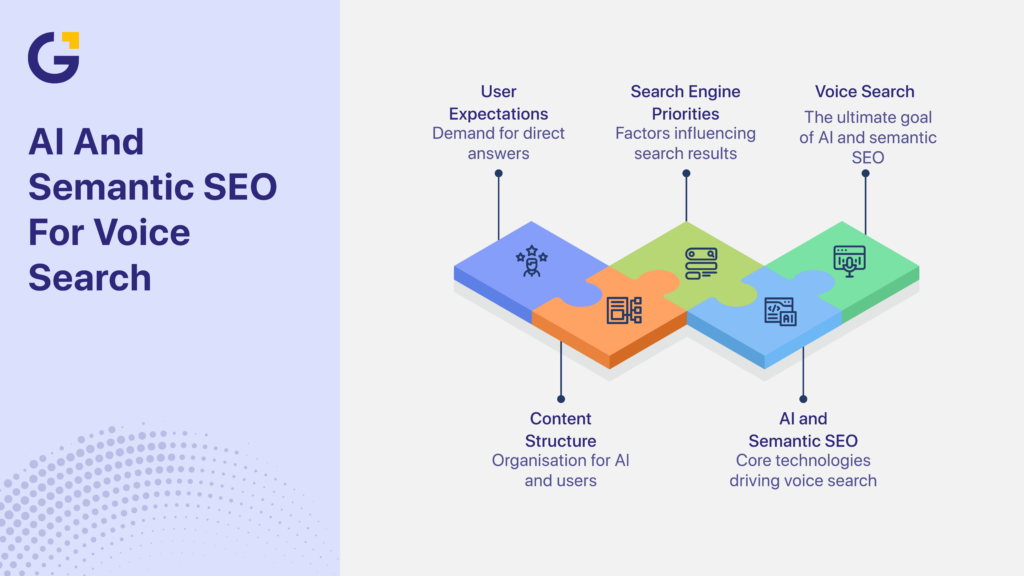
Modern search engines now rely heavily on AI systems and semantic understanding to interpret meaning instead of matching only exact keywords. This helps search platforms understand relationships between topics, businesses, locations, and search intent more accurately.
Google’s AI systems increasingly prioritise:
- concise answers
- clear page structure
- trusted entities
- local business relevance
- mobile performance
- semantic relationships
Search engines also evaluate whether content answers questions naturally while remaining easy to crawl and structure. As AI Overviews and voice assistants continue expanding, businesses increasingly need content that sounds natural to users while remaining highly organised for search engines and AI systems, a direction repeatedly discussed by Sundar Pichai.
Users also increasingly expect direct answers instead of navigating through multiple pages. Businesses that create structured, intent-focused content are more likely to remain visible across voice search and AI-generated search results. Businesses preparing for conversational search should also understand how SEO, AEO, and GEO are reshaping modern search visibility.
Voice Search SEO Strategies Australian Businesses Should Prioritise
Voice search SEO in Australia now depends on conversational search intent, local SEO, mobile-first performance, and structured answer-focused content. Businesses that optimise these areas improve their chances of appearing in featured snippets, AI Overviews, and voice assistant responses.
Use Conversational Keywords and Question-Based Content
Voice searches sound more natural than typed searches. Businesses should create content that reflects how real people speak instead of focusing only on short keywords. Question-based searches and conversational keywords strategies in Australia are becoming more important because users increasingly interact with AI assistants conversationally.
Businesses should optimise for voice queries by creating content around:
- customer questions
- long-tail keywords
- natural language phrases
- local service intent
- FAQ-driven search behaviour
Examples include:
- “Who offers local SEO services in Sydney?”
- “What is the best SEO strategy for small businesses?”
- “How do I improve my Google rankings in Australia?”
Question-based content also improves visibility in featured snippets and AI summaries. This is especially valuable for businesses targeting local service searches and conversational search SEO opportunities.
Optimise for Featured Snippets and Google AI Overviews
Featured snippets’ voice search strategies remain important because many voice assistants pull spoken answers directly from concise snippet-style content. AI Overviews are expanding this further by summarising answers directly within search results.
Businesses should structure content using:
- short answer-first paragraphs
- concise H2 summaries
- tables
- lists
- FAQ sections
- clear headings
Google’s official guidance explains that AI search features rely on the same core quality systems used in traditional Search. According to Google Search Central, AI-powered search features still rely on core ranking systems such as helpful content, page experience, and relevance signals, making clear, answer-focused content increasingly important for visibility in AI Overviews and conversational search results. Clear structure, helpful content, and strong expertise signals improve visibility across both traditional and AI-generated results.
Businesses investing in content marketing services can strengthen AI search visibility by building conversational content clusters that answer specific customer questions clearly and directly.
Improve Local SEO and Google Business Profile Signals
Local voice search optimisation in Australia is heavily tied to Google Business Profile quality and local relevance signals. Many voice searches involve local intent, especially on mobile devices.
Businesses should regularly optimise:
- business categories
- service descriptions
- opening hours
- reviews
- service areas
- local landing pages
- location consistency
Google’s local ranking systems evaluate:
- relevance
- distance
- prominence
This means businesses with strong reviews, accurate information, and well-structured local pages often perform better in local voice search results.
Australian SMEs operating in Sydney, Melbourne, Brisbane, Perth, or regional areas should also create suburb-specific content where relevant. Local intent searches remain highly valuable because they usually occur close to conversion.
Build Faster Mobile-First Websites
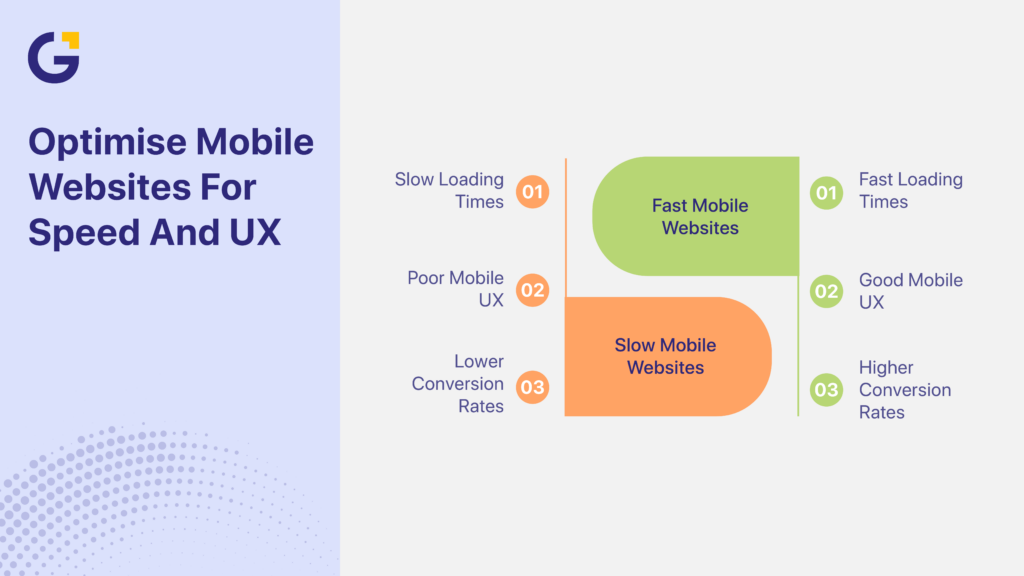
Most voice searches happen on smartphones. Businesses with slow websites, confusing layouts, or poor mobile UX often lose both rankings and conversions.
Mobile SEO strategies in Australia should focus on:
- fast loading times
- responsive design
- clear navigation
- tap-to-call functionality
- clean page structure
- Core Web Vitals
A fast website also supports conversion performance. Users searching through voice assistants often expect immediate answers and frictionless mobile experiences.
Businesses improving website speed and mobile usability often see benefits beyond rankings, including:
- lower bounce rates
- higher engagement
- stronger lead generation
- better mobile conversions
Companies wanting to improve mobile-first SEO and conversion performance can review their current website design and development structure to identify technical SEO and UX issues affecting search visibility.
Businesses improving voice search performance should also review what makes a good website in 2026, especially around mobile UX, speed, and conversion-focused design.
Use Structured Data and Semantic SEO Correctly
Structured data helps search engines understand website content more clearly. Schema markup for SEO supports better interpretation of business information, services, FAQs, and page relationships.
Semantic SEO is also becoming more important because search engines now evaluate topical relationships and entity relevance instead of isolated keywords.
Businesses should focus on:
- entity-based content
- contextual relevance
- structured headings
- internal linking
- crawlable page architecture
- topical authority
SEO platforms like Semrush and Ahrefs can help businesses identify conversational search patterns, long-tail opportunities, and question-based content gaps.
Best Tools for Voice Search Optimisation and SEO Reporting
Businesses should track conversational search performance using SEO and analytics tools that identify question-based queries, mobile search trends, and local visibility opportunities. Data-driven SEO decisions are increasingly important as AI-driven search behaviour evolves.
Useful tools include:
- Semrush
- Ahrefs
- Google Search Console
- Google Business Profile Insights
- PageSpeed Insights
- Google Analytics
These tools help businesses:
- Identify conversational keywords
- Monitor local rankings
- Improve mobile performance
- Detect technical SEO issues
- Analyse search intent
- Measure content engagement
Businesses should also monitor which pages generate featured snippets and AI Overview visibility. Question-based traffic patterns can reveal opportunities for stronger voice assistant SEO and search intent optimisation.
Search query reports from Google Ads campaigns often reveal conversational keyword patterns and customer language trends that businesses can incorporate into long-form SEO content and FAQ optimisation.
Future Voice Search Trends Australian Businesses Should Watch
Voice search trends in Australia will continue evolving alongside AI assistants, conversational commerce, and personalised search experiences. Businesses that adapt early are generally better positioned for conversational search and AI-driven visibility.
Several trends are expected to shape the future of voice search in Australia:
- more conversational AI assistants
- multimodal search experiences
- local AI recommendations
- conversational ecommerce
- personalised search journeys
- AI-generated summaries
Search behaviour is also becoming more fragmented across platforms. Users increasingly search through smartphones, smart speakers, AI assistants, in-car systems, and wearable devices.
How AI Search and Voice Search Are Becoming Connected
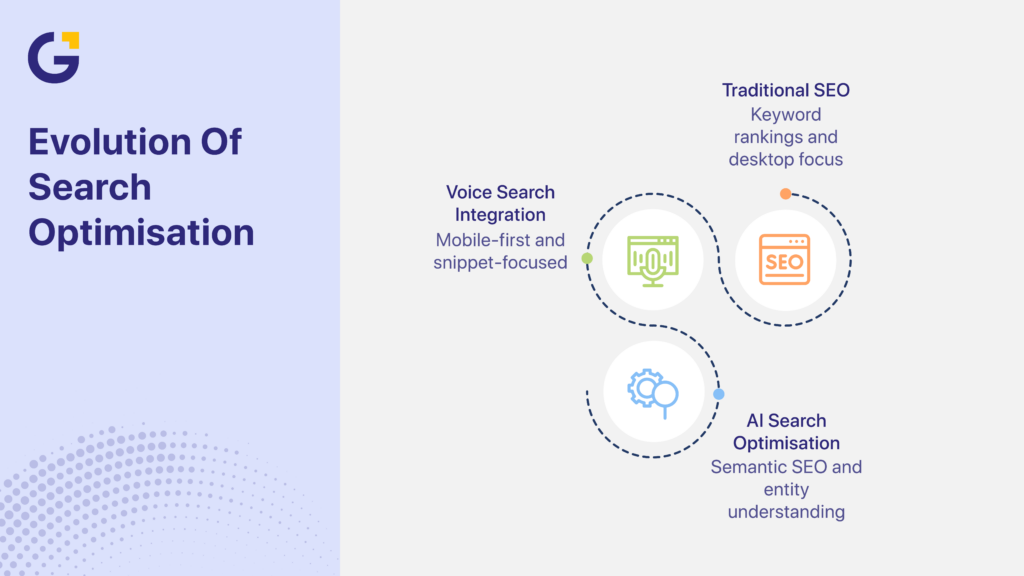
Voice search and AI search are becoming more connected as search engines prioritise conversational answers over exact keyword matching.
Traditional SEO mainly focused on rankings and exact keyword targeting. Modern AI-driven search experiences now evaluate:
- conversational intent
- topical authority
- semantic relationships
- trust signals
- answer clarity
- user experience
| Traditional SEO | Voice Search SEO | AI Search Optimisation |
| Keyword rankings | Spoken queries | AI-generated summaries |
| Search results pages | Conversational answers | Contextual responses |
| Desktop-focused | Mobile-focused | Multi-platform |
| Link-based visibility | Snippet-focused | Entity-focused |
Search engines now rely more heavily on semantic SEO, entity understanding, and conversational content structure. As AI Overviews and voice assistants continue expanding, businesses increasingly need content that sounds natural to users while remaining highly structured for search engines and AI systems, a direction repeatedly discussed by Sundar Pichai.
Businesses should also avoid treating voice search as hype. Not every industry relies heavily on spoken search behaviour, and not every search journey becomes voice-first. The stronger long-term strategy is improving customer experience, local SEO, conversational content, mobile UX, and an AI-ready website structure instead of chasing trends blindly.
Businesses that consistently improve:
- local SEO
- conversational content
- mobile UX
- technical SEO
- AI-ready content structure
will generally remain better positioned as search behaviour continues evolving across Australia.
How Genix Digital Helps Australian Businesses Prepare for Voice Search SEO
Voice search optimisation in Australia is no longer just about ranking for keywords. Businesses now need conversational content, strong local SEO, mobile-first websites, semantic search relevance, and structured answer-focused pages that align with AI-driven search behaviour. Australian SMEs that adapt early are more likely to improve visibility across voice assistants, featured snippets, AI Overviews, and high-intent local searches while also improving conversions and user experience.
At Genix Digital, we help Australian businesses improve voice search visibility through conversational SEO, local SEO, mobile optimisation, and structured content strategies. Businesses looking to strengthen their voice search optimization in Australia can review their current SEO performance through a tailored digital strategy consultation. Contact us to discuss your SEO strategy and see whether voice search optimisation is the right fit for your business.
FAQs
What is voice search optimisation?
Voice search optimisation is the process of improving website content and SEO signals to help businesses appear in spoken search results from tools like Google Assistant and Siri. It usually involves conversational keywords, local SEO, mobile optimisation, and answer-focused content structure. Businesses that optimise for voice queries often improve both search visibility and user experience.
How do Australian businesses optimise for voice search?
Australian businesses can optimise for voice search by improving local SEO, mobile website performance, conversational content, and structured page formatting. Businesses should also focus on question-based content, featured snippet optimisation, and Google Business Profile accuracy. Local service businesses in Sydney and across Australia often benefit from suburb-focused landing pages and conversational FAQs.
Does voice search help local SEO?
Yes, voice search strongly supports local SEO because many spoken searches involve nearby services, directions, or business information. Searches like “best accountant near me” or “SEO agency in Sydney” usually signal strong local intent. Businesses with strong Google Business Profiles, reviews, and mobile-friendly websites are often more visible in local voice search results.
What is the difference between voice search and AI search?
Voice search focuses on spoken queries through devices like Google Assistant or Siri, while AI search generates conversational answers using multiple sources and contextual understanding. Businesses should optimise for both by creating conversational, well-structured content that answers user questions clearly.





 1 Jun 2026
 12 Min Read