

Australian businesses are entering a new phase of digital marketing where first-party data in Australia strategies are becoming essential. As third-party cookies lose reliability due to privacy updates, browser restrictions, and user controls, many SMEs are seeing gaps in tracking, rising ad costs, and unclear reporting. What worked before is no longer consistent.
First-party data offers a practical solution. It gives businesses direct, consent-based insights from their own customers, making it easier to track performance, personalise campaigns, and improve conversion rates. For Australian SMEs that rely on measurable results, this shift is not just technical. It directly impacts leads, sales, and long-term growth. In fact, Dynata research shows that over 80% of marketers plan to increase their use of first-party data, highlighting how quickly businesses are moving away from third-party tracking toward more reliable, owned data strategies.
For businesses that want clarity around their current data setup, reviewing your website, campaigns, and tracking systems can help identify where first-party data can improve visibility and ROI.
What Is First-Party Data?
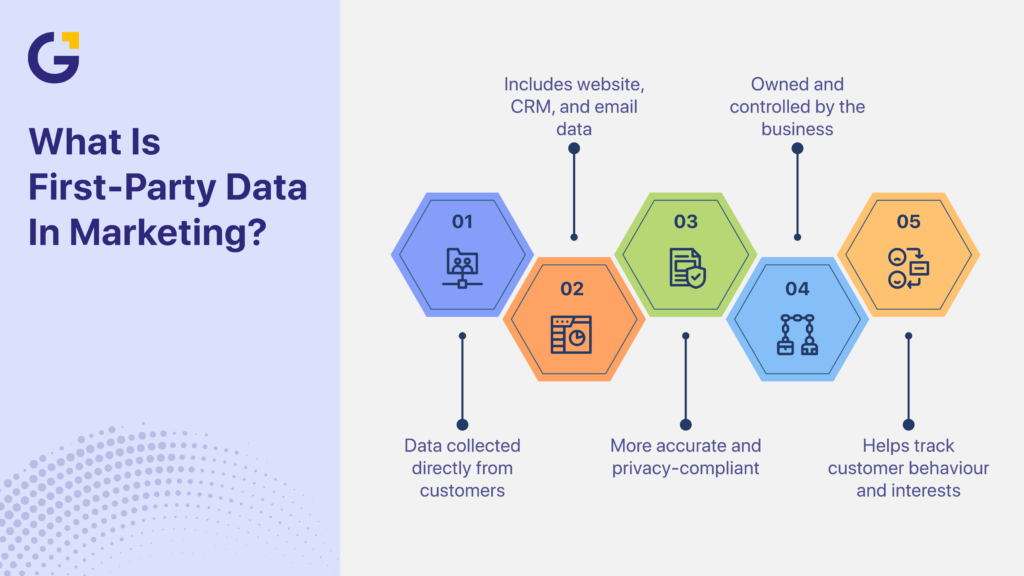
First-party data in Australia refers to information a business collects directly from its customers through its own channels. This includes websites, CRM systems, email lists, and customer interactions. Because it is collected with consent, it is more accurate, privacy-compliant, and reliable for long-term marketing performance.
Instead of relying on external platforms, first-party data is owned by the business. This gives more control over how customer information is used for marketing, analysis, and decision-making.
Common examples of first-party data include:
- Website behaviour such as page visits and time spent
- Email sign-ups and newsletter subscriptions
- Purchase history and transaction data
- CRM records and customer profiles
- Customer enquiries and support interactions
These data points help businesses understand what customers are doing, what they are interested in, and how they move through the buying journey. This is the foundation of a strong first-party data marketing strategy in 2026.
Why First-Party Data Matters After Cookie Deprecation
First-party data matters because third-party cookies are no longer a reliable foundation for digital marketing. Many browsers have already restricted them, and users are more aware of how their data is collected. This shift has created challenges for businesses that rely on external tracking.
For Australian SMEs, the impact shows up in several ways. Campaign performance becomes harder to measure. Retargeting audiences shrink. Attribution becomes less accurate. As a result, marketing decisions feel less clear, and return on investment becomes harder to justify.
This shift is also being driven by changing consumer expectations. According to the Office of the Australian Information Commissioner, 84% of Australians want more control over how their personal information is handled, while only 32% feel they currently have that control. This growing concern is a key reason why businesses are moving toward privacy-first, consent-based data strategies.
First-party data addresses these issues by providing a direct and controlled data source. It allows businesses to track interactions within their own ecosystem instead of relying on third-party signals.
This shift is also closely tied to privacy-first marketing practices in Australia, where transparency and consent play a central role. Businesses that adapt early gain an advantage in both compliance and performance.
First-Party Data vs Third-Party Data
First-party data and third-party data serve different roles in marketing, but their value has changed significantly in recent years. Understanding the difference helps businesses make better decisions about where to focus their efforts.
| Data Type | Source | Accuracy | Privacy | Use Case |
| First-Party Data | Collected directly from customers | High | Strong compliance | Personalisation, targeting, CRM |
| Third-Party Data | External providers | Lower | Increasing restrictions | Broad audience targeting |
| Zero-Party Data | Provided intentionally by users | Very high | Strong consent-based | Preferences, surveys |
First-party data is now the most reliable option because it reflects real interactions. Third-party data, while still used in some cases, is becoming less effective due to tracking limitations.
What Is a Cookieless Future and What Replaces Third-Party Cookies?
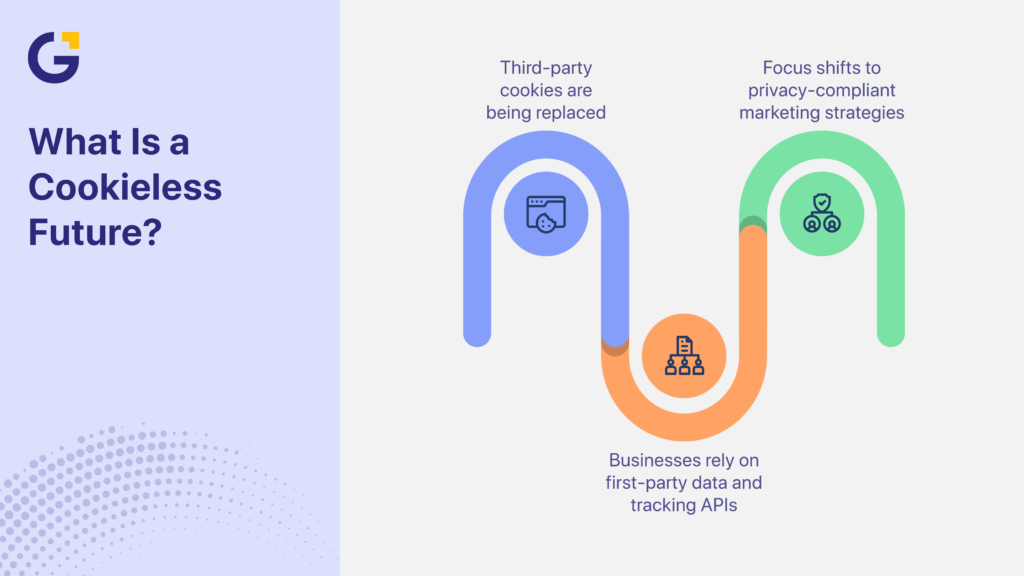
A cookieless future refers to a digital environment where third-party cookies are no longer the primary way to track users across websites. Instead, businesses rely on their own data systems and privacy-compliant technologies.
This does not mean tracking disappears. It changes how tracking works. Businesses move toward:
- Server-side tracking to improve data accuracy
- CRM and email data for audience targeting
- Conversion APIs from platforms like Google and Meta
- Logged-in user ecosystems and account-based tracking
This shift is part of a broader cookieless marketing strategy in Australia, where businesses focus on owned data instead of rented data.
For SMEs, this transition does not require complex enterprise systems. It requires a clear data strategy after cookie deprecation and the right setup across existing tools.
How Australian Businesses Can Collect First-Party Data
Australian businesses can collect first-party data by capturing information directly from customer interactions. The goal is to build a system where data flows from multiple touchpoints into a central view of the customer.
Before listing methods, it is important to understand that effective data collection is not about gathering as much information as possible. It is about collecting the right data at the right time, with a clear purpose and consent.
The most practical ways to collect first-party data include:
- Website forms and lead generation pages
- Email newsletter subscriptions and gated content
- Online purchases, bookings, and checkout data
- Customer service conversations and enquiries
- Surveys, reviews, and feedback forms
- Account creation and login systems
Each of these methods supports data collection that feeds into a broader customer data platform (CDP) or CRM system.
Many Australian SMEs improve their data collection by connecting websites, CRM platforms, and marketing campaigns into one system. This approach strengthens lead tracking and conversion visibility, especially when supported by effective website design and a well-structured email marketing strategy.
First-Party Data Strategy for Australian SMEs
A first-party data strategy helps businesses turn raw information into actionable insights. Without a clear strategy, data often sits unused or disconnected, limiting its value.
The most effective approach for SMEs is a simple five-step framework:
- Audit existing data sources: Review what data is already available across your website, CRM, and campaigns.
- Improve data collection points: Optimise forms, landing pages, and sign-up processes to capture meaningful data.
- Connect systems: Integrate your CRM, analytics, and advertising platforms to ensure data flows properly.
- Activate campaigns: Use data for email marketing, retargeting, and personalised content.
- Measure and optimise: Track performance and refine your strategy based on results.
This framework aligns with a practical first-party data strategy approach in Australia that focuses on execution, not just theory.
Businesses that want a clear, connected marketing system often benefit from aligning their data, campaigns, and reporting through structured digital marketing services that support long-term growth.
Tools and Technologies for First-Party Data
First-party data does not require expensive enterprise software. Most Australian SMEs already use tools that can support a strong data strategy when properly connected.
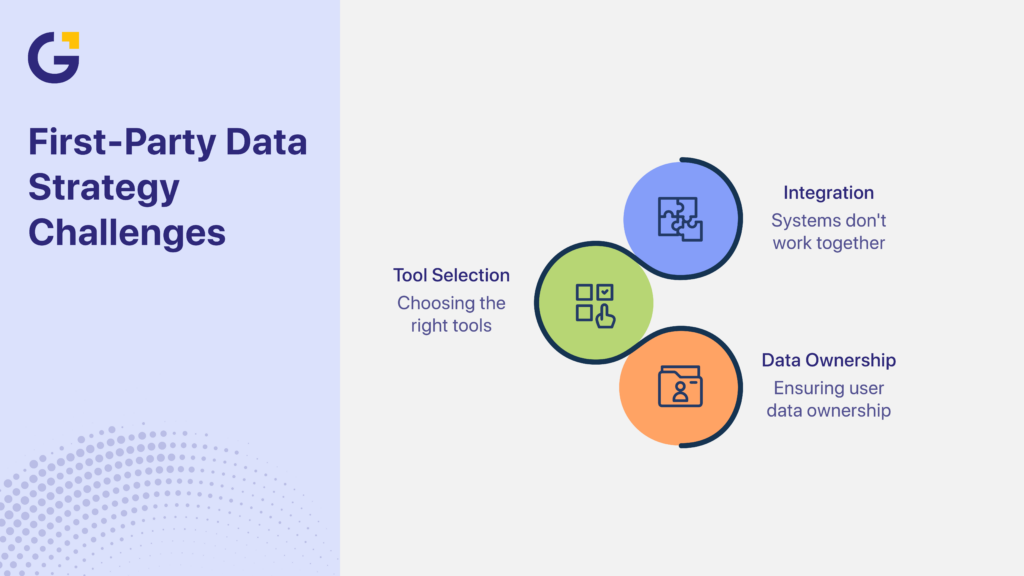
Before choosing tools, businesses should focus on integration. The value of data comes from how systems work together, not from individual platforms.
Common tools include:
- CRM systems to store and manage customer data
- Email marketing platforms for segmentation and automation
- Google Analytics (GA4) for behavioural insights
- Google Ads and Meta Ads for audience targeting
- Marketing automation tools for campaign execution
These tools support marketing attribution, personalisation, and user data ownership, which are key elements of modern marketing.
Privacy and Compliance in Australia
First-party data must be collected and used responsibly. In Australia, businesses must follow privacy regulations that protect customer information and ensure transparency.
The Office of the Australian Information Commissioner outlines the Australian Privacy Principles, which guide how businesses handle personal data. These principles focus on consent, data security, and clear communication with customers.
For marketing teams, this means:
- Clearly explaining how data will be used
- Obtaining consent before collecting personal information
- Securing data storage and access
- Allowing users to manage their data preferences
This aligns with data privacy compliance in Australia marketing standards and supports long-term trust.
Real-World Use Cases for First-Party Data
First-party data can be applied across different industries to improve marketing performance. The key is using data to create more relevant and timely interactions.
For example, an e-commerce business can use purchase history to send personalised recommendations and abandoned cart emails. A local service business can track form submissions to improve lead conversion. A B2B company can use CRM data to retarget high-value prospects.
These use cases show how first-party data in Australian businesses can improve both targeting and conversion outcomes without relying on third-party tracking.
Common Mistakes Businesses Should Avoid
Many businesses collect data but fail to use it effectively. This often leads to missed opportunities and unclear performance insights.
Before implementing a strategy, it helps to understand common mistakes:
- Not connecting systems, leading to data silos
- Ignoring data quality and accuracy
- Overcomplicating tools without a clear strategy
- Failing to activate data in campaigns
- Weak reporting that does not link to ROI
Avoiding these issues is essential for building a sustainable Australian marketing data strategy.
The Future of Marketing in Australia Is First-Party Data
The future of digital marketing in Australia is built on first-party data. Businesses that rely on their own customer insights will have more control, better accuracy, and stronger compliance with evolving privacy standards.
This shift also supports the growth of zero-party data, where customers voluntarily share preferences, and advanced identity resolution techniques that improve tracking accuracy without relying on third-party cookies.
As technology evolves, the combination of first-party data, automation, and AI will shape how businesses engage with customers and measure success.
How Genix Digital Helps Australian Businesses Build First-Party Data Systems
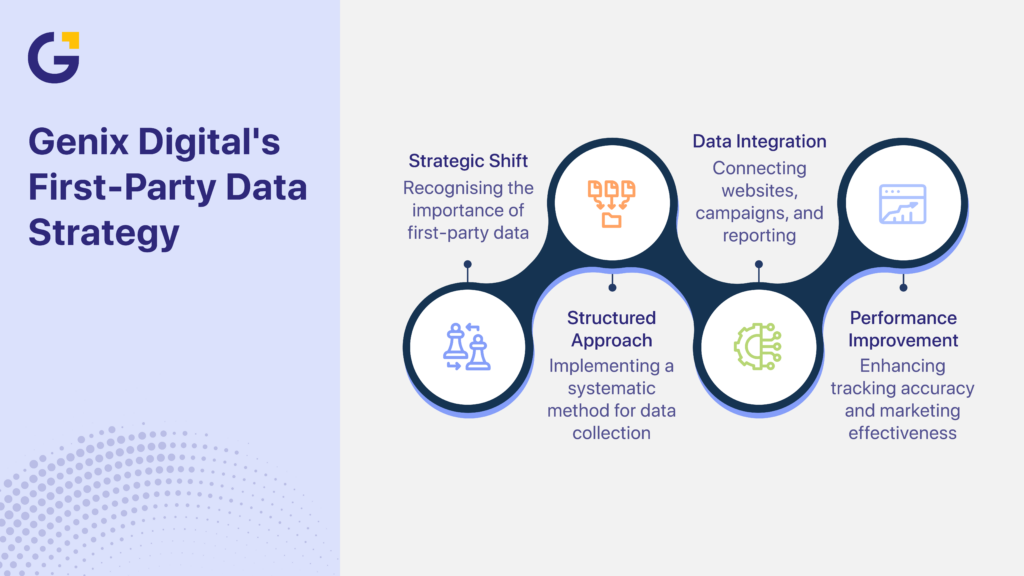
The shift toward first-party data is not just a technical change. It is a strategic shift that affects how businesses collect, manage, and use customer information. Australian SMEs that adopt a structured approach can improve tracking accuracy, reduce wasted ad spend, and create more effective marketing campaigns that drive measurable growth.
At Genix Digital, we help Australian SMEs build practical first-party data systems that connect websites, campaigns, and reporting. From SEO and web design to paid advertising and email marketing, the focus is on improving visibility, leads, and conversions through clear, data-driven strategies. Book a consultation to review your current marketing setup and identify opportunities to improve performance.
FAQs
How to build a first-party data strategy?
Start by auditing your current data sources and identifying gaps in your tracking setup. Then improve how you collect data through forms, CRM systems, and campaigns. The next step is to connect your tools and activate data in marketing campaigns. Businesses can also work with experts to implement a structured approach that improves results.
How to prepare for a cookieless future?
Preparing for a cookieless future involves shifting from third-party tracking to first-party data systems. Businesses should focus on improving data collection, integrating CRM and analytics platforms, and using server-side tracking. This ensures better accuracy and compliance with evolving privacy standards.
How to collect first-party data?
First-party data can be collected through website forms, email subscriptions, purchases, and customer interactions. The key is to collect data with consent and use it to improve marketing performance. Simple tools like CRM systems and email platforms are often enough to get started.
How to build a first-party data infrastructure?
Building a data infrastructure involves connecting your website, CRM, analytics, and advertising platforms. This creates a central system where data flows consistently. Businesses should prioritise integration and reporting to ensure data supports decision-making.
How to use first-party data for personalisation?
First-party data allows businesses to tailor content, offers, and messaging based on customer behaviour. This includes personalised emails, targeted ads, and customised website experiences. Personalisation improves engagement and increases conversion rates when used effectively.





 4 Mar 2026
 8 Min Read