


Choosing between a custom website vs template website is one of the first big decisions any Australian business owner faces when building an online presence. Get it wrong, and you could end up overspending on features you don’t need or, worse, undercutting your brand with a site that can’t grow with you.
The truth is, there’s no one-size-fits-all answer. A template website for small business needs might be perfect for a solo tradie needing a simple online brochure, while a fast-scaling e-commerce brand may need the scalability and flexibility only custom website design can offer. This guide breaks down the real differences in cost, design, SEO, and scalability so you can make a confident, informed decision.
Not sure which path suits your business? Read our comparison guide below before you commit to a build, or explore our custom web design services to see how we build high-performing digital assets.
What Is a Template Website?
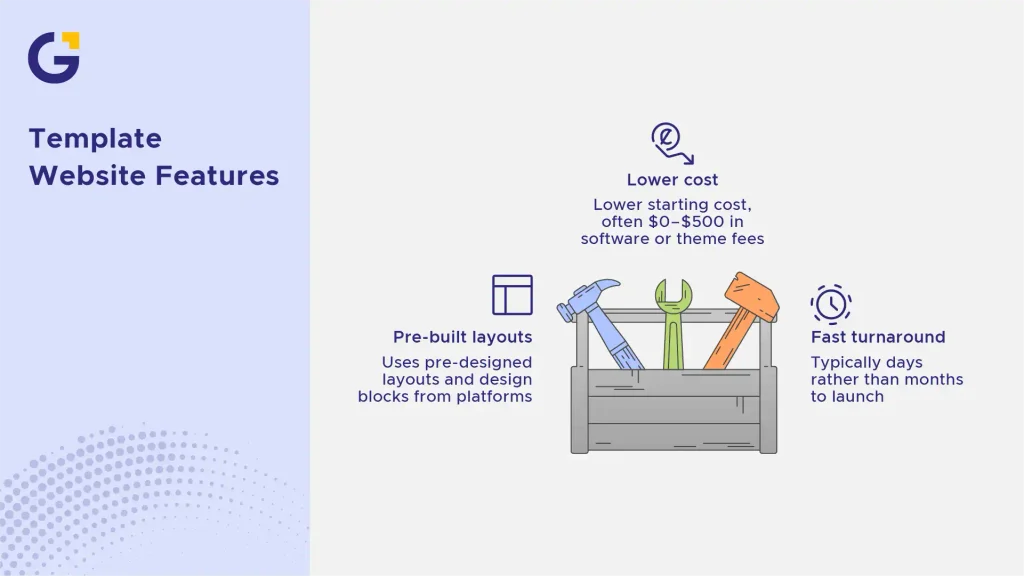
A template website is built using pre-designed layouts from platforms like WordPress, Wix, or Squarespace. You pick a theme, customise colours and text, and launch often within days.
These drag-and-drop website builders are popular because they require little to no coding knowledge and come with a lower upfront cost. They’re designed to work “out of the box” for a broad range of industries.
If you are deciding between platforms, read our guide on whether “Should My Small Business Use Wix, WordPress or a Custom AI Website” to see which fits your current stage.
Example Case: A Melbourne-based yoga instructor wants a simple site listing class times, pricing, and a booking form. A Squarespace template gets her online in under a week with minimal investment. How AI Websites Are Helping Small Businesses in Melbourne Win More Clients shows similar ways local operators get online quickly.
- Pre-built layouts and design blocks
- Lower starting cost, often $0–$500 in software or theme fees
- Fast turnaround, typically days rather than months
What Is a Custom Website?
A custom website is built from scratch by developers and designers around your specific business goals, brand identity, and user experience needs. Nothing is templated; every element is coded or designed intentionally.
This approach gives you full control over functionality, performance, and unique design, which is why most established Australian brands and growing e-commerce businesses lean toward custom web design vs template design as they scale.
Example Case: A Sydney logistics company needs a website integrated with its inventory system, client portal, and custom quote calculator. No template can support this, so they commission a fully custom website Australia build via full stack development.
- Built around unique business requirements
- Full design and functional flexibility
- Higher upfront investment, longer development timeline
Custom Website vs Template Website: Key Differences
To make an informed choice, let’s look at custom website vs template website across the critical operational areas.
Cost
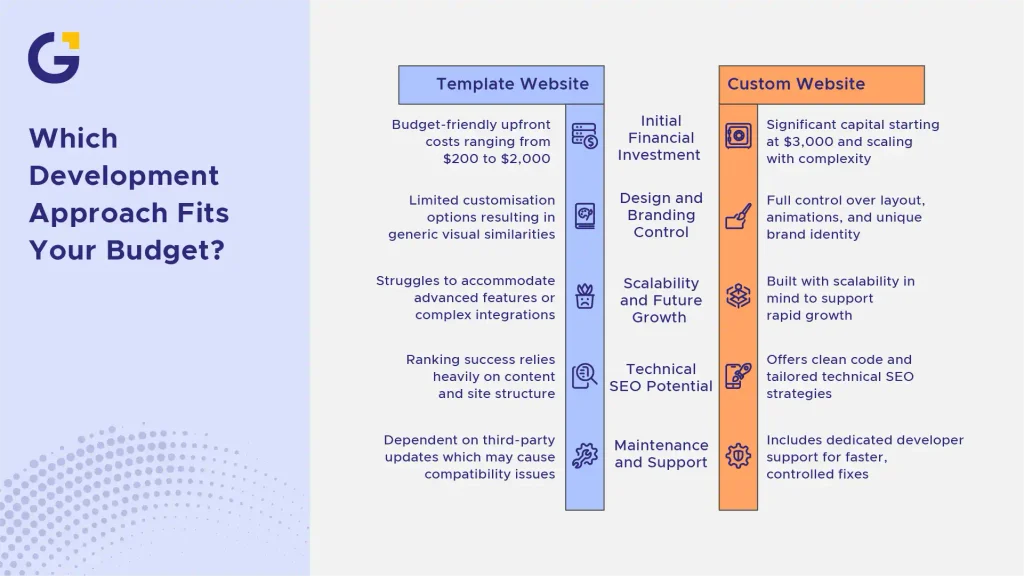
Template websites are budget-friendly upfront, often costing between $200–$2,000 including theme and basic setup. Custom websites typically start from $3,000 and can run into tens of thousands depending on complexity. If you’re weighing overall platform costs, check our breakdown on How Much Does a Website Cost in Australia in 2026?.
However, template sites can incur hidden costs over time, premium plugins, redesign fees, or developer patches that narrow the price gap. Examining the total custom website development cost against ongoing template maintenance is essential before choosing.
Design and Branding
Templates offer limited website customisation, meaning your site may resemble dozens of others using the same theme. Custom websites allow full control over layout, animations, and brand identity, ensuring your business stands out.
As Melanie Perkins, co-founder of Australian tech giant Canva, frequently highlights, giving businesses the tools to create a visually distinct brand identity is key to market success. For businesses where visual differentiation matters hospitality, retail, professional services — custom design combined with expert UI/UX design services is often worth the investment. To learn more about standard layout strategies, read UI/UX for B2B businesses: 10 page patterns that convert.
Scalability and Flexibility
Template platforms can struggle as your business grows, especially when adding advanced features like booking systems, membership portals, or complex integrations. Custom websites are built with scalability in mind from day one.
If you’re planning rapid growth, multiple product lines, or third-party software integrations, a custom build avoids costly migrations later. For e-commerce businesses evaluating options, see our guide on Shopify vs WooCommerce for Australian businesses: which is better?.
SEO Performance
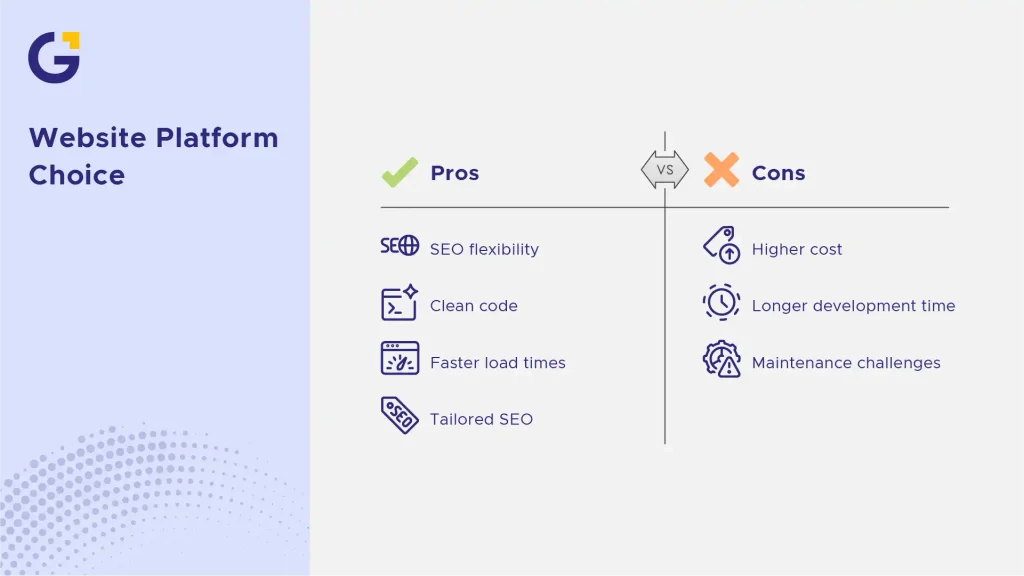
Contrary to popular belief, template websites can rank well on Google. SEO success depends more on content, site speed, and structure than platform choice. That said, custom websites offer greater SEO flexibility, including clean code, faster load times, and tailored technical SEO strategies.
According to Google Webmaster Guidelines, page speed and structural efficiency play an increasingly vital role in search visibility. For competitive industries or national campaigns, custom setups facilitate better optimisation. Check out our How to do seo for website step-by-step guide to audit your current foundation.
Maintenance and Support
Templates rely on third-party theme and plugin updates, which can occasionally cause compatibility issues. Custom websites usually come with dedicated developer support, offering faster fixes and more control over updates.
Reviewing template website pros and cons alongside a robust WordPress maintenance checklist ensures you aren’t caught off-guard by security vulnerabilities or unexpected breakdowns.
When a Template Website Makes Sense
A template website for small business needs is often the smarter first step, especially for startups, sole traders, or businesses testing a new market. It gets you online fast without a large upfront investment.
Example Case: A new Brisbane café wants a simple menu, location, and contact page live before opening day. A WordPress template vs custom website build leans heavily in favour of a template here, meeting every need without unnecessary complexity.
- Limited budget or tight launch timeline
- Simple business offering (menu, services, contact info)
- No need for complex integrations or custom functionality
When a Custom Website Makes Sense
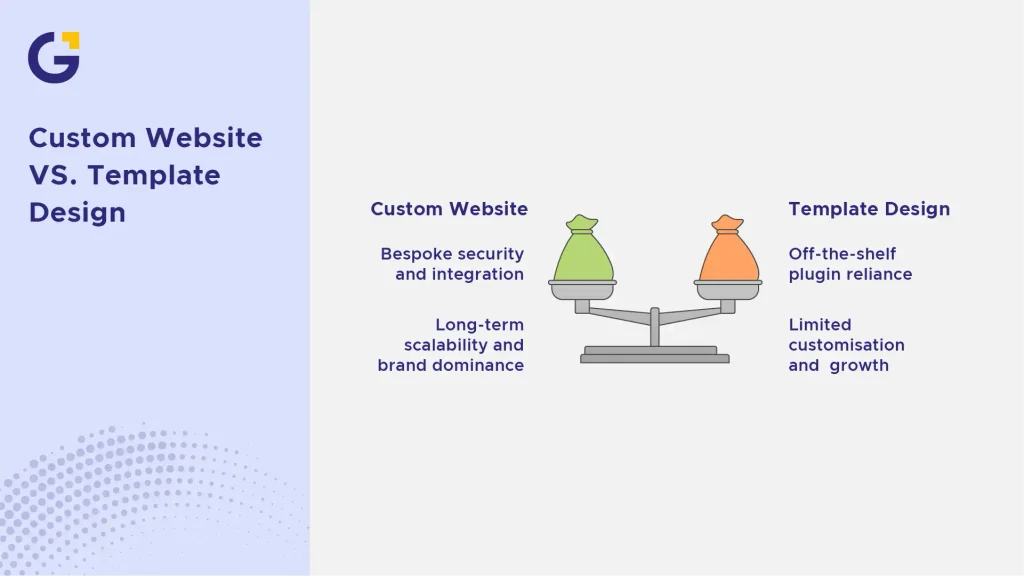
If your business relies on a strong digital brand, complex functionality, or long-term scalability, custom web design vs template design tips the scales firmly toward custom. This is especially true for businesses competing in crowded, high-value markets.
Example Case: A Perth-based fintech company requires custom financial calculators, seamless bank API integrations, and strict data security protocols. Relying on off-the-shelf plugins would pose severe security and usability risks. A custom full-stack build ensures security, speed, and a seamless user experience.
- Need for bespoke user journeys and high-converting landing pages (read our tips on High‑converting product landing pages for Australian market)
- Integration with proprietary software, CRMs, or ERPs
- Strong focus on organic search dominance through advanced SEO services and AI SEO strategies
How Much Does Each Option Cost in Australia?
Understanding the financial investment required for a custom website vs. a template website is critical for budgeting. Below is a realistic breakdown of typical Australian market rates:
| Option | Upfront Development Cost | Ongoing Monthly / Yearly Costs | Ideal For |
| Template Website | $200 – $2,500 | $20 – $150/mo (Hosting, Themes, Plugins) | Startups, Tradies, Local Services |
| Custom Website | $3,500 – $25,000+ | $50 – $300+/mo (Managed Hosting, Security) | Growing SMEs, E-commerce, Enterprise |
While template sites are cheap initially, third-party plugin fees and design limitations often lead businesses to rebuild within 18–24 months. According to web technology usage data from W3Techs, over 40% of the web runs on CMS systems, but tailored enterprise applications heavily favour custom-built stacks for performance and security.
If you want to know if a custom website is worth it, calculate the potential losses caused by slow loading speeds or lost conversions. Businesses investing in paid channels like Google Ads or Meta Ads must ensure their landing page converts efficiently to maximise return on ad spend.
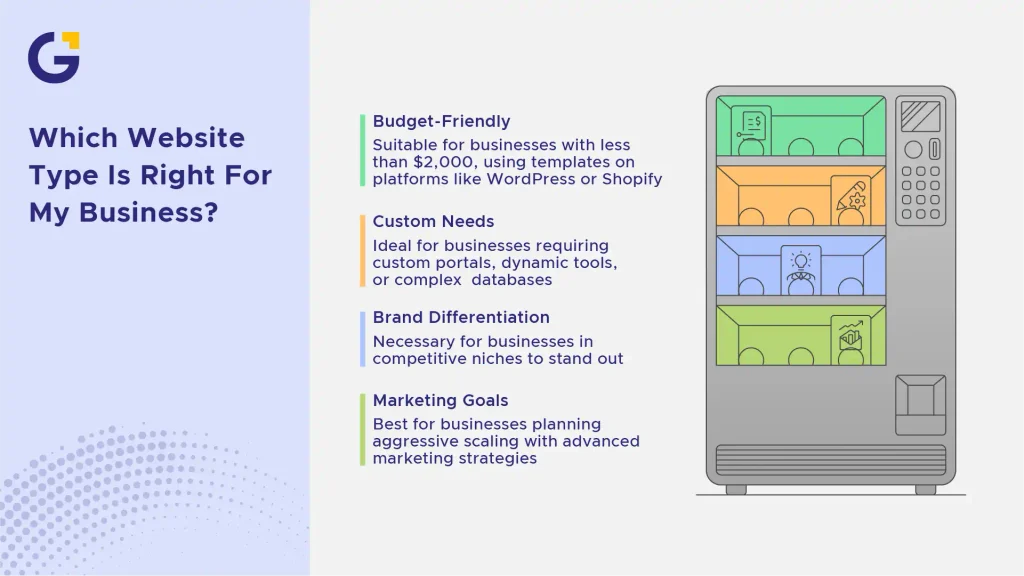
Which Option Is Right for Your Business?
To decide how to choose a website type, ask yourself these four fundamental questions:
- What is your immediate budget? If you have less than $2,000, start with a high-quality template on a platform like WordPress or Shopify.
- How complex are your functional needs? If you need custom portals, dynamic booking engine tools, or complex databases, go custom.
- How important is brand differentiation? If you operate in an ultra-competitive niche, a generic WordPress theme will make it hard to stand out.
- What are your digital marketing goals? If you plan to scale aggressively using written content marketing, local search strategies, or dynamic ad campaigns, a custom site provides superior performance and tracking capabilities.
Need help deciding between custom design and a template? We build high-performing websites tailored to your exact business needs. Contact Genix Digital today or check out our WordPress & Web Solutions to see what’s possible.
FAQs
Is a custom website worth it for a small business in Australia?
It depends on your growth strategy. If your website is simply a digital business card, a template is sufficient. However, if your website is your primary customer acquisition channel, investing in the benefits of custom website design will yield a significantly higher conversion rate and ROI over time.
Can I start with a template and switch to a custom website later?
Yes, absolutely. Many successful businesses start with a basic template to test market demand. Once revenue grows, they migrate to a custom build to support higher traffic, advanced on-page SEO, and custom workflows.
How long does it take to build a custom website vs a template site?
A template website can be configured and launched in 1 to 2 weeks. A custom website typically takes 6 to 12 weeks, as it involves thorough UX design, custom coding, testing, and content optimisation.
Which option provides better SEO flexibility?
While both can rank on search engines, custom websites provide superior SEO flexibility. They allow developers to eliminate bloatware, optimise clean code structures, and implement advanced technical strategies to rank higher on search engine results pages.





 15 May 2026
 10 Min Read