


The website cost in Australia for 2026 usually ranges from around $1,500 for a basic template site to more than $50,000 for advanced e-commerce or custom platforms. The final price depends on design, development, SEO setup, integrations, content requirements, and long-term business goals. A simple brochure site costs far less than a website built for lead generation, paid ads, or e-commerce growth.
Many Australian businesses now treat websites as part of their wider marketing budget instead of a standalone expense. A website often supports SEO, CRM systems, paid ads, landing pages, lead generation, and content strategy. That is why website pricing varies so widely between businesses, industries, and providers.
A cheaper website can work for some startups or local service businesses. However, many SMEs later discover that a limited SEO setup, poor mobile performance, and weak conversion design increase marketing costs over time. Businesses planning long-term growth often invest earlier in stronger structure, faster performance, and scalable development. For companies reviewing long-term growth goals, Genix Digital’s website development services focus on websites built for SEO, conversions, and business scalability.
The Short Answer: Realistic Website Cost Ranges in Australia
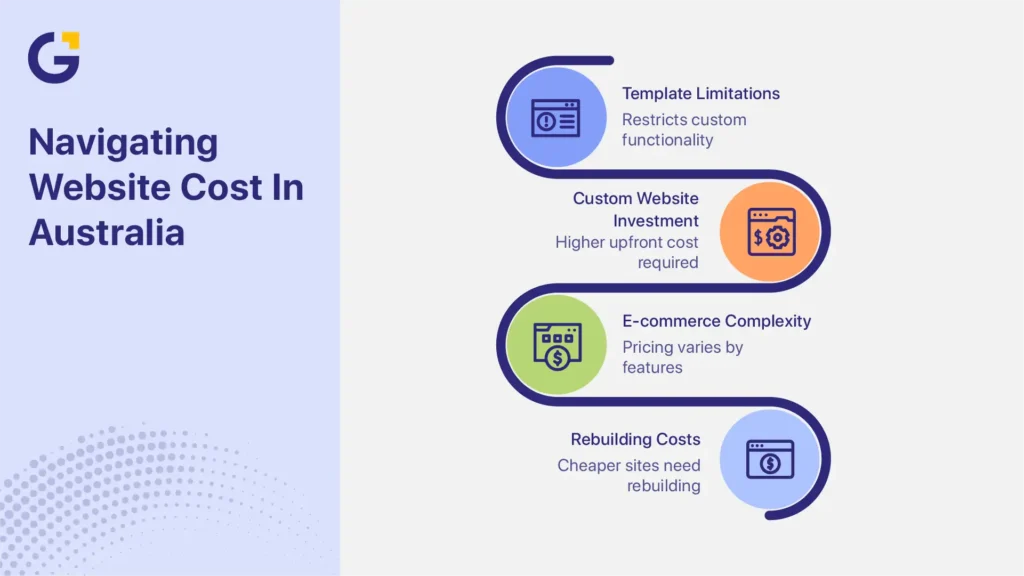
A realistic small business website cost in Australia depends on the website type, business goals, and required functionality. Template websites may start around a few thousand dollars, while custom lead-generation or ecommerce websites often require larger investments because they include SEO setup, integrations, custom UX, and conversion-focused design.
Template Website
A template website usually costs between $1,500 and $5,000 in Australia. These websites use pre-built layouts through platforms like WordPress, Wix, Squarespace, or Shopify. This option works best for startups, sole traders, local service businesses or early-stage companies testing demand.
Template websites help businesses launch quickly with lower upfront costs. However, they often have limitations around:
- custom functionality
- SEO flexibility
- page speed
- advanced integrations
- unique branding
Many businesses later rebuild these websites once lead generation or SEO becomes more important.
Custom Business Website
A custom website cost in Australia often ranges between $5,000 and $20,000, depending on complexity. These websites usually include:
- custom layouts
- stronger SEO structure
- conversion-focused design
- advanced forms
- service page architecture
- CRM integrations
This pricing range is common for:
- professional services
- healthcare clinics
- trades
- multi-location businesses
- growing SMEs
A large part of the custom website development cost comes from planning, SEO setup, content structure, and UX decisions instead of visual design alone.
One issue many Australian businesses face is paying for a cheaper website first, then rebuilding within one or two years because the original structure cannot support SEO or lead generation properly.
E-commerce or Advanced Website
An e-commerce website cost in Australia usually starts around $8,000 and can exceed $50,000 for advanced builds.
Pricing changes based on:
- product count
- inventory systems
- payment gateways
- shipping setup
- automation
- CRM integrations
- subscription systems
- custom checkout functionality
Platforms like Shopify and WooCommerce reduce development time, but larger e-commerce businesses often require custom integrations and conversion optimisation.
| Website Type | Typical Cost Range | Best For | Main Limitation |
| Template Website | $1,500–$5,000 | Small businesses and startups | Limited scalability |
| Custom Business Website | $5,000–$20,000 | Lead generation and SEO growth | Higher upfront investment |
| E-commerce Website | $8,000–$50,000+ | Online stores and advanced sales funnels | More complex maintenance |
Businesses comparing website pricing should also understand what separates high-performing websites from cheaper builds. This guide on what makes a good website in 2026 explains the technical and conversion factors that affect long-term performance.
If your business is comparing realistic pricing options, Genix Digital can help Australian SMEs request a website cost estimate based on business goals, SEO requirements, and growth plans.
What Actually Changes the Cost of a Website?
Website pricing changes based on functionality, SEO requirements, design complexity, integrations, content creation, and marketing goals. A simple informational website costs far less than a platform designed for lead generation, e-commerce growth, automation, or paid advertising support.
Number of Pages and Templates
A five-page website costs far less than a 40-page SEO-focused business website.
Pricing often increases because of:
- custom layouts
- landing page design
- blog structures
- service page architecture
- multi-location SEO pages
- content hierarchy
Businesses investing in SEO often need additional service pages, location pages, and conversion-focused landing pages. This increases development and copywriting requirements.
Copywriting and SEO Setup
SEO setup is one of the biggest differences between a basic website and a growth-focused website.
This includes:
- metadata
- page structure
- internal linking
- mobile optimisation
- technical SEO
- content hierarchy
- conversion copywriting
According to Google Search Central Helpful Content Guidelines, websites should prioritise useful, people-first content and clear site structure. Many cheap websites skip this setup completely.
A common mistake many business owners make is comparing websites only by upfront price instead of long-term visibility and lead generation performance.
Businesses planning their structure and content strategy can also review this guide on how to design a website in Australia before starting development.
Forms, Bookings, Payments, and Integrations
Integrations often increase website development costs significantly.
Examples include:
- booking systems
- CRM connections
- payment gateways
- e-commerce tools
- email marketing systems
- analytics platforms
- AI chatbots
Some businesses now add AI tools to improve lead generation and customer support. Plugins such as the Jotform AI Chatbot Plugin and AI Engine Plugin allow businesses to automate FAQs, booking assistance, and customer enquiries.
One mistake many Australian businesses make is underestimating how much integrations and automation affect total website costs.
DIY vs Freelancer vs Agency Pricing
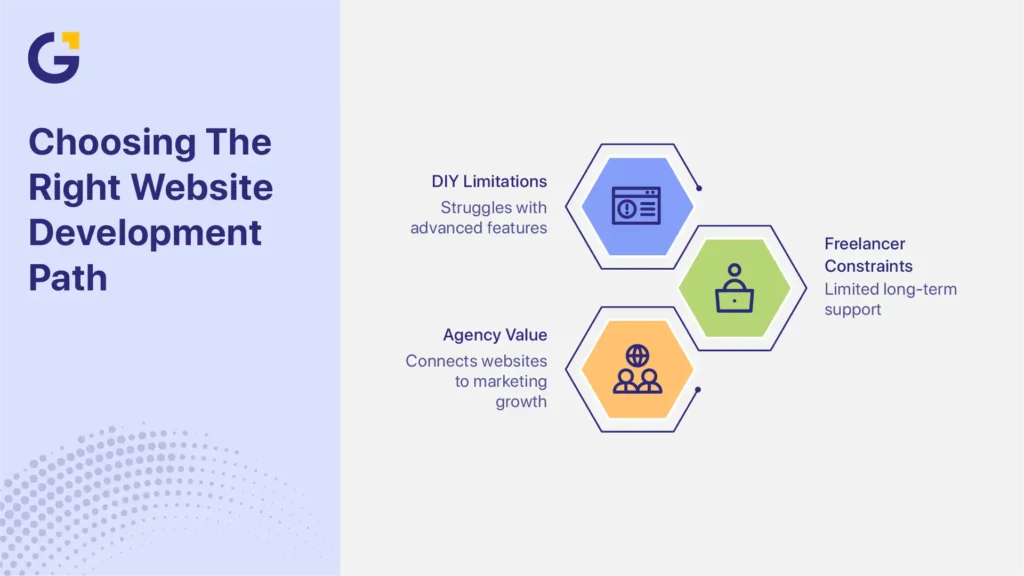
DIY builders, freelancers, and agencies all support different business goals. Some businesses only need a simple online presence, while others require SEO strategy, conversion optimisation, automation, and long-term scalability. The right option depends on growth expectations, technical requirements, and marketing goals.
When DIY Is Enough
DIY website builders work well for:
- side projects
- temporary websites
- proof-of-concept businesses
- low-budget startups
Platforms like Wix, Squarespace, and Shopify help businesses launch quickly with lower costs.
However, DIY websites often struggle with advanced SEO, scalability, page speed, custom UX, and conversion optimisation.
Many businesses eventually outgrow these platforms once lead generation becomes more important.
Where Freelancers Work Well
Freelancers are often a strong middle-ground option.
They work well for:
- smaller websites
- moderate redesigns
- businesses with limited budgets
- landing page design projects
Freelancers may also provide more flexibility than larger agencies. However, businesses sometimes run into limitations around:
- long-term support
- availability
- broader marketing strategy
- technical scalability
When an Agency Makes Sense
Agencies usually become valuable when websites connect directly to marketing growth.
This often includes:
- SEO campaigns
- paid ads landing pages
- CRM integration
- ecommerce development
- CRO strategy
- analytics
- content strategy
In many rebuild projects, businesses originally started with DIY platforms before outgrowing their SEO or functionality limitations.
Agencies also bring multiple specialists into one workflow. This may include:
- web development
- SEO setup
- copywriting
- UX design
- analytics
- paid advertising strategy
| Option | Typical Cost | Best For | Main Risk |
| DIY Builder | Lowest upfront cost | Early-stage businesses | Limited scalability |
| Freelancer | Moderate pricing | Smaller projects | Limited long-term support |
| Agency | Higher investment | Growth-focused businesses | Higher initial cost |
For Australian SMEs unsure about the right setup, Genix Digital helps businesses review website requirements, marketing goals, and future scalability before committing to a rebuild or redesign.
Hidden Costs Most Businesses Forget
The upfront website build cost is only part of the total investment. Many Australian businesses underestimate ongoing expenses such as hosting, maintenance, plugin renewals, analytics setup, SEO improvements, and conversion optimisation after launch.
Hosting, Plugins, and Maintenance
Website maintenance costs vary based on platform complexity and traffic levels.
Common ongoing expenses include:
- hosting
- SSL certificates
- plugin licensing
- software updates
- security monitoring
- backups
- uptime monitoring
WordPress website pricing may appear lower initially, but businesses still need maintenance and security updates over time.
Higher-quality hosting usually improves page speed, uptime, security, and user experience. This becomes especially important for e-commerce development and paid ads landing pages.
Tracking and Analytics Setup
Many businesses forget the cost of analytics and conversion tracking.
This may include:
- Google Analytics 4
- Google Tag Manager
- CRM tracking
- call tracking
- ecommerce attribution
- conversion reporting
Without proper tracking, businesses struggle to measure lead generation performance or advertising ROI.
Content Updates and CRO
Websites also require ongoing optimisation after launch.
This often includes:
- SEO updates
- blog publishing
- landing page improvements
- conversion testing
- content strategy
- UX refinement
A common issue many SMEs face is launching a website without budgeting for maintenance, updates, or SEO improvements after launch.
Businesses investing in lead nurturing and automation may also connect websites to an email marketing strategy to improve customer retention and conversion rates.
How to Choose the Right Website Budget
The right website budget depends on business goals, competition, lead value, and long-term marketing plans. Some businesses only need a simple informational website, while others benefit from investing earlier in SEO-ready development, conversion optimisation, and scalable infrastructure.
Low-Risk First Build
A lower-cost website may work well for:
- testing demand
- validating a business idea
- temporary service launches
- smaller local businesses
In these situations, businesses often prioritise:
- Speed to launch
- Simple branding
- Essential functionality
- Basic lead capture
Growth-Focused Build
Growth-focused websites usually include:
- SEO setup
- content structure
- lead generation forms
- mobile optimisation
- CRM integration
- conversion-focused UX
These websites often support Google Ads, local SEO, content marketing and sales funnel performance.
Businesses in competitive industries usually benefit from a stronger structure earlier because rebuilding later often costs more overall.
When to Invest in Custom UX
Some businesses require more advanced customisation from the beginning.
Examples include:
- SaaS platforms
- larger ecommerce businesses
- healthcare groups
- high-ticket service providers
- multi-step conversion funnels
These websites often require:
- advanced integrations
- unique workflows
- custom dashboards
- high-performance UX
- scalable infrastructure
Based on how many Australian SME websites evolve, businesses often upgrade once lead generation and SEO become priorities instead of optional extras.
5 Signs Your Business Needs More Than a Basic Website
- Your website does not generate consistent enquiries.
- Your pages struggle to rank in Google.
- Your site loads slowly on mobile devices.
- Your business needs CRM or booking integrations.
- Your marketing campaigns require dedicated landing pages.
Why Australian Businesses Choose Genix Digital
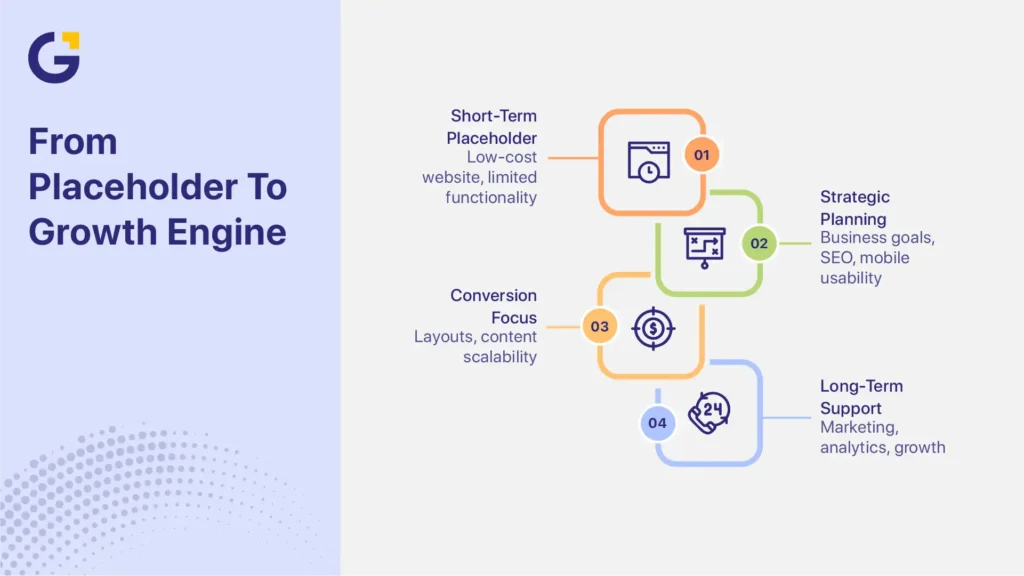
Many businesses discover that building a website is only part of the challenge. The bigger issue is making sure the website supports SEO, lead generation, paid advertising, and long-term growth without needing a rebuild too soon.
At Genix Digital, website projects are usually planned around business goals instead of design alone. That often includes thinking about mobile usability, SEO structure, conversion-focused layouts, content scalability, and future marketing needs before development starts.
One issue commonly seen during website rebuild projects is businesses investing in lower-cost websites that later struggle with SEO visibility, slow mobile performance, or limited functionality. In many cases, fixing those issues later becomes more expensive than planning properly from the beginning.
Because websites now connect closely with marketing, analytics, and customer acquisition, many Australian SMEs prefer a website strategy that supports long-term growth instead of acting as a short-term placeholder.
Planning a Website Budget Starts With Clear Business Goals
Many Australian businesses overspend on features they do not need or underinvest in areas that directly affect lead generation, SEO performance, and conversion rates. The right website budget usually depends on business goals, competition, growth plans, and how the website fits into the wider marketing strategy.
For some businesses, a lean starter website is enough. Others may need stronger SEO foundations, custom landing pages, CRM integrations, ecommerce functionality, or conversion-focused design from the beginning. Understanding those requirements early often prevents expensive rebuilds later.
Genix Digital’s website development services help Australian SMEs assess website scope, SEO requirements, integrations, and long-term growth priorities before committing to a build or redesign. Businesses comparing options can also request a website cost estimate to better understand realistic pricing, timelines, and technical requirements for their industry.
FAQs
Q1. How much should a small business website cost in Australia in 2026?
A small business website cost in Australia usually ranges between $1,500 and $10,000, depending on design, SEO setup, integrations, and content requirements. Simpler template websites cost less, while growth-focused websites with SEO and lead generation features cost more.
Q2. Is WordPress cheaper than a custom website?
WordPress website pricing is often lower because businesses can use existing themes and plugins instead of fully custom development. However, advanced WordPress websites with custom UX, integrations, and e-commerce features can still become large projects.
Q3. Why do agency websites cost more than DIY website builders?
Agency websites usually include strategy, SEO setup, conversion optimisation, content structure, analytics, and long-term scalability planning. DIY builders reduce upfront costs but often lack advanced marketing and performance features.
Q4. What hidden costs should I expect after launching a website?
Many businesses forget ongoing costs such as hosting, plugin renewals, maintenance, analytics setup, SEO updates, security monitoring, and content improvements. These costs are important for website performance and long-term lead generation.
Q5. How much should I budget for website maintenance?
Website maintenance costs often range from a few hundred dollars per month to much higher for e-commerce or complex websites. Costs depend on updates, hosting quality, monitoring, SEO work, and support requirements.





 1 Apr 2026
 18 Min Read