

Australian businesses have more ways to reach buyers than ever, but more channels do not always mean better results. Navigating digital marketing in Australia requires moving past surface metrics and building an integrated system focused on leads, sales, and long-term customer retention.
That matters in a market with 2.73 million actively trading businesses, 97.1 % internet penetration, 77.9 % social media usage, and 9.8 million households shopping online, according to recent data from the Australian Bureau of Statistics.
Search dynamics have also transformed. Google expanded AI Overviews globally, powering results with Gemini models. To capture market share today, brands need a tailored digital marketing strategy in Australia that aligns paid, organic, and owned channels while directly addressing different stages of business growth.
The best way to approach growth in 2026 is not to chase every passing trend. It is to implement data-driven SEO and CRO strategies alongside actionable digital marketing tips that Australian companies can scale over time. Exploring Top Digital Marketing Trends in Australia for 2026 can also help you align your strategy with evolving consumer behaviours.
What Makes A Digital Marketing Strategy Successful For Australian Businesses?
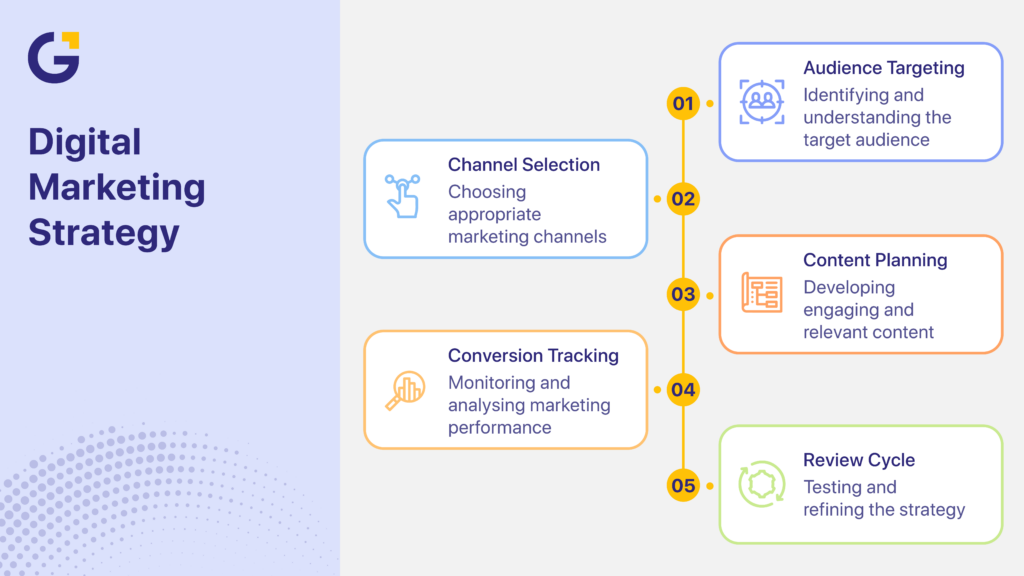
A successful australian digital marketing framework is a cohesive plan connecting business goals, audience targeting, channels, content, and conversion tracking. The best digital marketing strategies for businesses do not treat SEO, ads, email, and social as isolated tasks; they combine them into a single growth engine.
Many brands fail because they invest in tools before establishing a cohesive strategy. A company might launch Meta ads, post on LinkedIn, and write weekly blogs, yet miss lead targets because their offer lacks clarity, the landing page is slow, or messaging varies by platform.
A strong strategy for digital marketing in Australia should include:
- A clear revenue or lead acquisition goal
- Defined audience buyer personas and pain points
- A balanced channel mix built around search intent
- A content schedule mapped to buyer journeys
- Unified data analytics and conversion tracking
- Regular optimisation cycles for testing and scaling
Aligning Marketing Strategies with Your Business Growth Stages
Not every strategy fits every business at the same time. Comparing methodologies of top Australian digital marketing agencies shows that strategy must match your current stage of business growth:
- Startup / Launch Stage: Focus heavily on speed to market. Prioritise high-intent paid search (Google Ads), core commercial landing pages, and foundational brand visibility.
- Growth Stage: Transition into scaling. Combine ongoing performance marketing with structured SEO content clusters, fast social media growth strategies, and automated email lead nurturing.
- Maturity / Expansion Stage: Focus on efficiency, market share, and retention. Invest deeply in conversion rate optimisation (CRO), advanced audience segmentation (e.g., targeting Gen Z or niche demographics), and omnichannel retargeting.
- Renewal / Re-invention Stage: Re-evaluate unit economics, refresh brand positioning, and overhaul legacy tech stacks to improve customer lifetime value (LTV).
Best Digital Marketing Strategies by Business Type
Different Australian businesses need different marketing priorities. A strategy that works for an e-commerce brand may not be the right approach for a local service business or B2B company.
Local service businesses: Prioritise Local SEO, Google Ads, Google Business Profile optimisation, and conversion-focused service pages to capture customers actively searching for nearby services.
B2B businesses: Focus on SEO, high-value educational content, LinkedIn, lead generation campaigns, and email nurturing to support longer sales cycles.
E-commerce businesses: Combine Google Shopping, paid social, product page optimisation, CRO, and email marketing to increase both first-time and repeat purchases.
Startups and new businesses: Begin with high-intent Google Ads, strong landing pages, conversion tracking, and foundational SEO before expanding into broader awareness channels.
Established SMEs: Focus on improving the efficiency of existing traffic through SEO, CRO, remarketing, customer retention, and data-driven campaign optimisation.
The goal is not to use every available channel. It is to select the channels that best match how your customers search, compare, and make purchasing decisions.
Which Top Digital Marketing Strategies Should Australian Businesses Prioritise First?
The latest digital marketing strategies for Australian businesses depend heavily on goals, margins, and sales cycle lengths. Combining a fast-response channel, a compounding long-term channel, and a retention mechanism minimises risk and ensures steady pipeline growth.
Business Priorities Framework:
- Fast Leads: Best starting channels are Google Ads, Paid Social, and High-Converting Landing Pages to reach high-intent active buyers immediately.
- Long-Term Growth: Best starting channels are a data-driven SEO strategy and Content Marketing to build sustainable organic traffic and brand equity over time.
- Higher Conversions: Best starting channels are Conversion Rate Optimisation (CRO) and UX Testing to turn existing site traffic into qualified sales.
- Retention & LTV: Best starting channels are Email Marketing Automation and Remarketing to drive repeat transactions and lower acquisition costs.
- Brand Awareness: Best starting channels are Short-form Video and Social Media Distribution to build visibility among prospective buyers early.
Why Is SEO Still One Of The Best Digital Marketing Strategies for Long-Term Growth?
SEO remains one of the highest-performing digital marketing strategies because it captures demand from buyers actively searching for solutions. A robust organic search plan reduces long-term acquisition costs and establishes trust.
According to Google’s official SEO Starter Guide, search engine optimisation helps search engines understand your content while enabling users to discover your website. Google’s guidance on AI search features also emphasises providing helpful, people-first content.
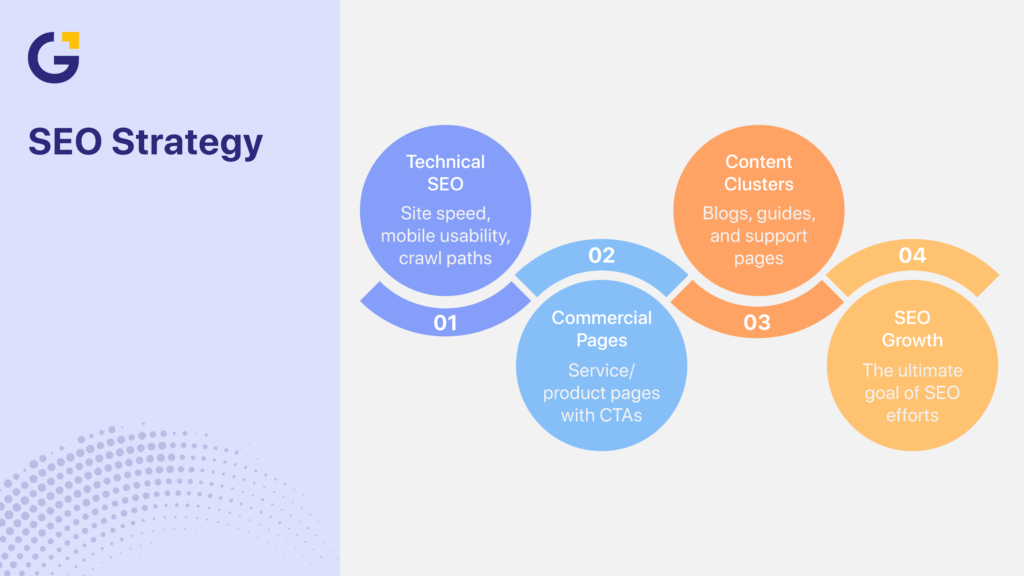
For Australian businesses, an effective SEO roadmap focuses on three main pillars:
- Technical & Infrastructure SEO: Ensuring fast load speeds, mobile responsiveness, structured data, and clean site architecture.
- Commercial Page Optimisation: Targeting transactional keywords with localised search intent (e.g., service pages tailored to Australian metropolitan areas).
- Topic Clusters & Authority Content: Publishing guides and articles that solve real user problems across every stage of the funnel. Learn more about how to structure these search signals in our comprehensive guide on SEO, AEO, GEO: The New Era of Search in 2026 and Beyond.
When structured correctly, organic search supports AI-driven discovery platforms, boosts paid campaign efficiency, and builds compounding traffic value over time.
How Data-Driven SEO and CRO Methodologies Drive Higher ROI
Top Australian digital marketing methodologies emphasise that driving traffic is only half the battle. Converting that traffic through structured Conversion Rate Optimisation (CRO) is where true profitability lies. To better understand these mechanics, review our guide on Conversion Rate Optimisation (CRO) Strategies for Australian Websites.
Combining data-driven SEO with CRO ensures that every visitor drawn from organic search hits a page built to convert:
- Heatmap & Behavioural Analysis: Track where users drop off or hesitate on critical service pages.
- A/B Testing Headlines & Offers: Test localised value propositions against generic messaging.
- Frictionless Form Design: Streamline lead forms to improve mobile conversion rates.
- Social Proof Integration: Embed Australian customer reviews, case studies, and trust badges directly above the fold.
How Does Paid Advertising Help Businesses Generate Leads Faster?
Paid search and social advertising represent the fastest path to reaching buyers with explicit intent or defined demographic profiles. Modern ad platforms utilise AI-driven bidding models (like Google AI Max and Meta Advantage+), making campaign structure and ad creative quality crucial to success.
To maximise paid return on ad spend (ROAS), Australian marketers should deploy a three-tier paid strategy:
- Search Ads: Capture active, high-intent searches for core services.
- Paid Social: Drive targeted awareness and capture interest across Meta, LinkedIn, or TikTok.
- Cross-Channel Remarketing: Re-engage past website visitors who did not convert on their first visit.
Why Should Content Marketing Sit At The Centre Of A Multichannel Digital Marketing Strategy?
Content marketing acts as the foundation for search, paid media, email, and social channels. It gives each channel high-value material to publish, promote, and leverage for lead generation.
Effective content fulfils three core objectives:
- Answers buyers’ technical and commercial questions directly.
- Provides search engines with topical authority signals.
- Supplies creative assets for ads, email nurtures, and social posts.
To build a complete content distribution model, include commercial landing pages, in-depth blog guides, downloadable lead magnets, and bite-sized social snippets.
How to Execute a Fast Social Media Growth Plan & Target Modern Audiences (Gen Z)
A modern digital marketing plan in Australia must adapt to shifting demographic habits. Reaching younger buyers and Gen Z audiences requires pivoting away from traditional corporate posts toward authentic, video-first content.
To execute a fast social media growth plan:
- Leverage Short-Form Video: Utilise Reels, TikTok, and YouTube Shorts to demonstrate real-world results, behind-the-scenes insights, and client testimonials.
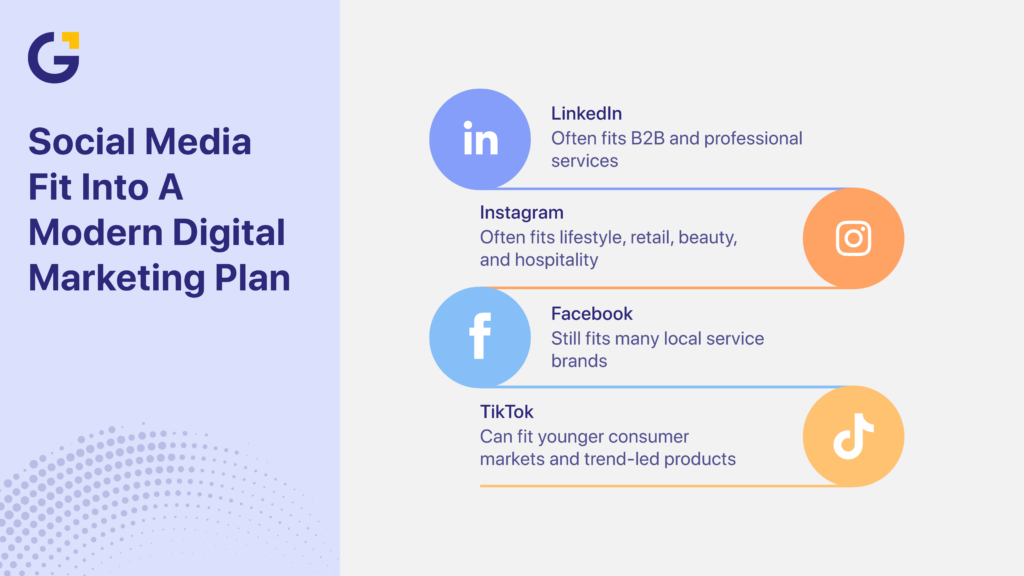
- Match Strategy to Platform:
- LinkedIn: Best for B2B services, corporate growth, and founder-led content.
- Instagram & TikTok: Ideal for lifestyle, retail, consumer services, and Gen Z brand engagement.
- Facebook: Continues to perform strongly for local service businesses and community-focused campaigns.
- Combine Organic with Paid Social: Boost high-performing organic posts to target lookalike audiences and amplify reach quickly.
Why Is Email Marketing Still One Of The Highest ROI Channels?
Email marketing remains one of the most profitable online marketing strategies in Australia because it leverages owned channels. Industry research from HubSpot consistently shows that email marketing yields one of the highest returns on investment across all digital channels.
- Lead Capture Stage: Convert new site visitors into warm leads using automated welcome series and downloadable guides.
- Sales Support Stage: Address objections and encourage bookings through case study highlights, demo offers, and pricing guides.
- Customer Retention Stage: Increase repeat purchases and lifetime value via cross-sell sequences, loyalty updates, and re-engagement campaigns.
Why Is Conversion Optimisation Essential For Better ROI?
Conversion optimisation is the process of turning more of your existing traffic into qualified leads or sales. The most effective way to improve marketing ROI in Australia is often not to buy more clicks or traffic, but to make your current website pages work harder.
A business can rank well on Google, run targeted ads, and still lose revenue if its landing pages, forms, and offers fail to convert. This is why conversion strategy, CRO, and landing page quality must sit at the centre of every growth-focused digital marketing plan.
Common conversion bottlenecks on Australian business websites include:
- Slow site loading speeds and poor mobile UX
- Weak headlines or value propositions that lack clear local relevance
- Too many form fields that create friction during enquiry
- Poor mobile layouts that make navigation difficult
- Lack of trust signals, reviews, or case studies above the fold
- Unclear call-to-actions (CTAs) that confuse prospective buyers
Top Australian digital marketing methodologies emphasise combining data-driven SEO with CRO to ensure every visitor drawn from search hits a page built to convert. Combining behavioural heatmaps, A/B testing, frictionless forms, and trust signal integration ensures maximum return on your marketing spend.
Google’s people-first content guidance strongly aligns with this approach: pages need to be genuinely helpful, highly relevant, and designed for user experience, not just search engine rankings.
How Do You Combine Paid And Organic Marketing For Better Growth?
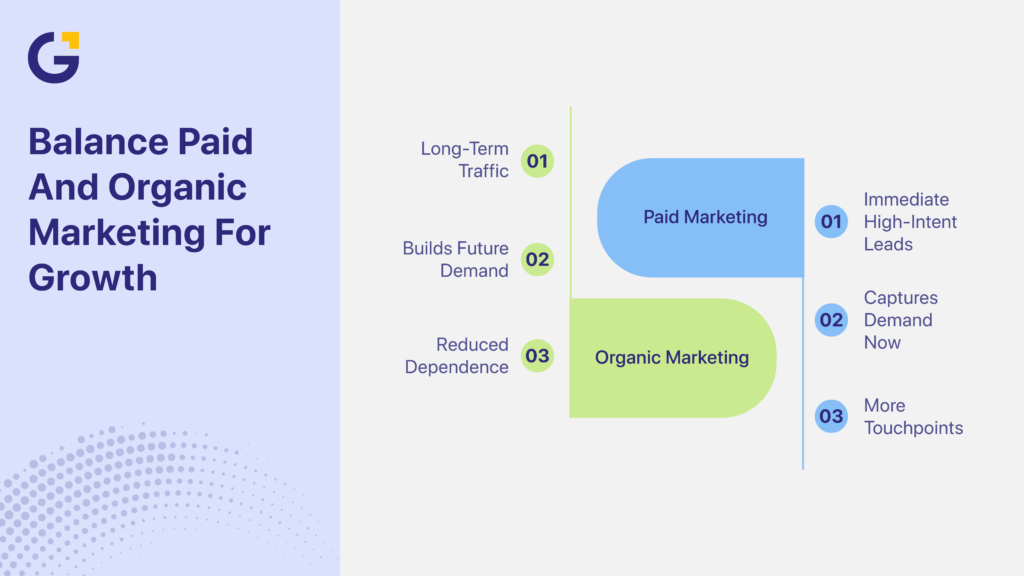
The most effective marketing frameworks use paid media for immediate momentum and organic channels for long-term stability. Combining both creates multiple touchpoints, lowers platform dependency, and protects market position.
A balanced growth model combines:
- SEO & Content Marketing for sustainable long-term traffic.
- Google Ads & Paid Social for immediate high-intent lead flow.
- Social Media & Short-Form Video for brand awareness and social proof.
- Email Automation & CRO to nurture leads and maximise visitor conversion rates.
How Genix Digital Helps Australian Businesses Build Better Growth Strategies
Sustainable business expansion rarely relies on a single channel. The best results stem from a strategic plan, a data-driven channel mix, robust funnel design, and continuous optimisation based on clear performance metrics.
At Genix Digital, we help SMEs and growth-focused Australian brands build customised, outcome-driven marketing systems across SEO, PPC, content marketing, web development, and conversion optimisation.
Contact Genix Digital today or book a strategy consultation to craft a tailored growth plan for your business.
FAQs
What are the most effective digital marketing strategies for Australian businesses?
The most effective strategies combine SEO, Google Ads, content marketing, targeted social media campaigns, email automation, and conversion rate optimisation (CRO). The exact mix depends on your industry, growth stage, and target audience.
How do I choose between SEO and paid advertising?
Paid advertising provides fast leads and immediate validation, making it ideal for short-term growth or new product launches. SEO builds compounding organic traffic and lowers overall acquisition costs over time. Combining both yields the strongest results.
What should an Australian digital marketing plan include?
A complete strategy should define business goals, target buyer personas, channel allocation, content schedules, budget distribution, KPI tracking, and conversion rate optimisation plans.
How can Australian businesses market effectively to Gen Z?
Marketing to Gen Z requires video-first platforms like TikTok and Instagram Reels, authentic messaging, social proof, mobile-first web experiences, and transparent brand values.





 31 Aug 2026
 8 Min Read