


You’ve spent money on ads, ranked reasonably well on Google, and finally got a local customer to click through to your website. Then… nothing. No call, no form submission, no email. They just vanished.
If this sounds familiar, you’re not alone. Across the country, well-meaning tradies, agencies, and service providers are unknowingly making service page UX mistakes Australia customers simply won’t tolerate. It’s not that your service is bad; it’s that your page is quietly pushing potential clients back into Google’s arms, straight into a competitor’s inbox.
The good news? Every mistake below is fixable, often without a full website rebuild. Fix service page conversion rate issues doesn’t have to be overwhelming. Let’s break down exactly where Australian business website mistakes happen and how to turn your service page into a local lead-generating asset.
Not sure if your page has these issues? A quick service page UX optimisation review can reveal exactly what’s costing you leads. You can request a free website evaluation from the Genix Digital agency team today.
The High Cost of Bad UX on Australian Service Pages
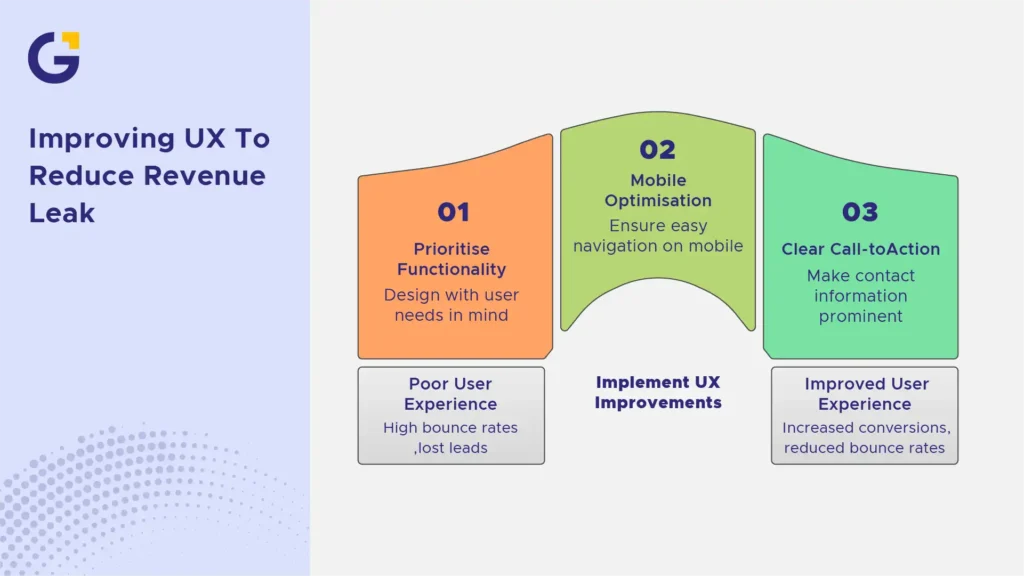
Poor user experience isn’t just an inconvenience; it’s a silent revenue leak. Every extra second a visitor spends confused or frustrated increases the chance they’ll bounce straight to a competitor.
Local Australian consumers, in particular, have zero patience for friction. Between spotty mobile coverage in regional areas and a straight-talking “get to the point” cultural attitude, service pages that feel clunky or impersonal get abandoned fast. As Sabri Suby often emphasises in his direct-response marketing strategies, if you fail to remove friction immediately, you are essentially paying to send leads directly to your rivals.
Bad UX website examples in real life usually stem from prioritising design over functionality:
Example Case: A Brisbane-based plumbing business ran paid traffic to their homepage for months, wondering why their cost-per-lead kept climbing. An audit revealed their mobile CTA button was below three scrolls of dense text, buried under a stock photo carousel.
- Average time on page: under 12 seconds
- Mobile bounce rate: 78%
Once the click-to-call button was moved above the fold, conversions increased by over 40% within a month.
1. Hiding Clear Contact Options and Calls to Action (CTA)
This is the single most common conversion killer on Australian small business websites. If a visitor has to hunt for your phone number or scroll endlessly to find a “Get a Quote” button, you’ve already lost them.
Australians researching local services, plumbers, electricians, accountants, or agencies are often doing so on the go. They want action, not an obstacle course.
Why Australian Clients Expect Immediate Mobile Contact
Most local searches happen on mobile, often with high purchase intent (“emergency electrician near me,” “same day carpet cleaning Melbourne”). These aren’t casual browsers; they’re ready to book. Modern mobile responsiveness isn’t optional; it dictates your survival in competitive markets.
If your click-to-call button, quote form, or SMS option isn’t visible within the first screen, you’re actively pushing urgent customers away.
Example Case: A Perth electrical services company had its contact number only in the footer. After moving a sticky “Call Now” button to the top of the mobile layout, their inbound call volume increased by 35% in six weeks.
- Sticky mobile CTA bar (call + quote button)
- Contact form visible without scrolling
2. Using Generic Global Content Instead of Local Aussie Context
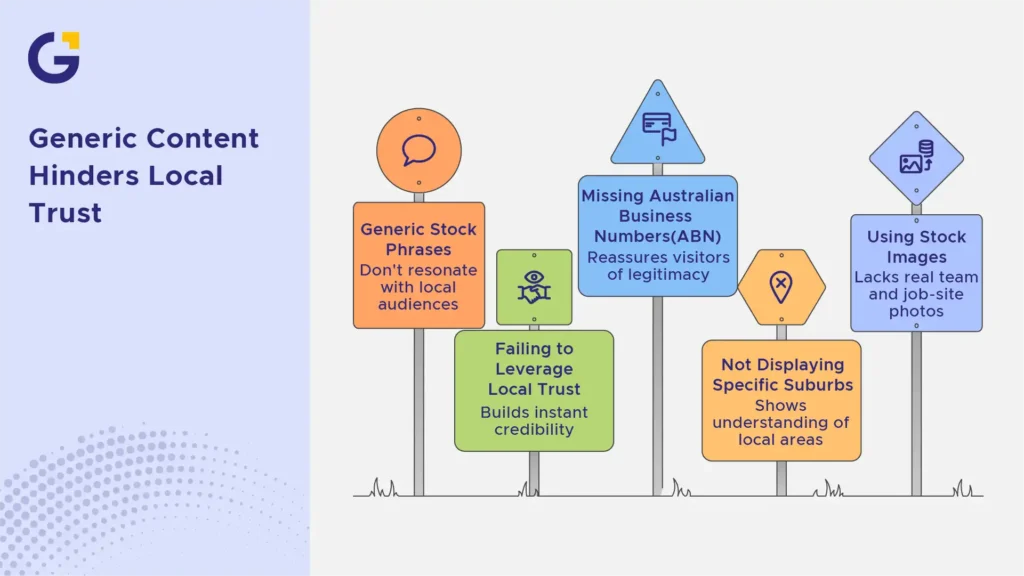
Many service pages read like they were copied and pasted from an American or UK template, because often, they were. Generic stock phrases like “industry-leading solutions” or “world-class service” don’t resonate with Aussie audiences looking for someone local, real, and trustworthy.
service page design flaws Australia frequently include failing to leverage local trust factors. Local context builds instant credibility. It tells visitors: “This business understands my suburb, my problem, and my expectations.”
Missing Local Trust Signals and Australian Business Numbers (ABN)
One overlooked but critical element is your ABN. Displaying it clearly (along with your physical service area) reassures visitors that you’re a legitimate, locally accountable business, not an overseas operation. Proper local service page optimisation ensures your site hits all regional compliance and trust markers.
Example Case: A Sydney landscaping company added their ABN, a Google Maps embed of their service radius, and real photos of their crew working in local suburbs. Within two months, their quote request form submissions rose by 22%, with several new clients specifically mentioning they “felt more confident” after seeing local proof.
- Display ABN prominently in the footer or the About section
- List specific suburbs/regions served
- Use real team and job-site photography, not stock images
3. Burying Pricing Structure and Service Scope Information
Aussies are practical. When pricing is completely hidden, or worse, requires filling out a five-field form just to get a ballpark figure, many visitors assume the worst: either it’s too expensive, or the business has something to hide.
You don’t need to publish exact quotes for custom work, but giving visitors a “starting from” price, package tiers, or a clear service scope eliminates guesswork and builds instant credibility.
4. Slow Mobile Page Speed and Poor UX Layout
In Australia, mobile network coverage can fluctuate as users move between regional corridors and dense city suburbs. If your page takes more than three seconds to load because of massive uncompressed images or heavy code scripts, users will hit the back button before they even see your headline.
According to technical research benchmarks from Google PageSpeed Insights, speed directly dictates mobile conversion rates. Website client loss causes are almost always tied to heavy, unoptimised pages that frustrate users on mobile devices.
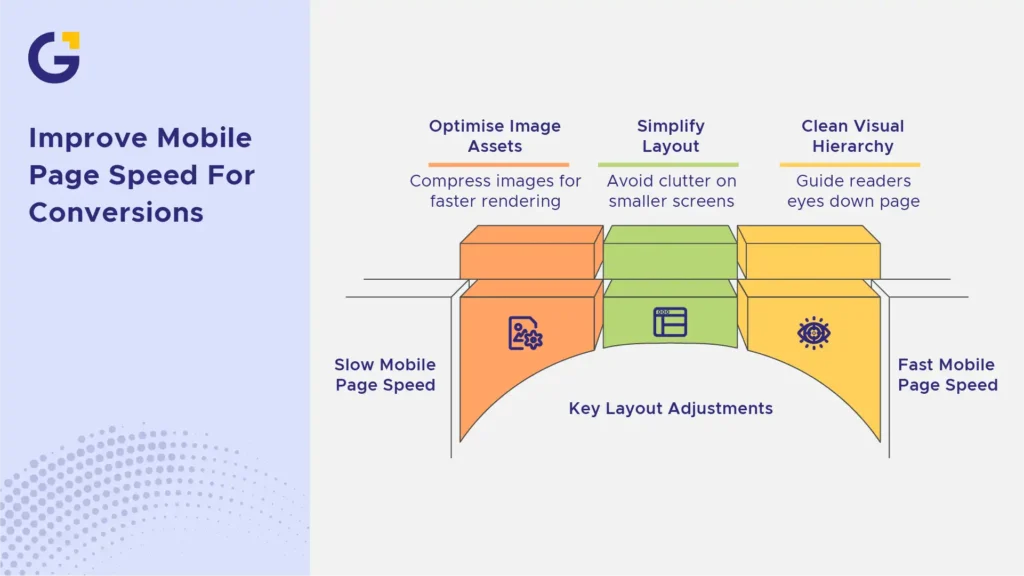
Key Layout Adjustments for Fast Conversions:
- Optimise image assets: Compress images without losing quality to speed up mobile rendering.
- Simplify layout: Avoid cluttered sidebars and chaotic multi-column layouts on smaller screens.
- Clean visual hierarchy: Ensure headlines, bullet points, and buttons naturally guide the reader’s eyes down the page.
5. Overwhelming Visitors with Jargon Instead of Clear Benefits
Your clients don’t buy “synergistic operational workflows”; they buy saved time, stress relief, and reliable work. One of the most prevalent Australian SMB website mistakes is writing for industry peers rather than everyday clients.
When auditing bad UX design examples, clutter and confusing jargon top the list. To improve local lead conversion, swap dense technical jargon for plain-English benefits.
- Instead of: “We utilise cutting-edge diagnostic equipment for fast remediation.”
- Say: “We find and fix your plumbing leak in under an hour, guaranteed.”
Focusing on clear, direct outcomes keeps visitors engaged and drives them straight to your call-to-action.
How to Audit Your Service Page for Higher Local Conversions
Fixing your service page doesn’t mean guessing what works. Implementing a structured conversion rate optimisation strategy helps you isolate bottleneck areas systematically.
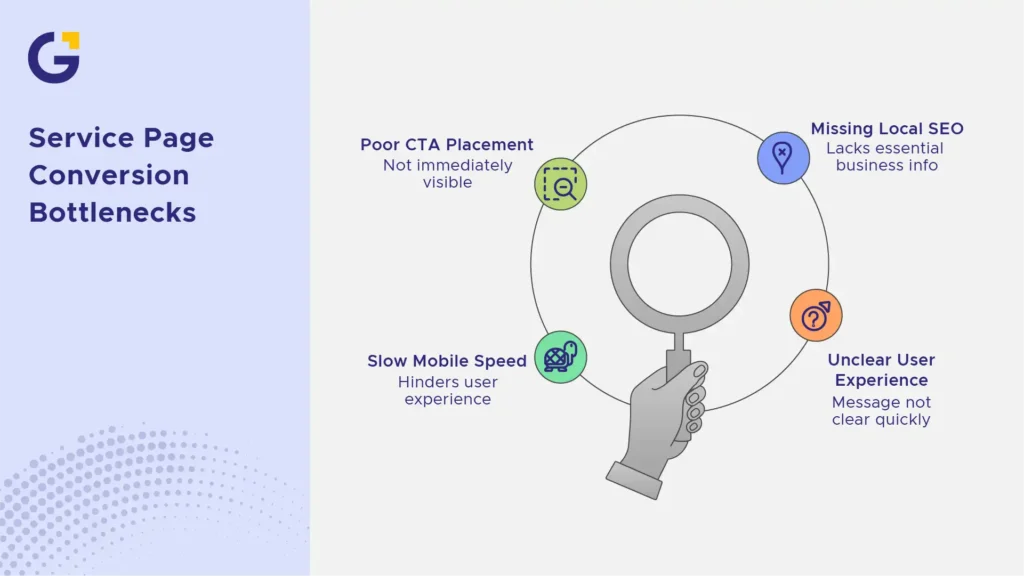
Here is a quick checklist to improve local lead conversion on your service pages:
- Test Mobile Speed: Run your URL through speed test tools to check load times on 4G networks.
- Verify CTA Placement: Ensure a phone number or quote button is visible immediately without scrolling on mobile.
- Audit Local SEO Signals: Double-check that your ABN, local phone number, and primary service areas are explicitly listed.
- Review User Experience: Look at your page through a customer’s lens—is your message clear within 5 seconds?
If you are planning a website redesign for Aussie businesses, ensuring these UX and local SEO fundamentals are built into the foundation is critical to achieving a strong ROI.
Turning Lost Visitors into Loyal Local Clients
Your service page is often the first impression a potential customer has of your business. If it’s slow, confusing, or feels distant, even the best marketing campaign won’t save your bottom line. By removing friction, highlighting local credibility, and simplifying your messaging, you can instantly turn leaking web traffic into high-value local leads.
If you are ready to fix your site’s performance, booking an Australian local SEO audit or getting professional help with service page UX optimisation will ensure your business stops losing qualified customers to local competitors.
FAQ
Why are local Australian clients leaving my service page without contacting me?
Visitors usually leave due to unclear calls to action, lack of local trust signals (like ABN or suburban focus), confusing navigation, or slow mobile loading times.
What is the biggest UX mistake on Australian business websites?
The most critical mistake is making it hard for mobile users to find a phone number, quote form, or clear contact button within seconds of landing on the page.
How can I make my service page feel more authentic to Aussie visitors?
Feature genuine Australian team photos, display local client testimonials, list specific coverage areas/suburbs, and clearly show your ABN.
Does hiding prices on my service page hurt lead generation?
Yes. While exact quotes vary, lacking transparent price indicators or starting-at rates causes visitors to assume your service is either too expensive or unverified.
How often should I audit my service page for user experience (UX) issues?
Perform a comprehensive UX and conversion rate audit at least once every six months, or whenever you notice a drop in inquiry rates.
How can Genix Digital help fix my service page conversion rate?
Genix Digital conducts deep UX and local SEO audits to restructure your landing pages, eliminate friction, and convert casual visitors into active leads.





 15 Jun 2026
 15 Min Read