
You check Google Analytics and see hundreds of visitors landing on your site every week. Yet your phone stays silent, your inbox is empty, and your sales team has nothing new to work on. If this sounds familiar, you’re not alone, and you’re not wasting your budget. The real issue is almost always Website Conversion Rate Optimisation Sydney businesses overlook once traffic starts flowing in.
Getting people to your website is only half the battle. The other half of the battle, the part most Sydney business owners forget to test, is what happens in the first five seconds after someone arrives. If visitors can’t immediately see how to contact you, don’t trust what they see, or get frustrated by a slow experience, they leave. No call, no lead, no sale.
The good news? This gap between your traffic and your phone calls is completely fixable, usually without spending an extra dollar on Google Ads or social media. Below, we break down the real reasons your site isn’t converting and the exact steps to turn passive browsers into paying clients.
Not sure where your website is losing leads? Book a free website conversion audit and get a clear diagnosis from our team in 24 hours.
The Hidden Gap Between Website Traffic and Phone Calls
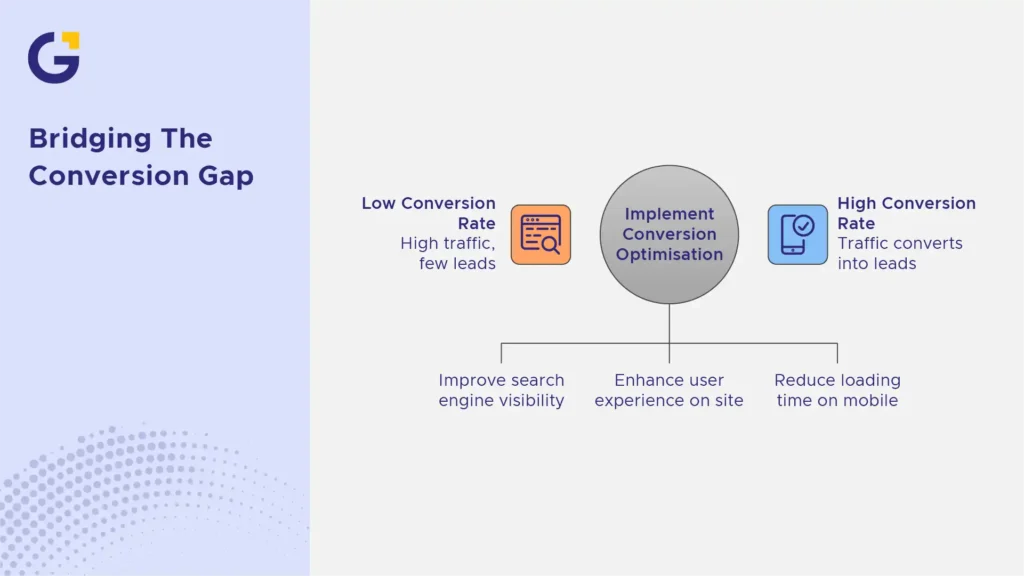
Most business owners assume more traffic equals more business. But traffic is just a vanity metric if it doesn’t convert into an action, a call, a form submission, or a booking.
A website can rank well on search engines, get shared on social media, and attract hundreds of visitors monthly, yet still fail to generate a single lead. This disconnect is what marketers call the “conversion gap,” and it is the single biggest reason local businesses feel like their digital marketing isn’t working.
Example Case: A Sydney plumbing company was getting 1,200 monthly visitors from paid ads, but only 8 phone calls. After performing technical SEO and UX audits, we found their contact number was buried in the footer, and their mobile site took 6 seconds to load. Visitors were abandoning the page before even seeing how to get in touch.
- High traffic with low conversions usually points to UX, trust, or speed issues, not a marketing problem.
- Fixing the conversion gap often costs less than the ad budget already being wasted on unconverted clicks.
Reason 1: Poor Mobile User Experience & Lack of Click-to-Call Buttons
Over 70% of local searches in Sydney happen on mobile devices. If your site isn’t built mobile-first, you’re losing the majority of your potential callers before they even reach your services page.
The most common mistake is forcing mobile users to pinch, zoom, or scroll excessively just to find a phone number. Every extra step gives them a reason to click back to the Google search results and pick a competitor.
This is precisely why conversion-focused web design matters far more than just aesthetics. A visual masterpiece that hides its contact details will always lose to a simpler site designed for immediate action.
Why Your Contact Info Must Be Above the Fold
“Above the fold” means visible without scrolling. On mobile, this is prime real estate, and it should always include a clickable phone number, not just text.
If a customer in Sydney is searching for an emergency service, a lawyer, or a local trade, they want to tap and call right away. A static phone number that isn’t clickable or worse, hidden away, sends that prospect straight to your competitors.
Example Case: A Sydney electrical services company added a sticky click-to-call button to their mobile header. Within 30 days, their mobile phone leads increased by 34% without changing their budget for paid Google Ads.
- Use a sticky header or a floating button for the phone number on mobile
- Ensure the number is a tel: link so it’s tappable, not just readable
Reason 2: Weak or Unclear Call-to-Actions (CTAs)
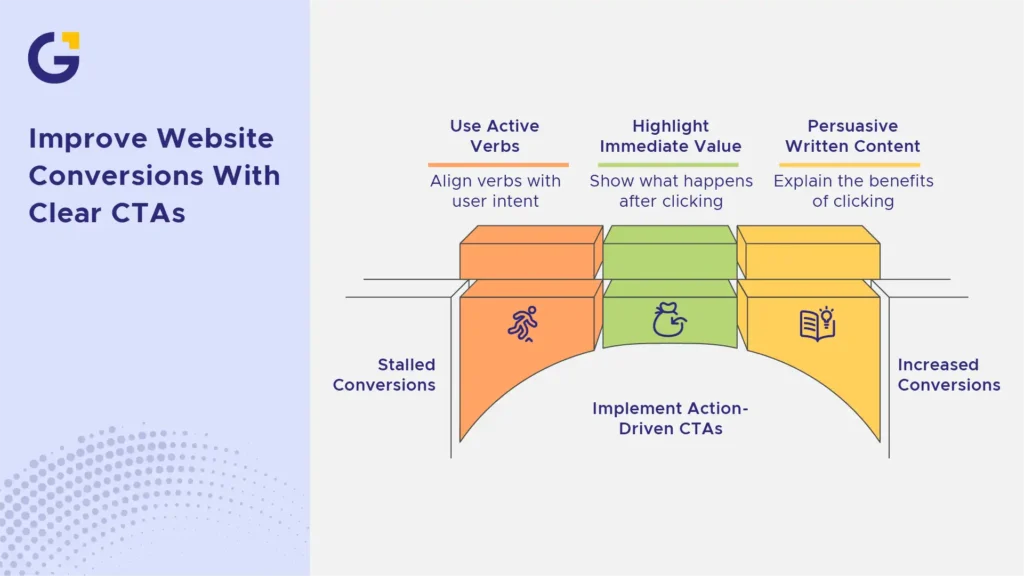
A website can have clean visuals and fast load times, but if the Call-to-Action (CTA) doesn’t clearly direct visitors on what to do next, conversions will stall.
Generic CTAs like “Submit” or “Learn More” don’t create urgency or clarity. Visitors need to know precisely what happens when they click, and why they should do it now rather than later.
Switching From “Submit” to Action-Driven Copy
As Australian direct-response marketing expert Sabri Suby highlights in Sell Like Crazy, high-converting offers rely on clear, value-packed call-to-actions that demand immediate response rather than passive reading. Action-driven CTAs speak directly to the outcome your customer wants. Instead of “Submit,” try “Get My Free Sydney Quote” or “Call Now for Same-Day Service.”
This simple adjustment leverages basic user psychology: it removes ambiguity, reduces user effort, and highlights immediate value.
Example Case: A Sydney home renovation company changed its generic lead form button to “Get My Free Renovation Quote”. Form completions rose by 22% over six weeks simply by refining their written copy.
- Use active verbs that align with user intent (e.g., “Claim,” “Book,” “Call”).
- Pair your CTAs with persuasive written content that highlights what happens next.
Reason 3: Lack of Local Trust Signals for Sydney Customers
Sydney consumers are inherently cautious. When choosing a local service provider online, they aren’t just looking at prices; they are actively looking for proof that your business is legitimate, reliable, and based right here in NSW.
If your landing page lacks clear proof of quality, visitors experience friction and hesitate to reach out. In competitive industries, that hesitation instantly kills your conversion rate.
Social Proof, Reviews, and Local Business Identity
To bridge the trust gap, your website must showcase authentic local authority. Displaying real customer reviews, local project photos, and industry certifications directly on key pages gives prospective clients the confidence to call. Building authority goes beyond just reviews; there are specific essential Sydney trust signals that every local site must implement before expecting visitors to reach out.
According to comprehensive search research by Google Consumer Insights, proximity and local relevance are top decision factors for consumer actions.
- Integrate real Google Reviews and local client testimonials near your primary call-to-action buttons.
- Show local identity elements: display your Sydney suburb address, local phone number prefix (02), and genuine images of your team or completed local projects.
- Strengthen your visibility through localised strategies like local SEO Sydney to back up your on-site claims with strong search engine trust.
Reason 4: Slow Page Speed and Friction on Landing Pages
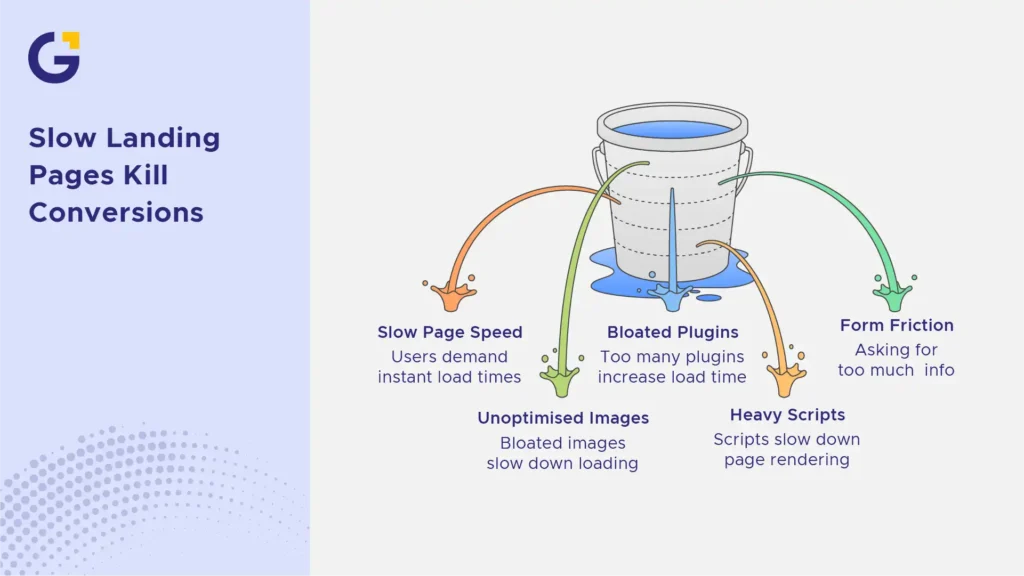
Every second of delay on your website destroys your conversion potential. Modern web users demand near-instantaneous load times, especially when browsing on mobile networks across Sydney. To ensure your site loads fast enough to protect your ad budget, review our detailed guide on website speed optimisation for Sydney businesses.
Research by Google’s Page Speed Insights demonstrates that as page load time goes from 1 second to 3 seconds, the probability of a user bouncing increases by 32%. If your site takes 4 or 5 seconds to respond, half your paid traffic has already left before seeing your phone number.
- Unoptimised images, bloated software plugins, and heavy scripts are silent sales killers.
- Form friction, such as asking for too much irrelevant information upfront, causes potential customers to abandon forms halfway through.
- Resolving code bottlenecks with dedicated WordPress development and optimisation or broader UI/UX design enhancements ensures your traffic converts smoothly.
How to Fix It: A Step-by-Step Conversion Optimisation Strategy
Turning your website into a lead generator requires an intentional, step-by-step approach focused on removing user friction.
1. Implementing Strategic Click-to-Call Placement
Place your contact options right where human eyes naturally look. Ensure your main phone number is prominently visible in the top right corner of desktop screens and anchored at the bottom of mobile screens.
2. Optimising Your Landing Pages for Immediate Action
Structure your landing pages around a single primary goal: getting the user to make contact. Remove unnecessary navigation links, simplify your forms to 3 or 4 fields maximum, and back up your value proposition with strong on-page SEO elements.
Turn Your Visitors into Daily Phone Leads
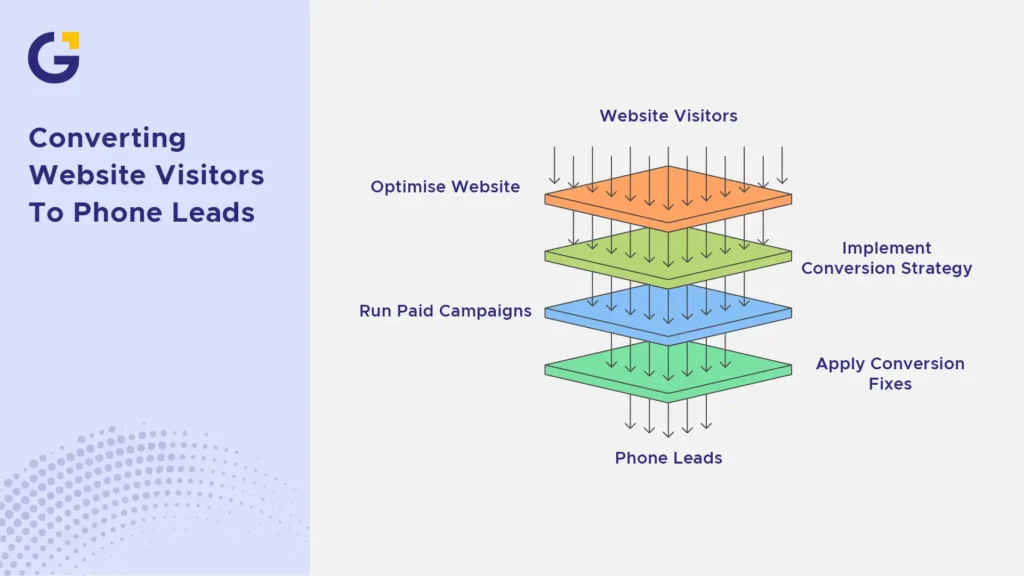
Getting web traffic is only step one. The real revenue growth happens when you optimise your site to turn those site visits into inbound calls, leads, and paying clients.
If your website isn’t delivering the phone calls your Sydney business needs, you don’t necessarily need more traffic; you need a better conversion strategy.
If you are running paid campaigns and want a comprehensive checklist, check out these 15 quick conversion rate fixes before increasing your ad spend.
Ready to turn your website traffic into active phone calls? Contact the Genix Digital team today or explore our tailored SEO services to start capturing the revenue your business deserves.
FAQs
Why does your website get traffic but no leads or phone calls?
Answer: This usually happens due to a poor user experience, missing click-to-call buttons on mobile, or weak call-to-actions. If visitors don’t immediately see how to contact you or trust your services, they will leave without calling.
Why am I getting clicks but no conversions?
Answer: High clicks mean your headline or ad is working, but zero conversions mean your landing page is failing. Lack of trust signals, slow loading speeds, or confusing navigation often prevent visitors from taking action.
How can I turn mobile website visitors into phone calls?
Answer: Place a prominent, clickable phone number (Click-to-Call) at the top of your mobile site, keep form fields to a minimum, and ensure your phone line availability is crystal clear.
Why does 96.55% of content get no search traffic from Google?
Answer: Most pages fail because they lack search intent alignment, targeted keywords, or strong backlinks. Bringing the wrong audience to your page means high traffic volume with zero real inquiries.
What is a good conversion rate for a local Sydney service website?
Answer: The average conversion rate for local service businesses ranges between 2% and 5%. If you get 1,000 visitors but fewer than 20–50 inquiries, your site needs Conversion Rate Optimisation (CRO).
How can Genix Digital help fix a low-converting website?
Answer: Genix Digital conducts complete UX and CRO audits to identify friction points, optimise your call-to-action strategy, and redesign landing pages so your existing traffic converts into daily phone leads.


 20 Jul 2026
 8 Min Read