
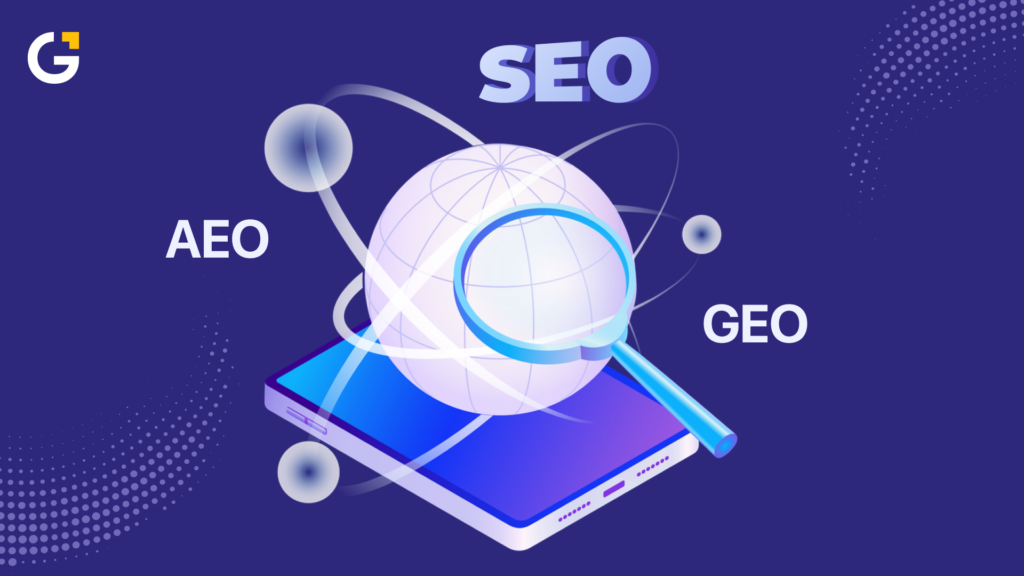
Search is changing fast. AI-powered tools, answer engines, and generative platforms are transforming the way people find information. Ranking on Google is no longer the only goal. Businesses now need visibility across Search Engine Optimisation (SEO), Answer Engine Optimisation (AEO), and Generative Engine Optimisation (GEO) to stay competitive.
This comprehensive 2026 guide explains what each approach means, how they work together, the emerging software market, evolving reporting metrics, and what your business or agency should focus on to stay visible in the AI search era.
Understanding the Evolution of Search
Search has changed quickly as people rely more on AI-powered search engines, voice assistants, and instant answers rather than scrolling through long results pages.
According to global research into digital adoption trends by Ipsos, nearly half of consumers now engage with generative AI tools regularly to discover products, research services, and validate commercial decisions. This surge highlights how quickly users are shifting toward AI-driven tools for finding information, making it essential for businesses to optimise across traditional search, answer blocks, and generative models.
How Search Has Shifted
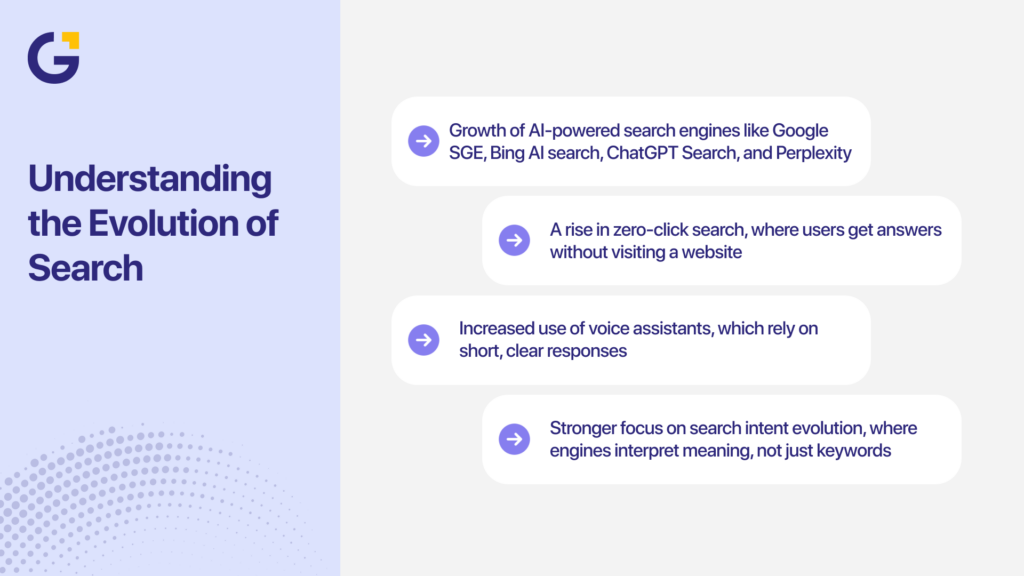
Search has moved from simple keyword matching to intent-based and conversational results. Users now expect search engines and AI systems to understand questions in natural language and return accurate answers immediately. This shift is driven by:
- Growth of AI-powered search engines like Google AI Overviews, Bing AI search, ChatGPT Search, Gemini, and Perplexity.
- A rise in zero-click search, where users get answers directly on search engine results pages (SERPs) or inside chat interfaces without visiting a website.
- Increased use of voice assistants, which rely on concise, direct responses.
- Stronger focus on search intent evolution, where engines interpret underlying user context rather than literal keyword strings.
Instead of ranking ten blue links, search tools now produce synthesised summaries, direct answer blocks, and interactive generative responses. This widens the channels brands must optimise for and expands the scope of traditional SEO models.
Why Traditional SEO Alone Is No Longer Enough
Keyword-focused SEO is no longer sufficient on its own because users interact with search results in entirely new ways. Modern search engines and LLMs favour:
- Content that answers questions directly using an “answer-first” structure.
- Structured pages supported by valid schema markup.
- Clear information that AI models can easily summarise, paraphrase, and cite.
- Content written in natural, conversational language aligned with real human queries.
- Verified, trusted sources supported by strong brand authority and entity signals across third-party platforms.
If a business relies solely on traditional ranking positions, it loses visibility when AI search tools extract answers and bypass traditional landing pages. Brands that fail to optimise for AEO and GEO risk losing traffic, impression share, and authority as more users shift to generative interfaces.
This is why SEO, AEO, and GEO strategies must work as a unified framework. SEO builds the indexable foundation, AEO secures direct answer placement, and GEO maximises the likelihood of being cited in AI generative synthesis.
What Is SEO (Search Engine Optimisation)?
SEO (Search Engine Optimisation) is the foundation of digital visibility. It is the practice of improving a website so search engines can crawl, index, understand, and recommend its content to users. It helps businesses appear for organic queries matching their products, services, or industry expertise.
Core Principles of SEO
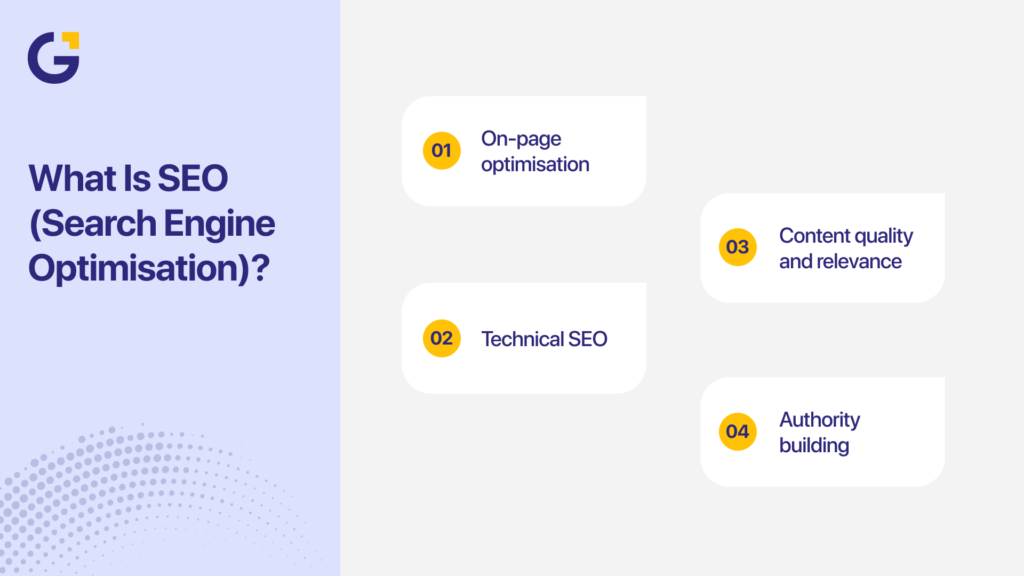
Strong SEO performance is built on four fundamental pillars:
Authority building: Earning trust signals through authoritative backlinks, brand mentions, directory citations, and strong entity validation across the web.
On-page optimisation: Optimising elements search engines read to parse a page, including title tags, structured headings (H1-H3), keyword intent targeting, internal linking architecture, and informative copy.
Technical SEO: Ensuring site infrastructure supports seamless crawling and indexing, including fast loading speeds, mobile-first design, clean site architecture, SSL security, and XML sitemaps.
Content quality and relevance: Creating authoritative content that addresses user search intent, provides depth, offers real-world examples, and demonstrates Google E-E-A-T Guidelines (Experience, Expertise, Authoritativeness, and Trustworthiness).
Limitations of SEO in 2026
While SEO remains indispensable, shifts in search behaviour have highlighted clear operational boundaries:
- Zero-click search reduces traditional organic traffic. Many search queries now deliver instant answers on the SERP, reducing direct clicks to traditional web pages.
- AI search engines generate synthesised answers. Platforms like ChatGPT Search and Perplexity generate conversational summaries that draw from multiple sources, bypassing standard organic listings.
- Keyword-focused content misses conversational nuance. AI engines evaluate semantic meaning and context rather than keyword repetition.
Why SEO Still Matters
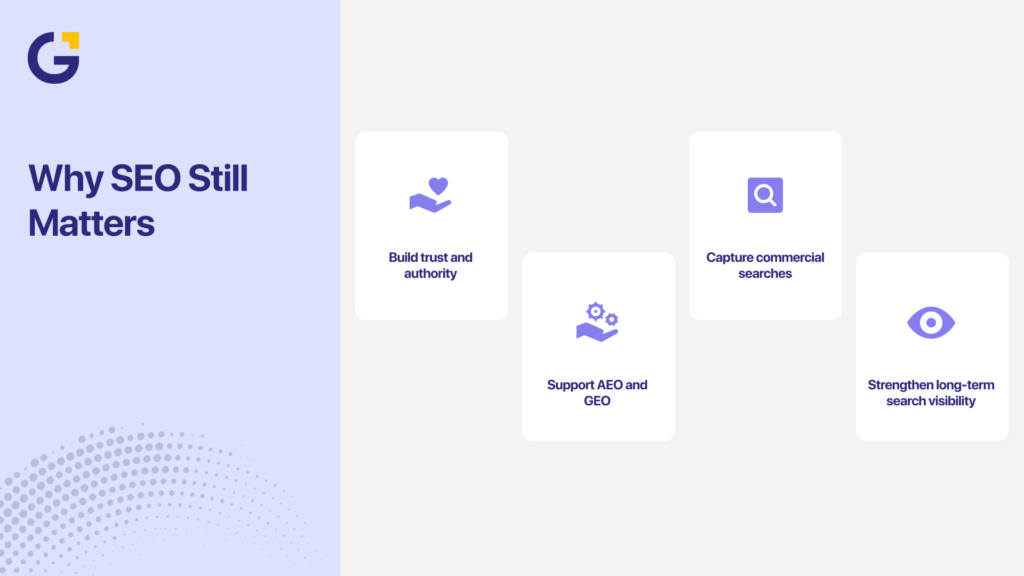
Even in an AI-first search environment, SEO remains essential because LLMs and AI crawlers rely on indexed, technically sound, and high-authority websites to populate their training data and real-time search indexes. SEO establishes the domain authority, crawlability, and baseline credibility that both Google and generative engines require.
What Is AEO (Answer Engine Optimisation)?
AEO is the process of structuring content so search engines and AI systems can extract clear, direct answers. Instead of focusing only on ranking, AEO focuses on being selected as the source for instant responses, featured snippets, voice answers, and AI-generated summaries.
AEO has become essential because users now expect fast, accurate information without needing to click through multiple pages.
How AEO Works
Answer Engine Optimisation (AEO) is the practice of structuring and formatting content so that search engines, voice assistants, and AI models can lift clear, direct answers directly out of your pages.
Instead of focusing solely on ranking positions, AEO focuses on becoming the primary source for Featured Snippets, People Also Ask (PAA) boxes, voice search responses, and direct answer panels.
How AEO Works & The Answer-First Approach
AEO relies on formatting content so parsing algorithms can extract factual statements without ambiguity. Recent 2026 research indicates that over 40% of LLM citations come from the top 30% of a page’s content. To capture AEO placements:
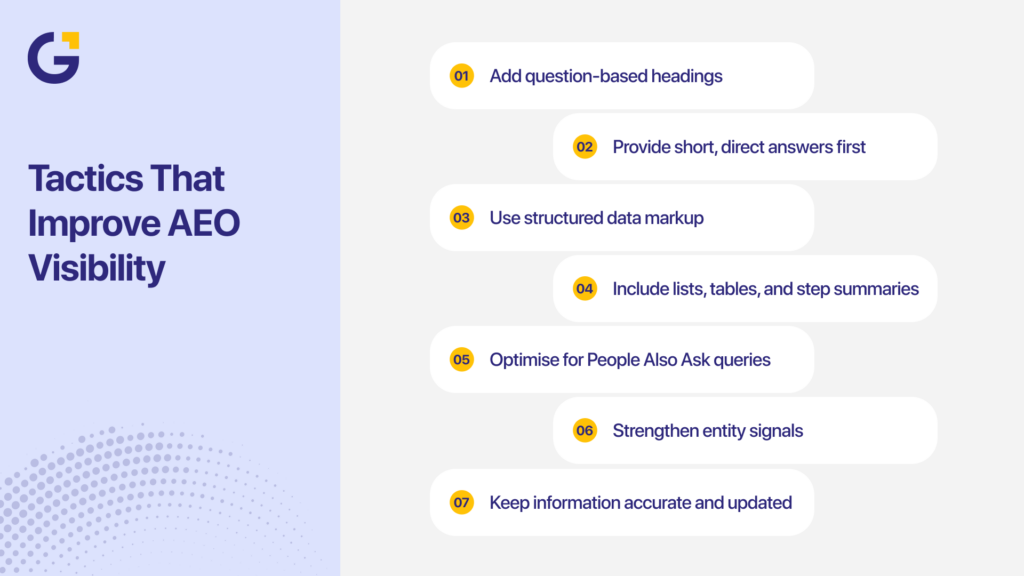
- Lead with direct answers: Place a concise 40–60 word direct summary immediately under question-based headings before expanding into detailed context.
- Use clear question-based headings: Use H2 and H3 tags that mirror natural language user queries (e.g., ### What is answer engine optimisation?).
- Implement structured data markup: Implement technical schema markup based on official Schema.org standards so search bots can clearly parse organisational details, FAQs, and step-by-step guides. For a detailed guide on implementation, explore our resource on Schema Markup for AI Search: What Australian Business Websites Should Add.
- Target zero-click real estate: Position your brand to be featured prominently in Google AI Overviews and snippet blocks. Learn more about local AI placement strategies in our guide on How Sydney Businesses Can Get Mentioned in Google AI Overviews.
Tactics That Improve AEO Visibility
- Structure information into concise bulleted lists, numbered steps, and comparison tables.
- Align content with conversational speech patterns to capture voice search queries.
- Maintain strict factual accuracy and update time-sensitive data regularly to prevent outdated information from being rejected by answer engines.
What Is GEO (Generative Engine Optimisation)?
Generative Engine Optimisation (GEO) is the strategy of optimising your brand, content, and digital footprint so generative AI platforms (such as Google AI Overviews, ChatGPT Search, Perplexity, Gemini, and Claude) cite, recommend, and reference your business in AI-generated answers.
Unlike traditional SEO, which focuses primarily on first-party website optimisation, GEO is roughly 80% strategic brand presence across the broader ecosystem and 20% technical on-page structure. Research shows that over 85% of AI model citations originate from third-party platforms, reviews, digital PR, and community discussions rather than brand-owned websites alone.
How Generative Engines Evaluate Content
Generative engines evaluate entities, reputation, and semantic clarity rather than keyword density. They assess:
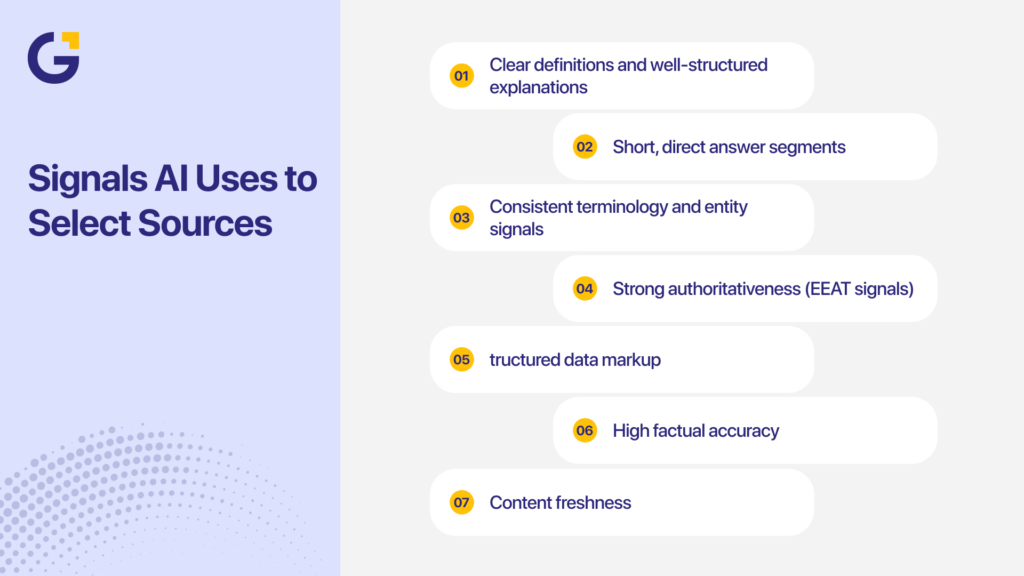
- Third-party authority and brand mentions: AI models cross-reference brand citations across news sites, industry publications, review platforms, and forums (e.g., Reddit, YouTube, Quora) to verify credibility.
- Factual consistency and original research: Generative platforms prioritise content containing original data, first-party statistics, expert quotes, and verifiable facts.
- Entity recognition: Clear, consistent brand information across all digital touchpoints helps LLMs build an accurate entry in the Google Knowledge Graph for your business.
To understand how Google’s generative models evaluate content in real-time, see our dedicated insights on How to Optimise for Google SGE (Search Generative Experience) in Australia.
Is SEO Replacing GEO in 2026? Or Vice Versa?
A common question among business owners and digital strategists in 2026 is: Is SEO replacing GEO, or is GEO rendering traditional SEO obsolete?
The short answer is neither. SEO is not replacing GEO, nor is GEO killing SEO. Instead, they represent two complementary layers of a modern digital strategy:
- SEO is the foundation: It ensures your website is crawlable, technically sound, indexable, and authoritative. Without solid SEO, AI crawlers will not trust or index your content.
- GEO is the expansion layer: It ensures that when users bypass traditional search links and ask AI assistants for recommendations, your brand is synthesised into the AI’s direct answer.
Treating SEO and GEO as competing choices is a mistake. Businesses that focus exclusively on SEO miss out on AI-generated recommendations, while those that pursue GEO without technical SEO lack the underlying web authority needed to sustain AI citations.
How SEO, AEO, and GEO Work Together
Rather than operating in isolation, SEO, AEO, and GEO form a unified visibility framework:
| Feature / Dimension | Traditional SEO | Answer Engine Optimisation (AEO) | Generative Engine Optimisation (GEO) |
| Primary Goal | Rank web pages in organic search results | Supply direct answers for snippets & voice | Earn citations & recommendations in AI responses |
| Main Target Platforms | Google Search, Bing | Google Snippets, PAA, Voice Assistants | ChatGPT, Perplexity, Gemini, Google AI Mode |
| Core Optimisation Focus | Keywords, technical performance, links | Direct answers, Q&A format, Schema markup | Third-party reputation, entity signals, original data |
| Key Metric of Success | Organic rankings, CTR, sessions | Snippet wins, zero-click impressions | Citation rate, AI share of voice, brand mentions |
The 2026 AEO & GEO Software Market & Platform Landscape
As AEO and GEO have matured into core marketing practices, a dedicated ecosystem of software platforms and tools has emerged to track and manage AI search visibility.
Emerging AI Search Monitoring Tools
Traditional SEO software suites are no longer sufficient to track dynamic AI search outputs. The 2026 software landscape includes specialised AI visibility platforms:
- Dedicated AEO/GEO Trackers: Tools like Profound, Peec AI, Scrunch, AirOps, and AIclicks allow brands to track prompt visibility, monitor citation frequency, evaluate brand sentiment across LLMs, and perform prompt-level competitive analysis.
- Enterprise SEO Extensions: Established enterprise platforms have integrated AI Overview and LLM citation monitoring directly into their reporting suites.
- Entity & Knowledge Graph Platforms: Tools designed to monitor brand entity consistency, Knowledge Graph validation, and third-party citation footprints across the web.
Investing in AI tracking tools allows businesses to establish baseline visibility across ChatGPT, Perplexity, and Gemini, moving away from subjective manual prompt testing toward automated data collection.
How Reporting Should Evolve When Adding GEO to SEO
One of the biggest operational challenges marketing teams face in 2026 is updating client and stakeholder reporting when adding GEO and AEO to traditional SEO workflows.
Moving Beyond Rankings and Direct Clicks
Traditional SEO reporting relies heavily on keyword rankings, organic sessions, and click-through rates (CTR). However, because GEO and AEO operate largely in zero-click and synthesised environments, reporting frameworks must adapt to measure brand influence and referral quality.
Key Metrics for a Modern AI Visibility Dashboard
When expanding your strategy to include GEO and AEO, incorporate the following KPIs into your monthly reporting:
- AI Citation Rate (%): The percentage of target industry prompts in which your brand or website is cited as a source by platforms like ChatGPT, Perplexity, and Google AI Overviews.
- AI Share of Voice (SoV): How frequently your brand is recommended compared to top competitors across a defined set of commercial intent prompts.
- Brand Sentiment in AI Outputs: Whether AI models describe your products or services positively, neutrally, or negatively when synthesising recommendations.
- Zero-Click Real Estate Share: Impression volume and placement frequency across Google AI Overviews, Featured Snippets, and People Also Ask modules.
- Generative Referral Traffic & Conversion Quality: While generative AI platforms may send lower total click volume than traditional search, AI-referred visitors often demonstrate significantly higher commercial intent and conversion rates.
Agency Strategy: Should Agencies Offer AEO and GEO Services in 2026?
If you lead digital strategy at an agency, incorporating AEO and GEO into your service offering is no longer optional; it is a critical growth driver for 2026 and beyond.
Why Digital Agencies Must Offer AEO & GEO
- Client Retention: Enterprise clients and SMEs are actively asking why their traditional SEO traffic is shifting toward zero-click AI responses. Agencies that proactively offer AI search optimisation retain clients by providing clear answers and strategic solutions.
- New Revenue Streams: Offering GEO audits, prompt visibility tracking, entity graph optimisation, and digital PR for AI citations creates high-value recurring service packages.
- Higher Strategic Value: Positioning your agency as an AI search authority elevates your team from tactical execution partners to strategic business advisors. Executive research from Gartner indicates that a majority of marketing leaders view AI transformation as crucial to maintaining market competitiveness.
Agencies should integrate GEO and AEO directly into their existing SEO contracts, providing clients with a unified “Organic & AI Visibility” strategy rather than selling isolated, piecemeal packages.
The Shift from Keywords to Conversations
AI search engines rely on Natural Language Processing (NLP) and semantic understanding. This shift means search queries are longer, more conversational, and heavily intent-focused.
Examples of Conversational Search Queries:
- “Which digital marketing agency in Australia offers proven AEO and GEO strategy for B2B SaaS?”
- “What is the difference between SEO, AEO, and GEO, and how do they impact my search traffic in 2026?”
- “How can I structure my service pages to get cited in Google AI Overviews?”
To capture conversational queries, content must provide comprehensive, structured answers rather than targeting isolated keyword variations.
Practical Strategies for SEO, AEO, and GEO in 2026
To build a future-ready digital presence, execute targeted actions across all three optimisation layers:
1. Unified SEO Strategies
- Maintain fast page speed, mobile responsiveness, and clean site architecture.
- Implement a logical header structure (H1, H2, H3) to make content easily scannable for crawlers.
- Build authoritative backlinks and maintain high E-E-A-T standards across all published material.
2. Targeted AEO Strategies
- Structure key service and informational pages with dedicated Q&A sections.
- Use direct, “answer-first” definitions (40–60 words) at the beginning of major sections.
- Apply valid Schema.org Structured Data (Organisation, WebPage, Article, Service, FAQPage) across your site.
3. Strategic GEO Strategies
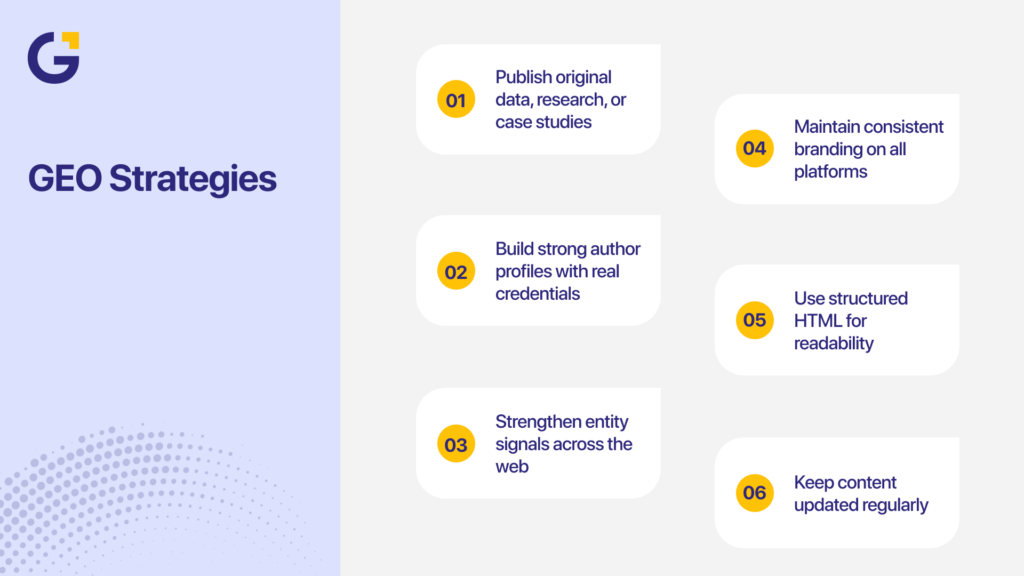
- Publish first-party research, proprietary data, industry case studies, and expert insights that LLMs cannot find elsewhere. To scale these assets effectively, review our guide on AI-Powered Content Marketing for Australian Brands: Tools & Strategies.
- Build strong brand reputation off-site through digital PR, industry guest contributions, and active community presence on platforms like Reddit, YouTube, and review directories.
- Maintain consistent brand NAP (Name, Address, Phone number) and corporate descriptions across every platform on the web to reinforce entity recognition.
Tools and Technologies Powering the New Search Era
Optimising for modern search requires a balanced toolkit covering technical analysis, content structure, and AI tracking:
- SEO Core Tools: Google Search Console, Google Analytics 4, Screaming Frog, Ahrefs, SEMrush.
- AEO & Intent Discovery Tools: AnswerThePublic, AlsoAsked, Google Rich Results Test.
- GEO & AI Visibility Platforms: Profound, Peec AI, Scrunch, AirOps, ChatGPT Search, Perplexity AI, Google Gemini.
Common Pitfalls and How to Avoid Them
- Pitfall 1: Relying solely on exact-match keywords.
- Fix: Focus on topical authority, semantic depth, and answering user intent naturally.
- Pitfall 2: Publishing unstructured, generic AI text.
- Fix: Edit AI drafts rigorously, incorporate first-hand experience, and format copy with clean subheadings and lists.
- Pitfall 3: Ignoring third-party brand reputation.
- Fix: Recognise that GEO depends heavily on off-site brand mentions, reviews, and external authority signals.
- Pitfall 4: Tracking only traditional organic keyword ranks.
- Fix: Adopt modern AI dashboards that measure AI citation rates, share of voice, and zero-click brand impressions.
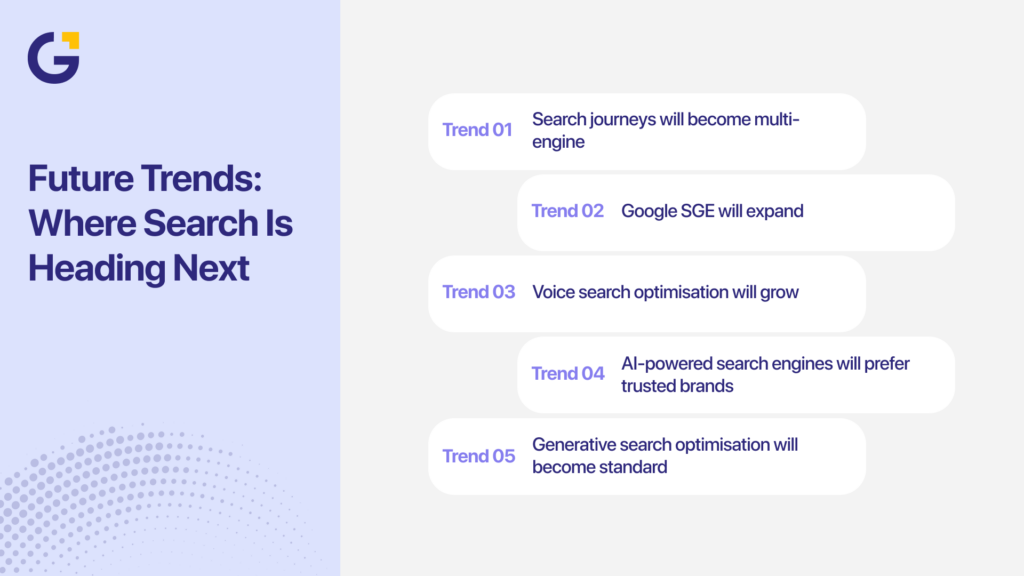
Future Trends: Where Search Is Heading Next
- Multi-Engine Search Journeys: Users will seamlessly switch between traditional Google search, AI chat platforms, vertical marketplaces, and social search depending on their immediate need.
- Expansion of Generative Interfaces: Generative search summaries will continue to handle a larger percentage of informational and comparison queries.
- Emphasis on Verified Entity Signals: Search and AI engines will increasingly favour verified, transparent, and authoritative brand entities over anonymous or unverified websites.
How Genix Digital Helps Businesses Stay Visible in the AI Era
Navigating the transition from traditional SEO to a unified SEO, AEO, and GEO framework requires specialised expertise, technical precision, and modern tracking capabilities.
Genix Digital delivers future-ready digital marketing strategies designed specifically for Australian SMEs and growing enterprises competing in the AI search landscape.
Our Core Capabilities Include:
- Comprehensive AI Search Audits: Evaluating your brand’s baseline visibility across Google AI Overviews, ChatGPT, Perplexity, and traditional SERPs.
- Advanced Genix Digital SEO Services: Strengthening your site’s technical foundation, site speed, internal architecture, and link authority.
- Dedicated AI Search Optimisation Services: Implementing AEO answer structures, advanced Schema markup, entity graph validation, and GEO content positioning.
- Data-Driven Reporting: Delivering clear, actionable dashboards that track organic traffic, AI citation rates, and high-intent conversion growth.
The Bottom Line: Winning in the Era of AI Search
SEO, AEO, and GEO now work together to shape how consumers discover information, compare providers, and make buying decisions across traditional and AI-powered search engines. To stay visible, businesses must optimise for organic rankings, direct answer delivery, and generative AI citations simultaneously.
Companies that build these capabilities early will secure dominant visibility, capture high-intent traffic, and earn long-term trust across every major digital discovery platform.
Ready to future-proof your digital marketing strategy? Book a strategy session with Genix Digital today and ensure your brand stays visible across Google, AI Overviews, and generative search engines in 2026 and beyond.
Frequently Asked Questions
1-What is the main difference between SEO, AEO, and GEO?
SEO focuses on improving web page rankings in traditional search results. AEO focuses on structuring content so search engines and voice assistants can extract direct answers for featured snippets and zero-click blocks. GEO focuses on positioning your brand so generative AI tools (like ChatGPT, Perplexity, and Gemini) cite and recommend your business in AI syntheses.
2-Is SEO replacing GEO in 2026?
No, SEO is not replacing GEO, nor is GEO replacing SEO. Traditional SEO provides the technical foundation, crawlability, and domain authority that AI engines rely on to discover and validate sources. GEO builds on SEO to ensure your brand is cited inside AI-generated answers.
3-Should digital marketing agencies offer AEO and GEO services to clients in 2026?
Yes, absolutely. Offering AEO and GEO services allows agencies to address zero-click search trends, protect client visibility as traditional SEO traffic evolves, and create high-value new revenue streams around AI visibility audits, entity optimisation, and prompt tracking.
4-How should client reporting evolve when a team adds GEO to SEO?
Reporting should expand beyond keyword ranks and session clicks to include metrics such as AI Citation Rate (how often LLMs cite your brand), AI Share of Voice against key competitors, Zero-Click Impression Share, Brand Sentiment in AI summaries, and referral conversion quality.
5-What software tools and platforms track AEO and GEO metrics in 2026?
Specialised tools like Profound, Peec AI, Scrunch, AirOps, and AIclicks track prompt-level citations and LLM visibility. Enterprise platforms also offer integrated AI Overview and citation monitoring features.
6-Where can I find free learning resources for AEO and GEO in 2026?
Free resources include Google Search Central Documentation on AI Overviews and Schema.org implementation, industry research blogs (such as Genix Digital), and open guides on entity optimisation and Knowledge Graph management.
7-How do I start optimising my business website for AEO and GEO today?
Start by adding question-based subheadings (H2/H3) across your key pages and leading with clear, 40–60 word direct answers. Implement relevant Schema.org markup, build original research and case studies, ensure consistent brand details across third-party review platforms, and monitor your brand’s presence across ChatGPT, Perplexity, and Google AI Overviews.



 17 Jul 2026
 6 Min Read