If your website isn’t ranking on page one, the issue usually isn’t your product or web design—it’s a lack of search authority. Thousands of Australian business owners invest heavily in content, only to find Google consistently prioritising their competitors.
That authority gap is almost always solved by backlinks. Securing strategic link building for small businesses in Australia remains the most reliable way to prove your site’s credibility to search algorithms. However, under Google’s 2026 spam detection updates, traditional shortcuts like automated directory submissions and low-quality guest posts will actively damage your rankings.
This guide outlines the exact, safety-first strategies required to earn high-impact Australian backlinks, whether implementing them in-house or through our dedicated off-page SEO team.
What Is Link Building and Why It Still Matters in 2026
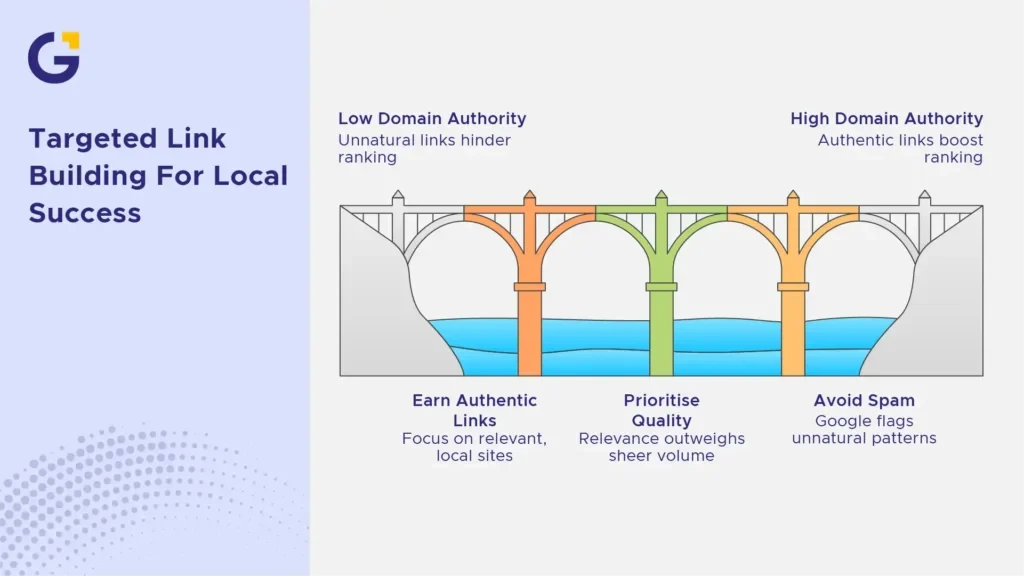
Link building is the deliberate practice of earning hyperlinks from external websites back to your own domain. Search engines view these inbound links as genuine digital “votes of confidence.” When reputable domains link to your pages, it reinforces your overall domain authority and referring domain profile, signalling that your content offers real value.
Despite perpetual claims across marketing forums that inbound links are losing relevance, search advocates like Google’s John Mueller routinely emphasise that authoritative, highly relevant links remain vital for understanding context and trustworthiness. What has dramatically evolved in 2026 is automated link detection. Updates targeting spam and unhelpful content now instantly flag unnatural link patterns, manipulative guest networks, and low-quality paid links.
For local business owners, this algorithmic shift is a massive advantage. You no longer need hundreds of spammy backlinks; instead, focusing on targeted link building for small business Australia allows you to outrank competitors using a smaller number of authentic, highly relevant Australian links.
Real-World Impact: A Melbourne-based physiotherapy clinic earned just 12 targeted backlinks over six months, securing placements on a local council health directory, two state sports associations, a local club sponsorship page, and a regional media feature. That small bundle of geographically aligned links easily outranked a local competitor holding over 200 low-quality backlinks from unrelated overseas blogs.
- Quality and relevance now heavily outweigh sheer link volume.
- Geographically targeted and industry-specific links carry maximum weighting for Australian search results.
- Google’s algorithmic spam filters make manipulative link schemes far riskier than ever before.
Why Link Building Looks Different for Australian Small Businesses
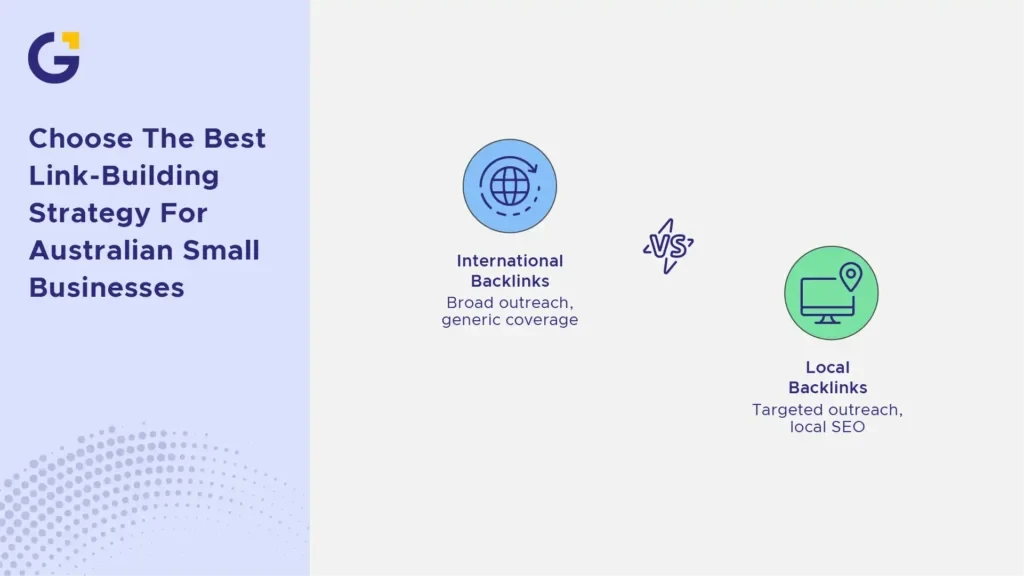
Most digital marketing guides online are written primarily for the US market, where media volume, publisher networks, and digital PR budgets operate on a vast scale. Australian businesses operate within a tighter, more interconnected digital landscape which requires a localised approach.
Local context is paramount down under. A single backlink from a state chamber of commerce, a regional industry body, or a local news outlet carries substantially more local SEO weight than dozens of generic international backlinks.
Furthermore, marketing budgets for local enterprises require efficiency. Rather than burning funds on broad outreach, Australian brands achieve better ROI by pairing strategic off-page tactics with high-converting written content marketing to naturally attract regional coverage.
Real-World Impact: An Adelaide landscaping firm bypassed expensive national campaigns entirely. Instead, they sponsored a regional garden exhibition, earning a listing on the event’s official partner page alongside a feature in a local lifestyle publication. These three hyper-local backlinks directly boosted their organic positions across key Adelaide suburbs.
Link Building Strategies That Work in 2026
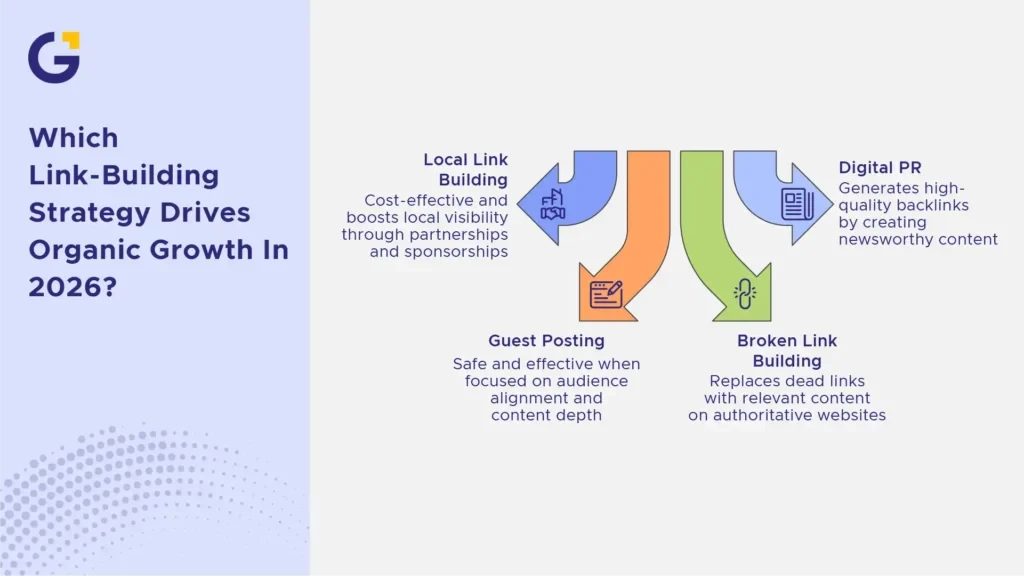
The brands currently winning at link building for small business Australia are not buying bulk links on sketchy forums. They are cultivating genuine local partnerships and publishing resource-rich content. Below are the four core strategies driving reliable organic growth for Aussie businesses today.
Local Link Building: Directories, Associations & Sponsorships
Local link building remains one of the highest-ROI activities for service providers. It is cost-effective, low-risk, and directly boosts visibility in local map packs.
Key local link opportunities include:
- Industry bodies and trade licensing boards.
- Suburban chambers of commerce and business networking groups.
- Municipal council directories and regional tourism boards.
- Sponsorships of community sports teams, charities, or annual events.
- Local supplier pages that highlight authorised stockists.
Because these links reflect real-world commercial relationships, according to Ahrefs’ guide on backlink audits, they maintain an exceptionally clean risk profile and build authentic authority.
Digital PR: Earning Links With Newsworthy Content
Digital PR involves creating original research, surveys, or expert industry commentary that journalists and editors actively want to cite as sources. When executed correctly, this approach generates organic press citations that strengthen your brand while providing high-quality SEO for small businesses.
Example Case: A Brisbane accounting firm surveyed 300 local sole traders regarding tax stress and inflation challenges. They published the findings as an interactive report, which was subsequently picked up by regional business publications, earning five high-authority press backlinks naturally.
Guest Posting Done Right (Without Getting Penalised)
Guest posting is far from dead, but the old method of submitting spun 500-word articles to random blogs is a direct path to a manual penalty. In 2026, guest blogging must focus strictly on audience alignment and content depth.
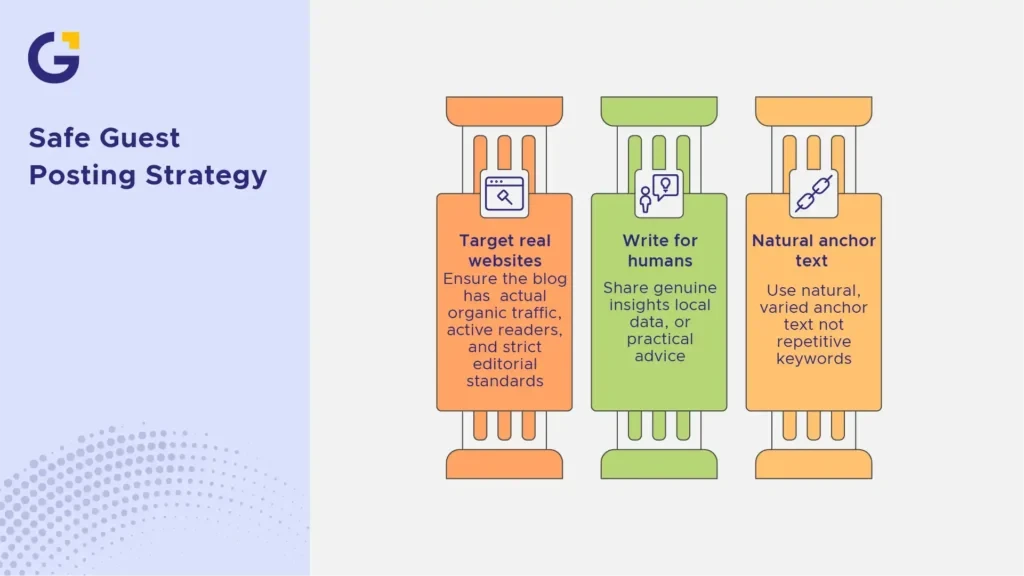
To keep your guest blogging strategy safe:
- Target real websites: Ensure the blog has actual organic traffic, active readers, and strict editorial standards.
- Write for humans first: Provide genuine insights, localised data, or practical advice that benefits the publisher’s readers.
- Maintain a natural anchor text profile: Avoid over-optimising link text with identical commercial keywords; use natural brand references or contextual phrases instead.
Broken Link Building and Resource Page Outreach
Broken link building involves finding dead links (404 errors) on authoritative Australian websites and offering your relevant content as a replacement. Similarly, resource page outreach targets curated industry guides that link out to helpful tools or local services.
How to execute this safely:
- Identify resource hubs: Use search queries like inurl: resources “Australia” or inurl: links “Sydney”.
- Audit for dead outbound links: Use browser extensions to check for broken URLs on those resource pages.
- Offer a superior alternative: Reach out politely to the webmaster, point out the broken link, and suggest your high-quality article or service resource as an updated replacement.
Link Schemes to Avoid and Google Penalty Risks
Navigating link building for small business Australia requires strict adherence to search engine quality guidelines. Cut-price link packages promising “100 high-DA links for $50” almost exclusively rely on link farms, private blog networks (PBNs), or hacked sites.
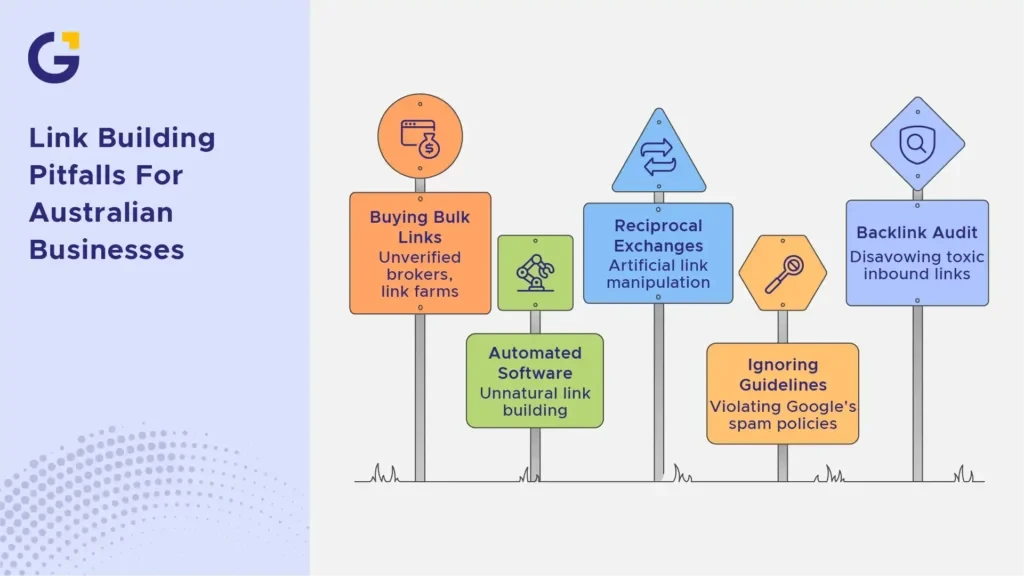
To protect your domain from algorithmic demotions:
- Never buy bulk links from unverified brokers.
- Avoid automated link-building software.
- Steer clear of reciprocal link exchanges (“I link to you, you link to me”).
- Review Google’s Search Essentials on Spam Policies to stay clear of artificial link manipulation.
If your domain unexpectedly drops in rankings, conducting a thorough backlink audit is essential to disavow toxic inbound links before permanent damage occurs.
How Many Backlinks Does a Small Business Actually Need?
One of the most common misconceptions among business owners is that you need thousands of backlinks to compete on page one. In reality, the exact number depends entirely on your local market competitiveness and target keywords.
For many local service providers such as plumbers in Sydney, accountants in Perth, or digital agencies in Melbourne, securing 15 to 30 highly relevant, high-quality Australian backlinks is often enough to establish strong top-3 positions.
Quality metrics to evaluate before chasing a link:
- Topical Relevance: Is the publishing site related to your industry or geographic region?
- Organic Traffic: Does the linking website actually receive real visitors from search engines?
- Link Placement: Is the link placed contextually within the body of the article, rather than hidden in a footer or site-wide sidebar?
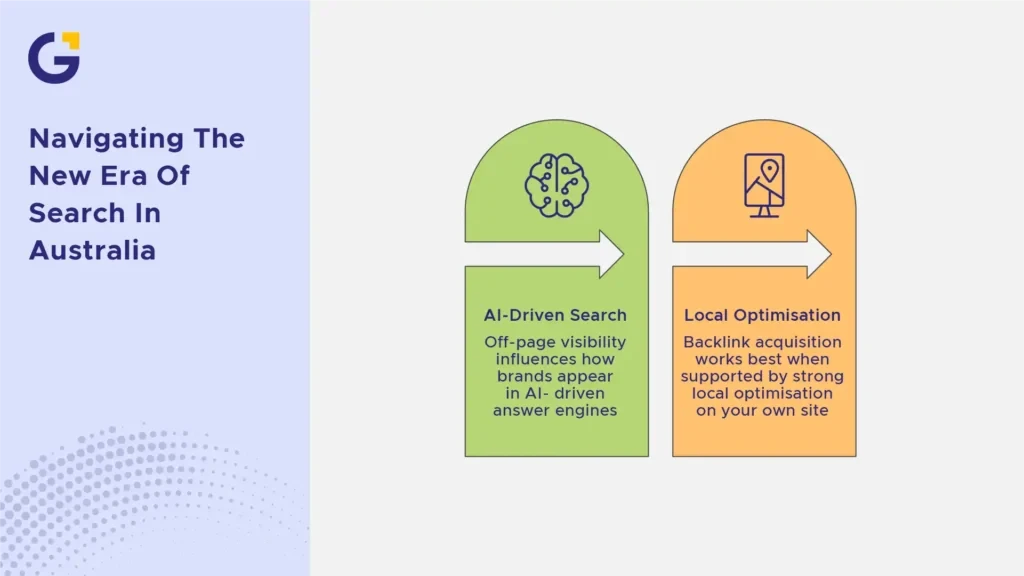
Navigating the New Era of Search in Australia
As search technology evolves, off-page visibility is no longer just about classic blue links; it directly influences how brands appear in AI-driven answer engines. If you want to dive deeper into how generative search impacts your organic footprint, read our complete guide on SEO, AEO, GEO: The New Era of Search in 2026 and Beyond.
Furthermore, backlink acquisition works best when supported by strong local optimisation on your own site. To make sure your Google Business Profile and local landing pages are fully optimised, check out our guide on How to Rank Higher on Google Australia in 2026.
Frequently Asked Questions
1. How long does it take to see results from link building in Australia?
Link building is a long-term SEO investment. While search crawlers may discover new links within days or weeks, the full impact on search engine rankings typically takes 3 to 6 months to materialise, depending on market competition and your domain’s existing trust.
2. What is anchor text and why is it important?
Anchor text is the clickable text snippet that holds a hyperlink. Maintaining a varied and natural anchor text profile (combining brand names, naked URLs, and contextual phrases) is critical to avoiding Google over-optimisation penalties.
3. Can I do link building myself or should I hire an agency?
Basic local tactics such as claiming directory listings, joining industry associations, and partnering with local suppliers can easily be managed in-house. However, scaled digital PR, broken link outreach, and technical link audits generally yield better ROI when managed by a dedicated agency.
4. Are free directory links still useful for Australian businesses?
Yes, provided they are legitimate, well-maintained Australian directories (such as TrueLocal, Yellow Pages, or council business listings). Generic, unmoderated global directories should be avoided, as they offer no ranking value and can clutter your link profile.





 22 May 2026
 8 Min Read