
If you’re building or redesigning a business website, you’ve probably asked yourself: how many pages should a website have? Too few pages and you risk looking incomplete or underselling your services; too many, and you end up with a bloated, confusing site that’s hard to navigate and even harder to maintain.
The truth is, there’s no single magic number. The right page count depends on your business size, services, audience, and SEO goals. However, a clear framework makes the process straightforward, beginning with strategic website sitemap planning well before writing any code.
In this guide, we’ll break down the primary factors influencing your page count, highlight the mandatory pages every site needs, and reveal how to craft a sitemap that serves both your customers and search rankings.
Need help mapping out your website structure? Plan your website sitemap with a strategy session before you build.
What Is a Website Sitemap and Why It Matters
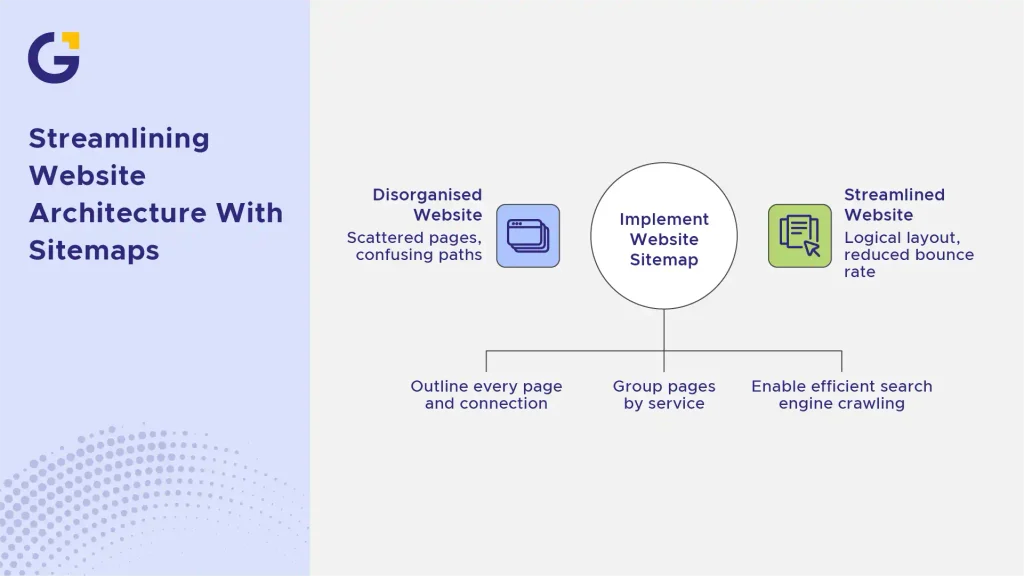
A website sitemap is essentially the architecture of your digital presence. It outlines every page, how they connect, and how visitors navigate between them.
Think of it as a building blueprint. Before laying foundations, an architect maps out every room and corridor. Proper website sitemap planning does the same for your site, eliminating dead ends, thin content, and confusing user paths.
Sitemaps serve two distinct audiences: human visitors and search engine crawlers. A logical layout helps users find answers quickly, while an XML sitemap enables search engines like Google to crawl and index your content efficiently.
Example Case: A local dental clinic launched without prior planning, ending up with 40 scattered pages containing overlapping content. After restructuring into a streamlined 12-page sitemap grouped logically by service, their bounce rate dropped by 22% within two months.
- Sitemaps improve user navigation and reduce bounce rates
- They help search engines crawl and index content properly
- They prevent duplicate or orphaned pages that hurt SEO
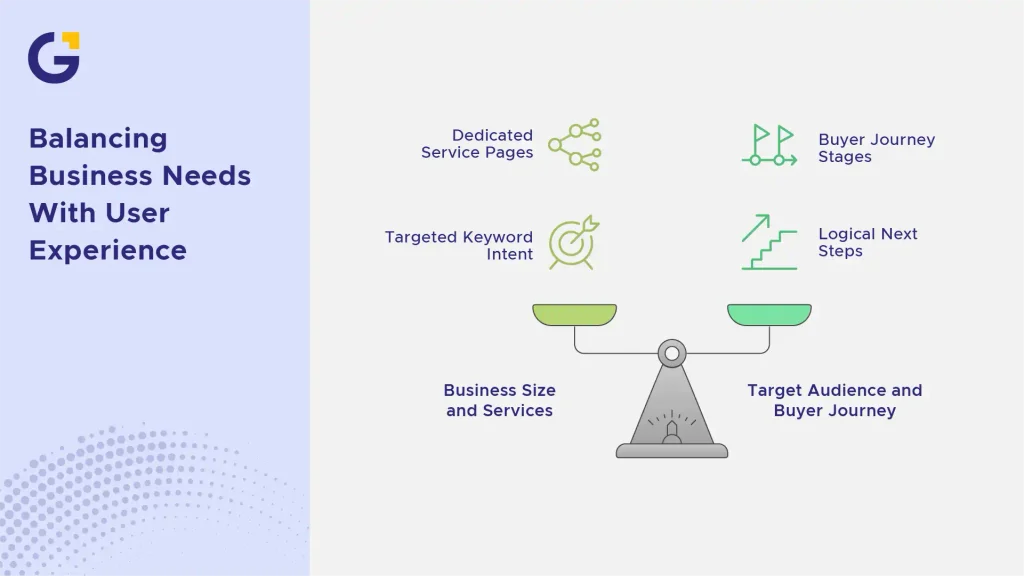
Factors That Determine How Many Pages You Need
There’s no universal answer to how many pages a website should have, because every business operates under different requirements. Instead of chasing an arbitrary target, focus on the structural drivers.
Business Size and Services Offered
A solo consultant offering one service needs far fewer pages than a multi-location company with ten distinct offerings. Map your pages to your actual services rather than guessing.
If you offer five distinct services, each deserves its own dedicated page. Combining everything into a single generic “Services” page hurts usability and dilutes keyword focus.
Target Audience and Buyer Journey
Consider how your prospective clients research before buying. For instance, a B2B platform with an extended decision cycle needs comprehensive information. Implementing proven UI/UX page patterns for B2B businesses can guide visitors seamlessly through research to conversion. Conversely, a local bakery’s visitors simply want operating hours, a menu, and a location map.
Map pages to each stage of the buyer journey awareness, consideration, and decision so visitors always have a logical next step.
SEO and Keyword Targeting
Every page should target a specific keyword intent. Trying to rank one page for ten unrelated topics rarely yields results.
For example, instead of relying on a broad overview, a trade business should create dedicated pages for each specialty to capture targeted local searches. You can learn more about structured navigation in our guide on how to do SEO for a website step-by-step.
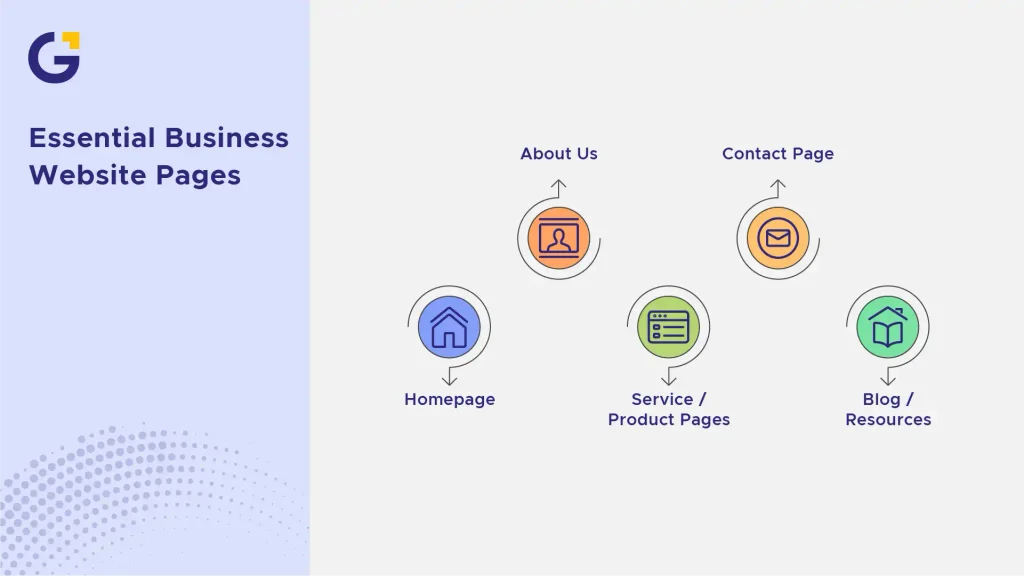
Essential Pages Every Business Website Needs
Regardless of industry, most small business websites need a core set of pages before adding anything extra. Getting these right first is the foundation of solid website structure for small business success.
Homepage
Your homepage is the main entry point and traffic distribution hub. It must clearly communicate what you offer, who you serve, and guide visitors smoothly to their next step.
About Us
This page establishes authority and trust. Sharing your story, leadership team, and credentials strengthens important E-E-A-T signals required by Google.
Service / Product Pages
Each primary offering requires a dedicated page detailing specific benefits, features, and clear conversion points. These pages act as the main engines for organic lead generation.
Contact Page
Make reaching out effortless. Include direct booking forms, phone numbers, email addresses, and an embedded map if operating from physical premises.
Blog / Resources
A dedicated resource hub drives long-term organic growth, addresses buyer queries, and builds authority over time.
Example Case: A law firm launched with just 5 standard pages. Within a year, expanding their core offerings into 8 dedicated service pages doubled their organic lead intake.
- Homepage, About, and Contact pages are non-negotiable foundations
- Service pages must mirror actual business offerings directly
- Resource content compounds search visibility over time
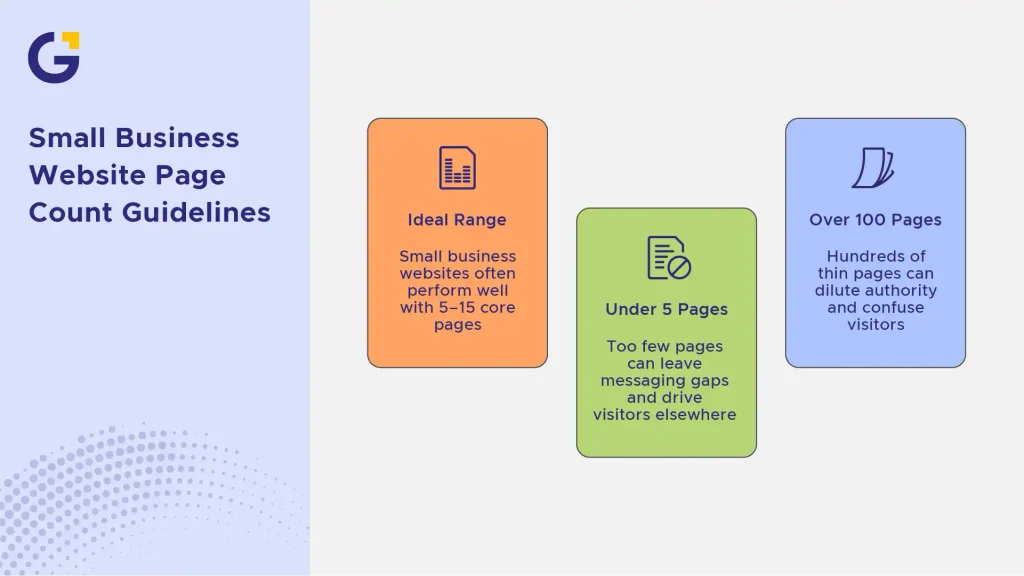
How Many Pages Is Too Many or Too Few?
Businesses frequently ask: how many pages does a small business website need to stay functional without feeling cluttered or thin? As a general benchmark, most small business websites perform exceptionally well with 5 to 15 well-structured core pages, supported by active blog content.
Too few pages (under 5) often leave critical gaps in your messaging, causing visitors to seek answers elsewhere. Conversely, creating hundreds of thin, auto-generated pages can dilute your domain authority and confuse site visitors. If you’re wondering “when should a Sydney business redesign its website”, bloated or unorganised navigation is usually a key sign.
How to Plan Your Website Sitemap Step by Step
Building a clear sitemap requires a systematic approach to ensure every page serves a business purpose:
- Audit Existing Assets & Content: Begin by listing all current pages, services, and materials to identify what to keep, update, or prune.
- Define Core Objectives & KPIs: Clarify what each page must achieve, whether that is capturing contact forms, phone calls, or direct purchases.
- Map Out Page Hierarchy: Group information logically under intuitive navigation headers (e.g., placing specific services under a main “Services” parent menu).
- Assign Target Keywords: Align every planned URL with a distinct primary keyword search intent to avoid internal keyword cannibalisation.
- Establish Internal Link Flows: Connect complementary pages strategically. For detailed execution strategies, review our article on internal linking strategy for service-based websites.
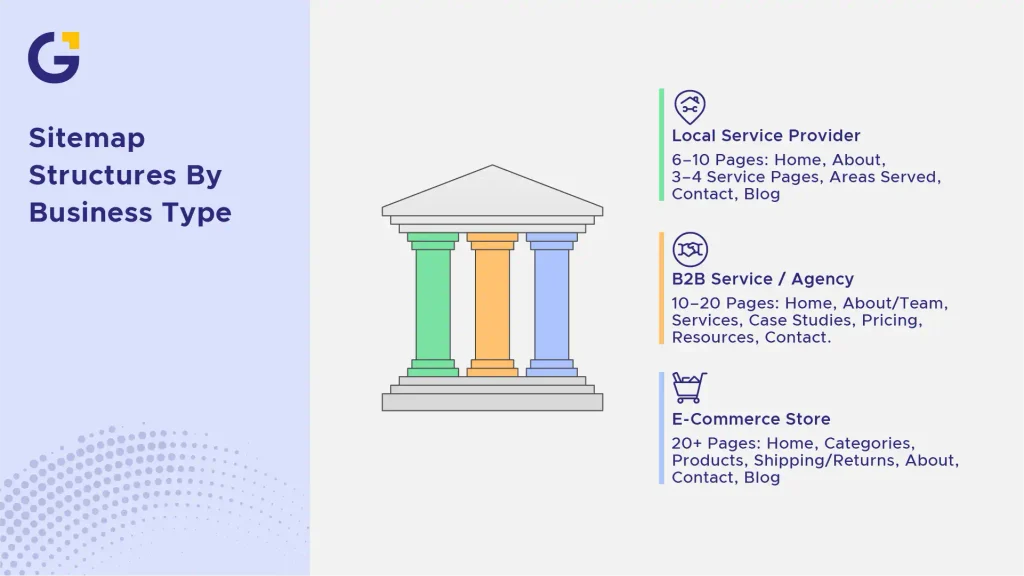
Example Sitemap Structures by Business Type
The ideal layout varies across industries. Here is how structures differ based on business goals:
- Local Service Provider (6–10 Pages): Homepage, About Us, 3–4 Dedicated Service Pages, Local Area Served, Contact Us, Blog.
- B2B Service / Agency (10–20 Pages): Homepage, About/Team, Individual Service Pages, Case Studies/Portfolio, Pricing/Packages, Resource Centre, Contact.
- E-Commerce Store (20+ Pages): Homepage, Category Pages, Individual Product Pages, Shipping/Returns, About, Contact, Blog. For technical comparisons on e-commerce frameworks, read our guide on Shopify vs WooCommerce for Australian businesses.
FAQs
1-How many pages should a website have for good SEO?
There is no strict minimum, but having separate, dedicated pages for each of your primary offerings allows you to target specific keywords far more effectively than combining everything onto a single page.
2-Can a website have too many pages?
Yes. Having excessive pages with low-quality or thin content can negatively impact search indexing and hurt user experience. It is always better to have fewer, high-value pages.
3-How often should I update my sitemap?
Your XML sitemap should update automatically whenever new content or pages are published. Your visual sitemap and navigation structure should be reviewed annually or whenever launching new business services.
4-Do I need a sitemap if I only have a 5-page website?
Yes. Even small websites benefit from clear sitemap structures and XML submissions, as it helps search engines index your site correctly right from launch.




 28 Nov 2025
 8 Min Read