
If your service business has a blog full of helpful articles but your booking pages still aren’t ranking, the problem might not be your content. It might be your internal linking service pages strategy or the lack of one.
Many service websites publish blog after blog without ever connecting that content back to the pages that actually generate revenue. The result? Search engines struggle to understand which pages matter most, and potential customers read an article, get their answer, and leave without ever seeing your service offer.
This guide breaks down exactly how to build an internal linking strategy for service websites that supports your money pages, improves crawl paths, and turns passive blog readers into paying clients.
Not sure which pages on your site need more internal support? Running a regular technical SEO and an internal linking audit can reveal exactly where you’re losing potential customers
Why Internal Links Matter for Service Websites
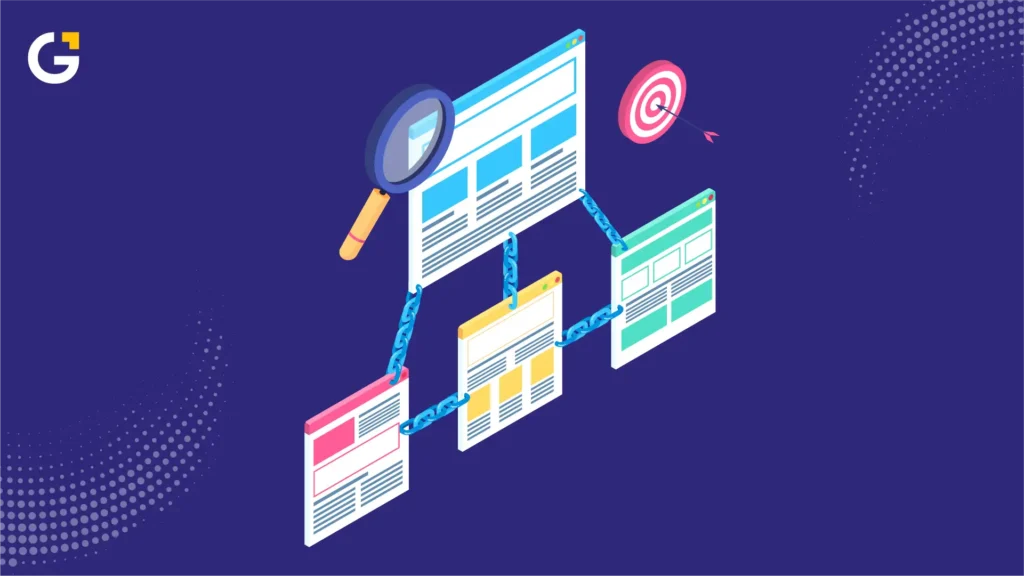
Internal links are the roads that connect your website. Without them, even your best content becomes an island that search engines and users struggle to find.
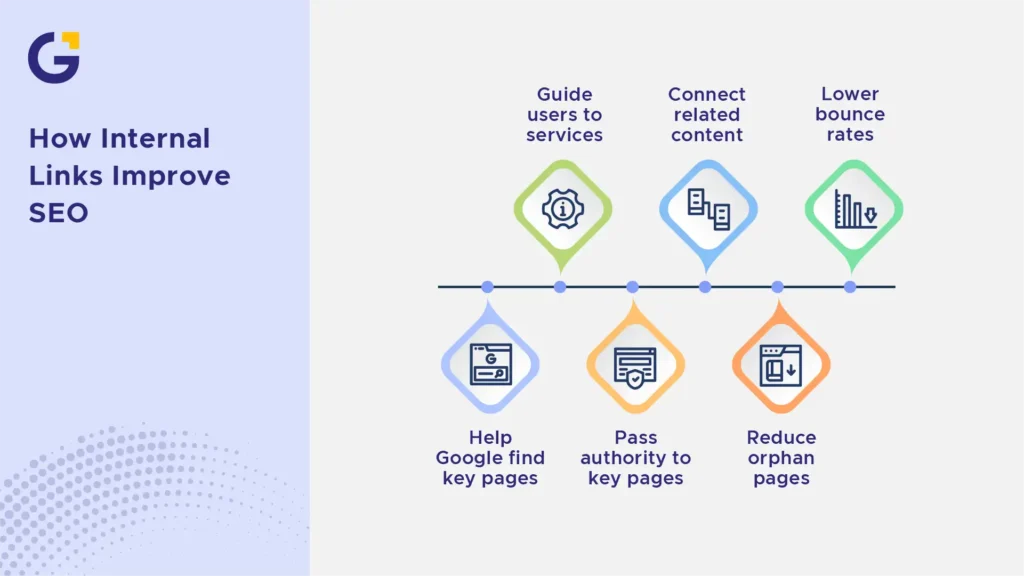
For service businesses specifically, internal links do three critical jobs. They help Google understand which pages are most important. They guide users from research mode into buying mode. And they distribute authority from high-traffic blog pages to lower-visibility service pages SEO assets that need the boost.
A website with no internal linking strategy often ends up with orphan pages; service pages sitting quietly with no links pointing to them at all. If Google can’t find a clear path to a page, it’s less likely to rank it, no matter how well it’s written. By building a structured SEO content hub and implementing a solid SEO strategy for service-based websites, you ensure that authority flows where it matters most.
Example Case: A plumbing company had a “Water Heater Installation” service page buried three clicks deep with zero internal links from blog content. After adding contextual links from five related blog posts about water heater maintenance and repair, the page moved from page 3 to page 1 within ten weeks.
- Internal links pass authority from popular pages to money pages.
- They reduce bounce rate by guiding users to relevant next steps.
- They help search engines establish topical relevance between related pages through contextual internal links.
How to Identify Money Pages
Before building any service page internal linking plan, you need to know exactly which pages deserve the most support. Not all pages carry equal weight, so treat them differently.
Main revenue pages
These are the pages directly tied to bookings, quotes, or purchases. Think “Request a Quote,” “Book a Consultation,” or core service pages like “Emergency Roof Repair.” These deserve the most money page SEO support site-wide.
Supporting service pages
These pages describe specific offerings under your main services, such as “Residential Roof Repair” versus “Commercial Roof Repair.” They still convert, but usually have lower search volume than the main page. To maximise their visibility, businesses often rely on highly targeted content marketing that supports service pages, allowing you to capture high-intent traffic through educational blog posts.
Local or industry pages
If you serve multiple cities or industries, pages like “Roof Repair in Austin” or “Roofing for Property Managers” fall here. These need internal links from both blog content and other service pages to build local relevance.
Example Case: A digital marketing agency organised its site into three tiers: core services, supporting services, and location pages; then mapped every blog post to link into at least one tier. Within four months, organic leads from service pages increased by 34%.
- Rank money pages by revenue impact, not just traffic potential.
- Group pages into a clear hierarchy before linking.
- Prioritise main revenue pages for links from your highest-traffic blog content.
Where Supporting Content Should Link
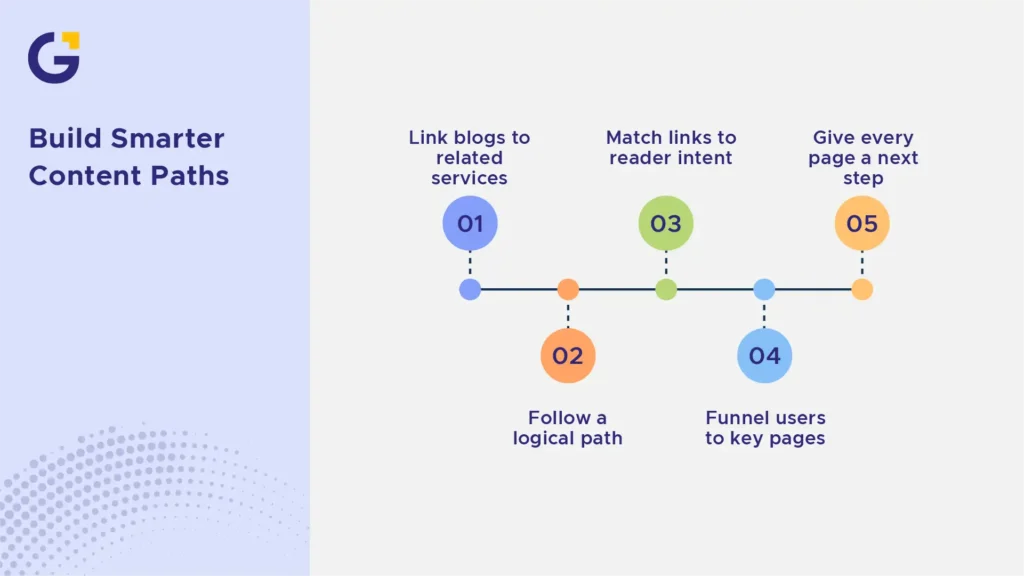
This is where an SEO silo for service business structures really pays off. Your blog content shouldn’t link randomly. It should follow a logical path toward relevant money pages using supporting content internal links.
A blog post about “Signs You Need a New AC Unit” should link to the AC installation service page. A post about “How Often to Service Your Furnace” should link to the maintenance plans page. The connection needs to make sense to a reader, not just to an algorithm.
Think of it as a funnel. Educational content sits at the top, supporting service pages sit in the middle, and main revenue pages sit at the bottom. Every piece of content should have a clear next step for the reader, not just to an algorithm.
Example Case: A home cleaning company restructured its blog so every post ended with a contextual link to the closest matching service page instead of a generic “Contact Us” link. Click-through rate to service pages increased by 22% in three months.
Anchor Text Rules That Keep Links Natural
Using anchor text in internal links is one of the most overlooked ranking factors. Google uses anchor text to understand what a linked page is about, but overusing exact-match keywords can look manipulative and hurt rankings.
The rule of thumb: vary your anchor text while keeping it descriptive. Instead of using “plumbing services” on every single link, mix it with phrases like “our licensed plumbing team,” “schedule a plumbing inspection,” or “learn about our repair process.”
According to Google’s own Search Central documentation, descriptive anchor text helps both users and search engines understand context, and unnatural repetition can be flagged as a manipulative SEO tactic.
Example Case: An electrician’s website used the exact phrase “electrical services” as an anchor text for over 40 different blog posts pointing to their homepage. After implementing a technical SEO audit and diversifying the anchor texts to natural variants like “hire a local electrician” or “our residential wiring solutions,” the site’s primary money pages saw a 45% increase in keyword rankings within two months.
Turning Content into Revenue
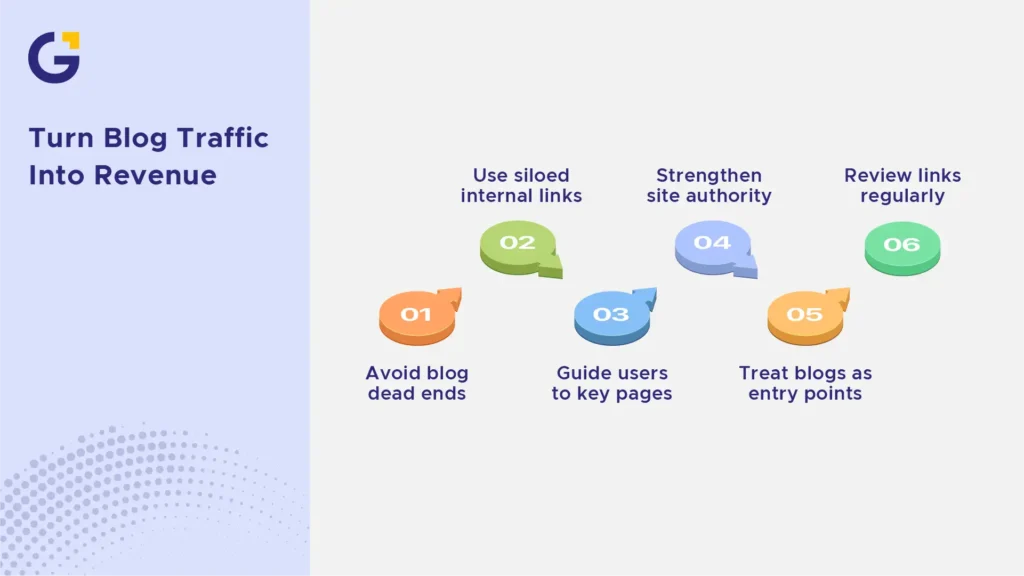
At the end of the day, an exceptional blog won’t grow your business if it acts as a dead end. Implementing a strategic, siloed internal linking structure is the missing bridge between your informational content and your commercial money page SEO. By guiding both search engines and potential clients along a clear, logical path, you maximise your site’s authority and create an effortless user journey.
Stop treating your blog posts as standalone articles. Start looking at them as the entry points to your sales funnel, review your links regularly during site updates, and watch your service pages finally get the rankings and bookings they deserve.
Frequently asked questions about internal linking strategy
What are money pages in SEO?
Money pages are pages that directly support revenue, such as service pages, product pages, booking pages, or quote request pages.
How do internal links help service pages?
They help users and search engines discover important pages, understand topic relationships, and move from educational content to commercial pages.
Should every blog link to a service page?
Not every blog, but relevant supporting content should link naturally to the most useful next step.
What anchor text should internal links use?
Use descriptive, natural anchor text that explains the destination without repeating the same keyword everywhere.
Can too many internal links hurt UX?
Yes. Too many irrelevant links can distract users and make the page feel spammy.
How often should internal links be reviewed?
Review internal links during content audits, service updates, site redesigns, and when publishing new supporting content.





 24 Sep 2026
 7 Min Read