


If you have tried using ChatGPT or another AI tool to write a blog post, you have probably noticed something. It reads fine, but it does not sound like your business. This is the exact problem an AI content workflow solves for small business owners, because generic AI content without a process tends to produce content that could belong to anyone.
The tool itself is not really the issue. The workflow around it is. Businesses that get good results from AI content workflow are not using it to replace strategy, they are using it inside a structured human-edited AI content process that still has human judgment at the centre. That is the gap this guide is going to close.
Looking for a hands-on partner to scale your brand? If you would rather have this workflow built and managed for you, our team offers professional content marketing support for Australian businesses.
Why AI Content Often Sounds the Same
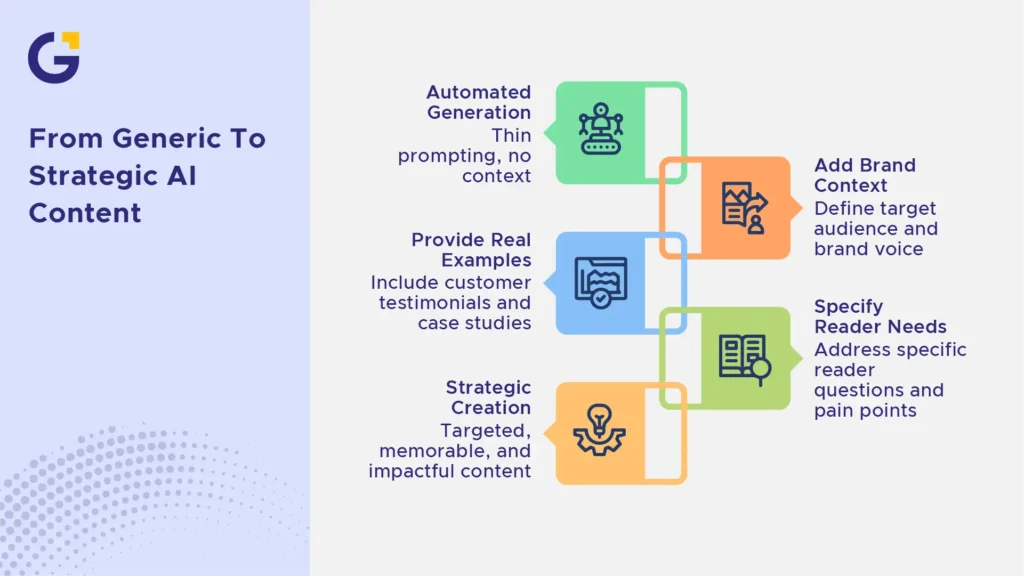
Most generic AI content has one root cause. It was generated from a thin, one-sentence prompting process with no brand context, no real examples, and no clear reader in mind.
AI models are trained to predict likely, average phrasing. Without direction, they default to safe, broad statements that could apply to almost any business in any industry.
The result is a small business AI content piece that is technically correct but completely forgettable. It rarely quotes a real customer, references an actual Australian regulation, or reflects how your business genuinely solves problems.
Example Case: A Melbourne bookkeeping firm asked an AI tool to “write a blog about the benefits of outsourcing bookkeeping.” The output was accurate but generic, listing benefits that any accounting business in any country could claim.
- No mention of ATO deadlines or Australian compliance requirements
- No reference to the firm’s actual client industries or pricing model
- Nothing a competitor could not publish word for word
To stand out, your AI content process for small businesses must transition from automated generation to strategic creation.
A Better AI Content Workflow
The fix is not to abandon AI. It is to place it correctly within a modern AI blog workflow where humans lead strategy, and AI supports execution.
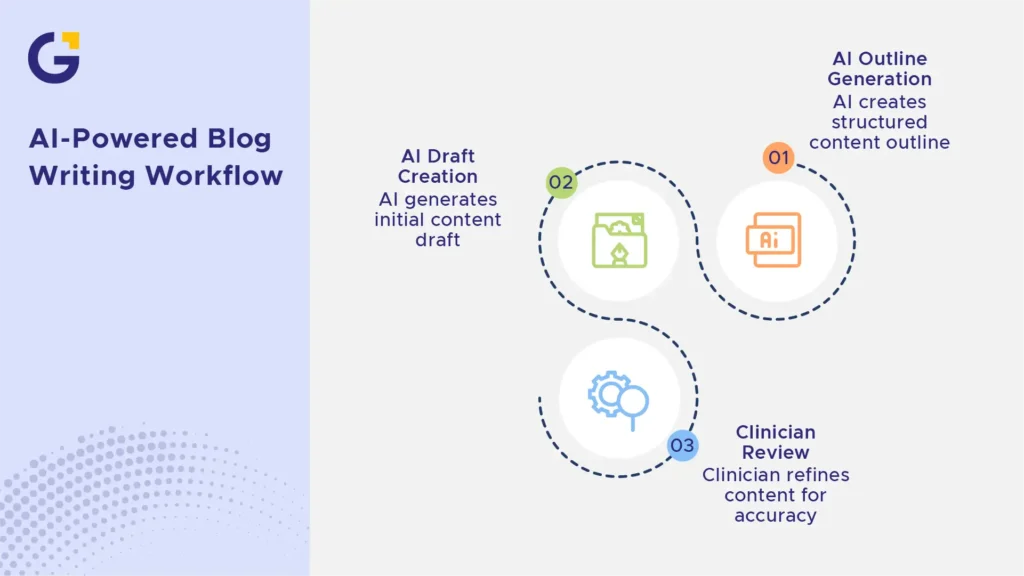
A solid AI content marketing workflow generally has three stages: human-led planning, AI-assisted drafting, and human-led review. Skipping any one of these is where quality breaks down.
Start with human strategy and examples
Before any AI tool is opened, someone on the team should define a clear content brief. This includes the target reader, the primary keyword, the angle, and at least one real example or customer story to include.
This step is where SME input and brand voice actually enter the content. AI cannot invent your customer stories or your genuine point of difference.
Use AI for drafts, outlines and repurposing
Once the brief exists, the AI blog writing workflow efficiency genuinely shines. It can turn a rough brief into a structured outline, draft sections quickly, and handle repurposing by turning a long article into social captions, email snippets, or FAQ content.
This is where time savings actually show up, because the AI is filling in structure and phrasing, not deciding strategy or facts.
Example Case: A Perth physiotherapy clinic writes a one-page brief with a real patient scenario (anonymised), then asks AI to draft an outline and first pass. The clinician then rewrites the clinical claims in their own words before publishing.
- Brief takes 15 minutes to write
- AI draft takes minutes to generate
- Clinician review adds accuracy and a real voice
Add subject matter review and editing
Every AI-assisted draft needs a strict editorial process and subject matter review. This is where an actual expert in the business checks claims, terminology, pricing details, and anything legal, medical, financial, or technical.
This human review AI content phase also catches “confident but wrong” AI statements, which are common enough that skipping this stage is a real risk for credibility and compliance.
What AI Should Not Decide Alone
Some decisions should never be fully delegated to an AI tool, no matter how good your content operations are.
AI should not decide your overall AI content strategy, pricing claims, legal or compliance wording, or final brand positioning without human sign-off. These require judgment grounded in a real business context that AI does not have access to.
It also should not be the final voice on anything customer-facing that touches trust, safety or money, categories Google’s own guidance treats as higher stakes for content quality. To ensure your search presence aligns with these guidelines, pairing your production with a proper SEO content strategy for small businesses ensures voice, trust, and search intent are aligned from the brief stage, not fixed after the fact.
How to Keep Brand Voice Consistent
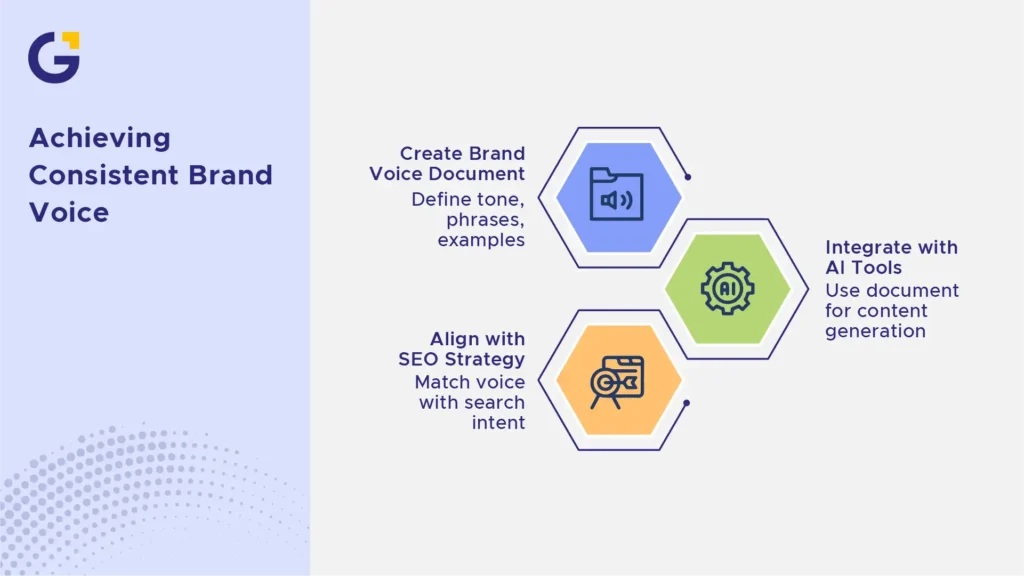
Brand voice drifts when every piece of content starts from a blank prompt. The fix is a living brand voice AI document that AI tools and staff both reference every time.
This document should include tone words, phrases to avoid, real customer language pulled from reviews or calls, and two or three example paragraphs written in your actual voice.
Feeding this into your prompt, or attaching it as reference material, dramatically reduces generic phrasing. It is also worth pairing this with a proper SEO content strategy for small businesses so voice and search intent are aligned from the brief stage, not fixed after the fact.
Quality Checks Before Publishing
Before anything goes live, run it through a short quality gate. This quality assurance step does not need to be complicated, but it does need to be consistent to maintain your brand reputation.
- Check facts and figures against a real, primary source (fact-checking).
- Check that examples are genuine or clearly framed as illustrative.
- Check tone against the brand voice document.
- Ensure the layout is easy to read and accessible.
AI Content Workflow Checklist
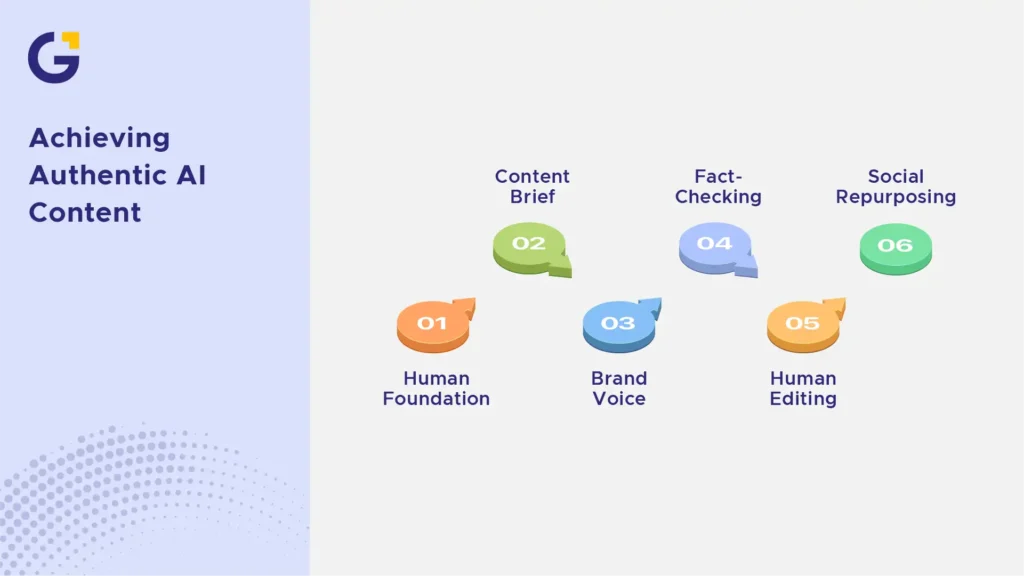
To make sure your AI content marketing stays authentic, fast, and high-performing, use this quick checklist before scheduling your next post on your content calendar:
- The Human Foundation: Do we have a unique angle, a real customer story, or SME input for this topic?
- The Brief: Did we write a proper content brief instead of just typing a quick topic into an AI prompt?
- Brand Voice Guardrails: Have we fed our brand voice guidelines and tone instructions to the AI?
- Fact-Checking & E-E-A-T: Have we verified every statistic, quote, legal claim, and medical/financial statement?
- Human Editing: Has a real team member polished the text, removed generic AI words (like “delve”, “testament”, or “revolutionise”), and formatted it for a smooth reader experience?
- Social Repurposing: Have we used the final, human-edited version to generate our newsletters and social posts?
Frequently Asked Questions
How can small businesses use AI for content?
Small businesses can implement a structured AI content workflow to generate detailed article outlines, draft initial sections, and brainstorm content planning ideas. AI is also highly effective for repurposing long-form articles into social captions and email snippets.
Why does AI content sound generic?
Most generic AI content sounds the same because it is generated from thin prompts without a proper content brief. Without SME input (Subject Matter Expert), real-world customer examples, and unique brand guidelines, AI defaults to predictable, average phrasing that lacks originality and fails to connect with a local Australian audience.
Should AI content be fact-checked?
Absolutely. AI models can confidently present inaccurate data or vague claims. Every draft requires rigorous fact-checking and a thorough human review in the AI content phase. This ensures that all legal compliance, industry-specific terms, pricing details, and clinical or technical statements are 100% accurate before publishing.
Can AI content rank in Google?
Yes, AI-assisted content can perform exceptionally well in search results, provided it aligns with Google’s E-E-A-T guidelines (Experience, Expertise, Authoritativeness, and Trustworthiness). The key is to combine AI efficiency with a solid SEO content strategy for small businesses. Purely automated, low-value generic content that offers no new insights will struggle to rank or build trust.
What should a content workflow include?
A professional AI content process for a small business should follow a clear editorial process: starting with a defined audience and keyword research, building a brief with real examples, generating the AI draft, and finishing with expert human editing, brand consistency checks, and a final quality assurance review.
Can AI help with content calendars?
Yes, AI is a fantastic tool for mapping out your content calendar. It can suggest creative topic clusters, recommend fresh angles for your industry, and help organise your publishing schedule. However, your actual business goals, seasonal priorities, and direct customer feedback should always dictate the final calendar structure.





 20 Mar 2026
 10 Min Read