
Email marketing is still one of the most reliable ways for Australian businesses to reach customers directly. Many owners want to know what email marketing is and whether it still works in 2026, especially with social platforms and paid ads changing so often. Email stays steady because it does not depend on unpredictable algorithms and allows you to speak to people who have already shown interest in your business.
In this guide, you’ll learn how email marketing works, why it matters, and how Australian businesses across retail, e-commerce, and B2B can use it to increase sales and repeat clients. You’ll also see insights from brands like Apple, HubSpot, Brevo, and Netflix, along with recent industry data from Statista and Smart Insights that show why email continues to grow this year.
What Exactly Is Email Marketing?
Email marketing is the use of email to send messages to subscribers who have agreed to hear from your business. These messages may include updates, promotions, reminders, educational tips, or automated sequences that guide someone from interest to purchase. Email marketing offers strong benefits for small businesses because it gives them an affordable and steady way to stay in touch with clients.
The primary goal is to build trust, share useful information, and move people toward a sale or booking.
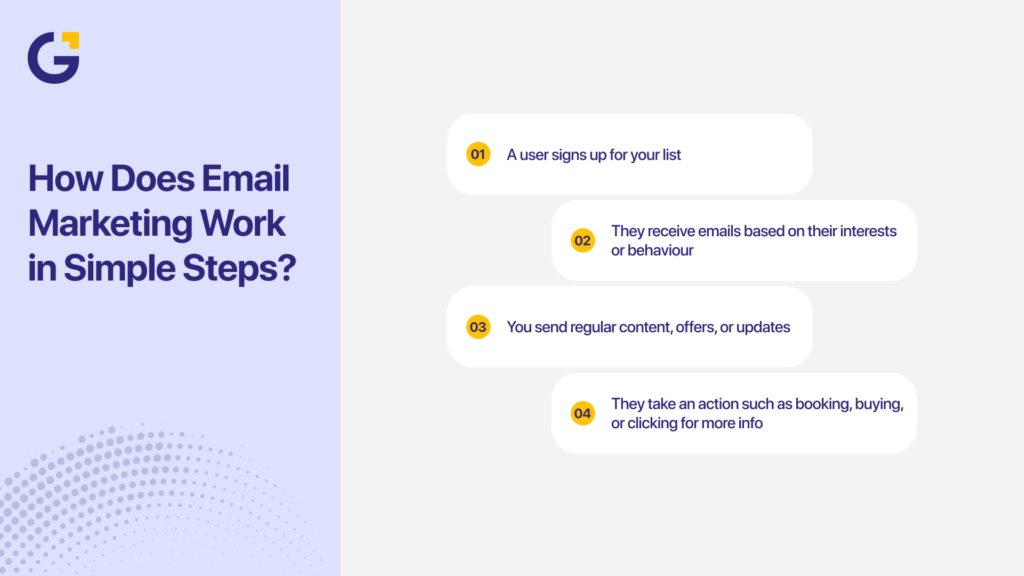
How does email marketing work in simple steps?
Email marketing follows a simple flow that guides a subscriber from interest to action. If you’re wondering what email marketing is and how it works, the steps below show how someone moves from signing up to taking an action.
- A user signs up for your list.
- They receive emails based on their interests or behaviour.
- You send regular content, offers, or updates.
- They take an action such as booking, buying, or clicking for more info.
Unlike social media posts that can disappear in crowded feeds, emails land directly in the inbox. Even tech leaders like Gary Vaynerchuk, and major brands like Qantas continue to rely heavily on email campaigns because the channel stays consistent year after year.
Is Email Marketing Still Working in 2026?
Yes. Multiple industry reports show continued growth in 2026. Statista reports that global email volume is expected to reach 424.2 billion emails sent per day by 2028. Also, HubSpot’s 2024 findings show that email remains the preferred channel for receiving brand updates.
These numbers explain why companies like Amazon, Canva, and Woolworths invest heavily in email automation. Email remains stable while social platforms change often. For small businesses in Australia, this means email is one of the easiest channels to control.
Why Email Marketing Matters for B2B Businesses
B2B decision makers prefer structured information, clear offers, and regular updates. Email suits this behaviour because it allows longer explanations without interruption.
Email helps B2B companies:
- Build authority through consistent insights
- Educate leads about services
- Stay top of mind during long sales cycles
- Share case studies and results
- Send automated follow-up messages
According to LinkedIn’s 2024 B2B Benchmark Report, 61 % of B2B marketers reported using email as a marketing channel. This shows that email is still a core tool for reaching decision makers. If most B2B teams rely on email, it means buyers are still willing to read messages that help them solve problems or compare services. When combined with lead nurturing sequences, email can shorten the time it takes for someone to contact your sales team.
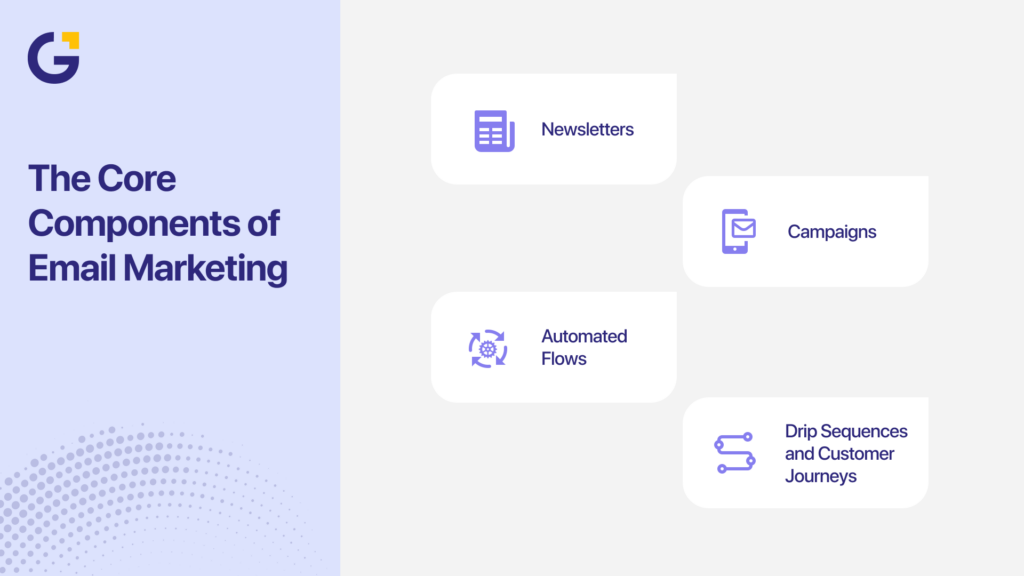
The Core Components of Email Marketing
Email marketing includes several types of emails. Each plays a different role in converting subscribers into clients.
Newsletters
Newsletters share regular updates, useful tips and short educational messages with your audience. They help your business stay visible without asking for a sale each time. A good newsletter builds trust by showing your expertise.
For example, an Australian accounting firm could send monthly reminders about tax deadlines, changes from the ATO, or simple money-saving tips for small business owners. Over time, these updates keep clients engaged and make them more likely to reach out when they need help.
Automated Flows
Automated flows are emails that send themselves based on a person’s actions. They work in the background and save time while still giving each subscriber a personalised experience. A few common triggers include: someone downloading a guide, adding items to a cart, signing up for a webinar, or showing interest in a service but not responding for a few days.
Businesses that use ActiveCampaign, Klaviy,o or HubSpot often set up these flows to follow up instantly and keep leads warm without manual effort. Automated flows are useful because they reach people at the right moment.
Campaigns
Campaigns are one-off emails sent at a planned time. They are often used for promotions, product launches, events, announcements, or seasonal offers. These emails work well when you want immediate attention or to drive short-term results.
Retail brands like The Iconic send campaigns during holiday sales, while service businesses may send campaigns for EOFY specials or new service updates. Campaigns help create urgency and bring quick traffic to your website.
Drip Sequences and Customer Journeys
Drip sequences are a set of emails sent over days or weeks. They guide people through a clear path, such as learning about your service, comparing options, or getting ready to buy. These sequences help build trust by giving useful information in small steps.
For example, an Australian fitness studio could send a welcome email, followed by a class timetable, member stories, and a new-client offer. Each email prepares the reader for the next step, making it easier for them to decide. Drip sequences work well for long-term nurturing and helping leads stay engaged.
The Power of Segmentation and Personalisation
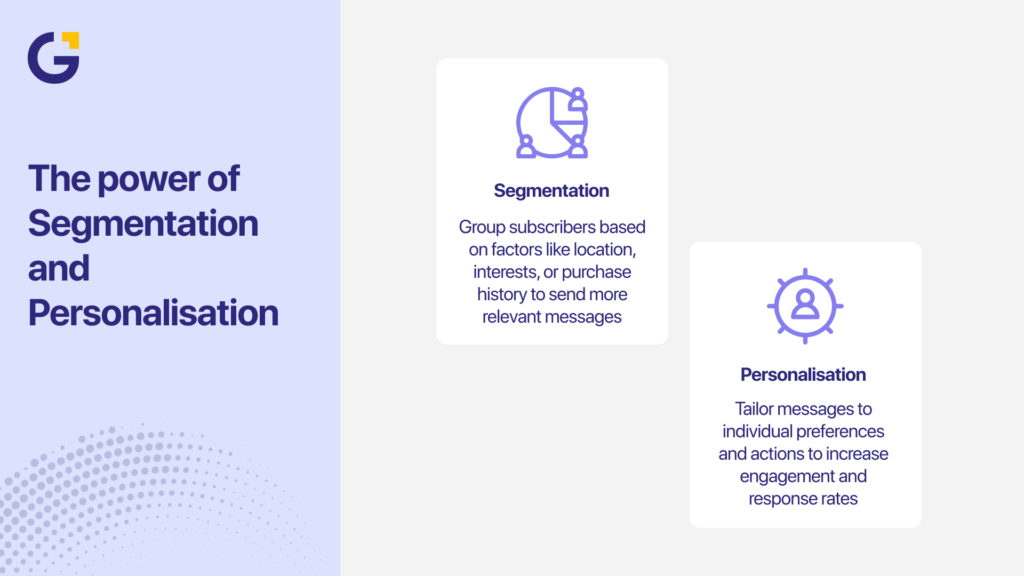
Email works best when it is relevant. This is where segmentation and personalisation matter. Segmentation means splitting your email list into smaller groups based on factors like location, interests, behaviour, purchase history, or engagement level. Email segmentation helps you group subscribers into smaller lists so each message feels more useful to the reader. This allows you to send content that fits each group, instead of sending the same email to everyone.
For example, Netflix sends different recommendations based on what you watched, which keeps emails useful and reduces unwanted content.
Personalisation builds on segmentation by adjusting the message to match a person’s actions or preferences. Personalised email content makes each message feel more timely and increases the chance that someone will click or respond. This often leads to better open rates, higher click-through rates, and stronger sales because people are more likely to engage with emails that feel tailored to them.
A 2024 McKinsey study found that buyers respond well to personalised communication and are more likely to trust brands that send timely, relevant messages.
Choosing the Right Email Marketing Provider
Many business owners struggle to pick the right software. The choice depends on your business size, automation needs, and sales process.
Comparison Table
Most email automation tools now include simple builders for journeys, tagging and performance tracking, which makes it easier for small teams to manage campaigns.
Here is a quick comparison of popular email marketing platforms to help you choose the one that fits your business needs.
| Platform | Best For | Key Features | Pricing Overview & Feature Highlights |
| Mailchimp | Beginners | Templates, basic automation | Free up to ~500 contacts. Paid plans start ~USD $13/month. Prices increase with list size. |
| ActiveCampaign | B2B & service businesses | Advanced automation, CRM | Starts ~USD $15/month for small lists. No free plan. Pricing increases with advanced automation and CRM tools. |
| HubSpot | Larger B2B teams | CRM, automation, sales tools | Free CRM and email tools are available. Advanced automation requires a Professional plan from ~USD $800/month plus onboarding. Enterprise starts ~USD $3,600/month. |
| Klaviyo | E-commerce | Product feeds, cart flows | Free up to 250 contacts. Paid plans start ~USD $20/month. Email + SMS plans from ~USD $35/month. |
| Brevo | Budget-conscious businesses | Email + SMS | Free plan (300 emails/day). Paid plans start ~USD $9/month for 5,000 sends. Volume-based pricing. |
Each tool has clear strengths. If you need help selecting one that suits your goals, Genix Digital provides audits and setup support.
How to Build and Grow a Healthy Email List
Email lists perform well when they include interested subscribers. The best approach is organic growth.
Here are some of the effective list-building methods:
- Add an email form to your website header
- Use lead magnets such as checklists, guides, or discounts
- Add sign-up forms at the end of blog posts
- Promote your newsletter on social media
- Use pop-ups carefully (not intrusive)
- Ask current clients to join for updates
For example, an Australian beauty clinic could offer a 10 percent discount for first-time bookings when users join the newsletter. This attracts warm leads who want the service.
Never buy email lists. They hurt deliverability and violate many platform rules.
Best Practices for High-Performance Email Campaigns
Strong email results come from clear messages, relevant content, and consistent testing. These practices help improve open rates, clicks, and deliverability while keeping your list healthy over time. They also make your emails easier to read on mobile and more useful for your audience.
These simple practices help your emails load faster, read better, and produce more consistent results across both B2B and consumer audiences.
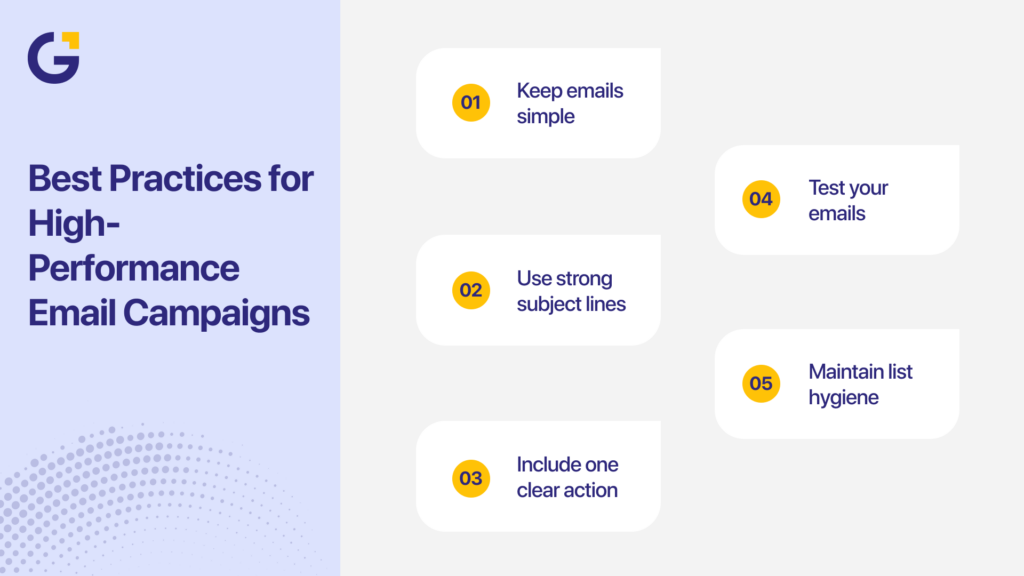
- Keep emails simple: Most people read emails on mobile. Use short sentences, clear spacing, and a direct call to action.
- Use strong subject lines: Short, clear, and relevant subject lines work best. Examples: Your July offer is ready, New tips for better bookkeeping, Your order update
- Include one clear action: Avoid multiple buttons or links. A single action improves click rates.
- Test your emails: Run A/B tests for subject lines, preview text, CTA wording, and send times. Brevo’s benchmarks show that many email campaigns perform best on Tuesdays and Thursdays around mid-morning or mid-afternoon.
- Maintain list hygiene: Remove inactive subscribers every few months. This helps protect deliverability and improves email performance.
Common Mistakes that Hurt Email Results
Avoiding these mistakes can improve your open and click rates.
- Sending emails too often
- Sending emails without value
- Not using segmentation
- Ignoring mobile design
- Using large images that load slowly
- Sending from a no-reply address
- Writing long blocks of text
- Not measuring results
- Not updating automation flows
These mistakes often lead to lower engagement or increased unsubscribes.
Measuring Success: Key Email Marketing Metrics
Tracking the right numbers helps you understand whether your emails are working and where improvements are needed. Most email tools show these metrics directly in the dashboard, making it easy to review performance after each send and across the month.
| Metric | What it Means | Good Range |
| Open Rate | How many people opened | 30 percent or higher |
| Click Through Rate | How many clicked on a link | 2 percent to 5 percent |
| Conversion Rate | How many completed the action | Varies by industry |
| Bounce Rate | Undelivered emails | Lower than 2 percent |
| Unsubscribe Rate | People leaving the list | Under 0.5 percent |
Reviewing these numbers each month shows whether your subject lines are strong, your content is relevant, and your list is healthy. If opens drop, test new subject lines. If clicks fall, adjust your call to action or layout to make the next step clearer.
How Genix Digital Helps Businesses Build Profitable Email Strategies
Genix Digital works with Australian businesses to create email systems that improve sales and retention. Our approach focuses on strategy, content, automation, and data.
What we do:
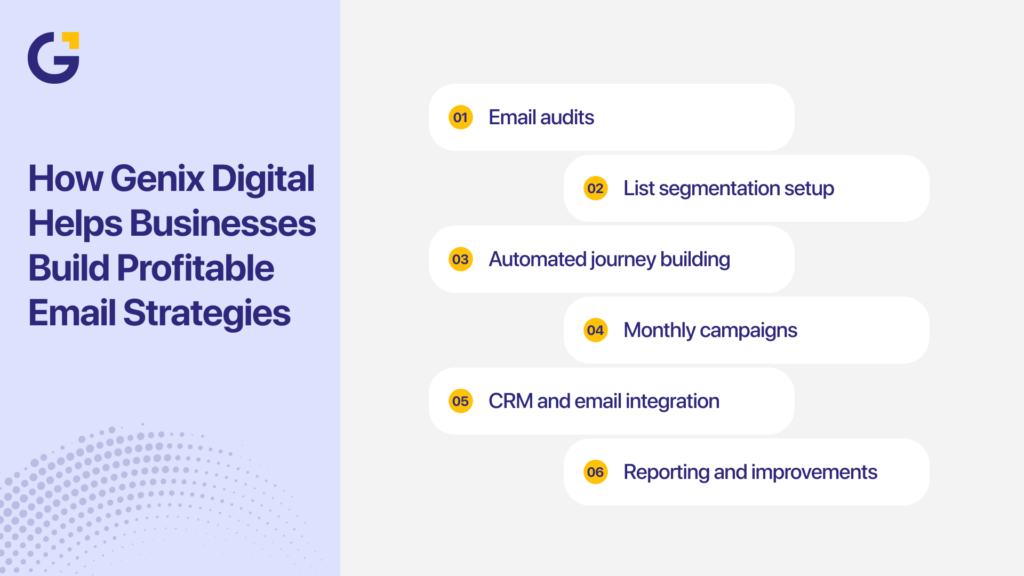
- Email audits
- List segmentation setup
- Automated journey building
- Monthly campaigns
- CRM and email integration
- Reporting and improvements
Whether you run a small store in Australia or a growing B2B company, a well-planned email setup can bring in new clients and keep your current clients active for longer. This gives your business a stable channel that continues to perform even when paid ads or social platforms change.
Final Thoughts – Email Marketing Still Delivers in 2026
Email marketing remains strong in 2026. It offers direct communication, strong ROI, and consistent results for small businesses and B2B brands. With the right strategy, segmentation, and automation, email can become one of your most stable channels for growth.
If you want to build a system that sends the right content at the right time, Genix Digital can help. Subscribe for more guides or book a free consultation with Genix Digital to build a reliable email marketing system for your business.
FAQs
What is email marketing in simple terms?
Email marketing is sending helpful or relevant messages to people who asked to hear from your business. It can include updates, offers or reminders. The goal is to build trust and guide people toward taking an action.
What are some examples of email marketing?
Common examples include newsletters, promotions, welcome emails, and abandoned cart reminders. Service businesses often send booking updates or follow-up messages. E-commerce brands send product suggestions or seasonal offers.
How do I start email marketing?
Start by choosing an email platform and creating a simple sign-up form. Build a small list of people who want updates, then send clear, helpful messages. Add automation and segmentation as your list grows.
What are the four types of email marketing?
The main types are newsletters, automated flows, one-off campaigns, and drip sequences. Each type serves a different purpose, from education to sales. Mixing these helps you stay consistent without sending too many emails.
Can you start email marketing for free?
Yes, many platforms like Mailchimp, Brevo and HubSpot offer free plans with basic features. These are suitable for small lists or early testing. As your list grows, you may need paid features for automation and reporting.

 1 Dec 2025
 9 Min Read