

Social media shifts quickly. TikTok surpassed 9 million Australian users, Instagram Reels became one of Meta’s primary formats, and LinkedIn achieved its highest engagement levels. These changes affect how small businesses connect with customers. Algorithms change without notice, trends move fast, and content that worked months ago may slow down. Many small business owners post when they can or copy what they see from brands like Woolworths, Cotton On, Officeworks, or Canva. Others follow ideas from well-known creators such as Kayla Itsines or Matt D’Avella. This often leads to inconsistent posting and unclear results.
A clear social media marketing strategy removes guesswork and gives you a steady direction. It helps you focus on content that supports your goals and fits your audience. This guide shows you how to build a full strategy from start to finish, based on practical steps and current industry data. You can also download a free template to help you plan faster and stay organised.
Why a Defined Social Media Marketing Strategy Matters
Businesses with a clear plan perform better than those posting at random. A report from Meta shows that structured media planning supports higher engagement and improved conversions.
A defined strategy helps because it gives you:
- A clear direction for your content
- Targets linked to business goals
- A way to review performance
- A schedule that keeps posting consistently
- Room to improve through regular testing
This is why brands like JB Hi-Fi, Bunnings, and Guzman y Gomez grow strong online communities. They follow a plan, stay consistent, and build content that matches what their audience wants.
What Is a Social Media Marketing Strategy?
A social media marketing strategy is a written plan that explains how your business uses social media to improve awareness, engagement, leads, or sales. It becomes a reference point for daily posting, campaign planning, and reporting.
A complete strategy includes goals, audience insights, platform choices, brand voice, content structure, paid plans, and tracking. It aligns your marketing with your business targets so each post serves a purpose.
Small businesses in Sydney use strategies like this to guide everything from weekly content to larger paid campaigns. Without structure, it becomes hard to measure progress or understand what works.
Once you understand what a strategy looks like, the next step is building it piece by piece.
Step 1: Set SMART Goals Aligned with Your Business Objectives
Clear goals help you track your effort. Soft goals like “grow followers” do not guide decisions well. A SMART goal defines what you want, how you will measure it, and when you expect to reach it.
Sydney businesses often set goals around bookings, online orders, lead forms, or quote requests. At Genix Digital, we regularly see SMEs gain faster progress when their goals focus on one outcome per quarter instead of spreading efforts across too many targets. These goals help shape content and paid activity.
Here are common goal categories:
- Awareness: Increase reach through short video posts
- Engagement: Improve comments and saves through educational content
- Traffic: Drive website visits with strong calls-to-action
- Leads: Encourage sign-ups or inquiries through dedicated landing pages
- Sales: Grow online orders during peak seasons
An example for a local gym: “Increase new member sign-ups by 15 percent in 90 days with Reels that show classes, transformations, and short fitness tips.”
Another example for a tradie business: “Generate 40 quote requests per month using Facebook traffic campaigns supported by weekly tips.”
Goals like these shape the rest of your strategy.
Step 2: Understand Your Audience and Buyer Personas
Good content comes from knowing who you are speaking to. Audience insights explain their needs, habits, problems, and behaviour. They also show you which platforms they use, what content holds their attention, and what drives them to take action. You can find insights through social platform analytics, customer interviews, surveys, or Google Analytics.
For example, a local café may learn that their weekday audience reacts to breakfast specials posted at 7 am, while weekend visitors prefer Stories showing behind-the-scenes shots. A consulting firm may find that LinkedIn articles create more meetings than short posts.
Audience insights help you adjust your messaging, posting times, and content style so each piece fits what your customers want to see.
Step 3: Choose the Right Platforms for Your Brand
Not all platforms suit all businesses. You should focus on the platforms your audience uses most, not every platform available. This saves time and supports stronger results.
- Instagram suits brands that rely on visuals.
- Facebook works well for community updates or local service businesses.
- TikTok works for fast-paced short videos.
- LinkedIn suits B2B content.
- YouTube works for tutorials.
- Pinterest works for home, design, and lifestyle.
A Sydney beauty clinic may choose Instagram and TikTok only. A solicitor may choose LinkedIn and Facebook. A wedding photographer may choose Instagram, TikTok, and Pinterest.
Choosing fewer platforms helps you stay consistent and improve content quality.
Step 4: Analyse Competitors and Identify Opportunities
Competitor analysis helps you understand what your audience already responds to. It also shows gaps you can fill. This does not mean copying posts. It helps you understand patterns so you can make better choices.
You review their posting volume, visual style, common themes, comments, and ad activity. A restaurant may discover competitors rely heavily on polished images but rarely share chef stories. A B2B consultant may find that competitors publish general advice instead of case studies.
Meta Ad Library, LinkedIn pages, review sites, and Google results help with research. This step gives you insight into what you should create, avoid, expand, or simplify.
Step 5: Develop Your Brand Voice, Visual Style, and Messaging
Brand voice helps customers recognise you. It supports consistent messaging across platforms.
Most businesses use a steady tone that reflects their work. A clinic uses calm and clear language. A fitness studio sounds energetic. A financial service uses straight, steady language. Canva is known for simple and friendly content. Atlassian uses direct language suited to tech users.
Your brand voice should match your values and your audience. It also shapes captions, comments, and ad text. Clear voice guidelines help your team stay consistent even when trends shift.
Step 6: Plan Your Content Strategy (Themes, Formats & Calendar)
Content themes give you structure. A content calendar keeps you consistent. This reduces stress and gives you more space to plan ahead.
Your themes should match your goals. If you want more leads, your content should include clear offers and customer stories. If you want more awareness, your content should include educational posts and short videos. Short-form video performs well across all major platforms. HubSpot’s 2024 State of Marketing Report found that short-form videos create engagement rates about 2.5 times higher than static image posts. This makes formats like Reels, TikTok, and YouTube Shorts a strong option for Sydney businesses that want more reach. If you want more engagement, your content should include polls and questions.
A content calendar may cover daily or weekly posts. It helps you prepare images, captions, and videos early. It also helps you follow trends without rushing.
A Sydney-based real estate agent may plan weekly suburb updates. A dog groomer may post transformation videos. A finance coach may publish weekly tips. Planning reduces gaps and improves results.
Step 7: Integrate Paid and Organic Strategies for Maximum Reach
Paid and organic content support each other. Organic content builds trust. Paid ads expand reach and drive actions like bookings or sales. When these work together, results improve.
A simple structure includes organic posts that show your values, customer stories, and expertise. Paid campaigns run alongside your organic posts to bring more people into your funnel.
Businesses often start with reach and traffic ads before running retargeting campaigns. A local e-commerce business may promote top products on Instagram, then retarget website visitors with special offers. A service business may run lead ads to book consultations.
Blending both improves consistency and reach.
Step 8: Build Engagement Through Community Interaction
Engagement happens when people respond to your content. It can include likes, comments, shares, saves, Story replies, or direct messages. Engagement helps your content appear more often in feeds.
You encourage engagement by asking questions, posting polls, replying to messages, and sharing behind-the-scenes content. This feels natural to users and helps build trust.
For example, a Sydney dentist may share simple tips and ask followers what topics confuse them most. A gym may run weekly Q&A sessions. A café may post photos of new menu items and ask customers to vote.
Fast replies also help because algorithms reward active pages.
Step 9: Measure, Track, and Optimise Performance
Reporting helps you improve your strategy. You review your results each week or month. You check what works and what needs improvement.
Metrics include engagement, reach, impressions, video views, leads, and cost per result. Tools like Meta Insights, LinkedIn Analytics, and Google Analytics support this.
You adjust your content based on results. If Reels perform well, you create more, if long posts underperform, you test shorter captions and if one platform slows down, you shift focus.
Brands that review data regularly improve faster than those that do not track results.
Common Pitfalls in Social Media Marketing (and How to Avoid Them)
Many small businesses fall into the same patterns. These mistakes slow progress and make content less effective.
- Posting without goals
- Ignoring engagement
- Posting too often across too many platforms
- Using low-quality images
- Avoiding video content
- Forgetting to track results
- Overusing promotional posts
- No consistency
Avoiding these issues helps improve your results much faster.
Free Social Media Strategy Template
Use the free Genix Digital social media strategy template below to make planning easier. It includes goal planning, audience insights, competitor tracking, platform selection, content themes, and reporting sheets, all designed to help you stay consistent each week.
Social Media Goals & KPIs
Use this table to define your SMART goals and match each one with the KPIs you will track. Update these every 30–90 days to keep your strategy focused and measurable.
| Goal | Social Media KPI | Details / Timeframe |
| E.g., increase bookings | E.g., Lead form submissions | E.g., +20% in 90 days |
Audience Insights & Buyer Personas
Use this section to describe your ideal customers, their behaviour, and the type of content they prefer. This helps you tailor posts to the people most likely to engage or purchase.
| Persona | Description | Behaviours | Content Preferences |
| E.g., “Busy Bella” | Sydney small business owner | On IG daily, uses LinkedIn for learning | Reels, how-tos, case studies |
Social Networks (Which Platforms to Use)
Choose platforms based on where your audience actually is, not where trends push you.
A. Current Social Traffic Sources (Google Analytics)
This table helps you identify which platforms already drive traffic to your site so you can focus on the channels that bring the strongest results.
| Social Network | Monthly Traffic | Other KPI(s) |
| E.g., Instagram | 3,200 visits/mo. | 120 inquiries/mo. |
B. Platforms With Existing Engagement
Use this table to review where your current audience is most active. Build your strategy around the platforms with the highest engagement.
| Social Network | Follower Count | Engagement Level |
| E.g., Facebook | 2,900 | Medium |
C. Competitors’ Top Social Networks
This section helps you spot which platforms your competitors rely on so you can discover opportunities or gaps to differentiate yourself.
Competitors’ Top Platforms:
- E.g., Instagram – Primary platform for most local brands, strong visual focus
- E.g., Facebook – Used for community updates, service promotions, and events
D. Additional Social Networks to Consider
Use this space to record emerging platforms or new networks worth testing based on audience behaviour and industry trends
Additional networks to review:
- E.g., Pinterest – Useful for home, design, beauty, wedding, fitness, and lifestyle businesses
- E.g., Reddit – Good for niche discussions, community engagement, and brand authority
E. Final List of Social Networks to Use
This table lets you finalise which platforms your business will actively use and maintain. Keep it simple so you can stay consistent.
| Social Network | Use? | Status |
| E.g., Instagram | Yes | Claimed + active |
| E.g., LinkedIn | Yes | Claimed, content plan needed |
Competitor Analysis (Step 4 of your article)
This table summarises what competitors do well, where they fall short, and where your brand has an opportunity to stand out. Use it to guide content gaps and improvements.
| Competitor | Strengths | Weaknesses | Opportunity |
| E.g., Local café | Beautiful photos | No Stories | Behind-the-scenes content |
Brand Voice, Visual Style & Messaging
Fill in this table to define how your brand should sound, look, and communicate online. It ensures a consistent brand identity across all platforms.
| Element | Description | Sample |
| Voice | How your brand talks | Friendly, expert, calm |
| Caption Style | Format + structure | Short, direct, value-driven |
| Visual Appearance | Colours, style, layout | Clean, green palette |
| Messaging Pillars | Core brand messages | Trust, clarity, results |
Content Strategy (Themes, Formats, Calendar)
Content Themes
This table helps you plan your core content buckets so your posts stay varied, strategic, and aligned with your goals.
| Theme | Description | Example Topic |
| Education | Teach your audience | “3 ways to improve engagement” |
| Engagement | Interact & spark conversation | Polls, “Ask Me Anything” |
| Social Proof | Build trust | Testimonials, case studies |
| Offers | Convert leads | Promotions, packages |
Weekly Content Planner
Use this planner to map out your weekly schedule, making sure you balance education, engagement, and promotional content.
| Day | Content Type | Example |
| Monday | Educational Reel | “How to plan your content week.” |
| Wednesday | Carousel Tips | “5 mistakes to avoid.” |
| Friday | Case Study | Client growth |
| Sunday | Story Poll | “Which topic next?” |
Paid + Organic Strategy
This table helps you map out how organic content and paid ads will work together in your strategy. Use it to clarify when to post organically and when to promote content with ads.
| Category | Purpose | Example |
| Organic | Build trust + consistency | 4 posts/week + Stories |
| Paid Traffic | Reach new audiences | $20/day to promote the top Reel |
| Retargeting | Warm audience conversion | 30-day website visitors |
| Conversion | Bookings/orders | Lead form ads |
Engagement Plan
Outbound Engagement (What You Post)
This section outlines what type of content you will publish, where it goes, and how often. It keeps your posting predictable and consistent.
| What | When | Where |
| New blog posts | When published | LinkedIn, Facebook |
| Reels | 2× weekly | |
| Client testimonials | Weekly | Instagram Stories + LinkedIn |
| Industry tips | Weekly | LinkedIn + Insta Carousels |
Inbound Engagement (Social Listening)
This table guides how you monitor conversations about your brand or industry. Use it to systemise when and how you respond to comments, questions, or mentions.
| Networks | Keywords / Hashtags | When to Monitor | How to Respond |
| IG, FB, TikTok | brand name, niche hashtags | Daily | Reply within 1 hour |
| competitor terms | 3× weekly | Offer helpful insight |
Promotion Plan
This table helps you schedule promotions, boosted posts, giveaways, and collaborations throughout the year so you can grow your reach and engagement in a structured way.
| Promotion Type | When | Details |
| Boosted Posts | Weekly | Boost the performing Reel |
| Retargeting | Ongoing | 30-day website visitors |
| Influencer Collab | Quarterly | Micro-influencers in Sydney |
| Giveaway | 1–2× year | Grow awareness |
Tools
This list shows which tools you can use for scheduling, analytics, design, and tracking. Choose the ones that best fit your workflow and skill level.
| Tool | Purpose | Cost |
| Meta Business Suite | Scheduling & analytics | Free |
| Buffer | Scheduling | $6–12/mo |
| Canva | Graphics & Reels | Free–$15/mo |
| Google Analytics | Website tracking | Free |
Tip: Review and update your strategy every 30 days to stay aligned with your goals and platforms.
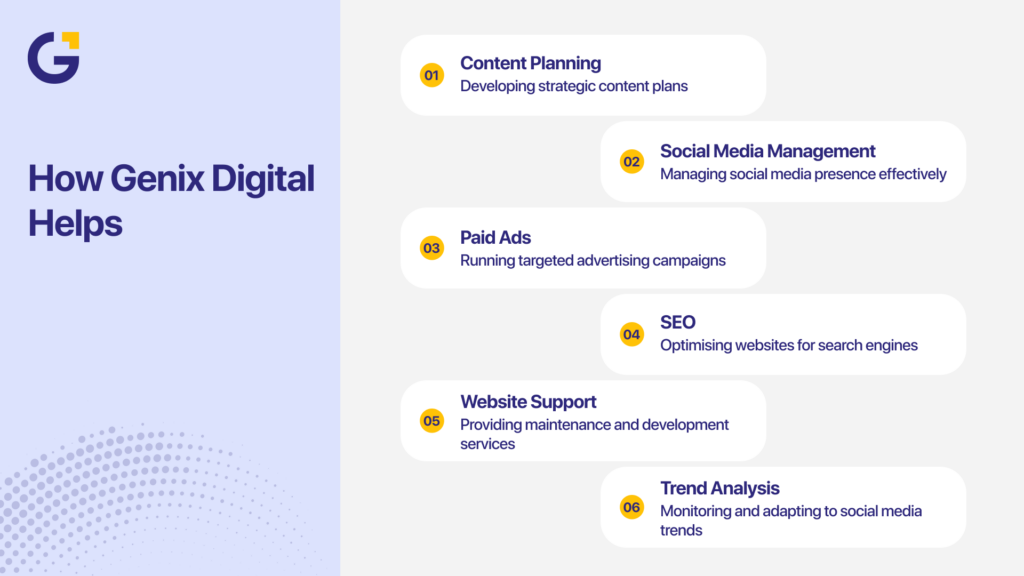
How Genix Digital Helps
Genix Digital supports Sydney businesses with content planning, social media management, paid ads, SEO, and website support. You receive consistent posting, strong visuals, regular reporting, and ads that match your goals. This helps you stay organised without managing everything yourself.
Our team also reviews trends, updates content styles, and helps you stay ahead of changes in Meta, TikTok, and LinkedIn systems. If you want support building or executing your strategy, you can book a free consultation and get guidance tailored to your business.
Final Thoughts
Creating a social media marketing strategy gives your business structure and removes daily guesswork. It keeps your content aligned with real goals, supports consistent posting, and helps you understand what works through clear tracking. When you follow a documented plan, your audience grows steadily, and your message stays consistent across every platform. The steps and template above give you a simple way to build a strategy that suits your business and supports long-term growth.
If you want expert help refining your plan or support with execution, you can book a free consultation with Genix Digital. Our team works with Sydney SMEs every day and can help you build a strategy that is practical, efficient, and built for real results.
FAQs
Q1: How do you create a social media marketing strategy?
You create a social media marketing strategy by setting clear goals, understanding your audience, choosing the right platforms, planning content, and tracking results. A documented plan keeps your posting consistent and tied to real business outcomes.
Q2: What is the 5 5 5 rule for social media?
The 5 5 5 rule encourages a balanced mix of content: 5 posts that educate, 5 posts that engage, and 5 posts that promote. It helps keep your feed varied without overwhelming your audience with sales content.
Q3: What are the 7 steps to creating a social media strategy?
The common 7 steps are goal setting, audience research, competitor analysis, platform selection, content planning, scheduling, and measuring performance. These steps give you a simple framework to follow.
Q4: What is the 50 30 20 rule for social media?
The 50 30 20 rule suggests you post 50 percent value or educational content, 30 percent engagement content, and 20 percent promotional content. It keeps your feed helpful and reduces audience fatigue.
Q5: What are the 7 C’s of social media?
The 7 C’s are clarity, content, connection, conversation, consistency, community, and conversion. These principles help guide quality posting and encourage stronger engagement.




 28 Nov 2025
 8 Min Read