


Email marketing remains one of the most reliable ways for Australian small businesses to reach customers without depending on unpredictable algorithms. But many business owners still ask the same question: How much does email marketing cost in 2026?
Pricing is harder to guess than it used to be. Email service providers (ESPs) like HubSpot, Mailchimp, and ActiveCampaign now bundle AI tools, automation features, and SMS add-ons. These upgrades make email more powerful, but they also influence monthly spend. This guide breaks down those costs, explains what affects pricing, and shows what Australian SMEs typically pay each month, so you can plan a realistic budget without paying for features you don’t need.
Why Email Marketing Is Still a Smart Investment
Email continues to deliver strong value because it reaches people who already know your brand, making it a valuable marketing channel. While social media and paid ads shift often but your email list is stable. A Statista report shows global email users will reach 4.6 billion this 2026, which shows how widely email is still used.
A local restaurant in Sydney, for example, can generate regular bookings using simple weekly emails that promote specials, reviews, and events. Even basic campaigns create consistent returns when sent to people who already want updates.
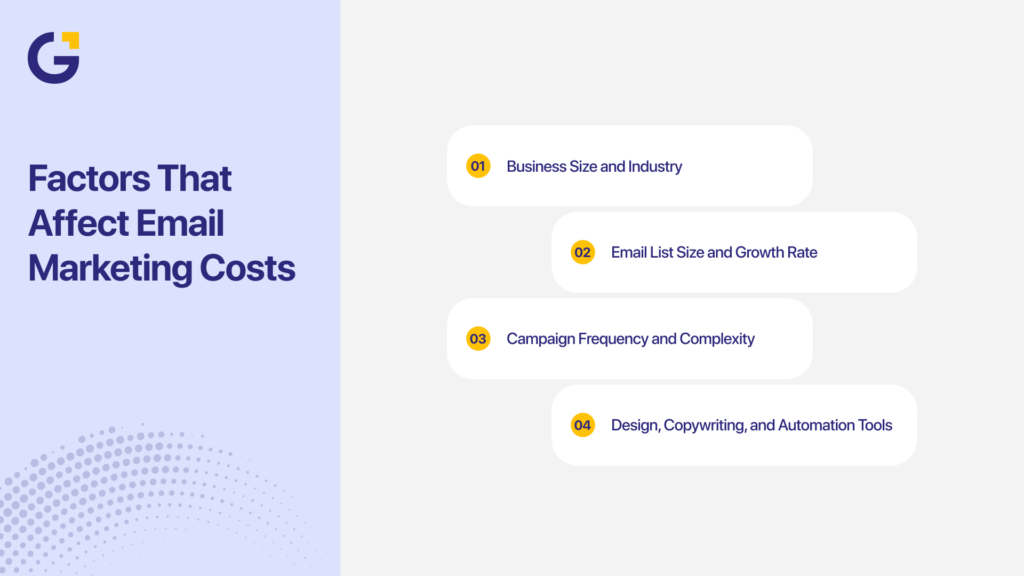
Factors That Affect Email Marketing Costs
Many business owners are surprised by how different pricing can be. The final cost mostly depends on your industry, list size, automation needs, and content requirements.
Business Size and Industry
Different industries use email in different ways. A clinic may send monthly updates, while an online store may send daily promotions. Higher frequency and detailed segmentation often increase platform fees because they require stronger automation tools and larger contact tiers.
A boutique fitness studio is a good example. They send class reminders, retention emails, and promotional updates. They need a platform that handles segmentation and behavioural triggers, which leads to a higher monthly cost compared to a business that only sends a monthly newsletter.
Email List Size and Growth Rate
Most email service providers price their plans based on contact count. Smaller lists cost less. As your list grows, your subscription tier increases.
For example, a Sydney eCommerce store may start with 2,000 contacts on a plan costing around 20 USD per month. Once they reach 10,000 contacts, that same plan may jump to more than 100 USD per month, simply due to list growth.
Campaign Frequency and Complexity
The more campaigns you send, the more time you need for setup, content, and testing. Simple monthly newsletters are quick to produce, while automated sequences such as welcome flows, abandoned cart emails, and multi-step journeys require more work and higher-tier tools.
A retailer that sends 30 segmented messages each month naturally spends more than a service provider that sends one general update.
Design, Copywriting, and Automation Tools
Content creation adds a separate cost to your monthly budget. Many businesses need help writing copy, designing layouts, and setting up automated sequences. AI tools now assist with subject lines and content suggestions, but human-led strategy and editing often produce better results, especially for brands with a clear tone of voice.
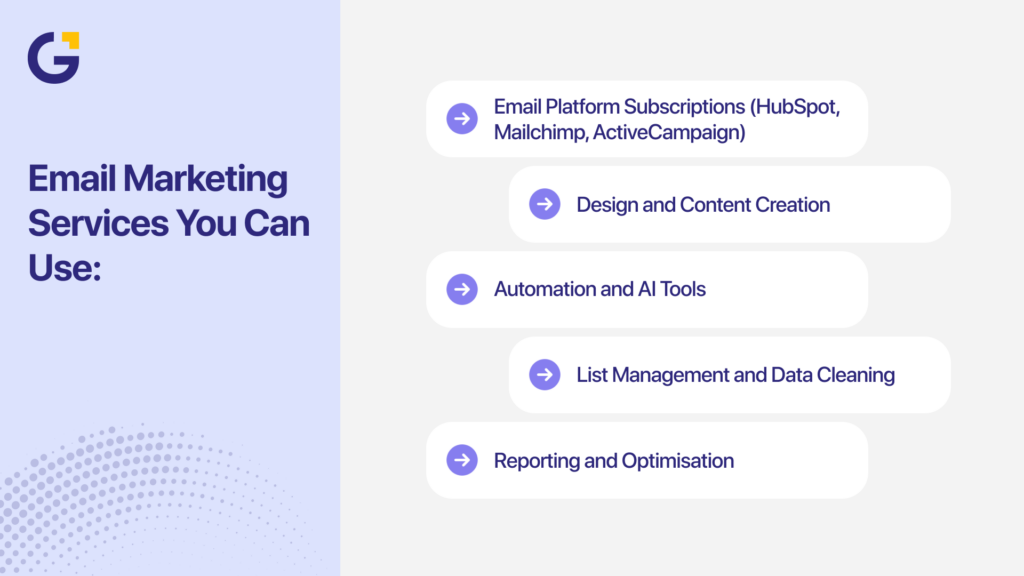
Breakdown of Email Marketing Costs in 2026
Pricing varies across platforms and service providers, but most costs fall into clear categories.
Email Platform Subscriptions (HubSpot, Mailchimp, ActiveCampaign)
Here is a quick look at what the major email platforms charge in 2026 and what you get at each level.
| Platform | Starting Cost (USD) | What You Get | Best For |
| HubSpot | Free tier available; Starter from $15/month (annual billing); Professional from ~$800/month for ~2,000 contacts | CRM integration, marketing automation, and AI tools | Businesses needing a full platform with growth potential |
| Mailchimp | Free plan up to ~500 contacts; Essentials from $13/month (500 contacts); Standard from $20/month; Premium from $350/month for ~10,000 contacts. | Email templates, flows, AI features, automation | Retail & general small to medium businesses |
| ActiveCampaign | Plans start at $15/month (for ~1,000 contacts, annual billing). Pricing increases significantly as contacts grow. | Strong automation, segmentation, and CRM integration | Businesses focused on frequent campaigns and automation |
Most Australian SMEs start at a low tier but upgrade fast once they expand their list or add automation. Currency conversion to AUD also increases the final monthly spend.
Design and Content Creation
If you use professionals for email content, here are typical Australian price ranges:
| Service Type | Typical Cost (AUD) |
| Single campaign copy | 150 to 500 |
| Email template design | 150 to 800 |
| Monthly email production | 300 to 2000 |
| Automation setup | 500 to 3000 |
Pricing varies based on contact limits and features, so the best way to get an accurate estimate is to contact Genix Digital for a personalised recommendation.
Automation and AI Tools
Advanced automation adds cost because it requires more complex workflows. Platforms often reserve predictive send times, AI segmentation, and behaviour-based triggers for mid-tier or premium plans. These features help businesses send the right message at the right moment, but they increase subscription fees.
Mailchimp, for example, only includes predictive tools in Standard or Premium plans, while HubSpot puts most advanced automation behind Pro-level pricing. ActiveCampaign charges more as the contact count increases, especially for e-commerce automation and multistep flows.
List Management and Data Cleaning
Healthy lists improve deliverability and help avoid spam filters. Many businesses clean their lists every 6 to 12 months. Third-party tools charge per email checked, usually between 5 and 10 cents per email. Packages for 500 to 5,000 emails range from 20 to 70 AUD, depending on the provider.
Reporting and Optimisation
Detailed reporting helps businesses adjust their campaigns. Some platforms only offer basic data in lower-tier plans, while higher tiers offer dashboards that show open times, device data, and revenue tracking. A Sydney consulting firm, for instance, may discover that most leads open emails between 7 am and 9 am, helping them improve engagement simply by changing send times.
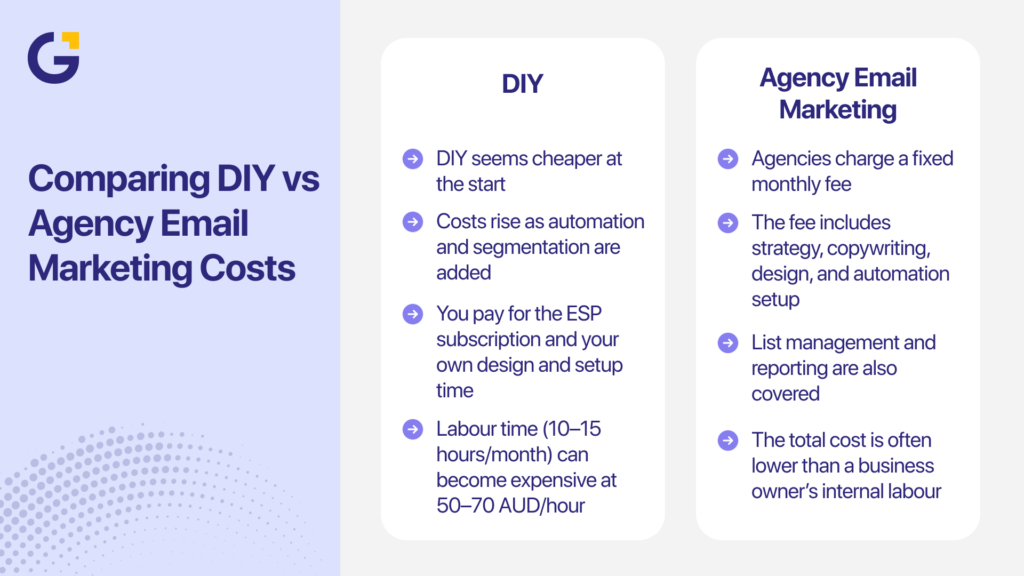
Comparing DIY vs Agency Email Marketing Costs
Many business owners start with DIY email marketing because it seems cheaper. This works well in the early stages, especially for small lists. But costs rise when you add automation, advanced segmentation, regular campaigns, and design support.
DIY users pay for the ESP subscription, design time, and internal labour. Agencies charge a monthly fee, but that fee covers strategy, writing, design, automation setup, list management, and reporting.
A business owner running campaigns alone might spend 10 to 15 hours a month on email tasks. At an internal rate of 50 to 70 AUD per hour, the labour cost alone often exceeds the agency fee.
When DIY makes sense?
DIY works for very small lists under 1,000 contacts and simple monthly newsletters. If you have the time to write, design, schedule, and monitor your campaigns yourself, basic tools can handle the job. This approach suits businesses that only need light communication and are not focused on sales-driven automation.
When does an agency make sense?
An agency becomes the better option once you want email to drive revenue, not just send updates. This includes automated sequences, segmented campaigns, and reporting that connects your emails to real sales outcomes. Agencies also reduce the risk of mistakes, save hours of manual work each month, and build campaigns that continue producing results long after they’re set up.
Typical Monthly Cost Ranges for Australian Businesses
Email marketing cost varies based on activity level and list size. Below is a realistic look at what most SMEs in Australia spend each month.
| Type of Email Setup | Typical Monthly Cost (AUD) | What It Includes |
| Basic DIY | 0 to 40 | Simple newsletters, small lists, no automation |
| Growing Business | 70 to 250 | Mid-tier ESP plans, light automation |
| E-commerce or Service Business with Automation | 250 to 800 | Advanced flows, content support |
| Agency-Managed Email Marketing | 500 to 4,000 | Strategy, content, design, automation, reporting |
Small service-based businesses sit on the lower end, while e-commerce stores often sit higher because they send more emails and use advanced automation flows.
Australian businesses also need to factor in USD conversions because HubSpot, Mailchimp, and ActiveCampaign charge in USD. As the AUD shifts, monthly fees can rise without warning.
ROI of Email Marketing – Why It’s Worth Every Dollar
Email marketing continues to produce reliable returns. Based on Litmus reports, the average ROI of 36 dollars for every 1 dollar spent, making it one of the most efficient digital channels globally.
The value comes from ownership. You own your list. You are not renting space on social media platforms. When Meta or TikTok changes their algorithm, your audience stays with you.
An example is a local allied health clinic that sends weekly educational content and appointment reminders. Their monthly cost may be 120 AUD, but a single booking often covers the entire monthly spend. Over a year, this becomes one of their most predictable revenue streams.
AI tools inside email platforms also boost ROI. Google’s AI tools and features inside HubSpot and Mailchimp help marketers choose better subject lines and send times. These improvements lead to higher open rates and more sales without increasing ad spend.
How to Budget for Email Marketing in 2026
A clear budget prevents surprise charges and helps you plan long-term. You can create an accurate email marketing budget by focusing on a few key steps.
- Decide how often you want to email your list. Weekly newsletters or regular promotional emails require more support than occasional monthly updates, so your frequency directly affects your budget.
- Choose the right platform for your needs. HubSpot becomes costly as you scale because most automation features sit in the Pro plan. Mailchimp starts out affordable for small lists but increases sharply once you pass 10,000 contacts. ActiveCampaign offers strong automation at lower price points, but pricing still rises based on contact count.
- Map out your list growth for the next 12 months. Most SMEs in Australia set aside 300 to 1,500 AUD per month, depending on whether they manage content internally or work with an agency. Estimating your list growth helps you predict when your subscription will move into a higher tier.
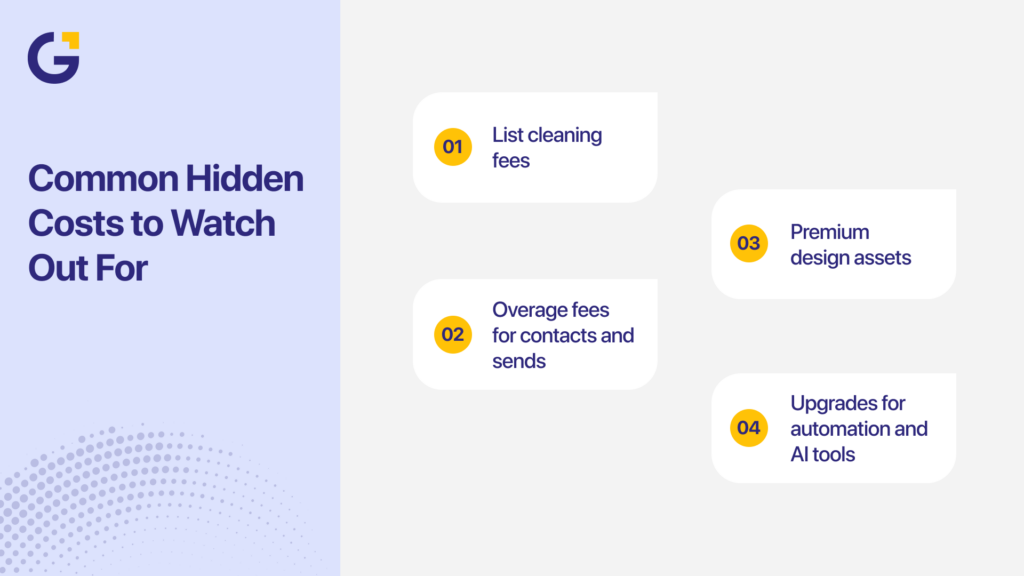
Common Hidden Costs to Watch Out For
Email marketing includes several hidden costs that can catch businesses off guard. These usually appear as your list grows or when you add more advanced features.
Common hidden costs include:
- List cleaning fees. Some platforms charge extra to clean unengaged contacts, and keeping inactive emails increases your monthly subscription cost.
- Overage fees for contacts and sends. Mailchimp, HubSpot, and ActiveCampaign can pause or block campaigns if you exceed your limits, which is common for fast-growing ecommerce lists.
- Premium design assets. Custom templates, coding support, and brand-specific layouts often cost extra for DIY users who want polished emails.
- Upgrades for automation and AI tools. Features like predictive send time, advanced segmentation, and AI content tools usually sit behind higher-tier plans.
A clear understanding of these extras helps you avoid surprise charges and manage your budget more confidently.
Cost-Saving Tips Without Sacrificing Quality
Many SMEs lower their email marketing cost by focusing on the tasks that produce the highest return. You do not need daily emails to see results. A strong weekly or fortnightly email often performs better than frequent, low-quality sends.
Here are practical ways to reduce costs without hurting performance:
- Use lighter automation that delivers steady results, such as welcome flows or simple follow-up sequences.
- Build evergreen automation like welcome emails, review requests, and abandoned cart reminders. These run in the background and continue generating revenue.
- Clean your list every six months to remove cold or inactive contacts. This helps keep subscription costs down and improves open rates.
A small number of well-planned actions will cut costs while still supporting steady growth.
How Genix Digital Delivers Cost-Effective, High-Impact Email Marketing
Genix Digital helps Australian SMEs reduce costs by removing trial and error. Our team focuses on strategy, not random campaigns. Clients receive clear planning, tailored content, and structured automation that supports sales.
Unlike basic DIY setups, Genix Digital builds systems that keep working long after each campaign is sent. This approach avoids wasted hours and helps businesses grow their revenue without increasing ad spend. Our team also works across major ESPs, including HubSpot, Mailchimp, and ActiveCampaign, to match clients with the right platform based on their list size and goals.
If you want clear pricing and predictable results, Genix Digital provides a customised cost breakdown and a simple plan that fits your 2026 goals.
Final Thoughts – Focus on Value, Not Just Cost
Email marketing cost varies, but the value stays consistent when you follow a clear strategy. The best results come from steady messaging, clean data, and automation that supports your customers at each step. When planned well, email marketing becomes one of the lowest-cost, highest-return marketing channels available to SMEs in Australia.
Book a free consultation with Genix Digital to get a personalised email marketing cost breakdown and a 2026 plan that fits your budget. We’ll walk through your current tools, list size, and goals, then outline clear pricing options for DIY and agency support. If you want email to bring in more leads and revenue this year, our team can help you set up a cost-effective, ROI-focused email marketing system.
FAQs
How much does email marketing cost in Australia per month?
Most SMEs spend between 70 and 800 AUD each month, depending on list size and platform choice. Costs increase as your contact list grows because ESPs charge by tiers. Businesses using automation or agency support usually sit at the higher end.
What is the cheapest way to run email marketing?
The cheapest option is DIY using a free or low-cost ESP with a small contact list. This works well for basic monthly newsletters. It becomes limiting once you need automation, segmentation, or consistent revenue-focused campaigns.
Do I really need automation for email marketing?
Basic automation helps you save time and improve results without extra effort. Even simple flows like welcome emails or review requests can increase conversions. Most businesses see stronger returns once automation is added.
Which email platform is best for small businesses?
Mailchimp and ActiveCampaign are popular for SMEs because they offer strong features at lower entry costs. Mailchimp is easier for beginners, while ActiveCampaign is better for automation-heavy businesses. HubSpot suits companies that need a CRM and advanced marketing tools.
Why do email platform prices increase as my list grows?
Most ESPs use contact-based pricing, so your plan moves to a higher tier when your subscriber count rises. Larger lists also increase your monthly email volume, which triggers higher send limits. This is why list cleaning is important for cost control.





 9 Mar 2026
 15 Min Read