
Artificial intelligence is changing how brands plan and manage email campaigns. Interest increased in 2024 and 2026 after Google, Meta, Mailchimp, HubSpot, Salesforce, and Adobe released new AI features. The rise of tools like ChatGPT, Gemini, and Jasper also pushed demand for faster content production and stronger personalisation. Many Australian businesses now want email marketing that feels more relevant, reduces manual tasks, and supports higher returns.
Statista reports that 7 in 10 marketers already use AI in email marketing. Retailers, clinics, trades, coaches, B2B teams, and ecommerce stores now use AI to improve open rates, predict behaviour, and automate key workflows. With budgets tightening and competition rising, AI gives marketers a way to move faster with fewer resources. This guide covers the benefits, strategies, tools, mistakes to avoid, and best practices for Sydney businesses using AI to strengthen their email marketing.
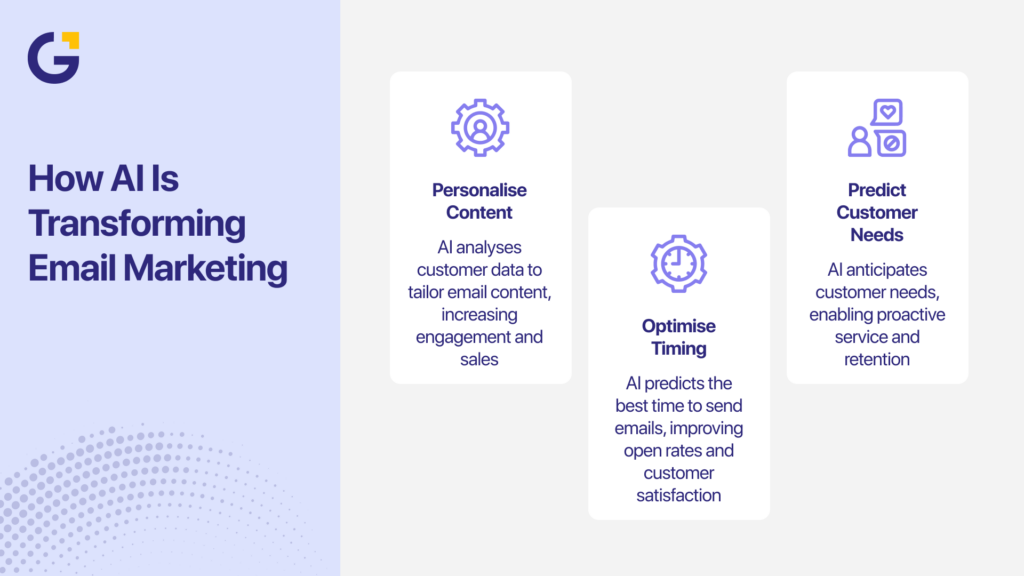
How AI Is Transforming Email Marketing
AI gives marketers new ways to study behaviour, predict actions, and personalise content. This reduces the guesswork that used to slow campaign planning. Google and Salesforce recently shared updates showing how predictive models are being used to adjust timing, content, and customer segments in real time.
Google CEO Sundar Pichai noted that AI will influence every industry, including how brands manage communication. Many marketers now use Google’s AI-powered tools to improve subject lines, send times, and automation. This shift reflects how AI continues to shape practical email marketing tasks for businesses of all sizes.
AI studies browsing patterns, email engagement, purchase history, and even small behaviour changes. It sends emails when a person is most likely to read them and adjusts content based on interests.
For example, a Sydney fashion store uses AI to monitor which items customers view. When the system sees repeated interest in a product category, it sends personalised suggestions. This increases sales without manual planning.
Another plumbing business can use AI to predict when customers may need maintenance. It sends reminders weeks before common issues occur. This helps retain clients and reduces manual scheduling.
AI does not replace marketers. It supports faster decisions and sharper targeting.
What Is AI-Powered Email Marketing?
AI-powered email marketing uses machine learning tools that automate parts of a campaign. These tools analyse behaviour and create personalised messages for each subscriber.
AI can write simple content drafts, predict the next likely action, update segments, and adjust timing. It also helps manage large contact lists that change every day.
For service businesses, AI can recommend the best time to send appointment reminders or follow up with inactive leads, while for e-commerce stores, it can predict the next purchase based on browsing patterns.
For instance, a dental clinic in Sydney may want fewer missed appointments. AI can review past behaviour and send reminders at the time each patient usually opens emails. This simple change often reduces no-shows.
Key Benefits of Using AI in Email Campaigns
AI brings value across personalisation, accuracy, speed, and automation, and highlights the key benefits of artificial intelligence in email marketing for small and medium-sized businesses. These benefits help brands improve performance without adding new staff.
Personalisation at Scale
AI reviews browsing behaviour, past purchases, and reading habits. It adjusts content for each person. This makes emails feel more relevant and reduces guesswork.
AI can personalise:
- Product recommendations
- Suggested articles
- Message tone
- Images
- Calls to action
This mirrors the systems used by Netflix and Amazon, which tailor recommendations based on user actions. Even small retailers can now access similar technology.
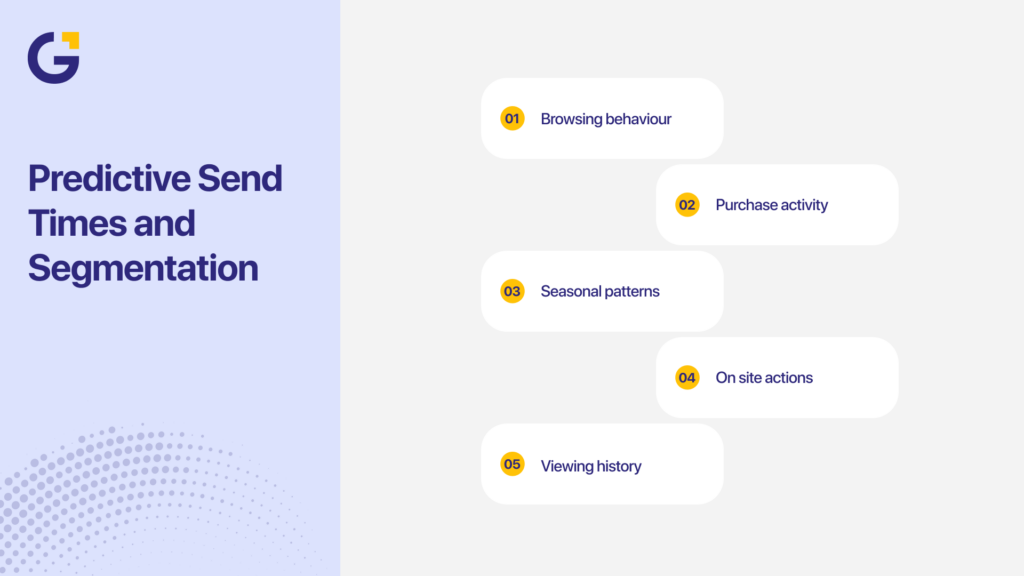
Predictive Send Times and Segmentation
AI studies when each subscriber usually opens emails. It then sends messages at the best time for each person. This improves open rates without manual planning.
AI also builds smart segments based on:
- Browsing behaviour
- Purchase activity
- Seasonal patterns
- On-site actions
- Viewing history
A business in Sydney might find that customers in the CBD open emails during commuting hours, while suburban customers prefer evenings. AI adjusts send times across all groups. This mix of smart timing and email segmentation automation helps campaigns reach the right people at the right moment without extra manual work.
Smarter Subject Lines and Content Optimisation
AI-powered subject line tools use data to predict which words improve open rates, and many teams now treat AI subject line generation as a standard part of planning. This supports improving open rates with AI-powered email marketing and helps campaigns perform better across newsletters, promotions, and automated workflows.
AI also reviews grammar, clarity, and formatting. It spots long sentences, unclear sections, or issues that reduce readability.
A financial planning firm might use AI to adjust tone for different customer types. A retail brand might use AI to shorten messages for customers who often skim content.
Improved Conversion and Retention Rates
McKinsey research shows that AI-driven personalisation can increase customer satisfaction by 15 to 20 percent and lift revenue by 5 to 8 percent. These gains come from delivering offers and messages that match what customers want at each moment. Strong personalisation also helps reduce the cost to serve by up to 30 percent.
For example, a gym uses AI to identify inactive members. It sends targeted offers based on each member’s attendance history. This helps reduce churn.
For e-commerce brands, AI recommends products based on browsing activity. For B2B companies, AI identifies leads who are showing early signs of interest and sends the right follow-up message.
How AI Fits Into Your Email Marketing Workflow
AI supports several parts of the email process, from content creation to reporting. It works best when connected to CRM data, website behaviour, and e-commerce data.
AI can draft email content, update segments, score leads, and compare performance. It helps marketers respond to changes faster than manual methods.
Teams that connect AI with their CRM, website analytics, and sales records see the strongest results.
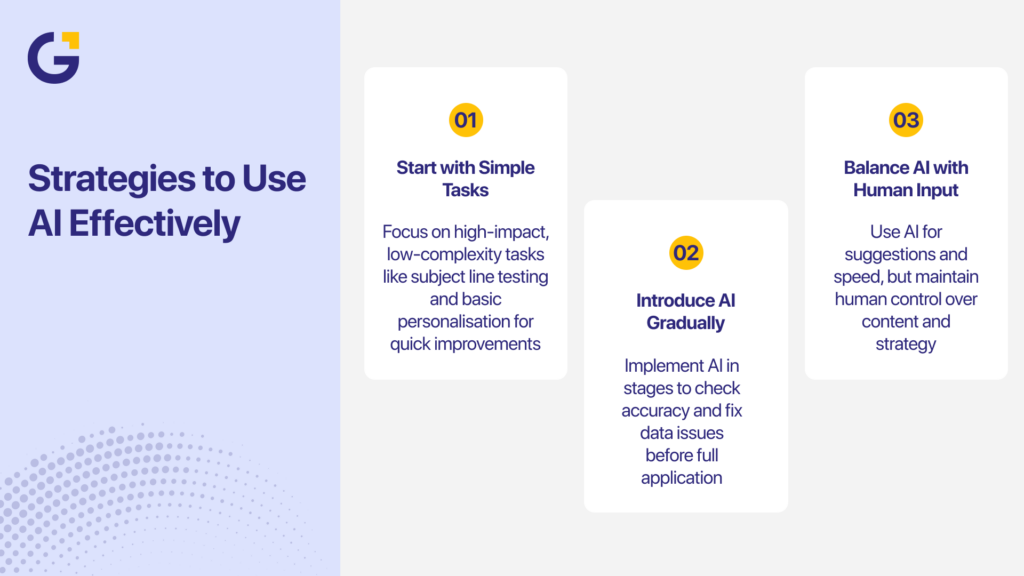
Strategies to Use AI Effectively
AI works best when businesses start with simple, high-impact tasks. These usually include subject line testing, basic personalisation, send time optimisation, and early-stage segmentation. These areas bring fast improvements without needing major system changes.
It is useful to introduce AI in small parts of the workflow before applying it to full campaigns. This lets teams check accuracy, fix data issues, and understand how the tool behaves. Expanding in stages reduces errors and keeps results consistent.
Content should still be planned and written by people who understand the brand’s tone and customer expectations. AI can help with suggestions, structure, and speed, but it should not replace the message or strategy. This balance keeps emails accurate and aligned with business goals.
Behaviour-Based Automation
AI can send emails based on real customer actions. This type of automation helps brands respond at the right moment instead of relying on fixed schedules. It also reduces the need for manual follow-ups.
Common behaviour triggers:
- Reading an email
- Viewing a product
- Downloading a guide
- Clicking a service page
- Adding items to a cart
- Booking or changing appointments
A healthcare clinic in Sydney may use triggers to send more information when a patient reads an article about a specific treatment. An e-commerce store may follow up when a customer views the same product several times. These timely messages help improve conversions and keep customers engaged. This kind of behaviour-based targeting keeps emails matched to real customer actions and helps improve conversion rates.
Dynamic Content Generation
AI adjusts email content based on each subscriber’s behaviour, interests, and past actions. Instead of sending the same message to everyone, AI updates sections of the email in real time. This can include recently viewed items, location-based suggestions, or products that match past purchases.
For example, a Sydney-based outdoor store can show surfboards to customers who live near the coast and hiking gear to customers in inland suburbs. AI reviews browsing patterns, purchase history, and location data to decide which content each person is most likely to click. This makes the email feel more relevant and increases engagement without extra manual work.
Keeping content aligned to real customer behaviour helps lift click-through rates, supports stronger conversions, and reduces the number of emails people ignore.
AI Driven A/B Testing
AI simplifies A/B testing by comparing many email versions at once. It checks the performance of different elements and chooses the best option based on real-time data. This removes the need for long manual tests that often delay campaigns.
AI can test:
- Subject lines
- Layouts
- Images
- Calls to action
Traditional A/B tests may take days before there is enough data to pick a winner. AI can run these tests in minutes, adjust the email automatically, and send the most effective version to the rest of the contact list. This helps brands improve open rates, clicks, and conversions without slowing down their workflow.
Lifecycle and Drip Campaign Optimisation
AI studies each stage of a customer journey and identifies where people lose interest or engage strongly. It tracks how new leads behave, which messages work best for returning customers, and which moments often cause drop-offs.
Based on this data, AI improves welcome sequences, abandoned cart emails, loyalty campaigns, and re-engagement workflows. It can adjust timing, content, and frequency so each message arrives when the subscriber is most likely to read it.
These targeted changes help businesses create smoother customer journeys, reduce missed opportunities, and increase repeat sales.
Best Practices for Implementing AI in Email Marketing
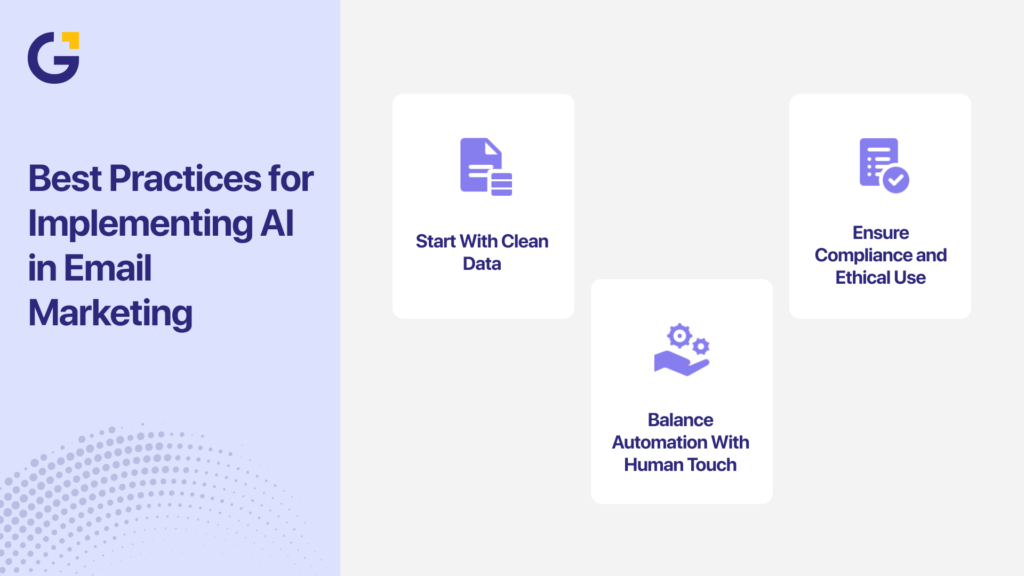
AI delivers strong results only when supported by clean data, human oversight, and compliance. These practices help businesses use AI in a controlled and reliable way.
Start With Clean Data
AI relies on accurate data to make correct predictions. This includes customer details, purchase history, engagement patterns, and segmentation fields. When data is incomplete or outdated, AI outputs become unreliable.
Cleaning data should always be the first step. This includes removing inactive contacts, updating missing fields, fixing formatting issues, and reviewing old segments that no longer apply. Companies with cluttered CRMs usually see poor AI personalisation and incorrect recommendations, so a short data audit often improves results quickly.
Balance Automation With Human Touch
AI can help create ideas, suggest subject lines, or adjust tone. But it cannot replace real brand knowledge or the context that comes from understanding customer behaviour. Human-led content keeps emails accurate, friendly, and aligned with business values.
After writing the core message, teams can use AI to refine length, improve clarity, or test variations. This approach prevents emails from sounding generic. Brands that rely fully on AI often lose personality, which reduces trust and engagement.
Ensure Compliance and Ethical Use
Australian organisations must follow the Spam Act. AI tools must support correct consent, sender identification, and one-click unsubscribe features. Compliance also covers how data is collected, stored, and used for personalisation.
Brands should review AI settings regularly, especially when using automated sequences. Incorrect rules can lead to unwanted emails or messages being sent without consent. This can cause fines and damage reputation. Ethical use protects both the customer relationship and the long-term success of the campaign.
Top AI Tools for Email Marketing in 2026
AI tools help automate content creation, segmentation, timing, and testing. The best tool depends on your industry and data needs.
Popular AI-powered email tools used by Sydney businesses include:
- Mailchimp
- Klaviyo
- Brevo
- HubSpot
- ActiveCampaign
- Omnisend
- Salesforce Marketing Cloud
These platforms offer built-in AI features for subject lines, send times, content suggestions, and segmentation. These AI tools for personalised email automation help teams reduce manual work while keeping campaigns relevant and timely.
For content assistance, marketers often use Jasper, Writer, or Grammarly GO. For predictive timing, some use Seventh Sense or Optimove. Each tool brings different strengths, so selection should match business goals.
Common Mistakes to Avoid When Using AI
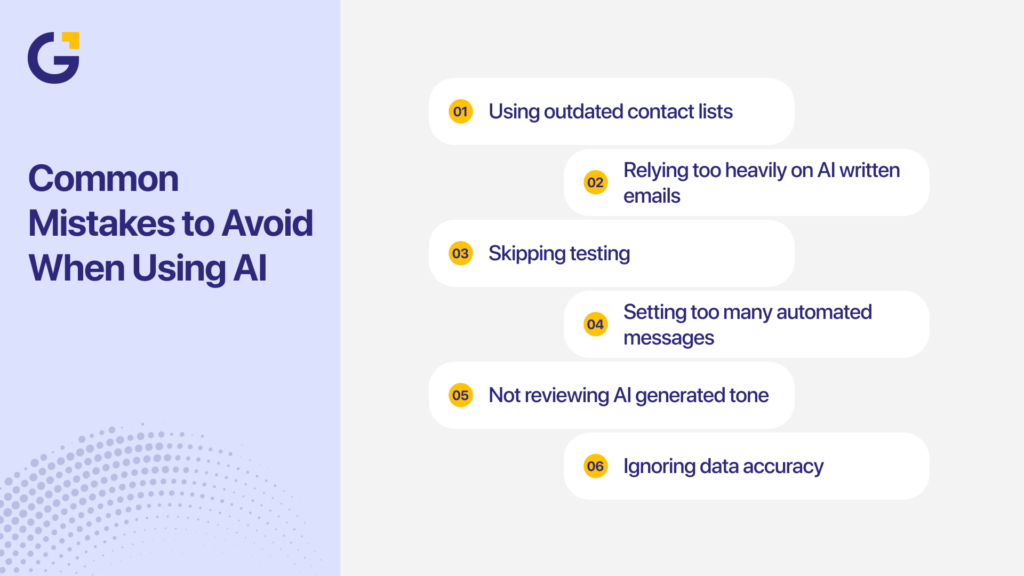
Businesses often see weak results when they rush into AI without planning.
Common mistakes include:
- Using outdated contact lists
- Relying too heavily on AI-written emails
- Skipping testing
- Setting too many automated messages
- Not reviewing AI AI-generated tone
- Ignoring data accuracy
Avoid these issues to keep messages clear and relevant.
Future Trends – The Next Phase of AI in Email Marketing
New tools from Google, HubSpot, Adobe, and Salesforce show where AI is heading. The next phase will focus on real-time personalisation across email, website, and social channels.
AI will score customers based on predicted interest, identify early churn signs, and update content based on voice or image searches. Subject line and layout tests will happen instantly. Brands will be able to run thousands of variations without manual work.
AI will also increase its ability to match messaging with customer intent. This will support stronger conversions at a lower cost.
Businesses that prepare now will have a strong advantage.
How Genix Digital Helps Businesses Harness AI for Smarter Email Campaigns
Genix Digital helps Sydney-based businesses set up AI-driven email systems that match real customer behaviour. Our team builds workflows that combine website actions, CRM data, and AI-powered tools.
This includes segmentation, content planning, send time testing, and complete lifecycle automation. Many Sydney brands contact Genix Digital when they want a clear plan for AI email automation that supports growth and reduces manual workload.
Genix Digital supports e-commerce, professional services, healthcare, trades, and B2B teams looking for better results with fewer manual tasks.
If you want to compare tools or build a stronger workflow, our team can assess your systems and recommend a clear approach.
Conclusion – From Automation to Intelligence: The New Era of Email Marketing
AI in email marketing gives Sydney businesses a simple way to improve personalisation, timing, and engagement across every campaign. When supported by clean data and a clear strategy, AI can help brands send more relevant messages, improve retention, and increase conversions. Used the right way, it becomes a reliable tool that speeds up work without removing the human insight needed for strong communication.
If you want guidance on which tools to use and how to apply AI in a practical way, Genix Digital can support you with setup and strategy. Compare your options and speak with a Genix Digital expert about implementing AI-powered email marketing for your business.
FAQs
How is AI used in email marketing?
AI is used to personalise content, predict send times, and segment audiences based on real behaviour. It studies past actions to send more relevant messages. It also helps create subject lines, automate workflows, and improve testing.
How do I use AI to improve an email?
AI can suggest subject lines, refine tone, and adjust length based on engagement patterns. It also recommends content based on browsing or purchase behaviour. These small improvements help lift open rates and clicks.
Can AI replace email marketing?
AI cannot replace email marketing, but it can automate many repetitive tasks. Businesses still need human input for strategy, brand voice, and customer understanding. AI works best as support, not a full replacement.
What is the 80/20 rule in email marketing?
The 80/20 rule suggests that 80 percent of results often come from 20 percent of actions. In email marketing, a small group of emails or segments usually drives most revenue. AI helps identify those high-value groups faster
Can I use AI to manage my emails?
Yes, AI can manage tasks like scheduling, segmentation, and follow-up messages. It can track behaviour and send the right email at the right moment. Teams still need to set goals and review accuracy to keep results consistent.


 4 Mar 2026
 8 Min Read