

If you’ve launched a website and are wondering, “How do I get it found on Google?”, you’re not alone. Business owners in Sydney are facing increasing competition, and in 2025, search is changing fast thanks to AI-powered tools and local searches. For example, when Google rolled out its Answers Overview feature earlier this year, it began showing instant solution boxes instead of just blue links. That means traditional SEO isn’t enough anymore; you need what’s called AEO (Answer Engine Optimisation) and GEO (Local SEO) working alongside classic approaches.
In this detailed how-to guide, you’ll learn exactly how to optimise your website step-by-step, covering technical SEO, on-page work, local Sydney strategies, and AEO tactics, so your website stands out, drives leads, and becomes a trusted asset.
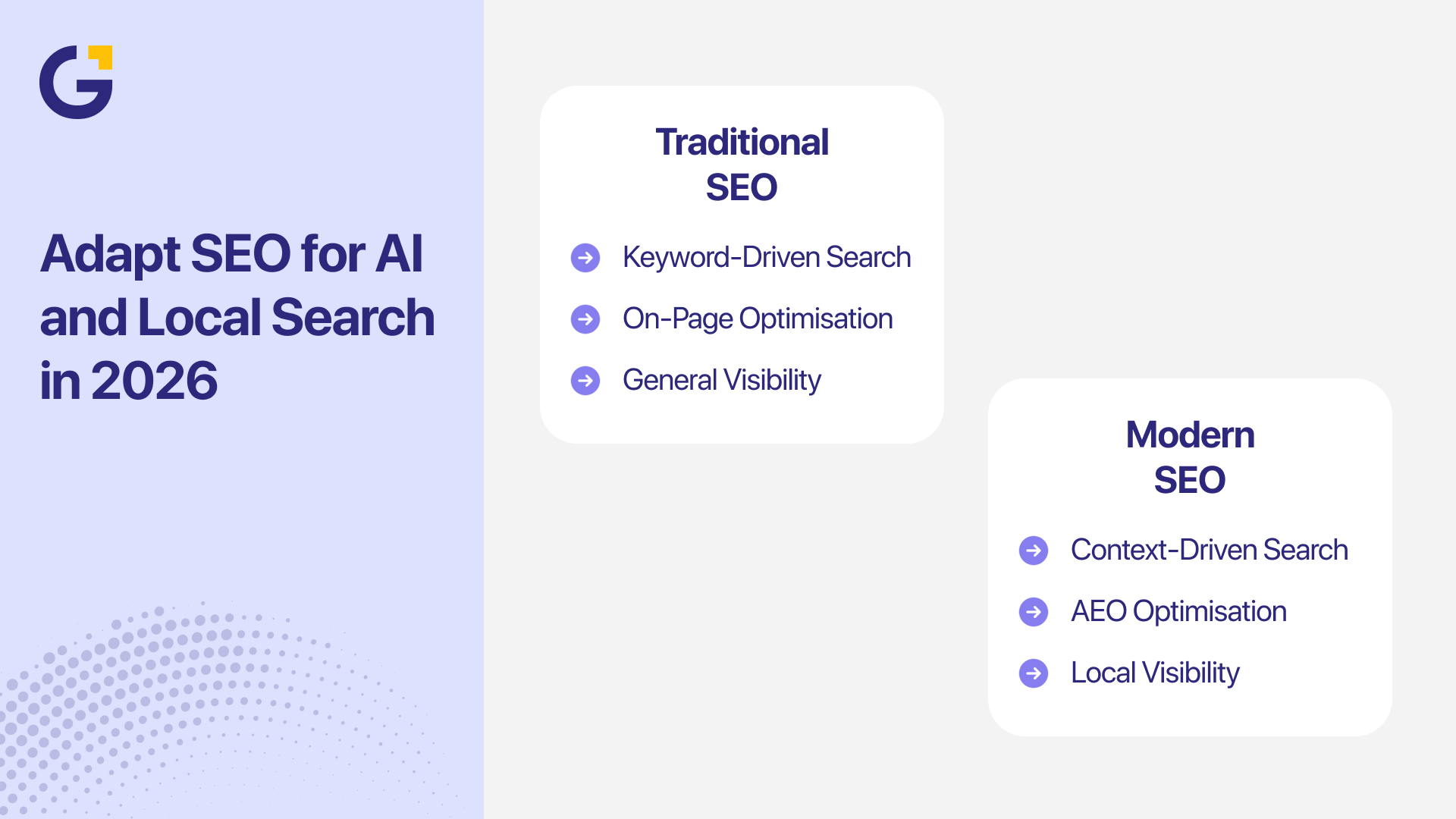
Why SEO, AEO, and GEO Matter More Than Ever in 2026
In 2026, search is no longer driven purely by keywords; it’s powered by context, intent, and AI. Google’s Answer Overview now appears in roughly one in four search results, instantly showing summaries and solutions without users needing to click through. At the same time, “near me” searches have surged more than 150 percent in the past two years, proving how critical local visibility has become.
AI platforms such as ChatGPT, Bing Copilot, and Google Gemini are changing the way people search. Instead of typing “SEO agency Sydney,” users ask, “Who can help my business rank locally?” These tools pull structured, conversational answers directly from optimised content, what’s known as Answer Engine Optimisation (AEO).
If you rely solely on traditional on-page SEO, your website risks being invisible in these new channels. To stay competitive, you must:
- Optimise for both Google and AI answer engines (AEO) by using schema markup, concise summaries, and structured data.
- Strengthen your local presence (GEO) through Google Business Profile updates, location pages, and reviews.
- Maintain technical excellence, ensuring your Sydney business site loads fast, performs on mobile, and satisfies search intent.
When executed together, SEO, AEO, and GEO transform your website from a static brochure into a lead-generation engine, one that builds authority, earns trust, and amplifies your brand across every search experience.

Step 1: Understand How Search Engines and Answer Engines Work
In 2026, it’s not enough to rank on Google; you also need to be visible in AI-driven answer engines like ChatGPT, Google Gemini, and Bing Copilot.
Search engines still crawl, index, and rank pages based on relevance, authority, and usability. Their goal is to show users a list of helpful links. Answer engines, however, aim to provide direct, summarised answers using structured data and conversational context.
To appear in both:
- Structure content clearly with headings, bullet points, and schema markup (HowTo or FAQ).
- Give short, factual answers that AI tools can quote or summarise easily.
- Write naturally, mirroring how people ask questions in everyday language.
Example: A Sydney marketing agency using clear FAQs and schema may be directly cited when someone asks, “Who offers the best SEO services in Sydney?”
Key takeaway: SEO drives visibility; AEO builds discoverability. Combining both ensures your business appears in traditional searches and AI-generated answers.
Step 2: Define Your SEO, AEO & GEO Goals
Before you begin optimising, set clear and measurable goals. A defined roadmap keeps your SEO, AEO, and GEO strategies focused and results-driven.
For your Sydney business, think beyond “get more traffic.” Instead, set goals like:
- Boost organic traffic by 30% within six months.
- Rank in the top three for terms such as “digital marketing agency Sydney.”
- Appear in the Google Local Pack for searches like “SEO agency Sydney.”
- Earn a featured snippet or AI answer box for “how to do SEO for a website step by step.”
These SMART goals (Specific, Measurable, Attainable, Relevant, Time-bound) give structure to your efforts and help you track real progress.
Key takeaway: Clear goals guide your strategy, ensuring every action, from keyword targeting to local content, moves your Sydney business toward stronger visibility and lead growth.
Step 3: Conduct Keyword and Intent Research
Keyword research is still the backbone of SEO, but in 2026, success depends on understanding why people search, not just what they type.
Use tools like Ahrefs, SEMrush, or Google Keyword Planner to find keywords your Sydney audience actually uses. Balance search volume with competition, and choose terms that reflect your goals. For example, “how to improve website ranking on Google” targets learners, while “SEO agency Sydney” attracts ready-to-convert clients.
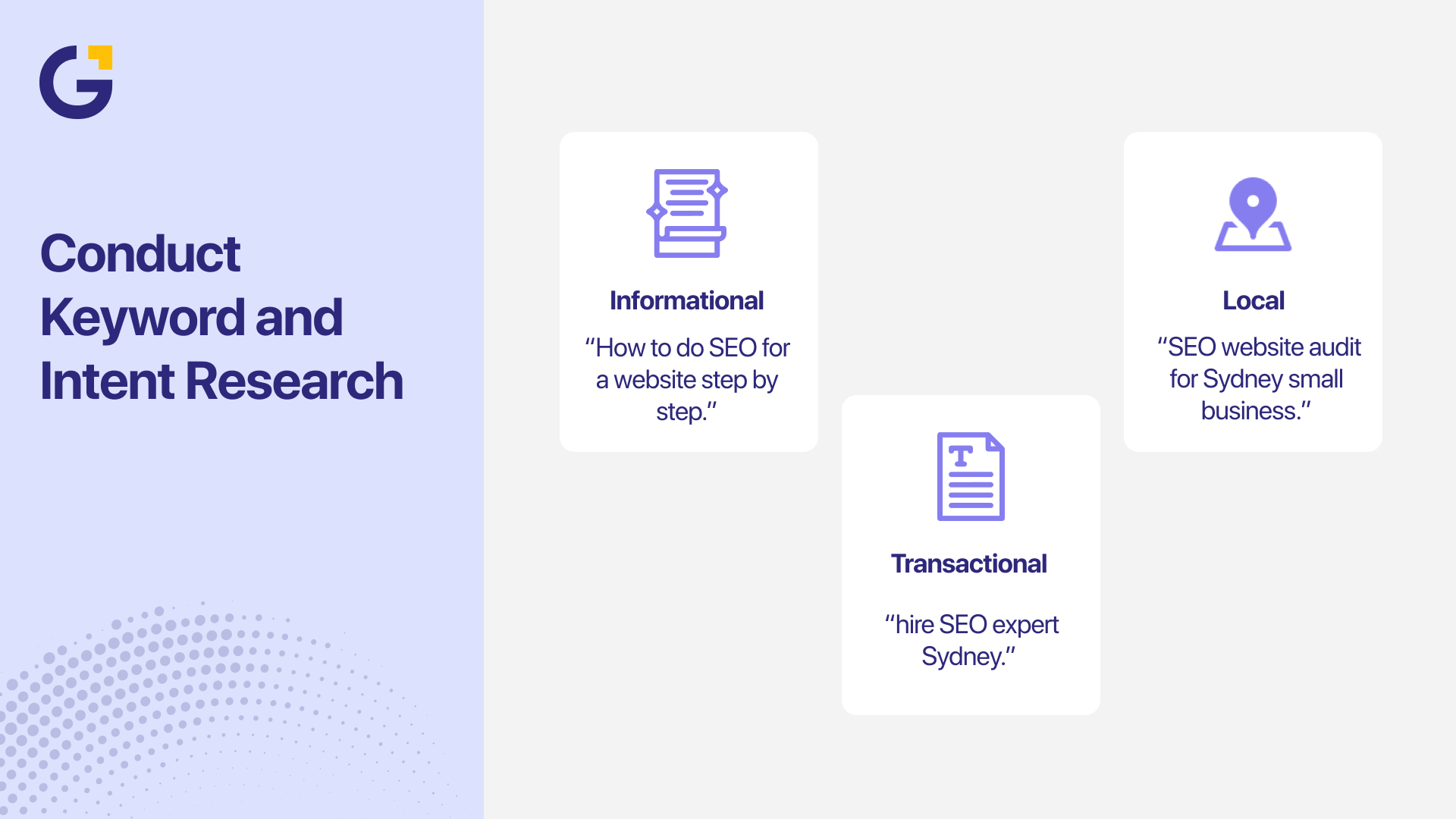
Classify each keyword by intent:
- Informational: “How to do SEO for a website step by step.”
- Transactional: “hire SEO expert Sydney.”
- Local: “SEO website audit for Sydney small business.”
Then, match each keyword to the right content type, guides, service pages, or FAQs, to keep your site organised and avoid overlap.
Key takeaway: Focusing on both keywords and intent helps your content reach the right people, improving rankings, engagement, and visibility across Google and AI-powered platforms.
Step 4: Analyse Competitors, SERP Features and Local Trends
Before creating or updating your content, study what already works in your market. Search your target keywords, like “SEO website Sydney,” and note which competitors appear on the first page. Review their headlines, content depth, and calls-to-action to see what earns visibility.
Pay attention to SERP features such as featured snippets, People Also Ask boxes, and map listings. These show what searchers find valuable and where you can optimise your content or schema to appear.
Finally, analyse local trends across Sydney suburbs like Parramatta, Chatswood, and Northern Beaches. Many small business owners include location names in their searches, so tailor your wording to match how they search.
Key takeaway: Competitor and SERP analysis reveal what users expect, and what’s missing, so you can create more relevant, locally focused content that stands out in both SEO and AEO results.
Step 5: Optimise On-Page Elements (Titles, Meta, Headings, URLs)
On-page SEO turns your research into results. Every element, title, meta descriptions, headings, URLs, and internal links, tells search engines and AI tools what your content is about.
How to optimise effectively:
- Title Tag: Include your primary keyword naturally, e.g., “How to Do SEO for a Website Step-by-Step.”
- Meta Description: Write a clear, action-driven line such as “Learn how to do SEO for a website with proven steps that drive real results in Sydney.”
- Headings (H1–H3): Use your main keyword in the H1 and related phrases in subheadings.
- URL: Keep it short and descriptive, like /how-to-do-seo-for-website-step-by-step-sydney.
- Internal Links: Add links to pages like SEO Services in Sydney or Website Design & Development to guide visitors.
- Alt Text: Describe visuals clearly, e.g., “Team analysing SEO website performance dashboard.”
Example: A Sydney fitness studio improved its title and meta description with targeted keywords and clear benefits, boosting click-through rates and visibility in both Google and AI-powered results.
Key takeaway: Well-structured on-page elements help your content rank higher, attract more clicks, and strengthen relevance across search and AI platforms.

Step 6: Create Content Optimised for Users and Answer Engines (AEO)
Modern SEO is no longer just about ranking; it’s about being the answer. Your content should inform people while also giving AI-driven tools the structure they need to feature your page.
Focus on clarity, structure, and value. Write concise sections that answer questions directly, using data and examples. For instance, if someone searches “How to improve website ranking on Google 2026?”, provide a short step-by-step guide and quick FAQs that AI can easily reference.
Best practices for AEO-friendly content:
- Use numbered or bulleted steps so Google and AI engines can display them easily.
- Write clear, short paragraphs in natural, conversational language.
- Add HowTo or FAQ schema markup to improve visibility in AI-generated results.
- Simplify technical topics like “local SEO Sydney” with relatable examples.
- Support claims with credible data (e.g., Websites that load in under 2 seconds convert 12% more visitors – Google UX Research, 2024).
Key takeaway: Structured, well-written content serves both users and AI systems, helping your Sydney business appear in search results, featured snippets, and emerging answer engines.
Step 7: Strengthen Internal Linking and Topic Clusters
Internal linking is one of the easiest yet most effective ways to improve SEO. It connects related pages, helps Google understand your site’s structure, and encourages visitors to explore more of your content.
Build topic clusters around a main page. For example, your “SEO Services Sydney” page can link to this guide, while this guide links back to supporting pages like “Website Design & Development” and “Content Marketing.” This creates a strong content network that improves authority and relevance.
Benefits of internal linking:
- Distributes link equity across important pages.
- Guides users naturally to related information.
- Reinforces keyword relevance for search engines.
Example links:
- “Explore our Website Design & Development services.”
- “See how our Content Marketing team can help.”
Key takeaway: A clear internal linking strategy turns your website into an interconnected resource hub, boosting visibility, engagement, and SEO strength for your Sydney business.
Step 8: Enhance Technical SEO – Speed, Schema, Mobile, Indexing
Even the best content can’t rank without a solid technical foundation. Technical SEO keeps your website fast, mobile-friendly, and easy for both users and search engines to navigate.
Quick technical SEO checklist:
- Page Speed: Aim for load times under 2.5 seconds on mobile (Google Web Vitals).
- Mobile-First Design: Ensure your layout works perfectly across all devices.
- Schema Markup: Use the HowTo schema for guides and the LocalBusiness schema for your Sydney location.
- Crawl and Indexing: Manage your robots.txt and sitemap.xml files to ensure pages are indexed correctly.
- Core Web Vitals: Regularly test LCP, FID, and CLS for consistent performance.
According to Google’s SEO Starter Guide, a technically sound, user-focused site is essential for visibility and trust.
Example: A Sydney retail store improved site speed by 40% after compressing images and cleaning up scripts, resulting in higher engagement and stronger rankings.
Key takeaway: Fast, mobile-friendly, and well-structured pages form the backbone of every successful SEO strategy.
Step 9: Build Local SEO (GEO) Signals – Google Business, Citations & Maps
To attract clients in Sydney, local SEO (GEO) is vital. It connects your business with people searching nearby and improves visibility in the map and local results.
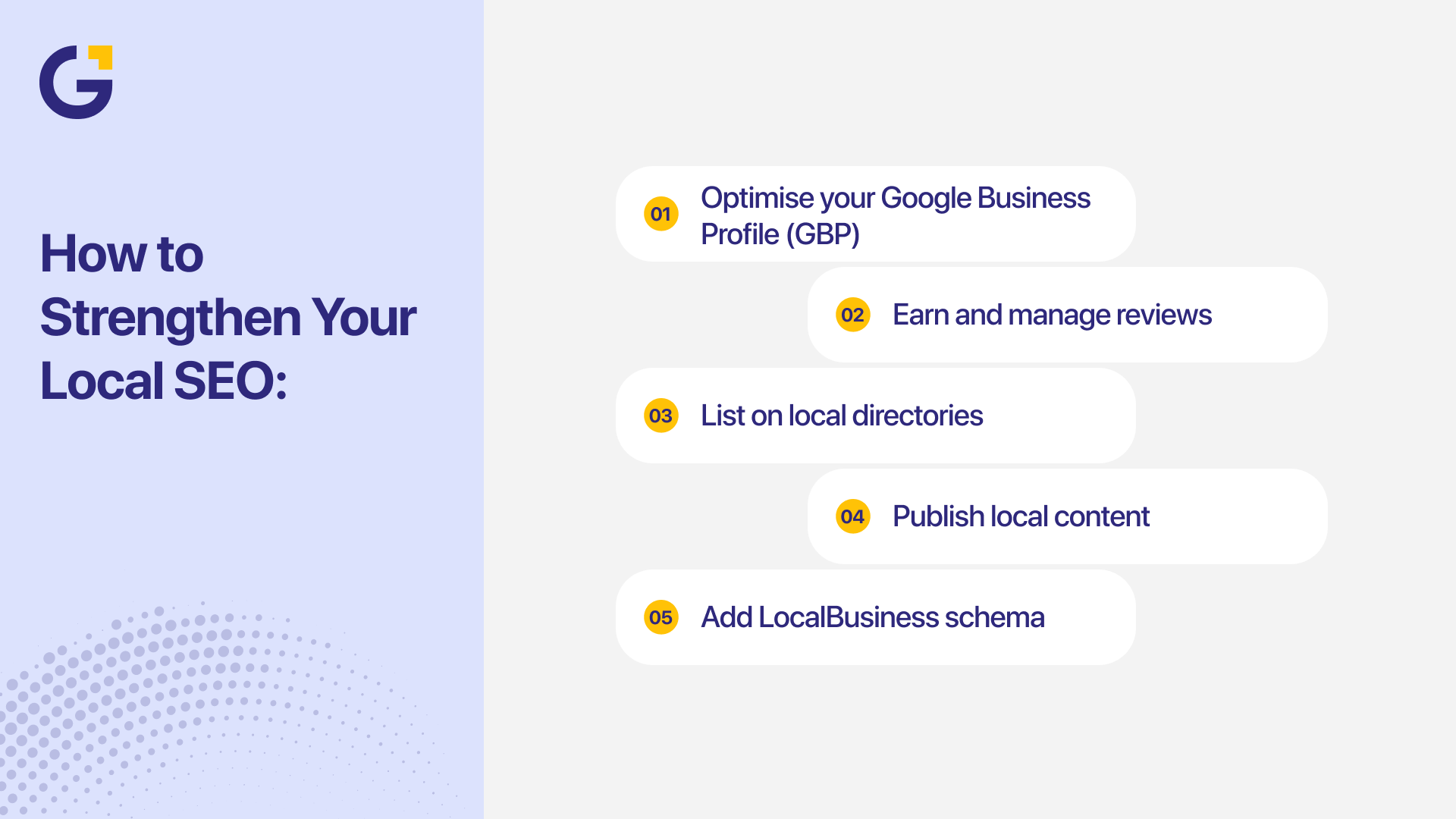
How to strengthen your local SEO:
- Optimise your Google Business Profile (GBP): Keep your business name, address, and phone number accurate. Add categories like “digital marketing agency Sydney” and update photos often.
- Earn and manage reviews: Encourage happy clients to leave feedback and always respond to build trust.
- List on local directories: Add your business to Yellow Pages, TrueLocal, and Hotfrog using consistent contact details.
- Publish local content: Create blogs or pages for suburbs like Parramatta, Chatswood, or Bondi, including phrases like “SEO website Sydney.”
- Add LocalBusiness schema: Help Google link your site to your verified business profile.
Example: A Sydney marketing agency refined its GBP and added local posts, boosting “near me” clicks by 30% in two months.
Key takeaway: Strong GEO signals, through reviews, citations, and local content, help your Sydney business appear in map results and attract nearby customers ready to act.
Step 10: Earn High-Quality Backlinks & Local Mentions
Backlinks remain one of Google’s strongest ranking factors, but in 2026, quality matters more than quantity. A few credible mentions from trusted Sydney or industry sources can boost your authority far more than dozens of generic links.
Ways to build valuable backlinks:
- Collaborate with industry blogs: Contribute expert tips or guest posts on topics like “how to do SEO for a website step-by-step.”
- Join local business networks: Get featured in Sydney business directories, marketing associations, or chambers of commerce.
- Earn media coverage: Pitch stories or insights to reputable outlets such as the Sydney Morning Herald or Business Insider Australia.
- Encourage brand mentions: Stay active on social platforms and community forums relevant to digital marketing.
A 2024 Backlinko study found that top-ranking pages have about three times more high-quality backlinks than those ranking lower.
Key takeaway: Prioritise meaningful backlinks and local mentions that demonstrate trust and relevance, helping your Sydney business build long-term authority in search results.
Step 11: Measure, Track, and Improve SEO/AEO/GEO Performance
SEO success depends on ongoing measurement and improvement, not just setup. Regular tracking helps you understand what’s driving results and where to refine your approach.
Key metrics to monitor:
- Organic traffic: Use Google Analytics to track page visits and engagement trends.
- Keyword rankings: Monitor core terms like “SEO website” and long-tail phrases such as “local SEO Sydney.”
- Featured snippets & AEO visibility: Tools like SEMrush or Ahrefs show where your content appears in AI and featured results.
- Local SEO performance: Review Google Business Profile insights for clicks, calls, and map actions.
- Technical performance: Check page speed, mobile usability, and index coverage in Google Search Console.
Review performance monthly or quarterly to identify wins and gaps. For instance, if new AEO-optimised content reduces bounce rates, apply similar improvements across your site.
Example: A Sydney tech firm saw a 40% jump in local inquiries after refining their Google Business Profile and adding suburb-based pages, followed by a 28% boost in organic traffic within six months.
Key takeaway: Regular tracking transforms your SEO, AEO, and GEO work into a sustainable growth strategy, helping your Sydney business stay visible and competitive.

Common SEO Mistakes That Hurt Rankings in 2026
Even strong websites lose ground if they overlook key fundamentals. Avoid these common pitfalls:
- Skipping mobile optimisation: Over 60% of searches happen on mobile—poor design means lost traffic.
- Ignoring AEO and GEO: These are no longer optional; they drive visibility in AI and local searches.
- Neglecting schema markup: Without structured data, answer engines may ignore your content.
- Chasing low-quality backlinks: Spammy or irrelevant links can trigger ranking penalties.
- Keyword stuffing: Overusing keywords weakens readability and trust signals.
- Not tracking results: Without regular performance reviews, it’s impossible to improve effectively.
Tip: A balanced approach, technical, local, and content-focused, keeps your site competitive and resilient.
Essential Tools for SEO, AEO, and GEO Success
Equip your Sydney business with the right tools to plan, execute, and track progress:
- Google Analytics & Search Console: Monitor performance, clicks, and indexing health.
- Ahrefs or SEMrush: Research keywords, backlinks, and competitor strategies.
- Google PageSpeed Insights: Test site speed and fix Core Web Vitals issues.
- BrightLocal (or similar): Manage citations, reviews, and local rankings.
- Google Business Profile Manager: Optimise and update your local presence.
- Schema Markup Generator: Easily add HowTo or LocalBusiness schema for AEO visibility.
Key takeaway: These tools help you refine performance, maintain technical health, and strengthen both search and local authority over time.
How Genix Digital Helps Australian Businesses Dominate Search & Local Results
At Genix Digital, we help Sydney-based SMEs turn their websites into high-performing growth engines. Our approach combines proven SEO practices with advanced AEO and GEO strategies tailored for Australian markets.
Our process includes:
- Comprehensive technical audits to fix speed, mobile, and schema issues.
- On-page optimisation covering titles, meta tags, and keyword mapping.
- Answer-engine-ready content built with structured guides and FAQs.
- Local SEO setup for Google Business Profiles, citations, and suburb-specific content.
- Backlink and mention strategy to strengthen authority and visibility.
- Transparent reporting with monthly dashboards that show measurable ROI.
If you’re ready to move beyond basic SEO and want measurable, location-driven results, book a free consultation with Genix Digital and let’s optimise your website for 2026 and beyond.
Summary: From SEO to AEO — The Next Evolution in Online Visibility
Optimising a website today isn’t just about keywords and links; it’s about delivering answers, dominating local searches, and creating a truly optimised platform for growth. By following the steps above, you’ll build a strong SEO website, designed for modern search behaviours in Sydney and beyond. Start with intent, work through on-page and technical SEO, layer in AEO tactics and GEO signals, then measure, refine, and grow.
Want expert help? Subscribe to our newsletter for more actionable guides or book a free consultation with Genix Digital and let us help your business rank, convert, and grow.
FAQs
Q1: How long does it take to see results with SEO for a website?
It depends on many factors, site age, competition, technical health, and content quality. Most small-to-mid-sized websites begin to see meaningful organic traffic and ranking movement in 3–6 months, though local GEO improvements can show results in 4–8 weeks.
Q2: What’s the difference between SEO and AEO?
SEO (Search Engine Optimisation) focuses on traditional search engines like Google. AEO (Answer Engine Optimisation) targets answer boxes, chat-based search, and structured responses, ensuring your content is formatted to be picked up by AI and answer engines.
Q3: Do I need to focus on local SEO if my business serves nationwide?
Yes, local signals still matter even for national or online-only businesses. They boost trust, improve visibility in regional searches, and help you dominate specific markets like Sydney before scaling nationally.
Q4: How often should I update my SEO strategy?
At a minimum, every quarter. But in 2026, with rapid algorithm changes and AI search growth, reviewing monthly or bi-monthly ensures you stay ahead of competitor moves and search-feature shifts.
Q5: Can I handle SEO myself, or should I hire an agency?
If you have time, basic knowledge, and tools, you can implement many steps. But for full-funnel optimisation (technical, on-page, AEO, GEO, backlink strategy) and local Sydney focus, a specialised agency like Genix Digital delivers faster, more reliable, and trackable results.





 26 Jun 2025
 8 Min Read