
Why Paid Advertising Still Works in 2026
In 2026, paid advertising will remain a powerhouse for online growth, with worldwide digital ad revenue reaching US$790.35 billion in 2024, according to Statista’s November 2024 Digital Advertising: Market Data & Analysis report. The market is forecast to surge to US $1.13 trillion by 2029, led by the United States, which alone contributes US $425 billion in ad spend.
This ongoing expansion shows how businesses, especially small and medium-sized enterprises, continue to rely on paid channels like Google, Meta, and TikTok to reach targeted audiences quickly and measurably.
If you’ve been wondering how to create a paid advertising campaign step by step, this guide explains every stage and shows how experts like Genix Digital help you turn clicks into loyal clients.
Understanding Paid Advertising: PPC, Display, and Social Ads
Paid advertising means paying to promote your business on digital platforms like Google, Facebook, LinkedIn, or TikTok. You bid on placements, and your ad appears in front of targeted audiences based on interests, location, or search intent.
Here are the main types:
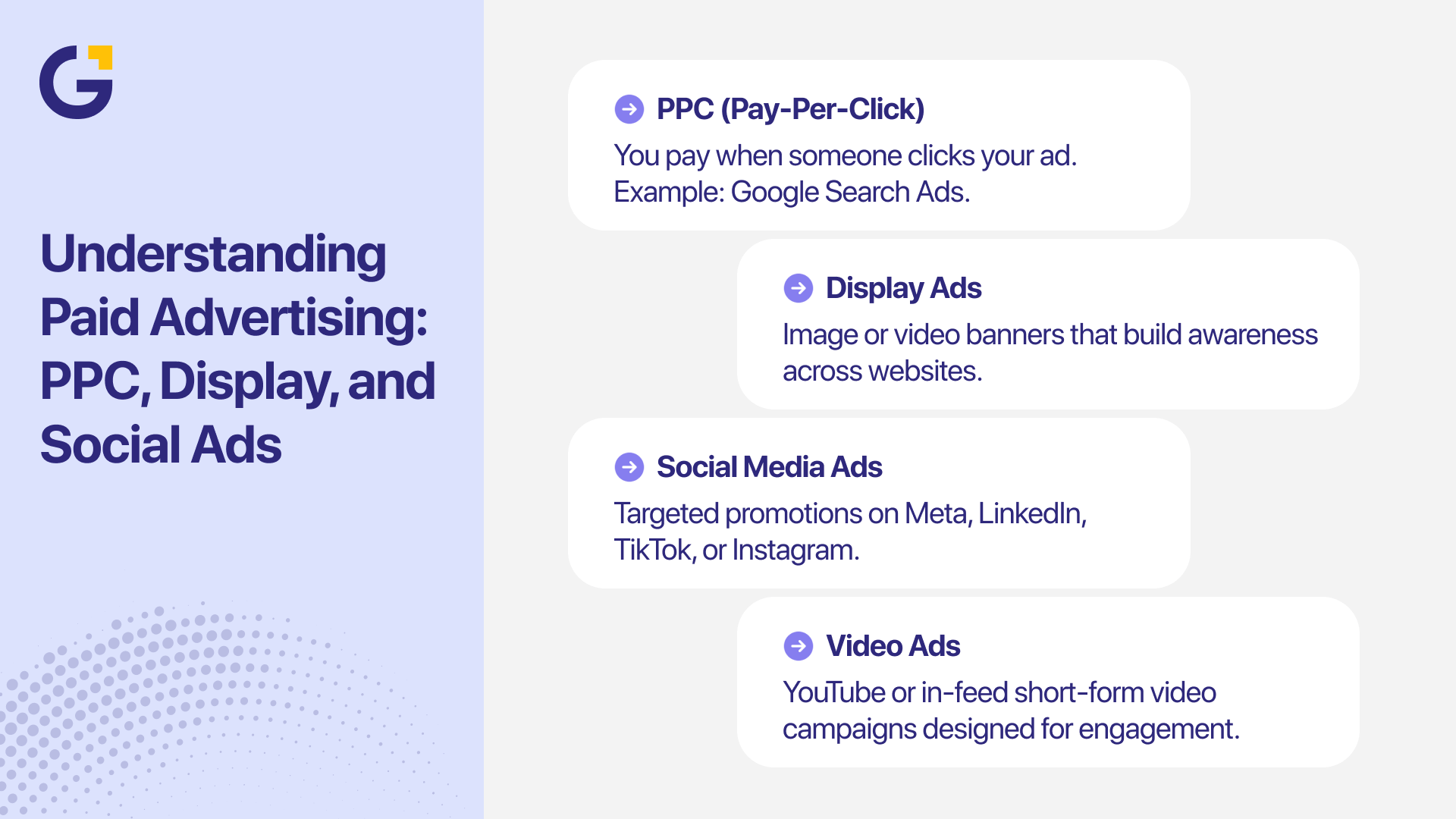
- PPC (Pay-Per-Click) – You pay when someone clicks your ad. Example: Google Search Ads.
- Display Ads – Image or video banners that build awareness across websites.
- Social Media Ads – Targeted promotions on Meta, LinkedIn, TikTok, or Instagram.
- Video Ads – YouTube or in-feed short-form video campaigns designed for engagement.
Each ad type suits a specific goal. For example, a local café might use Google Ads to attract nearby searchers, while a fashion brand could use Instagram Reels Ads to boost awareness.
Benefits of Paid Advertising for Small and Medium Businesses in Australia
Paid advertising gives SMEs a level playing field with larger competitors. You can start small, test campaigns, and scale up as results come in.
Top benefits include:
- Immediate visibility on search engines and social media
- Control over audience, budget, and message
- Measurable performance through clicks, conversions, and ROI
- Flexibility to pause, edit, or A/B test in real time
As marketing expert Neil Patel often emphasises, the key to paid advertising isn’t about increasing your budget, but about spending strategically and meticulously tracking the results.
Once you understand the benefits, the next step is to see how these ads fit into your broader marketing funnel.
How Paid Ads Fit Into Your Marketing Funnel
Paid ads accelerate every stage of your customer journey.
Funnel Stage | Campaign Example | Goal |
Awareness | YouTube video ad | Introduce your brand |
Consideration | Google Display ad | Show product value |
Conversion | Search ad or remarketing | Drive sales or inquiries |
Loyalty | CRM or email remarketing | Keep customers engaged |
At Genix Digital, campaigns are built to match these stages, driving awareness first, then guiding leads through conversion and loyalty phases.

Setting Your Goals: Awareness, Leads, or Sales
Before spending a dollar on ads, it’s essential to define what success looks like for your campaign. Clear goals not only guide your targeting and creative choices but also make it easier to measure what’s working.
- Brand Awareness: Focus on impressions, reach, and engagement to get your business in front of new audiences. This stage is perfect for startups or companies launching new products that want more people to recognise their brand name or message.
- Lead Generation: Aim to capture details from interested prospects through clicks, form submissions, or sign-ups. This goal works well for service-based businesses like real estate agencies, law firms, or clinics looking to build a pipeline of potential clients.
- Sales: Measure tangible outcomes such as purchases, bookings, or return on ad spend (ROAS). E-commerce stores and local retailers often prioritise this goal to track direct sales performance and profit margins from ads.
Each objective requires a slightly different ad setup, budget focus, and creative style. For instance, a real estate agency might aim to generate 100 qualified leads per month using Google Search Ads, while a local café chain might prioritise foot traffic tracked through Google Maps and local search campaigns.
Overview of Major Platforms
Each advertising platform has its own strengths, audience behaviour, and best use cases. Understanding where your customers spend time helps you invest your budget wisely.
- Google Ads: Best for intent-driven searches (e.g., “plumber near me”).
- Meta Ads (Facebook & Instagram): Ideal for brand storytelling and retargeting.
- LinkedIn Ads: Effective for B2B services and recruitment.
- TikTok Ads: Engages younger audiences with creative video content.
- YouTube Ads: Excellent for visual storytelling and brand recall.
Pro Tip: Start with one or two channels where your audience already spends time. Once you see consistent performance data, expand to additional platforms and adjust your strategy based on engagement and conversion insights.
Audience Targeting Basics: Demographics, Interests, & Behaviour
The secret to effective ad targeting and conversion tracking lies in knowing exactly who your audience is and what motivates them. The more specific your targeting, the less money you waste on showing ads to people who aren’t likely to convert.
Define who you want to reach by:
- Demographics: Target audiences by age, gender, income level, location, or even job title. For example, a trades business in Sydney might focus on males aged 25–45 within specific suburbs, while a fitness studio might target women aged 18–35 within a 10-kilometre radius.
- Interests: Reach users based on hobbies, values, or topics they follow online. A café can target “coffee lovers” and “remote workers,” while an eCommerce store selling eco-products might reach people interested in sustainability and green living.
- Behaviours: Focus on how people act online, their purchase history, device usage, or previous visits to your website. Behaviour-based targeting is especially powerful for retargeting campaigns that remind past visitors to complete a purchase or booking.
Platforms like Meta Ads Manager and Google Ads use tracking tools (often called pixels or tags) to monitor user interactions after clicking your ad. Over time, this data helps you fine-tune your campaigns and improve accuracy, a process known as conversion tracking, which ensures your ads reach the right audience at the right time.

Crafting High-Converting Ad Copy and Creatives
Great ads tell a story in seconds. Keep these tips in mind:
- Hook early: Start with a bold claim or question.
- Keep it simple: One message per ad.
- Use visuals that stop scrolling: People process images 60,000× faster than text.
- Add urgency: Use time-limited offers or strong calls to action.
Example:
“Get your free website audit today and discover how your competitors rank!”
Tools like Canva and Meta Creative Hub help non-designers craft professional-looking creatives.
Budgeting and Bidding Strategies for Beginners
Paid advertising doesn’t require a massive budget. The key is consistency.
Here’s a simple plan:
- Start with a daily budget of $30–$50 for testing.
- Allocate 70% to high-performing campaigns, 20% to testing, and 10% to remarketing.
- Review CPC (Cost per Click) and CPA (Cost per Acquisition) weekly.
As reported by Search Engine Journal, the average cost-per-click (CPC) across all industries for Google Ads and Microsoft Ads is US$5.26, with higher-competition sectors such as legal services averaging $8.58 per click and lower-cost categories like arts and entertainment around $1.60.
Landing Page Alignment for Paid Campaigns
Even the best ad fails if your landing page doesn’t convert. Ensure your page:
- Loads in under 3 seconds
- Matches the ad promise (headline and offer)
- Includes a clear CTA (e.g., “Book a free consultation”)
- Works seamlessly on mobile
For example, if your ad promotes “Affordable SEO Packages,” your landing page should show pricing tiers and a simple form to request a quote.
Tracking Performance: Metrics That Matter
Monitoring campaign performance ensures your budget drives results. Track:
- CTR (Click-Through Rate) – Shows how engaging your ads are.
- CPC (Cost per Click) – Helps manage spend.
- Conversions & CPA – Measures success.
- ROAS (Return on Ad Spend) – The final profitability metric.
Use dashboards from Google Ads, Meta Ads Manager, or Looker Studio for easy visual tracking.
Common Mistakes Beginners Make in Paid Advertising
- Skipping keyword research or using broad matches too early.
- Ignoring ad testing, always compare two versions (A/B testing).
- Sending traffic to the homepage instead of a tailored landing page.
- Failing to track conversions with a proper setup.
- Stopping too early, most campaigns need 2–4 weeks to stabilise.
Avoiding these mistakes helps save money and improves campaign learning speed.

How Genix Digital Helps Businesses Launch & Optimise Paid Ads
Setting up a campaign is easy. Getting results takes experience. At Genix Digital, we combine strategy, creative design, and real-time optimisation. Our team manages:
- Keyword and audience research
- Ad design and copywriting
- Campaign setup and monitoring
- Monthly performance reports
- Conversion tracking and remarketing
Whether you’re a local retailer or a national eCommerce brand, we’ll help you turn clicks into clients without wasting budget.
Conclusion – Starting Smart with Paid Advertising
Paid advertising remains one of the most effective ways to boost visibility, drive targeted traffic, and convert interest into measurable sales. When done strategically, with clear goals, precise targeting, and consistent optimisation, it allows even small and medium-sized businesses to compete with larger brands. By testing, analysing, and refining your campaigns, you can build a reliable system that continually attracts the right audience and delivers long-term results.
At Genix Digital, we specialise in helping SMEs create data-driven paid advertising strategies that turn clicks into real clients. From keyword research and ad setup to performance tracking and conversion optimisation, our team ensures every dollar you spend works harder for your business. Book a free consultation today to discover how Genix Digital can help you launch, manage, and grow successful paid campaigns that deliver measurable ROI and lasting growth.
FAQs
Q1: What is paid advertising?
Paid advertising is a marketing method where businesses pay to display ads on search engines, websites, or social media platforms. It’s designed to reach specific audiences quickly and drive measurable results like traffic, leads, or sales.
Q2: Is $10 a day enough for Google Ads?
A $10 daily budget can work for small, local campaigns or early testing phases. However, results depend on your industry’s cost-per-click (CPC), competition, and targeting strategy; higher-competition industries may require $20–$50 per day for meaningful traction.
Q3: What should be the daily budget for Google Ads?
There’s no one-size-fits-all budget, but many small businesses start with $20–$50 daily to collect data and optimise performance. The key is consistency: review and adjust spending weekly based on metrics like cost per lead (CPL) and return on ad spend (ROAS).
Q4: Do we really see 4,000 ads a day?
Yes, research suggests the average person encounters between 4,000 and 10,000 ads daily across TV, social media, search, and digital platforms. This high exposure makes it crucial to create relevant, eye-catching ads that stand out from the noise.
Q5: Can I get paid for advertising?
You can earn money through advertising by becoming a content creator, affiliate marketer, or website owner who monetises traffic with ad placements. Platforms like YouTube, TikTok, and Google AdSense allow individuals to earn revenue when audiences view or engage with their ads.


 1 Dec 2025
 9 Min Read