Why Move-In Leads Are Gold for Service Businesses
Every week across Australia, thousands of households relocate, and that creates a massive opportunity for local service providers. According to the Australian Bureau of Statistics report, about 1.14 million Australian households, roughly 12%, move to a new home each year. That means every week, thousands of new residents are actively searching for essential local services such as cleaning, moving, utilities setup, and home improvements.
Move-in leads are high-intent customers. They’re actively looking for businesses they can trust right now, from locksmiths and electricians to cleaners and landscapers. The question is: how do you find them first?
At Genix Digital, we’ve seen that the combination of Google Ads and Meta Ads gives Australian service businesses the most reliable path to reach move-in audiences early, build awareness fast, and convert them before competitors do.
Understanding the “Move-In” Audience in Australia
The “move-in” segment represents people who’ve recently changed addresses or are about to. They’re making dozens of urgent buying decisions, from connecting broadband to booking trades.
According to CoreLogic data reported by ABC News in 2024, national house prices rose 6.7 percent over the year, reflecting continued housing demand and activity across Australia. This steady growth indicates ongoing movement in the property market and increasing demand for location-based home services.
- They search for “near me” or suburb-specific terms on Google.
- They browse home-related content and community groups on Facebook or Instagram.
- They respond to urgency and trust signals (reviews, location, same-day service).
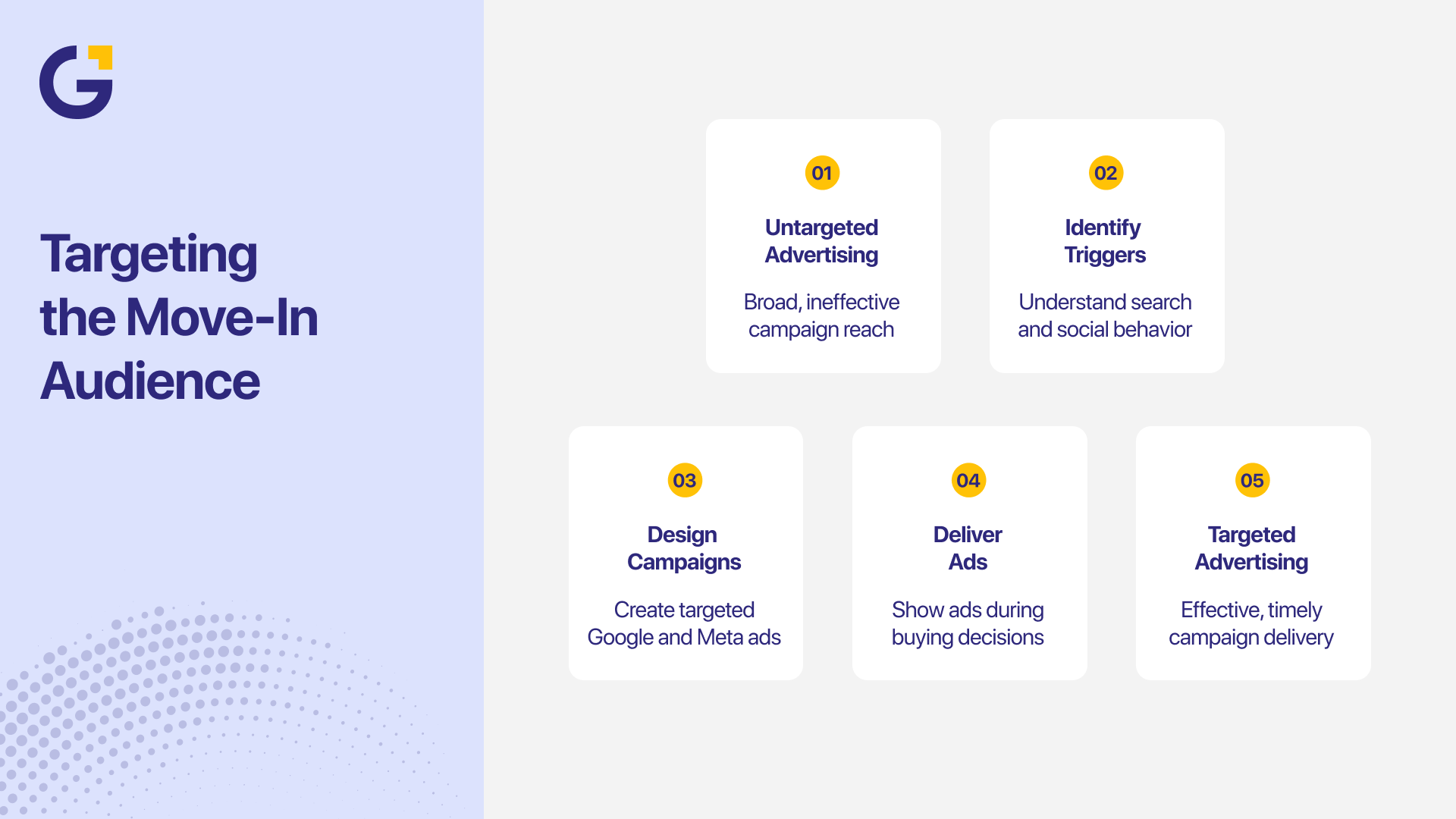
Understanding these triggers allows advertisers to design targeted Google and Meta campaigns that appear exactly when these consumers are ready to book.
Why Google & Meta Ads Are Ideal for Move-In Campaigns
Both platforms dominate digital reach, but for different reasons.
- Google Ads captures active intent. When someone searches “bond cleaning Sydney” or “best moving company near me,” they’re already ready to buy.
- Meta (Facebook & Instagram) Ads influence passive intent. They help you reach people in transition who may not be searching yet but fit your target demographic (new homeowners, renters, families).
Together, they form a complete move-in marketing system:
- Google drives high-intent leads.
- Meta builds awareness and remarketing touchpoints.
And both now use advanced automation, Google’s Performance Max and Meta’s Advantage+, which leverage AI to identify behavioural patterns like “recently relocated” or “household changes.”
According to Madgicx’s analysis of Meta Advantage+ campaigns, e-commerce advertisers saw up to a 32% improvement in return on ad spend (ROAS) compared to manual campaigns. While Meta has not published an official “32% year-over-year conversion rate” figure for service-industry move-in audiences, this metric illustrates the potential upside of using Advantage+ automation.
Defining Your Target Audience and Intent Signals
To make your campaigns efficient, define audience signals clearly:
- Location targeting: Use radius targeting (3–10 km) around new-build estates or popular moving destinations.
- Life event targeting (Meta): Select “Recently Moved” or “New Job” demographics.
- Keyword intent (Google): Focus on queries combining “moving,” “new home,” or service-specific needs.
- Examples: “set up internet in new house,” “post-move cleaning,” “install security cameras.”
- Custom intent audiences: Upload CRM or customer email lists to build lookalikes.
Google Ads Strategy for Move-In Leads
Below is a step-by-step guide to maximising your move-in lead conversions:
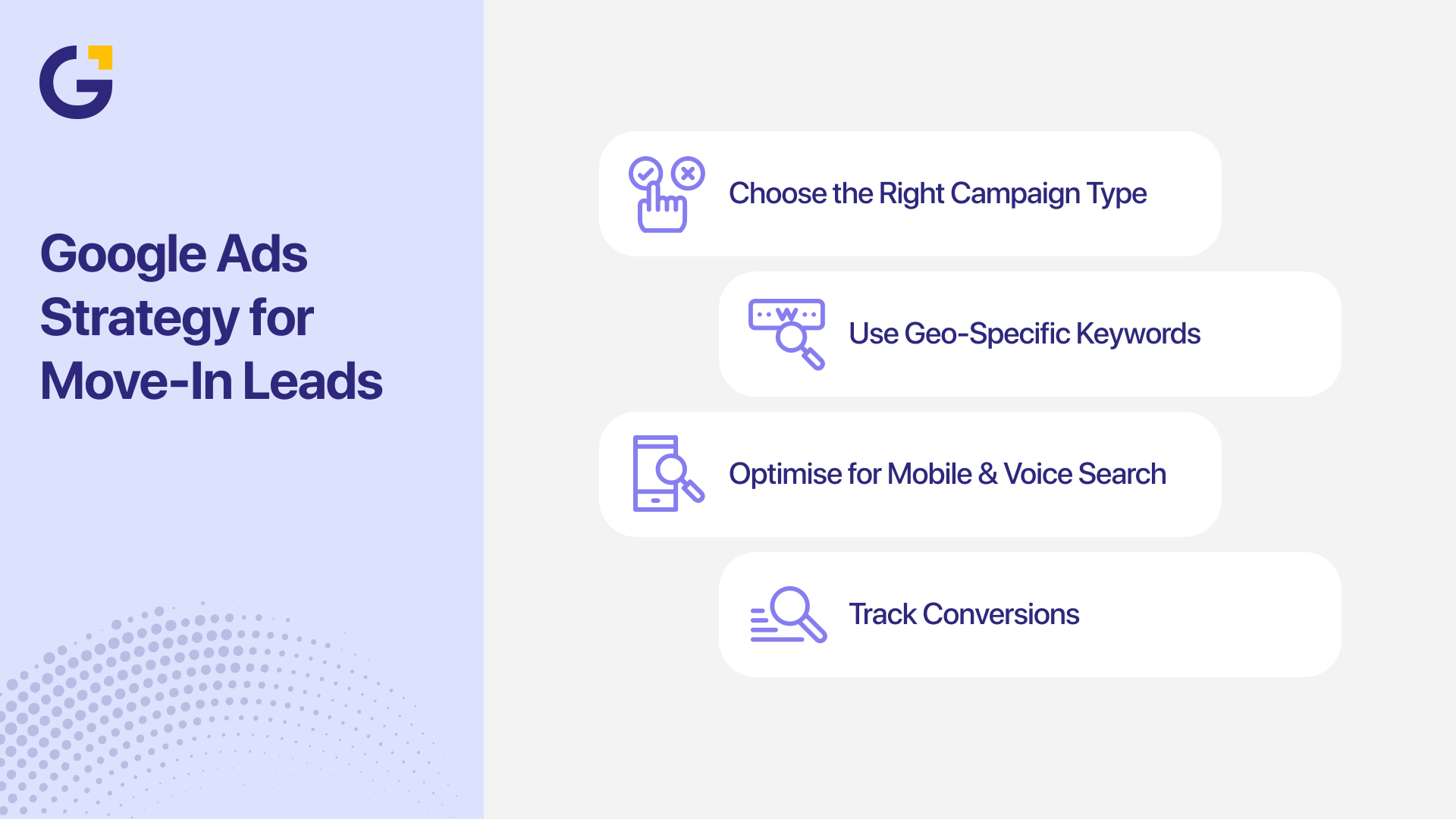
Choose the Right Campaign Type
Start with Search or Performance Max campaigns.
- Search campaigns give full keyword control.
- Performance Max blends Search, Display, YouTube, and Maps placements, ideal for home services.
Use Geo-Specific Keywords
Example:
- “Moving company in Parramatta”
- “New home cleaning Melbourne”
- “Solar installation Perth suburbs”
Include dynamic location insertions in ad copy to improve Quality Score.
Optimise for Mobile & Voice Search
According to Google, more than 50 percent of search queries globally now come from mobile devices, making mobile optimisation a top priority for service-based advertisers.
To capture these high-intent users, ensure your ad headlines and extensions are designed for quick actions. Incorporate features like call extensions, location pins, and “Book Now” CTAs to make it easy for potential customers to contact you or book services instantly.
Track Conversions
Track conversions by linking Google Analytics 4 with your Google Ads account to monitor key actions such as form submissions, phone calls, and online bookings. This integration helps you understand which ads and keywords drive real results. Use these insights to refine your campaigns and power smart bidding strategies that automatically prioritise the highest-converting audiences.
Meta (Facebook & Instagram) Ads Strategy for Move-In Leads
Meta’s advantage is its ability to reach people before they search.
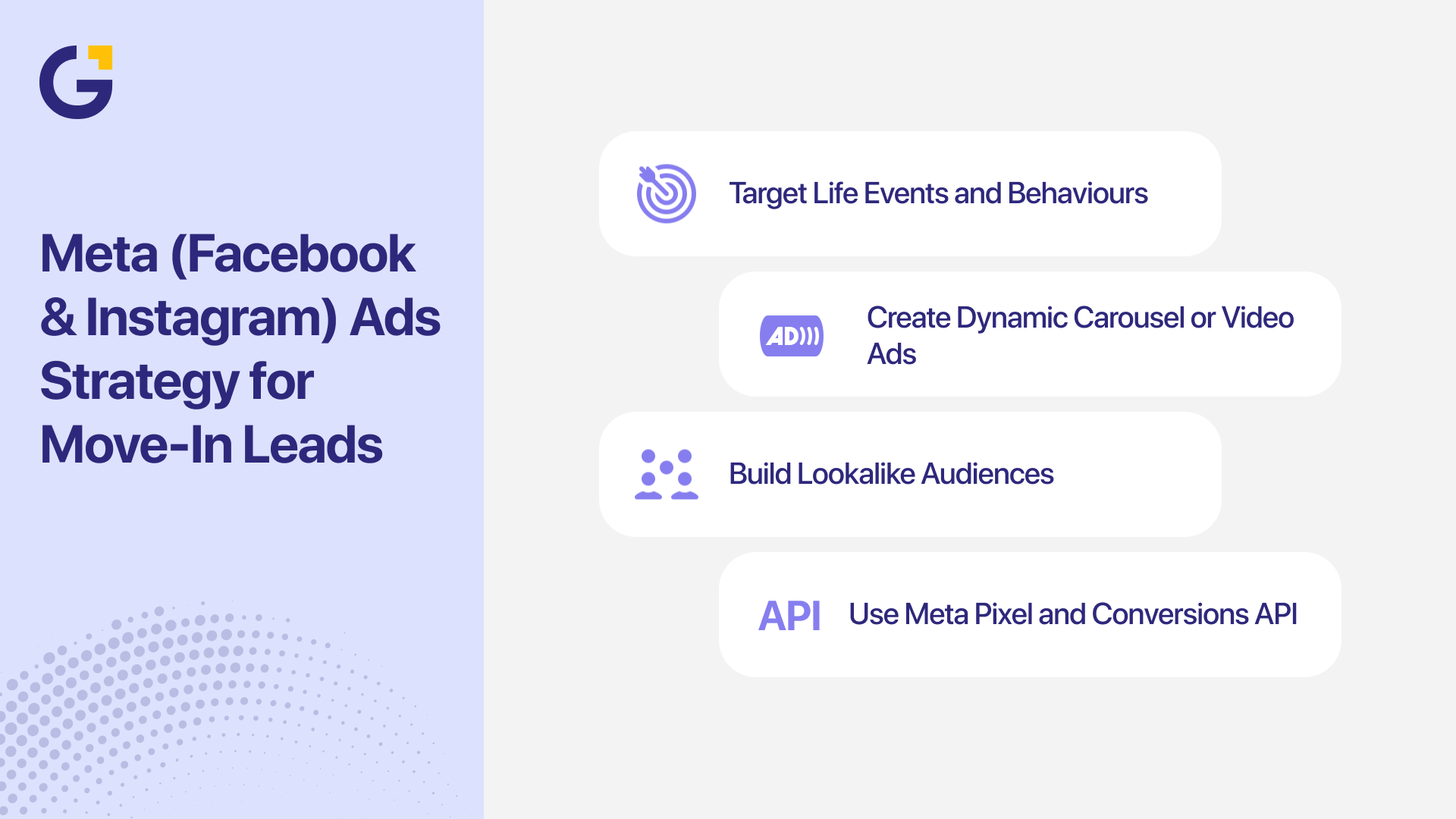
Target Life Events and Behaviours
Meta’s detailed targeting lets you reach audiences based on life events like “Recently Moved,” “Newly Engaged,” or “Parents with Toddlers.” These groups often represent households going through change, a perfect time to promote home-related services. Using these behavioural signals helps your ads reach people who are most likely to need your services in the near future.
Create Dynamic Carousel or Video Ads
Visual storytelling captures attention quickly and builds trust. Use carousel or video ads to showcase before-and-after transformations, client testimonials, or your team in action. These formats perform best because they help audiences visualise your service benefits in real-life scenarios.
Build Lookalike Audiences
Upload your existing customer list to create 1–2% lookalike audiences that mirror your highest-value clients. This approach extends your reach while maintaining precision and efficiency. It’s a cost-effective way to attract new move-in customers who share similar needs and interests as your best clients.
Use Meta Pixel and Conversions API
Set up both the Meta Pixel and Conversions API to capture website actions accurately and improve campaign optimisation. These tools work together to provide a complete picture of how users interact with your ads. Advertisers who integrate server-side tracking typically see around a 15% improvement in cost per qualified lead, according to Meta’s Conversions API insights.
Crafting High-Impact Ad Messaging That Converts
Your messaging must connect emotionally and practically. Move-in audiences are stressed, time-poor, and overwhelmed.
Example of an effective Google Ad:
“Just Moved? Book Reliable Electricians Near You, Fast Service, Up-Front Pricing, Local Experts.”
Example of a Meta Ad Caption:
“New home, new to-do list? Our cleaners handle the mess so you can settle in stress-free.”
Tips for Copywriting Success
- Highlight speed, trust, and convenience.
- Use numbers or proof (“Rated 4.9 Stars,” “Over 2,000 Happy Clients”).
- Add urgency: “Book today – next-day availability.”
Run A/B tests on headlines and CTAs every week. Even small text changes can lift CTR by 10–15%.
Best Ad Formats and Creative Tips
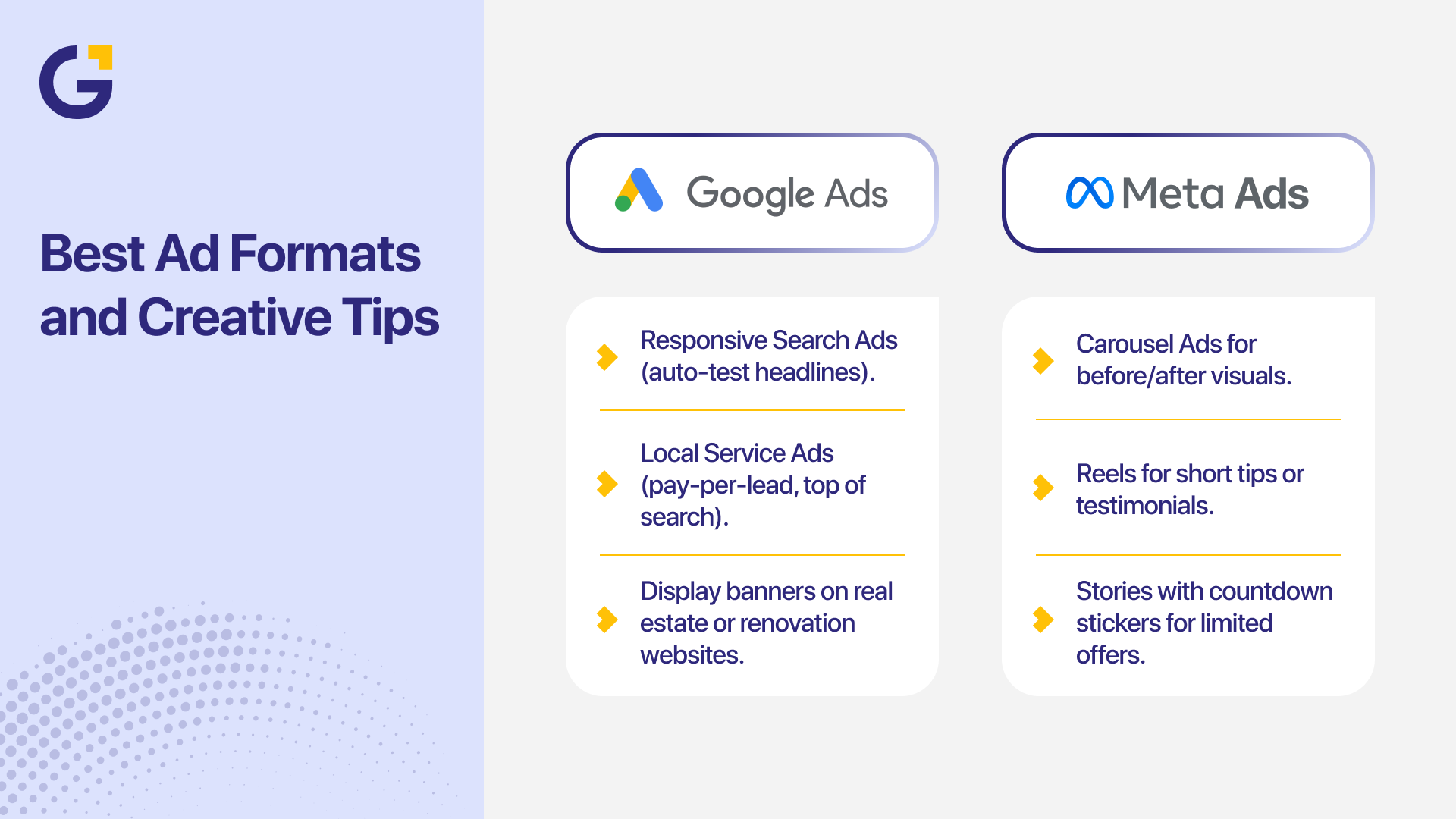
Google Ads:
- Responsive Search Ads (auto-test headlines).
- Local Service Ads (pay-per-lead, top of search).
- Display banners on real estate or renovation websites.
Meta Ads:
- Carousel Ads for before/after visuals.
- Reels for short tips or testimonials.
- Stories with countdown stickers for limited offers.
Use brand colours, human faces, and clean design. Canva or Adobe Express templates make rapid creative refreshes simple, a must for A/B testing.
Landing Page Alignment - Turning Clicks into Leads
Even the best ads fail if your landing page isn’t ready to convert.
Checklist for a High-Converting Page
- Headline repeats ad promise (“Book Trusted Movers in Brisbane”).
- Clear hero image of your team or service in action.
- Visible phone number and short lead form above the fold.
- Google Reviews or Trustpilot badges.
- Local map or service-area details.
Include tracking tags for conversions, heatmaps (Hotjar), and scroll-depth analytics.
Tracking, Retargeting & Lead Nurturing Essentials
The magic of paid media happens after the click.
- Google Tag Manager: Centralise event tracking.
- Meta Pixel: Build retargeting lists of people who visited your landing page but didn’t convert.
- Email/CRM follow-up: Send automated welcome or discount offers within 24 hours.
Example workflow:
- A user clicks a Meta ad for cleaning services.
- Visits the landing page but doesn’t book.
- Sees Google Display remarketing ad two days later.
- Books through follow-up email CTA.
Real Campaign Examples & Results (Australia-Based)
At Genix Digital, we’ve helped multiple Australian service businesses use data-driven ad strategies to reach move-in customers.
- Sydney Removalists: Google + Meta combo lifted qualified lead volume by 58% within three months.
- Melbourne Cleaners: Advantage+ campaigns cut cost per booking by 27%.
- Perth Home Services: Using Performance Max and local video assets doubled call enquiries.
These campaigns show how multi-platform advertising delivers predictable, trackable results when structured correctly.
Common Mistakes to Avoid in Move-In Ad Campaigns
Many businesses miss out on high-quality leads simply because their campaigns aren’t optimised for timing or intent. Avoiding these common mistakes can help you maximise every ad dollar and attract move-in customers right when they’re ready to book.
- No cross-platform coordination: Running Google and Meta separately without shared tracking wastes data.
- Generic ad creative: Ads that don’t speak to the “just moved” mindset underperform.
- Weak landing pages: Too much text, no trust signals, or unclear CTA.
- Neglecting mobile optimisation: 70%+ of move-in traffic is mobile.
- Skipping retargeting: Most leads convert after 2–3 exposures.
How Genix Digital Helps You Capture More Move-In Leads
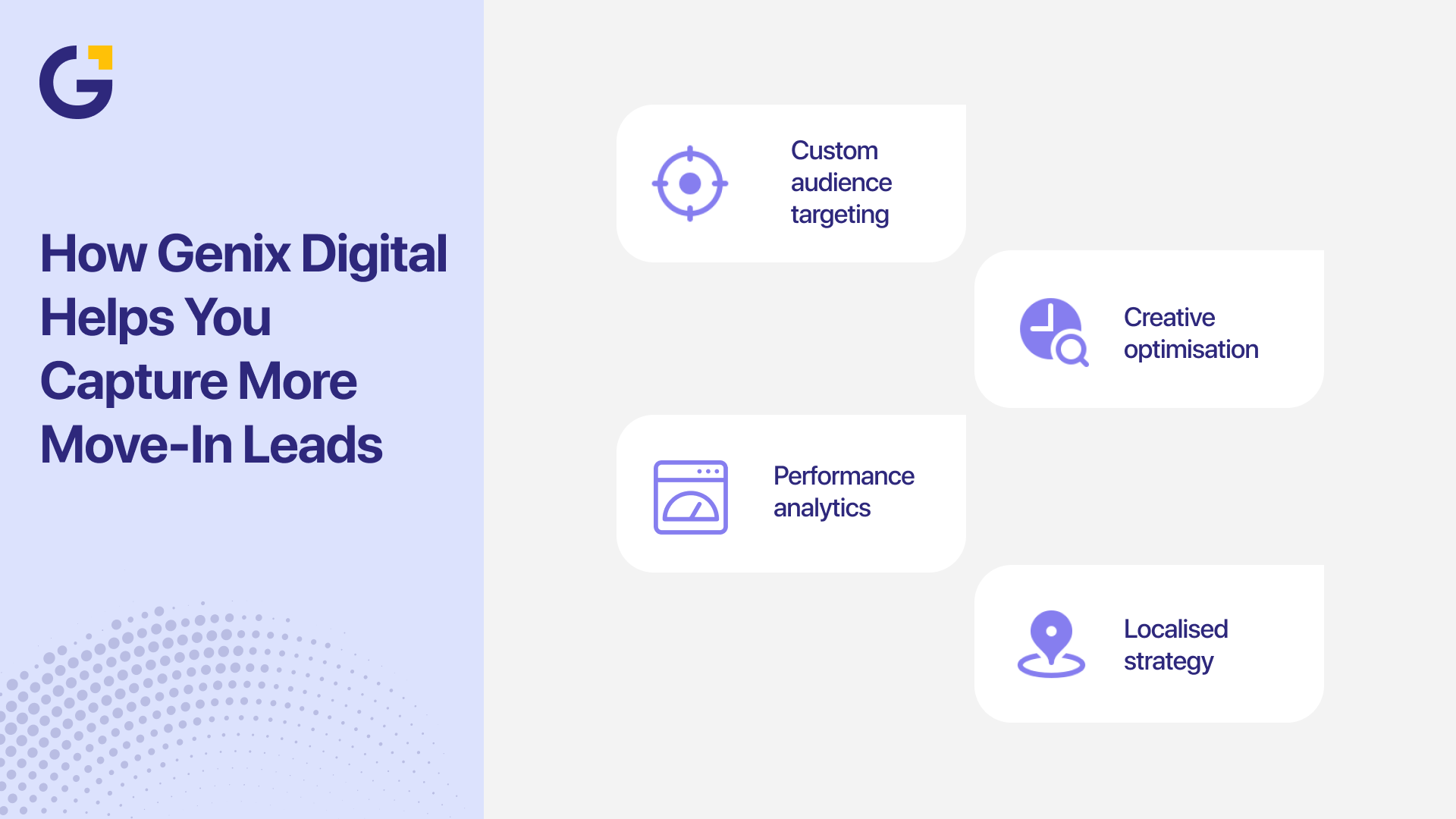
At Genix Digital, we specialise in data-driven Google & Meta Ads for service-based Australian businesses. Our approach combines:
- Custom audience targeting: Using AI-based insights to find new homeowners and movers.
- Creative optimisation: Testing ad formats and messaging that boost CTR.
- Performance analytics: Measuring every impression to refine spend efficiency.
- Localised strategy: Ensuring your campaigns dominate your region, whether Sydney, Melbourne, or Brisbane.
If you’re ready to attract high-value move-in customers, book a free consultation with our team.
Bringing It All Together
Move-in leads present a valuable opportunity for Australian service providers to connect with customers who are actively seeking local services after relocating. By combining the precision of Google Ads with the reach and engagement power of Meta Ads, your business can stay visible at the exact moment new residents need help. Aligning your ad messaging, creative assets, and tracking systems ensures every campaign drives measurable results and sustained growth.
At Genix Digital, we specialise in helping service-based businesses grow faster and outperform their competitors through tailored, data-driven advertising strategies. Our team designs and manages Google and Meta campaigns that convert clicks into real leads, boosting your local visibility and ROI. Subscribe for more actionable marketing guides or reach out to discover how we can help you turn every move-in opportunity into lasting customer relationships.



 28 Nov 2025
 8 Min Read
